Why Men Grow Quieter After 60: 12 Feelings He’s Not Saying Out Loud
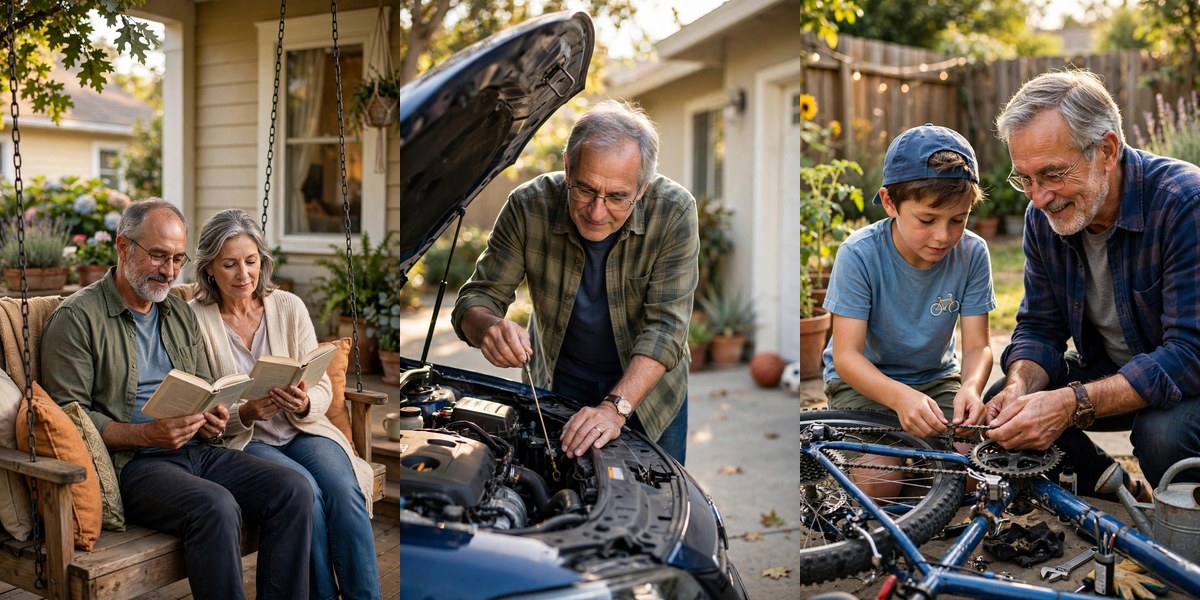
The man across the breakfast table answers in shorter sentences than he used to. He stays in the garage a little longer, stares into his coffee a little more. If you’re reading this, you’ve noticed — and you’ve probably wondered whether the quiet means something is wrong.
Most of the time, it means something is felt. Psychologists who study adult development keep landing on the same finding: the post-60 quiet is rarely rejection or laziness. It’s an inner adjustment — a collision between a lifetime of emotional habits and a brand-new, unscripted chapter.
Think of this as a field guide to the man you love — the same stage of life that softens many people can quiet others first. Below are 12 feelings he may be carrying beneath the silence, each with its own quiet translation — and a gentle way to meet him where he is.
🪪 “Who Am I Without the Title?”

If he could say it: “I miss being somebody at work — and I’m embarrassed that I miss it.”
For forty years his days had a shape: meetings, deadlines, a title that told the world exactly who he was. Retirement took the frame away — and with it, the mirror he used to see himself in.
Psychologists call this identity grief. It isn’t about money or the commute. It’s the quiet mourning of a self that no longer exists, and most men were never taught how to grieve anything out loud.
What he feels: A hollow mornings-and-Mondays ache, like the week forgot to start. What it looks like: Long coffee stares, restlessness without a task, irritation at “so what did you do today?” How to reach him: Ask for his expertise, not his résumé — “Can you look at this with me? You’re better at this than I am.”
🧱 “I’m Too Tired to Be Strong Today”

If he could say it: “I’ve held everything in for so long that talking now feels like lifting something too heavy.”
A lifetime of absorbing every shock without flinching has a bill — and it comes due around sixty. Speech, the real feeling-heavy kind, starts to feel like one more demand on an empty tank.
This isn’t coldness; it’s depletion. He learned young that being steady meant being silent, and nobody ever showed him the exit from that bargain.
What he feels: An emotional tiredness that sleep doesn’t fix. What it looks like: Short answers in the evening, retreating to his chair, a sigh before every sentence. How to reach him: Give him the first hour home in total peace — then talk over something easy, like cooking dinner together.
🌙 “Sitting Near You in Silence Is My Favorite Part of the Day”

If he could say it: “I’m not pulling away. This is how I come back to myself.”
For many men, silence isn’t distance — it’s the recovery room. Researchers who study long-term couples keep finding the same thing: he restores himself in quiet the way others restore themselves in conversation.
The trap is reading it as rejection. When you sit in the same room, each with your own book, you haven’t lost each other. You’ve found the companionship that doesn’t need a soundtrack.
What he feels: Comfortable, restored, close to you. What it looks like: Relaxed posture, staying in the room, lingering nearby instead of leaving. How to reach him: Don’t leave to “give him space.” Stay, read your own book, and let the quiet be shared.
☀️ “I’m Fine — I Just Can’t Prove It”

If he could say it: “This right here — the porch, the tea, you — is the peace I worked forty years for.”
Here’s the feeling nobody suspects: genuine contentment. After decades of performing busyness, stillness can look suspiciously like withdrawal to the person watching it.
Check his body before his words. Dropped shoulders, slow breathing, a willingness to stay exactly where he is — that is a settled man, not a distant one.
What he feels: Deep, unhurried ease. What it looks like: Lingering on the porch, no rush to fill the air, soft eyes. How to reach him: Match the rhythm. Put your own mug down and stay. Peace doesn’t need narration.
🩺 “My Body Is Sending Signals I’m Afraid to Read”

If he could say it: “I’m scared of what the doctor might say, so I say nothing at all.”
The knee that aches a little longer each winter. The test results sitting unopened on the counter. For a man raised to tie his worth to physical competence, admitting a symptom can feel like surrendering the last fortress.
So he goes quiet instead of vulnerable. The silence isn’t stubbornness — it’s fear wearing a familiar face, the same face that never once asked for directions.
What he feels: Quiet dread dressed up as indifference. What it looks like: Deflecting health questions, postponing checkups, sudden irritability about “fussing.” How to reach him: Handle the logistics softly — “I booked us both in for Tuesday; we’ll get lunch after.” Matter-of-fact, no speeches.
🔧 “This Corner Is Where I Think”

If he could say it: “Leave me with my small tasks and my silence for an hour, and I’ll come back a better man.”
The garage, the shed, the workbench — every quiet man has a room where nothing is asked of him. Sorting small objects, fixing small things: it’s meditation with a purpose, a way to steady an overstimulated mind.
It looks like hiding only from the outside. From the inside, it’s deliberate recovery — the same reset your evening walk gives you, delivered through his hands.
What he feels: Calm, in control, quietly absorbed. What it looks like: Long unhurried hours, tinkering without a goal, humming under his breath. How to reach him: Bring him a cold drink, say “take all the time you need,” and walk back inside. That one sentence builds more trust than any deep talk.
🤲 “I Tell You With My Hands”

If he could say it: “I checked your oil and fixed the gate. That’s me saying I love you.”
When words got hard, he switched languages. The full gas tank, the fence mended without being asked, the porch bulb replaced before you noticed it was out — these are sentences in his native dialect.
If you only count spoken affection, you’ll conclude he stopped caring years ago. Count the acts of service and you’ll find a man fluent in devotion.
What he feels: Love, expressed the only way that ever felt safe. What it looks like: Quiet repairs, errands done unasked, things maintained. How to reach him: Notice out loud — “I saw you fixed the back fence. Thank you for taking care of us.” Watch what that sentence unlocks.
👻 “The World Stopped Asking for Me”

If he could say it: “I used to matter to rooms full of people. Now I wonder if anyone notices I’m here.”
Work didn’t just give him a paycheck — it gave him an audience. Colleagues who needed his judgment, projects that carried his name. Retirement can feel like the spotlight clicking off mid-sentence.
He won’t say “I’m afraid of becoming invisible.” That sentence requires a vocabulary he was never given. So he goes quiet instead, testing whether the world still registers his presence.
What he feels: A shrinking sense of mattering. What it looks like: Withdrawing from social plans, downplaying his opinions, “it doesn’t matter what I think.” How to reach him: Ask his advice on things only he knows — family history, practical skills, his read on a situation. Being consulted is being seen.
🤝 “Being Useful Was How I Loved”

If he could say it: “Being useful was my love language. I don’t know what to do with the loving now.”
For decades his love had a job description: provide, protect, fix. The kids grew up, the house is steady, the tools hang unused — and the man who expressed devotion through usefulness is holding a language nobody’s speaking anymore.
Watch what happens when a grandchild asks him to fix something or a neighbor needs a strong pair of hands. He lights up like a room getting power back. That light is the clue.
What he feels: A usefulness hunger, sharp and specific. What it looks like: Perking up around grandkids’ projects, volunteering for repairs, deflating at “we’ve got it.” How to reach him: Invent the need, honestly — “Could you teach him to use that tool? He’d learn it better from you.” Being needed is his love language’s native country.
🕯️ “I’m Lonely and I Don’t Know How to Say It”

If he could say it: “Everyone I used to laugh with at work is gone — and I don’t know how to make friends at my age.”
Retirement doesn’t just end a job; it dissolves a social world. The daily banter, the shared jokes, the easy company of colleagues: gone overnight, with no replacement plan.
Many men built their friendships through shared activity, which retired life rarely provides. His loneliness has no name because it arrived without a funeral. Learning to name it is the first step — for both of you.
What he feels: A quiet, disorienting aloneness — even in a full house. What it looks like: Long evenings scrolling or staring, turning down invitations, insisting “I’m fine.” How to reach him: Build the bridge sideways — invite him to something shoulder-to-shoulder (a walk, a project, a game) rather than face-to-face “let’s talk.” Company arrives before conversation.
⚖️ “I Don’t Want to Be a Weight on You”

If he could say it: “If I tell you what’s wrong, you’ll worry — and I’d rather carry it than watch you carry it.”
Watch a proud man slow down: he starts declining help he needs and hiding needs he has. Every unspoken ache is a small act of protection — he’d rather be the shield than the weight.
The irony is that the silence he offers as a gift lands as distance. He thinks he’s sparing you; you feel shut out. Both of you are acting out of love, and both of you are lonely in it.
What he feels: Guilt at needing, pride in enduring. What it looks like: “I’m fine, don’t fuss,” doing things that hurt, refusing the arm offered on the stairs. How to reach him: Make needing normal — share your own small vulnerabilities first. “My knee’s been acting up too — let’s both get checked.” Company halves the shame.
🛡️ “I’m Protecting You From My Heaviness”

If he could say it: “Some thoughts are too dark to bring into our kitchen. So I walk with them alone.”
Some silences aren’t withdrawal — they’re shelter. He senses his own heaviness and decides, in his own way, not to set it down on you.
This is the quietest love of all, and the hardest to read. He walks beside you in the evening light, saying nothing, because the saying would hand you a weight he refuses to pass on.
What he feels: Tender protectiveness, mixed with private sorrow. What it looks like: Warm presence, an arm near yours, eye contact without words. How to reach him: Tell him he doesn’t have to protect you from everything — “You don’t have to carry the heavy stuff alone. I’m stronger than you think.” Then let him choose the moment.
🔍 Reading Him Right: The Do’s and Don’ts
Knowing what’s underneath the quiet changes how you respond to it. These five pairs are the difference between a silence that deepens and a silence that heals — and they’re echoed in the habits of people who stay steady through big life changes.
✅ Do share space quietly. Parallel walks, side-by-side tasks, reading in the same room — closeness without a soundtrack lowers his guard.
✅ Do notice his acts of service out loud. “I saw you fixed the gate — thank you.” Acknowledging his dialect teaches him it works.
✅ Do ask his advice on things only he knows. Being consulted tells him he still matters to the world inside the house.
✅ Do give him the first quiet hour. Let him decompress, then connect over something easy — dinner, a drive, a small project together.
✅ Do say this exact sentence when the room feels heavy: “You don’t have to talk right now — but I’m right here if you want company.” Then stop talking and let it land.
❌ Don’t interrogate the silence. “What’s WRONG with you?” turns a safe harbor into a courtroom. He’ll perform an answer and withdraw further.
❌ Don’t fill every pause with bright chatter. Forced conversation spends the exact energy he’s trying to protect — and teaches him that quiet isn’t safe around you.
❌ Don’t take it personally. His quiet is almost never a verdict on you. Making it about the relationship adds pressure to a man already short on words.
❌ Don’t demand the feelings-talk on your schedule. “We need to talk about this NOW” triggers the defensiveness of a lifetime. Offer the door; let him choose when to walk through it.
❌ Don’t say “you’ve changed.” Say “I notice.” One is an accusation; the other is an invitation.
🚩 When Quiet Is a Red Flag
Most post-60 quiet is adjustment, not illness — but it pays to know the difference. Content solitude comes with relaxed body language, continued care for daily life, and warmth when approached. Clinical withdrawal looks different.
Take it seriously if you see persistent despair, a total loss of pleasure in things he used to enjoy, neglected hygiene or meals, withdrawal from everyone including old friends, or talk of being a burden in a hopeless, final-sounding way.
If that’s the picture, this isn’t a communication style to decode — it’s a health matter to address. Encourage a visit to his doctor, gently and without drama, the same way you’d book any other checkup. You don’t have to diagnose anything. You just have to refuse to watch alone.
The Quiet Isn’t a Wall — It’s a Room
Here’s the reframe worth keeping: his silence isn’t a wall he’s built between you. It’s a room he’s living in right now — one with twelve different feelings unpacking their boxes.
Learn the floor plan and you can visit. Sit beside him without demanding a tour. Notice the small sentences he speaks with his hands. And on the evenings when the quiet feels heaviest, remember the simplest truth of all: he talks less, but he feels more.