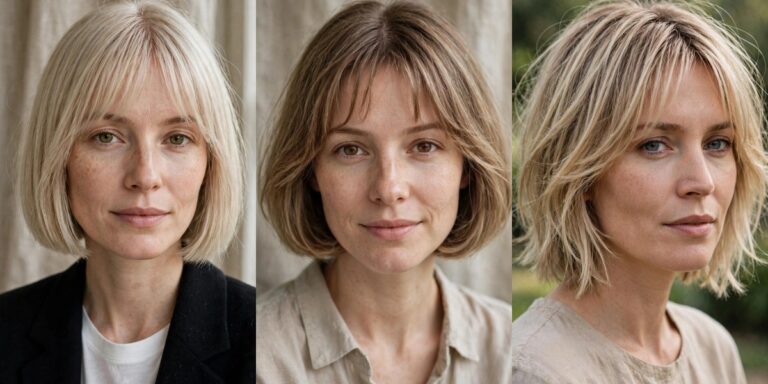
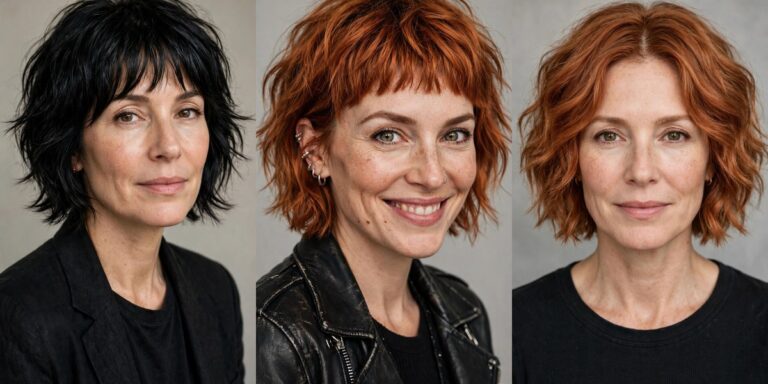
23 Chin Length Bob Ideas for Fine Hair
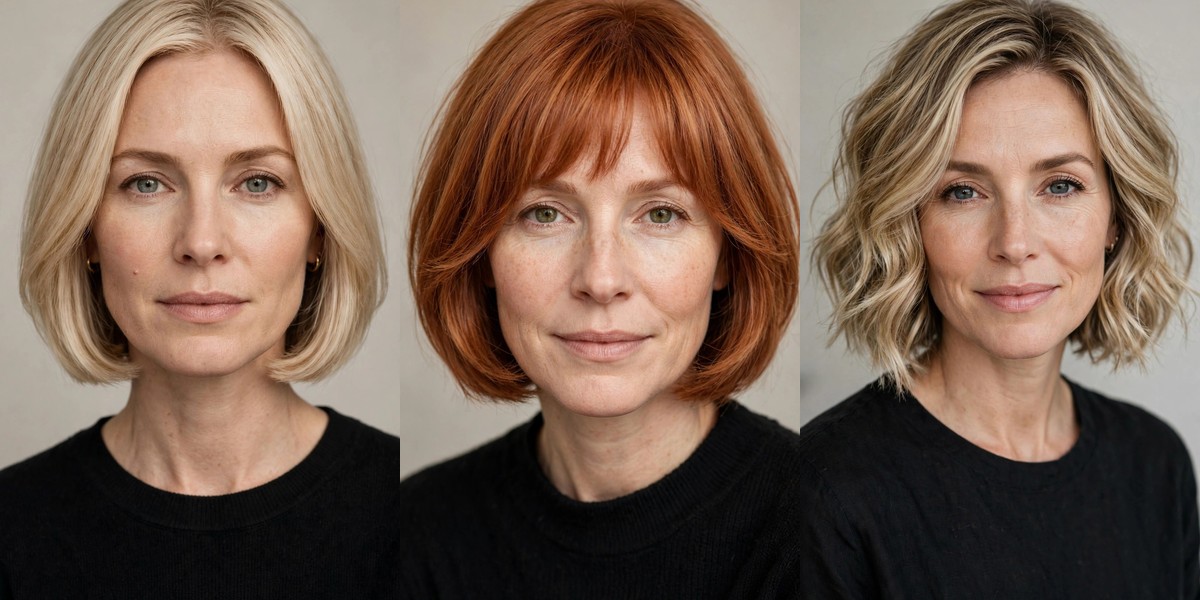
A chin length bob and fine hair are a natural match — as long as the cut respects the hair. Too many layers and the ends go wispy; too heavy and it sits flat. The sweet spot is a clean outline with just enough softness to move.
These 23 ideas are built around that balance. Blunt edges for density, gentle bends for lift, and fringe pairings that add shape without stealing fullness. Find the one that matches your morning routine, then show your stylist exactly where the weight should stay.
✂️ Crisp & Blunt
Density-first cuts. When fullness is the goal, the bottom edge does the talking.
1. 🪞 Glass-Blunt Chin Bob
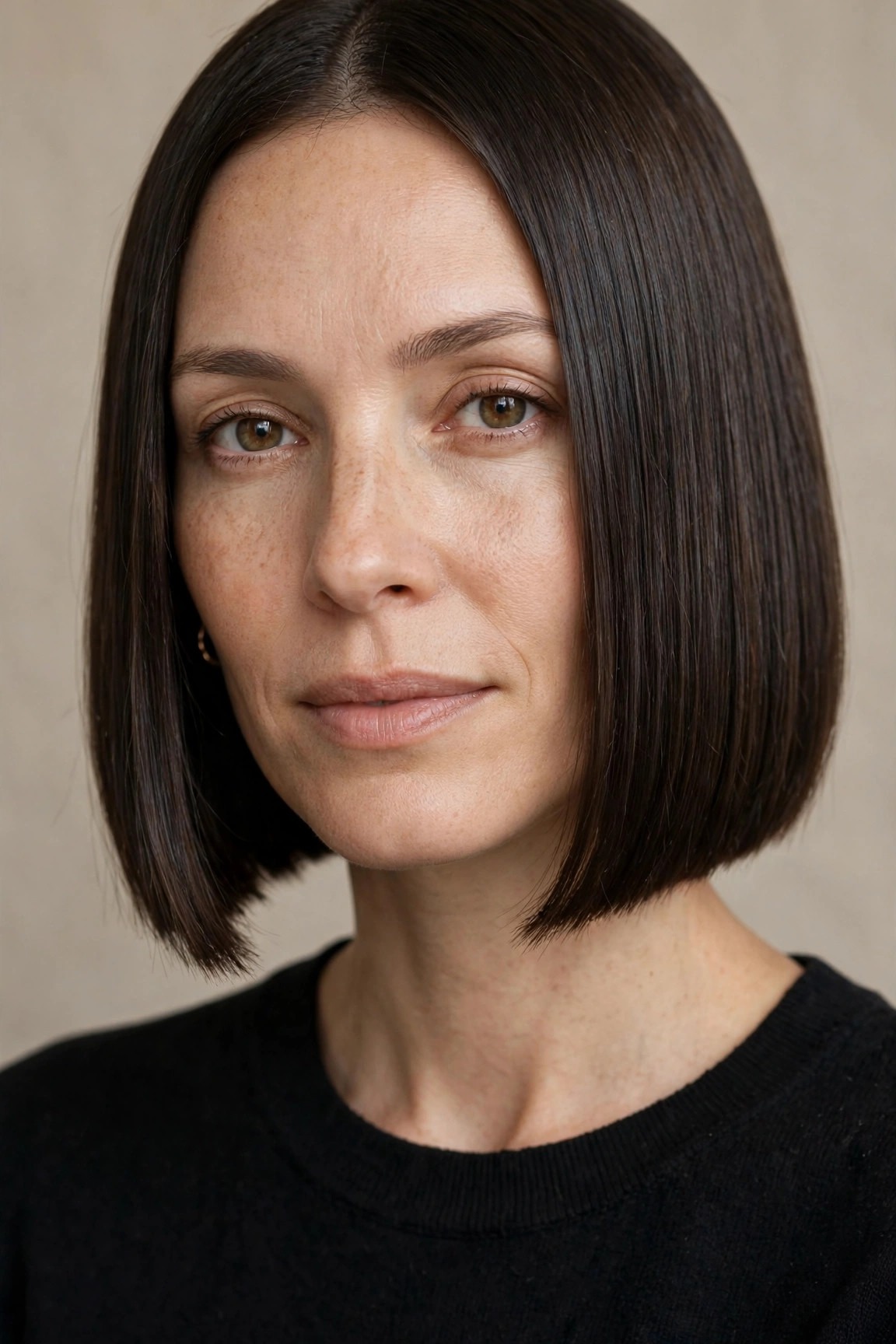
The look: a razor-sharp bottom edge with a mirror-smooth finish.
Nothing makes fine hair read thicker than one clean line. The glass finish catches light across the whole perimeter, which visually doubles the density at the ends.
Why it works: zero layering means zero lost weight. Styling tip: flat-brush blow-dry downward, then one pass of a flat iron — shine spray only on the ends, never the roots.
2. 📦 Box Bob with Center Part
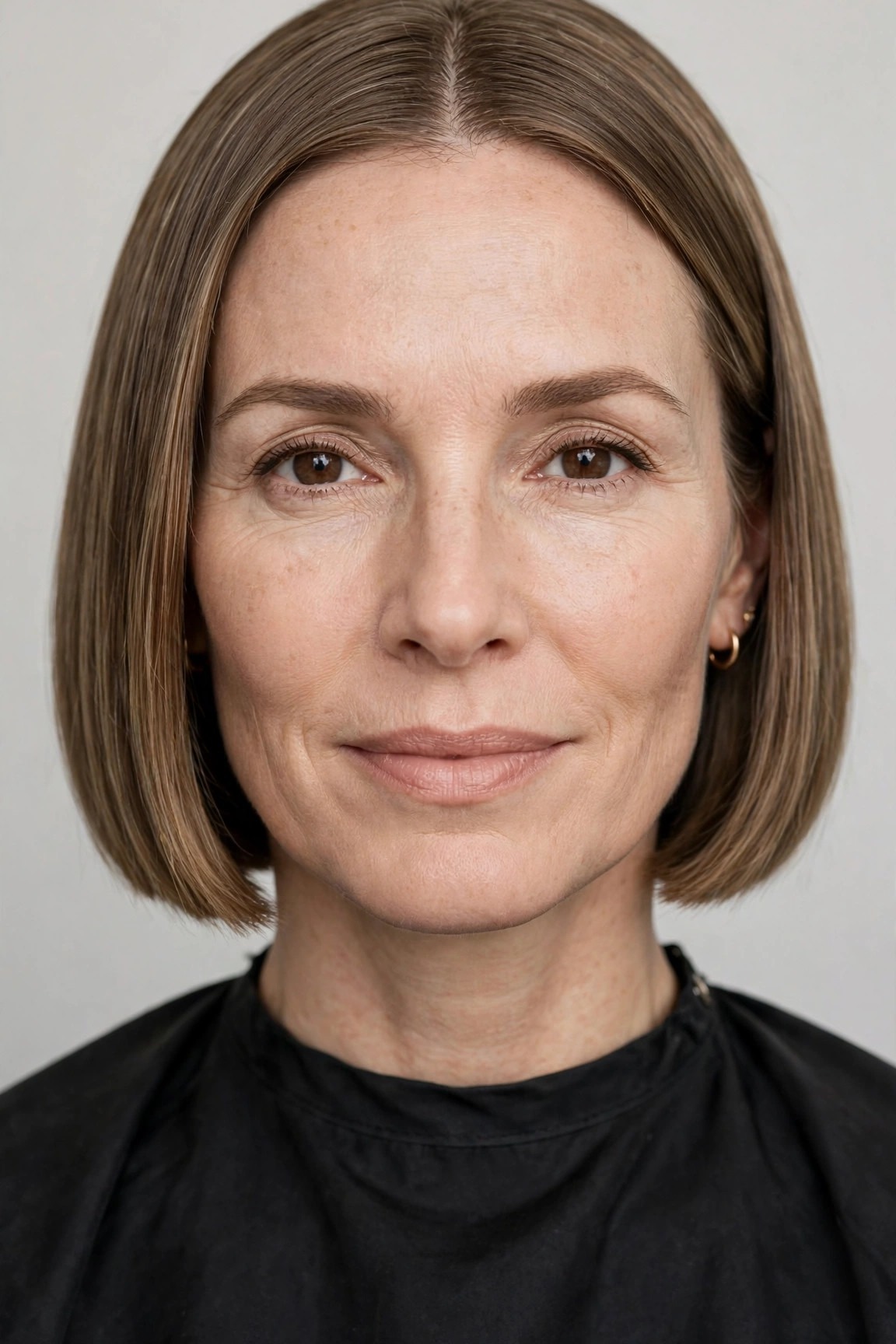
The look: an even, squared silhouette split down the middle.
The box shape keeps the sides from collapsing inward, so the cut holds its width all day. A center part makes the symmetry do the styling for you.
Best for: oval and heart faces — the width balances a narrow jaw. Ask your stylist for: “a one-length bob, squared corners, cut dry at the very end so the line is exact.”
3. 🍝 Rounded Italian Chin Bob
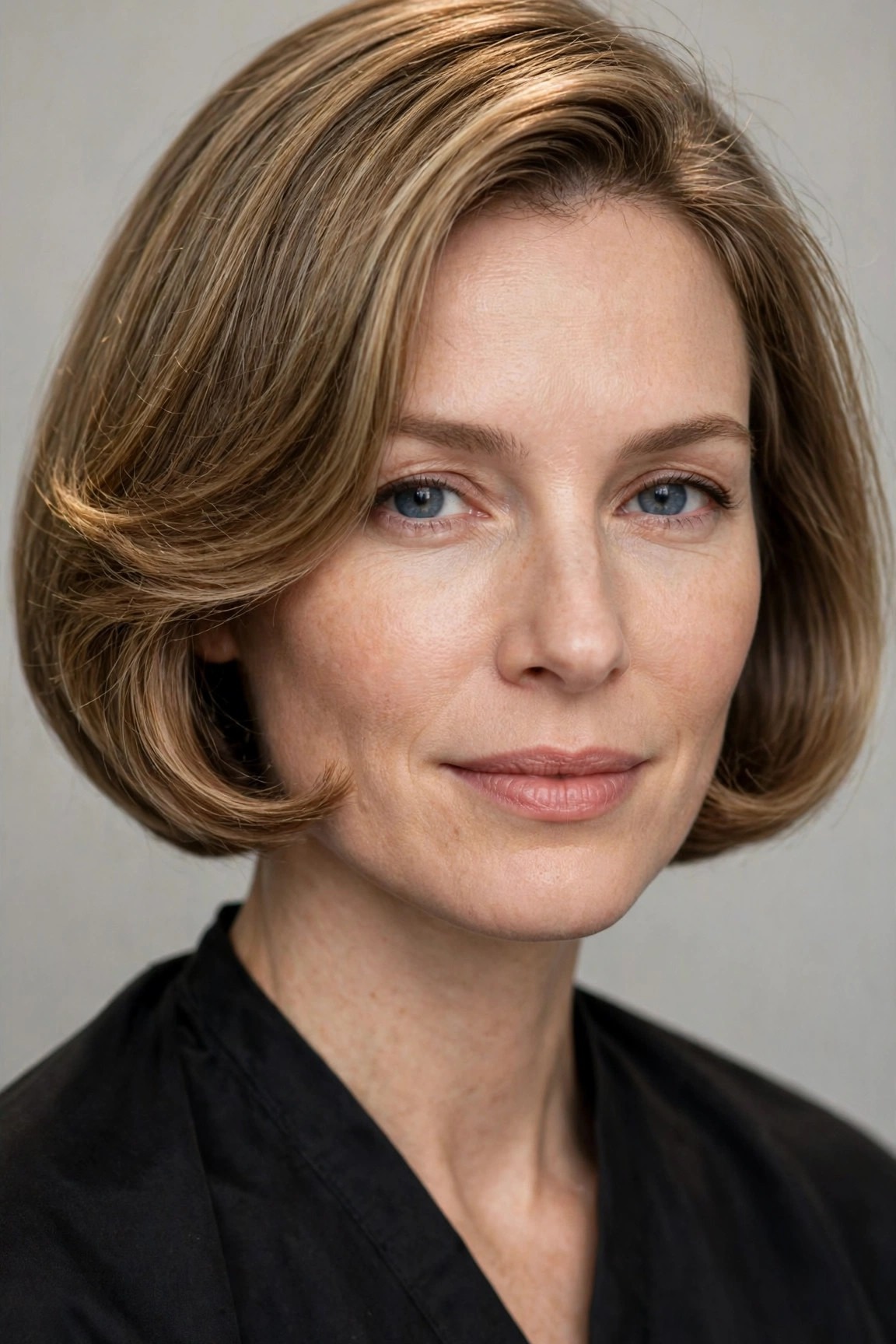
The look: a plush, curved silhouette that hugs the jaw.
The Italian bob’s rounded outline creates the illusion of more hair — curves read as volume where straight lines read as sleek. Soft golden ribbons through the front keep it from looking heavy.
Styling tip: blow-dry with a round brush curving under, focusing lift at the crown. Maintenance note: trims every 6–7 weeks; the curve grows out fast.
4. 📐 A-Line Chin Bob

The look: a gentle forward angle — shorter at the nape, longer at the front.
The angle pulls the eye forward and down, giving fine hair presence where it usually disappears. Tucked-under ends thicken the front pieces without any teasing.
Why it works: the diagonal line adds drama cheaply — no layers needed. Best for: round faces; the forward length slims the cheeks.
5. 🤏 Blunt Bob with Tucked Ends
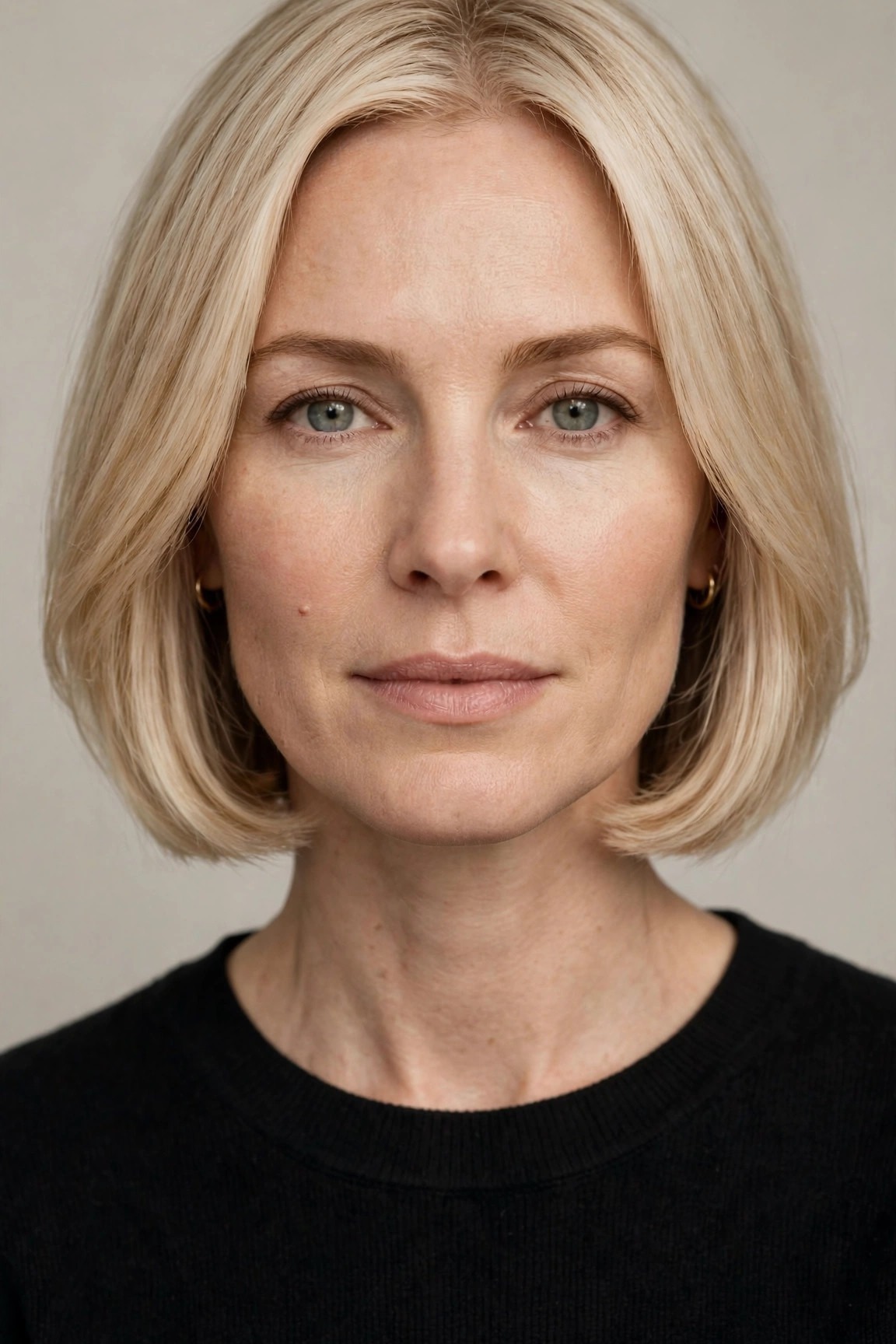
The look: a blunt base with the very ends bevelled softly under.
That tiny under-tuck is the difference between “flat” and “full.” It rolls the edge inward so light bounces off the curve instead of the scalp showing through.
Styling tip: a blow-dry brush on medium heat does this in four minutes. Color formula: beige blonde keeps the bevel soft — icy tones show every imperfection.
6. 🖤 Jaw-Skimming Sleek Bob

The look: deep side part, liquid-smooth lengths, jaw-grazing edge.
On dark fine hair, sleekness is a superpower — the shine makes every strand count double. The deep part adds instant root lift on the heavy side.
Best for: second- and third-day hair; the part hides flat roots. Maintenance note: a pea of smoothing cream, ends only — roots stay product-free.
🌊 Soft & Lived-In
Movement without the meltdown — airy texture that keeps the edge honest.
7. 〰️ Soft-Bend Chin Bob
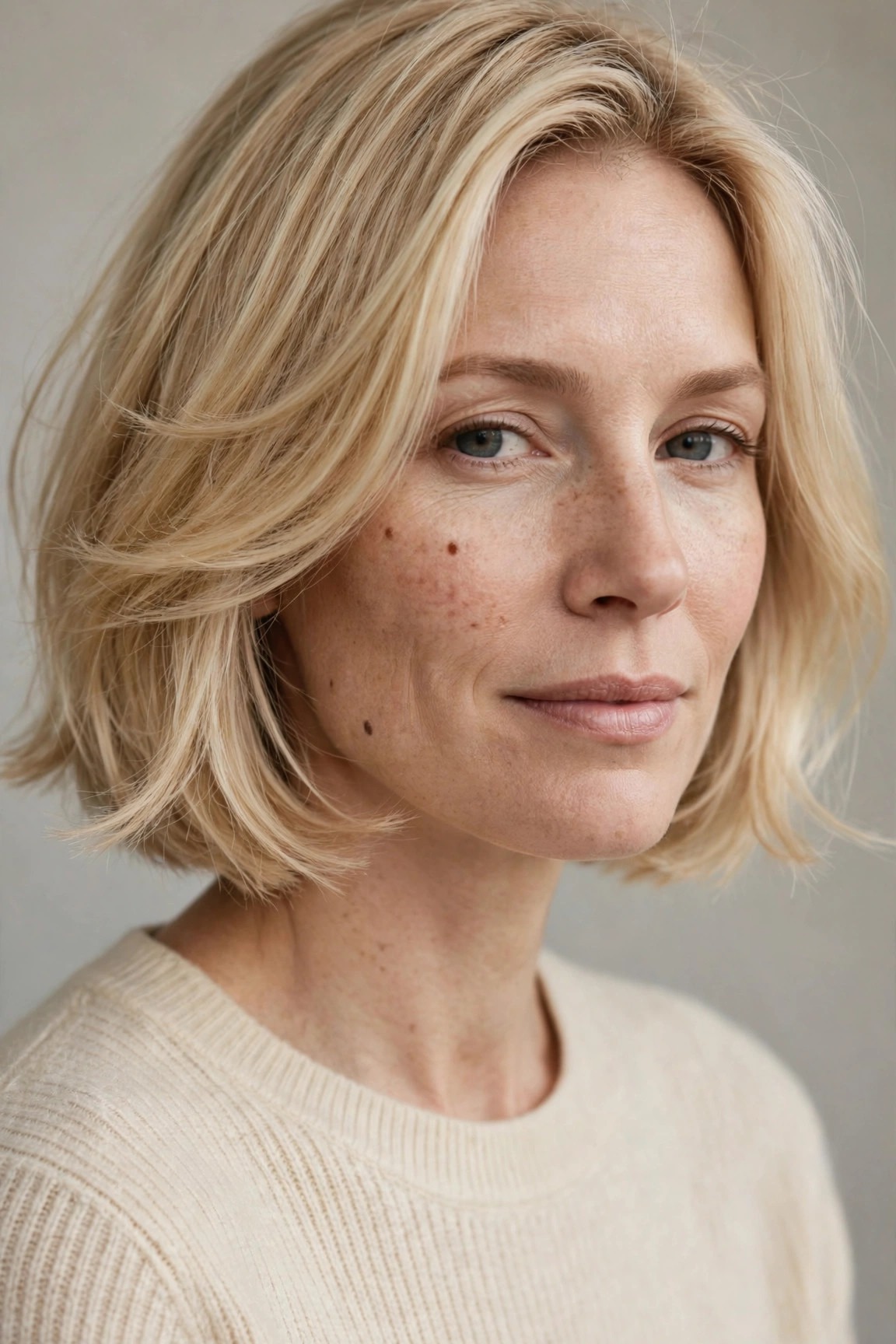
The look: a blunt base loosened with one soft bend through the mid-lengths.
This is the “I woke up like this” version of the bob. The bend breaks up the severity of the line while the untouched ends keep their weight.
Styling tip: wrap 2-inch sections around a 1.25-inch iron, leave the last inch straight. Why it works: bend only where the eye travels — the perimeter stays dense.
8. 🪶 Micro-Layered Chin Bob

The look: whisper-thin layers on the surface, full edge underneath.
Micro layers are layering for people who fear layering. They live in the top third of the hair, so movement shows on top while the bottom stays thick.
Ask your stylist for: “surface texture only — don’t touch my perimeter.” Best for: fine hair that falls flat by noon.
9. 🇫🇷 Parisian Undone Chin Bob
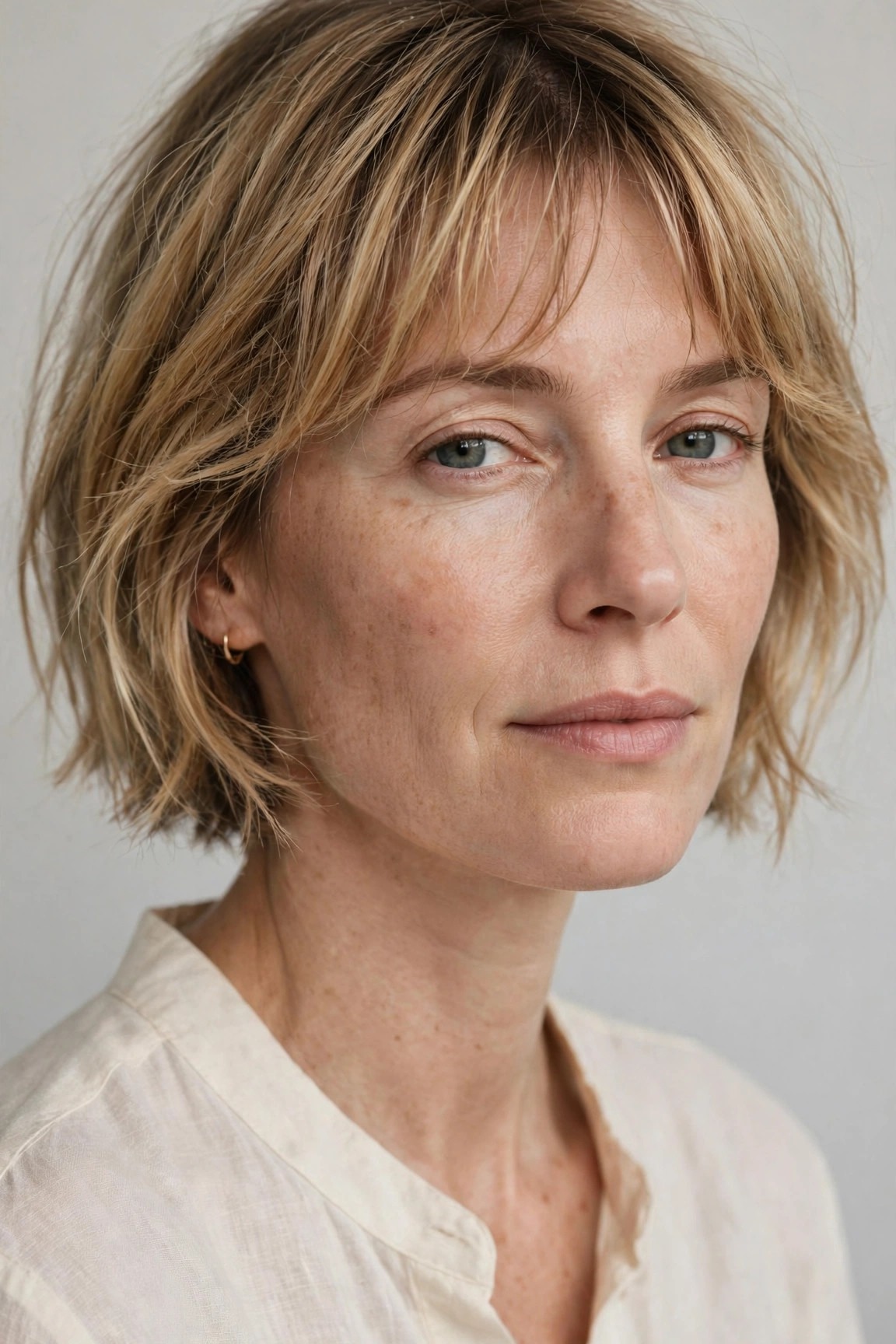
The look: wispy fringe, air-dried texture, perfectly imperfect.
The Parisian bob forgives fine hair’s lack of body by making texture the point. A little frizz? That’s the look. Flat crown? A deep part fixes it.
Styling tip: scrunch in a pea of styling cream on damp hair and go. Why it works: low manipulation = less breakage on fragile strands.
10. ↔️ Side-Part Swept Chin Bob

The look: a deep-ish side part with the front swept in one smooth curve.
Changing the part is the cheapest haircut you’ll never pay for. The sweep creates diagonal volume across the forehead — instant fullness illusion.
Best for: fine hair with a stubborn cowlick — the sweep works with it. Maintenance note: retrain the part with a clip while hair dries.
11. ✂️ Choppy-Piecey Chin Bob
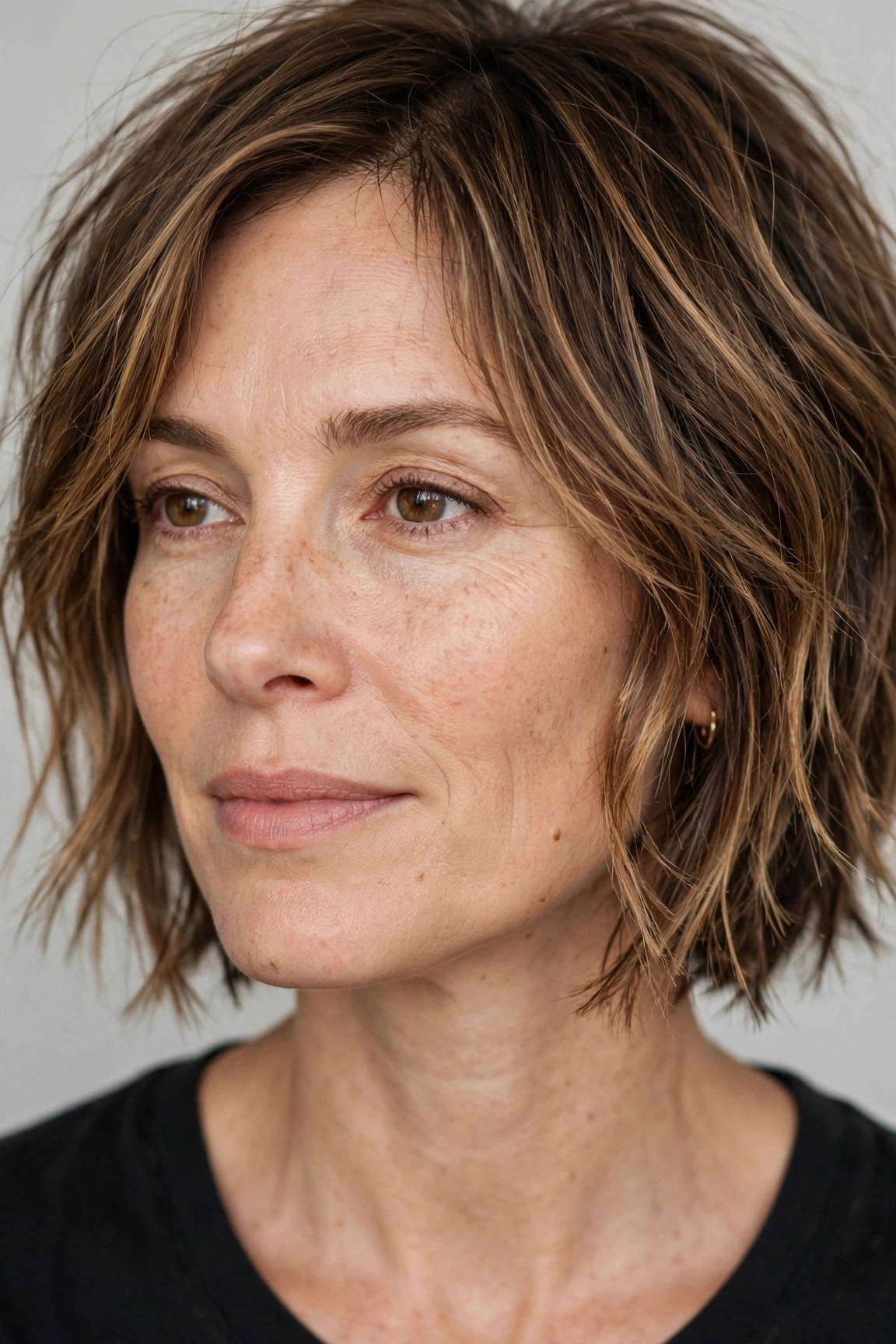
The look: separated, piecey ends with a light undone feel.
Piecey texture gives fine hair something straight cuts can’t: visible separation. The eye reads each piece as fullness. Keep the chop to the last two inches.
Styling tip: twist small sections with texture cream, ends only. Color formula: caramel ribbons make the pieces pop.
12. 🍃 Feathered-Edge Chin Bob

The look: soft feathering around the face, airy but intact ends.
Feathering is the gentlest way to add face-framing shape. It removes almost no weight, so fine hair keeps its density while gaining softness.
Why it works: the face frame draws attention up and out. Best for: square jaws — the softness offsets strong angles.
💇 Fringe Pairings That Work
Bangs on fine hair? Yes — when they add shape without eating the sides.
13. 🍾 Bottleneck Fringe Chin Bob

The look: fringe that pinches at the temples and opens around the eyes.
Bottleneck fringe is genius for fine hair: narrow at the top (takes little hair), wide at the cheekbones (frames the face). The copper tone adds reflective shine.
Ask your stylist for: “bottleneck bangs, longest pieces grazing the cheekbones.” Styling tip: blow-dry forward with a small round brush, then split with fingers.
14. 🪟 Wispy Curtain Fringe Bob

The look: a center-parted curtain that melts into the bob.
Curtain fringe on a chin bob creates one continuous line from crown to jaw — the eye follows it down and reads length and fullness. Wispy keeps it light.
Why it works: the parted fringe doubles as face-framing layers. Maintenance note: trim the curtain every 3–4 weeks; it grows into the eyes first.
15. 🤎 Brow-Skimming Fringe Bob
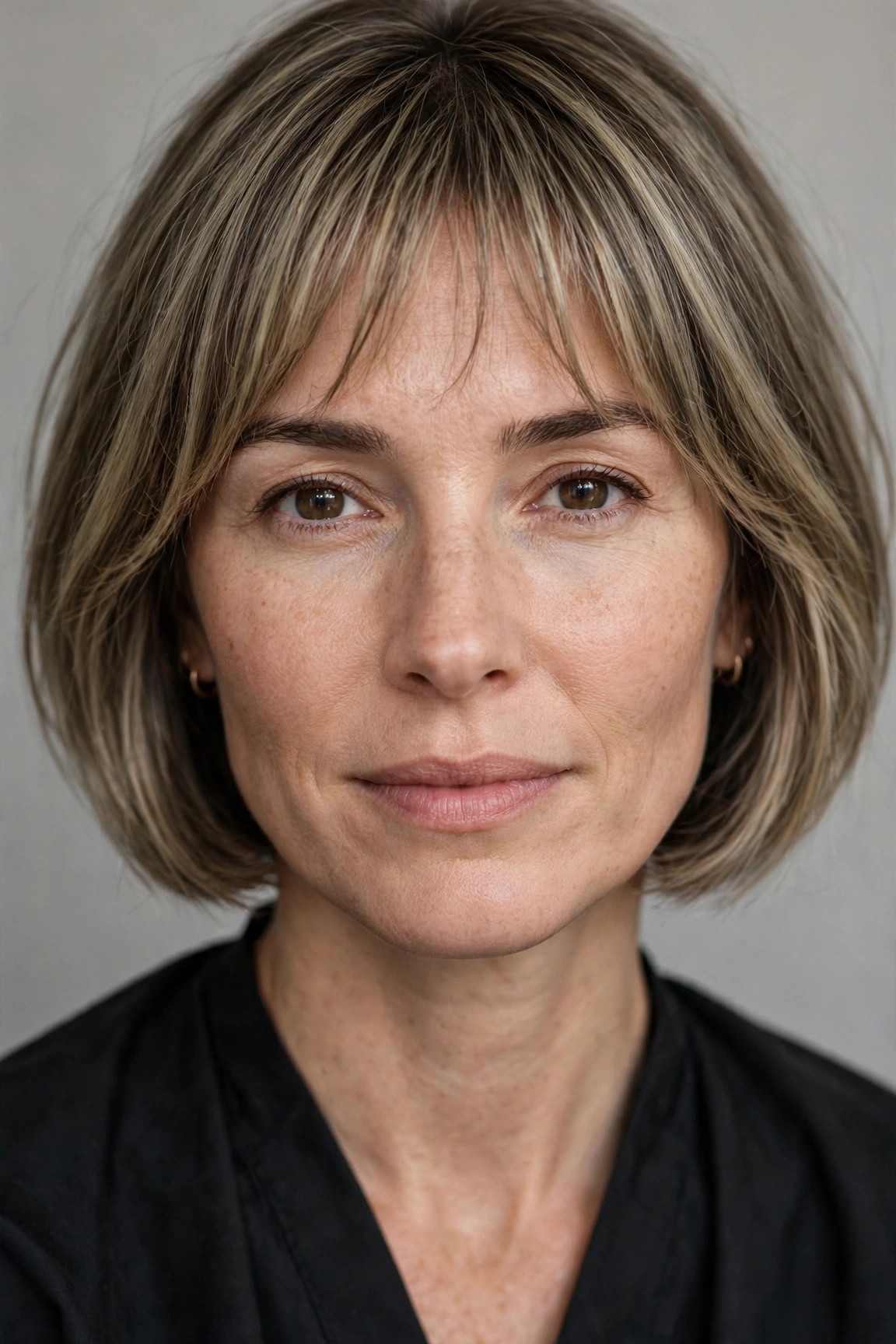
The look: airy fringe just kissing the brows over a rounded bob.
A soft brow fringe adds instant style to a simple bob — it’s the accessory the cut wears. Kept airy, it won’t separate into strings by midday.
Styling tip: dry the fringe first, side to side, before it sets. Best for: long foreheads and oval faces.
16. 🌊 Long Side-Swept Bangs Bob

The look: bangs that sweep long across the forehead into the front pieces.
Side-swept bangs are the lowest-commitment fringe: they grow out into layers gracefully. On fine hair they add diagonal interest without a heavy curtain.
Why it works: the diagonal line slims and lifts simultaneously. Best for: anyone growing out a fringe — this is the graceful exit.
17. ⚡ Micro Bangs Chin Bob

The look: short, bold, graphic — a statement above a clean bob.
Micro bangs use the least hair of any fringe, which makes them secretly ideal for fine hair. They add edge without stealing density from anywhere else.
Ask your stylist for: “airy micro bangs, cut well above the brow, textured ends.” Best for: small foreheads and confident minimalists.
18. 🎀 Face-Framing Bend Bob

The look: front pieces curved softly away from the face.
Not quite bangs, not quite layers — the face-framing bend is the compromise that flatters everyone. Strawberry blonde keeps the curve luminous.
Styling tip: a round brush turned outward on the front two sections. Why it works: the outward curve opens the face and shows off cheekbones.
✨ Shape & Color Tricks
When the cut is simple, shape and shade do the heavy lifting.
19. 📈 Graduated Nape-Lift Bob
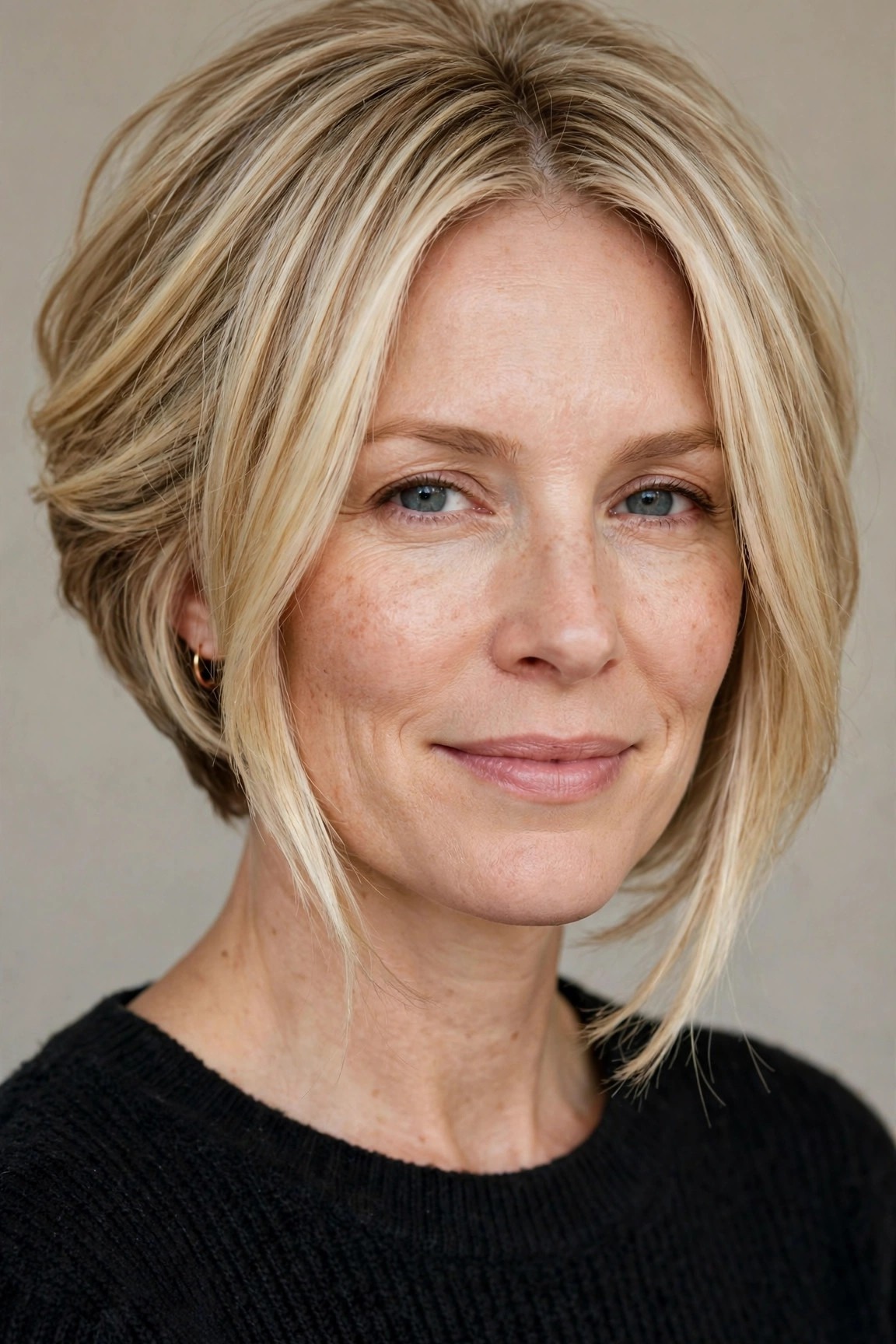
The look: gentle stacking at the nape, longer pieces through the front.
A soft nape lift builds volume exactly where fine hair goes flat — the back. Kept gentle (not 2000s-stacked), it reads modern and full.
Ask your stylist for: “soft graduation at the nape only — keep the front one length.” Maintenance note: the nape needs reshaping every 5–6 weeks.
20. 🧣 French Nape-Tuck Bob

The look: a tucked, collar-grazing nape with effortless French ease.
The nape tuck removes bulk where fine hair doesn’t need it and shows off the neck. Auburn adds warmth that makes the shape glow.
Why it works: less hair at the nape = more swing everywhere else. Best for: fine hair that poufs at the back when it’s humid.
21. 👂 Tucked-Behind-the-Ear Bob

The look: one side tucked, one loose front piece left to frame the cheek.
Styling, not cutting — but it transforms the bob. The tuck shows off earrings and cheekbones; the loose side keeps the asymmetry interesting.
Styling tip: a tiny flat bobby pin behind the ear holds it all day invisibly. Best for: second-day hair that needs a refresh, not a wash.
22. 🧡 Copper Glow Chin Bob

The look: rich copper color over a smooth rounded bob.
Copper is fine hair’s best friend in a bottle — warm tones reflect more light than cool ones, so the hair looks thicker and healthier instantly.
Color formula: ask for a level-7 copper with a gloss — the gloss is non-negotiable for shine. Maintenance note: copper fades fast; a color-depositing conditioner buys you two extra weeks.
23. 🌾 Dimensional Blonde Chin Bob

The look: multi-tonal blonde with soft, loose waves.
Dimension is the optical illusion fine hair needs: highlights and lowlights create shadows the eye reads as thickness. The waves keep it touchable.
Color formula: babylights plus a root shadow — depth at the root, brightness at the ends. Why it works: the shadow at the root alone can make hair look 30% denser.
💡 More fine-hair cuts to explore:
Layered Bob Hairstyles for Thin Fine Hair · Bob Hairstyles for Fine Hair · Short Hairstyles for Fine Thin Hair
📋 Your Chin-Bob Cheat Sheet
At the salon, say: where you want the weight (the bottom edge), how much layering (surface only), and your real morning routine — the cut must match the effort.
Density rule: blunt perimeter first, texture second, and never both deep layers and a blunt edge in the same cut.
Fine-hair styling kit: lightweight root spray, a round brush or blow-dry brush, and one light cream — heavy oils and waxes are the enemy.
Trim cadence: every 6–8 weeks keeps the edge honest; fringe pieces need a dusting every 3–4.