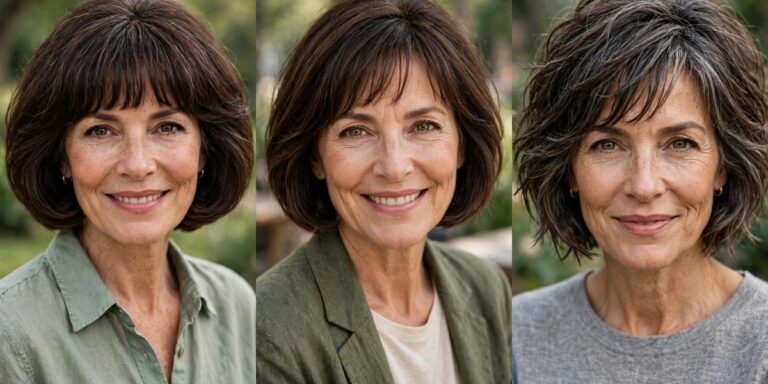
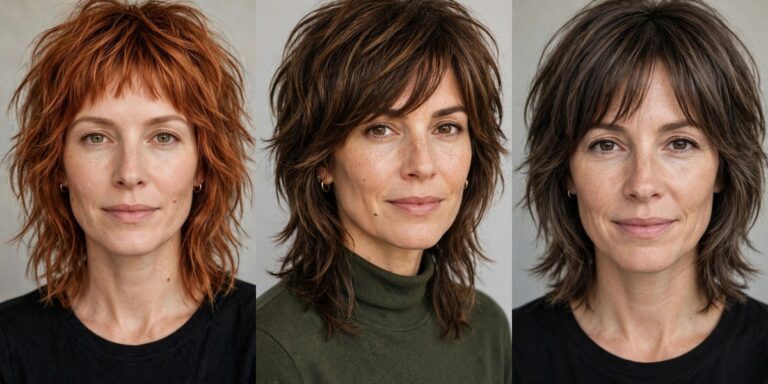
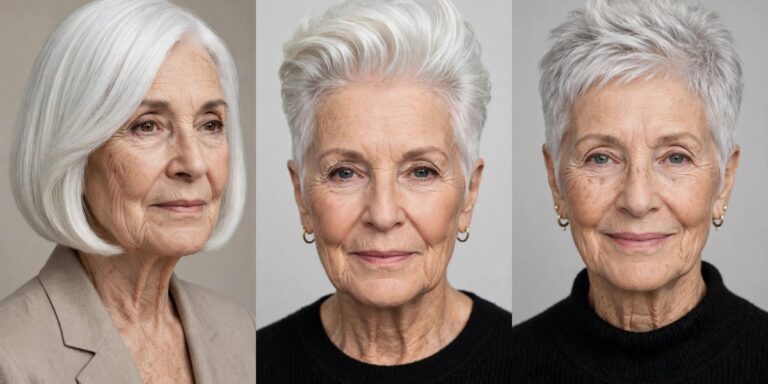
23 Hairstyles for Women Over 60 with Thin Fine Hair
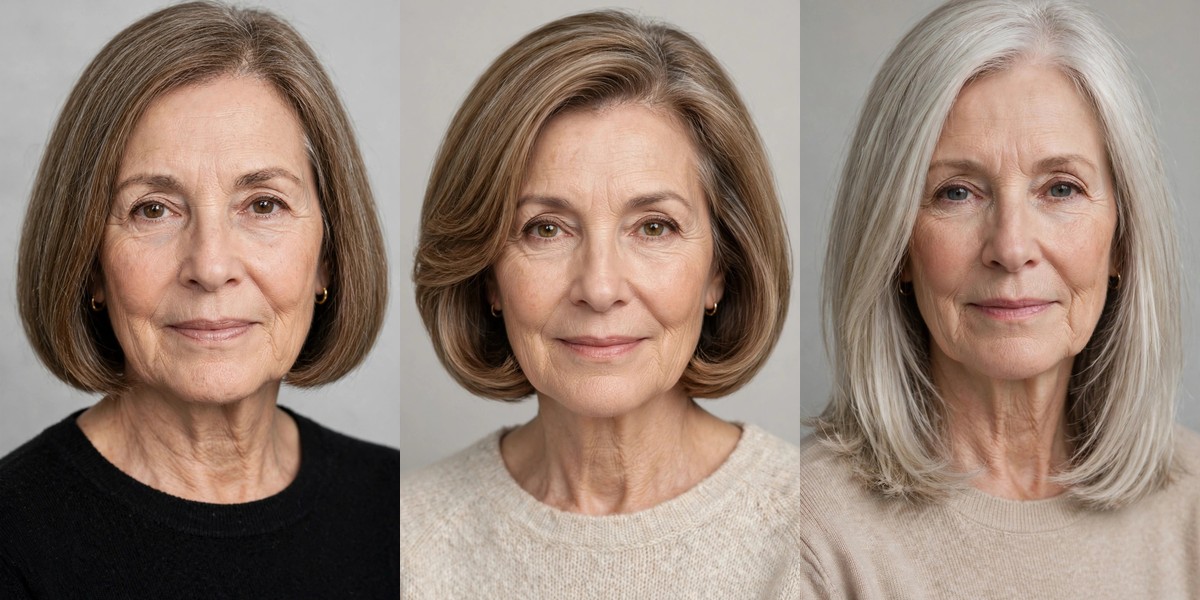
Thin fine hair after 60 asks for a particular kind of kindness from a haircut: shape without stringiness, fullness without stiffness, and styling that doesn’t feel like a second job. The right cut delivers all three.
These 23 styles do exactly that — feathered pixies, solid bobs, easy lobs — each chosen for how it behaves on fine hair day after day, not just in the salon chair.
✂️ Pixies with Purpose
Short cuts engineered for lift.
1. 🪶 Feather Whisper Pixie
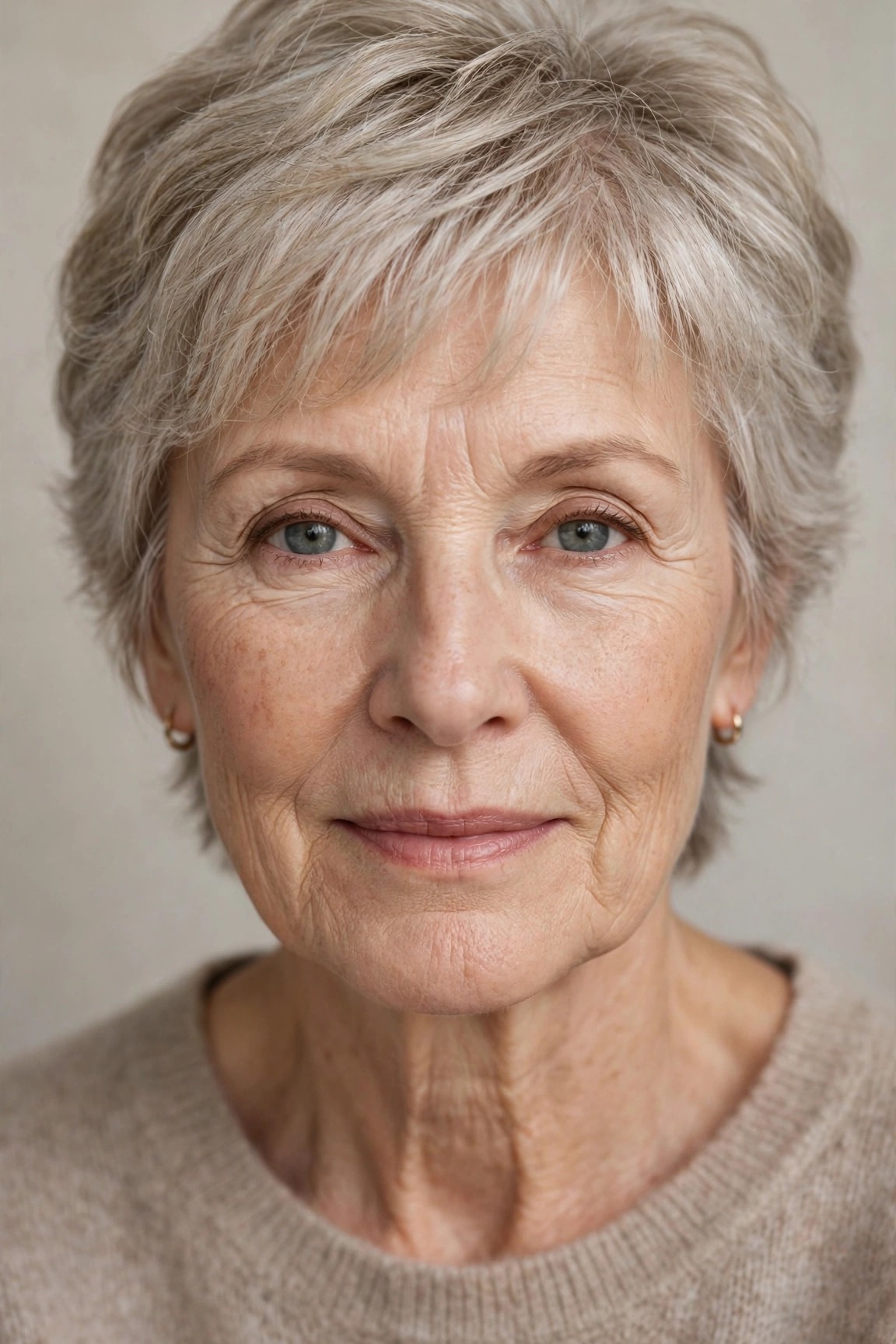
The look: soft feathered layers with a light fringe and crown fullness.
Feathering is the gentlest way to build shape — the layers whisper rather than chop. Extra lift at the crown keeps it from ever looking flat.
Why it works: feathered texture reads as fullness. Styling tip: volumizing mousse + small round brush, dried upward.
2. 📏 Jawline Glass Bob
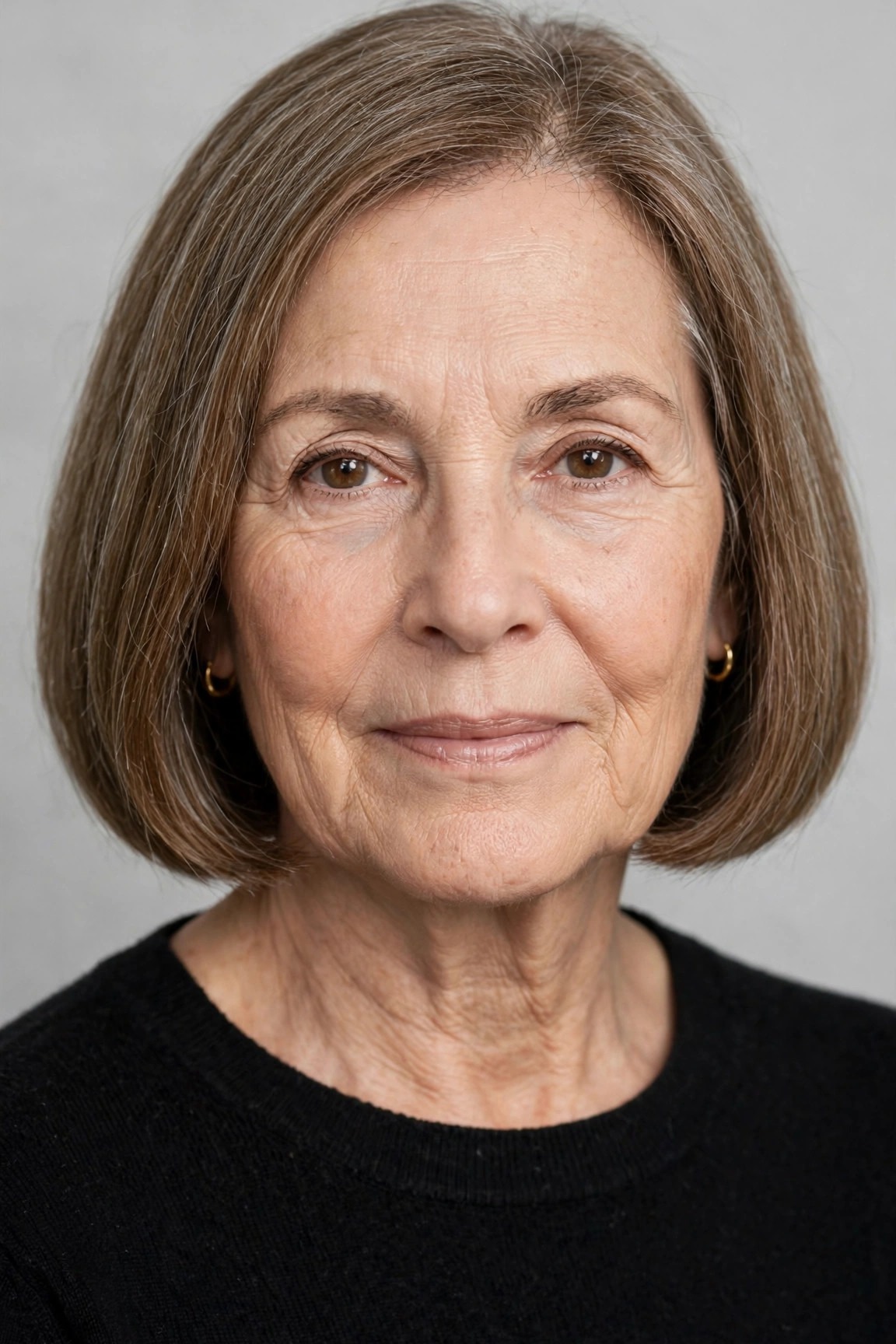
The look: one solid, clean line at the jaw.
The blunt outline is fine hair’s best defense — the solid edge makes ends look twice as thick. Minimal layers keep every strand’s weight at the bottom.
Best for: the straightest fine hair. Styling tip: smoothing cream + light flat-iron for the crisp line.
3. ⭕ Rounded Tuck Bob

The look: a rounded chin-length shape with tucked-under ends.
The tuck is the density trick — curving the ends under makes the perimeter look thicker and more polished. The rounded shape fills in nicely.
Styling tip: a round brush turned under. Why it works: curves suggest volume that isn’t there.
4. 👑 Crown Feather Cut
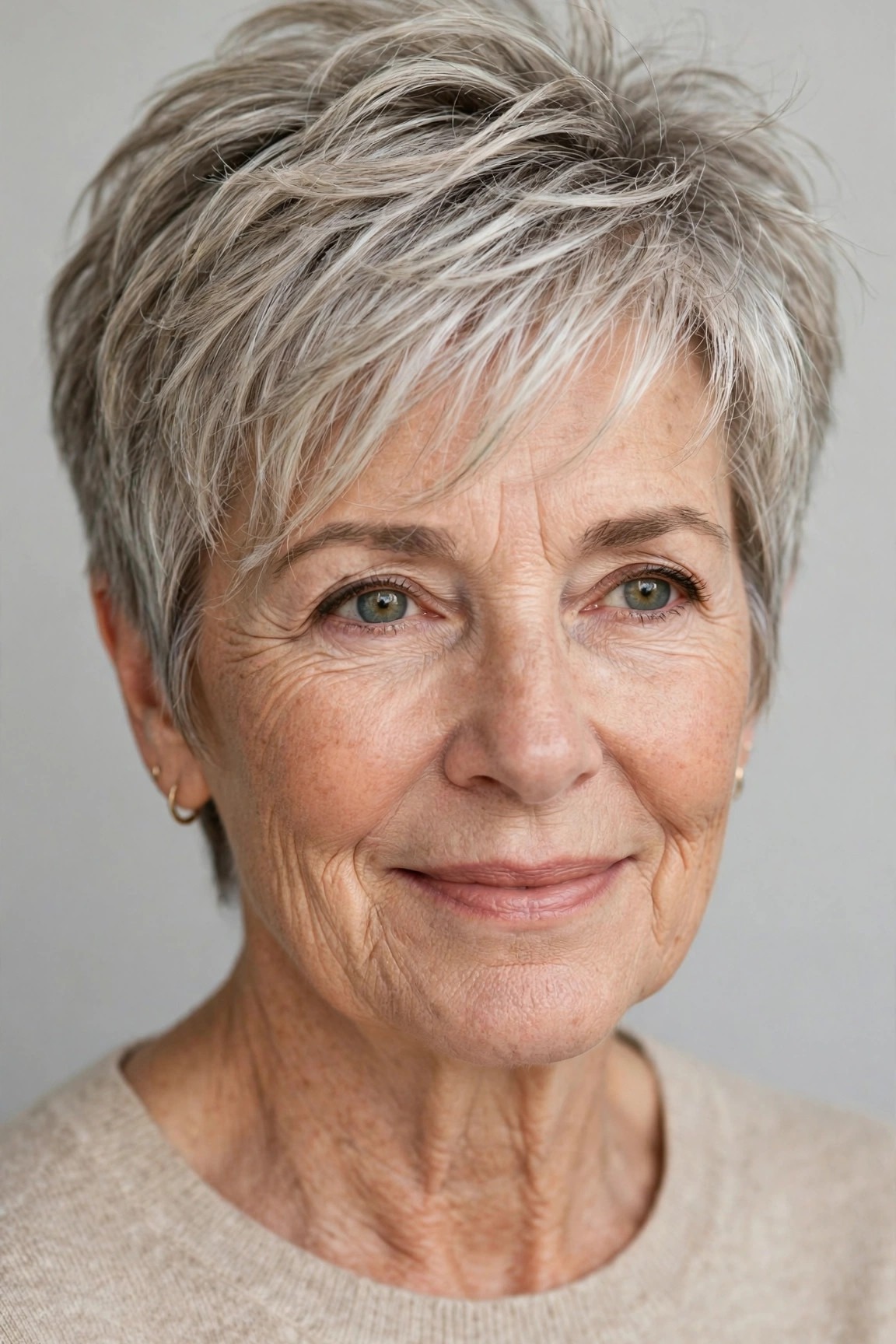
The look: feathered layers concentrated at the crown.
Crown-focused layering puts lift exactly where fine hair surrenders. The feathered texture keeps it light, never poufy.
Best for: flat crowns. Styling tip: mousse before drying; finish with fingers, not a heavy brush.
5. 〰️ Ripple Wave Pixie
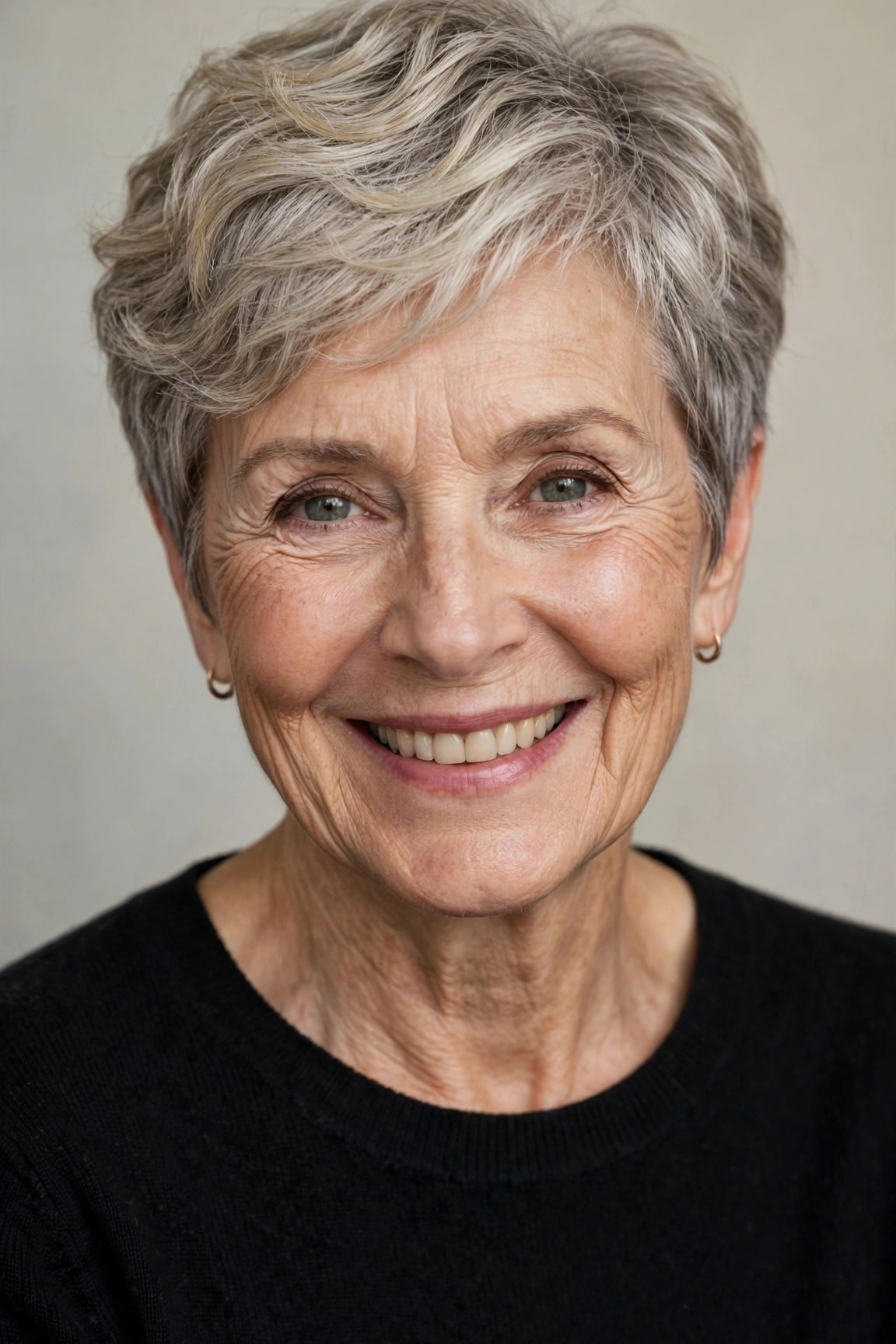
The look: soft tousled texture on top with neat sides.
Even a little wave adds body — the tousled top creates separation that reads as thickness. Shorter sides keep the shape tidy.
Styling tip: scrunch in mousse or texture cream. Why it works: texture is free volume.
6. ↔️ Side-Part Layer Bob
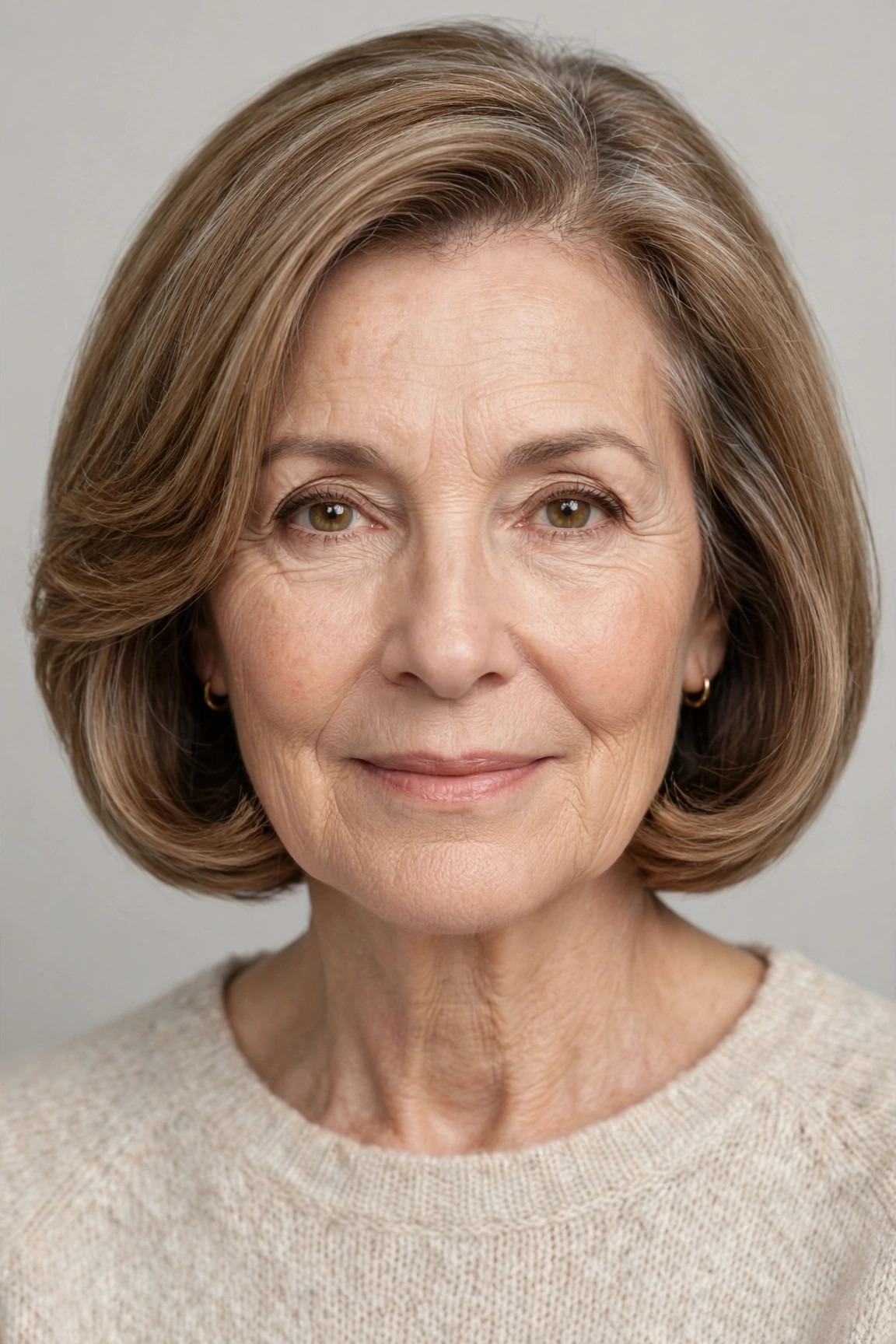
The look: soft layers with a side part for width.
The side part adds fullness through the sides — asymmetry creates the illusion of more hair. Inward ends polish the shape.
Styling tip: lift roots as you dry for lasting fullness. Why it works: the part does half the styling.
⭕ Bobs That Behave
Reliable shapes, zero drama.
7. 🌬️ Piecey Air Shag
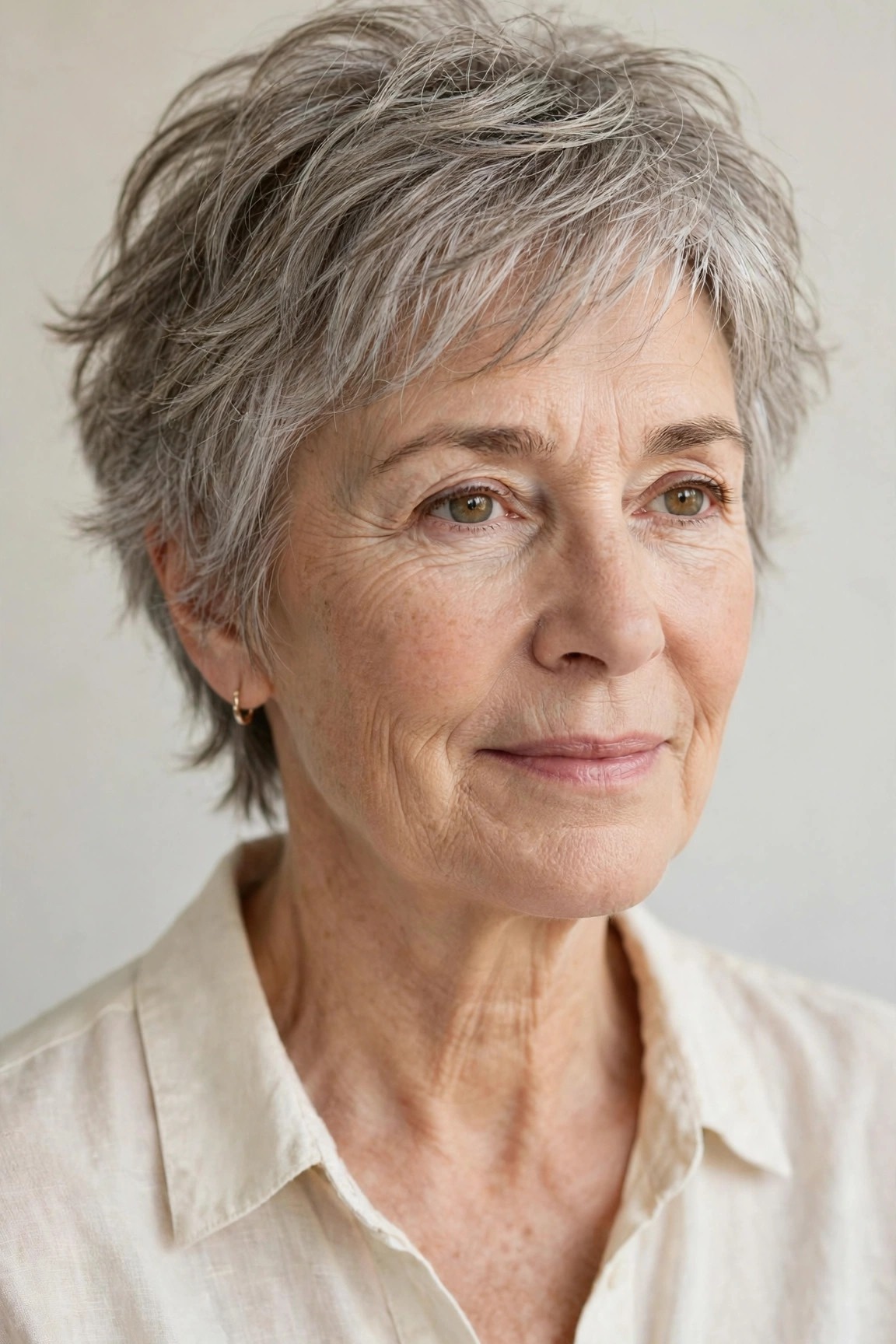
The look: piecey layers through the top and sides.
The shag’s texture breaks up limpness — piecey layers create a relaxed finish that looks fuller than sleek fine hair. Light and airy.
Styling tip: texturizing spray + rough-dry. Best for: fine hair needing personality.
8. 🔺 Stacked Wedge
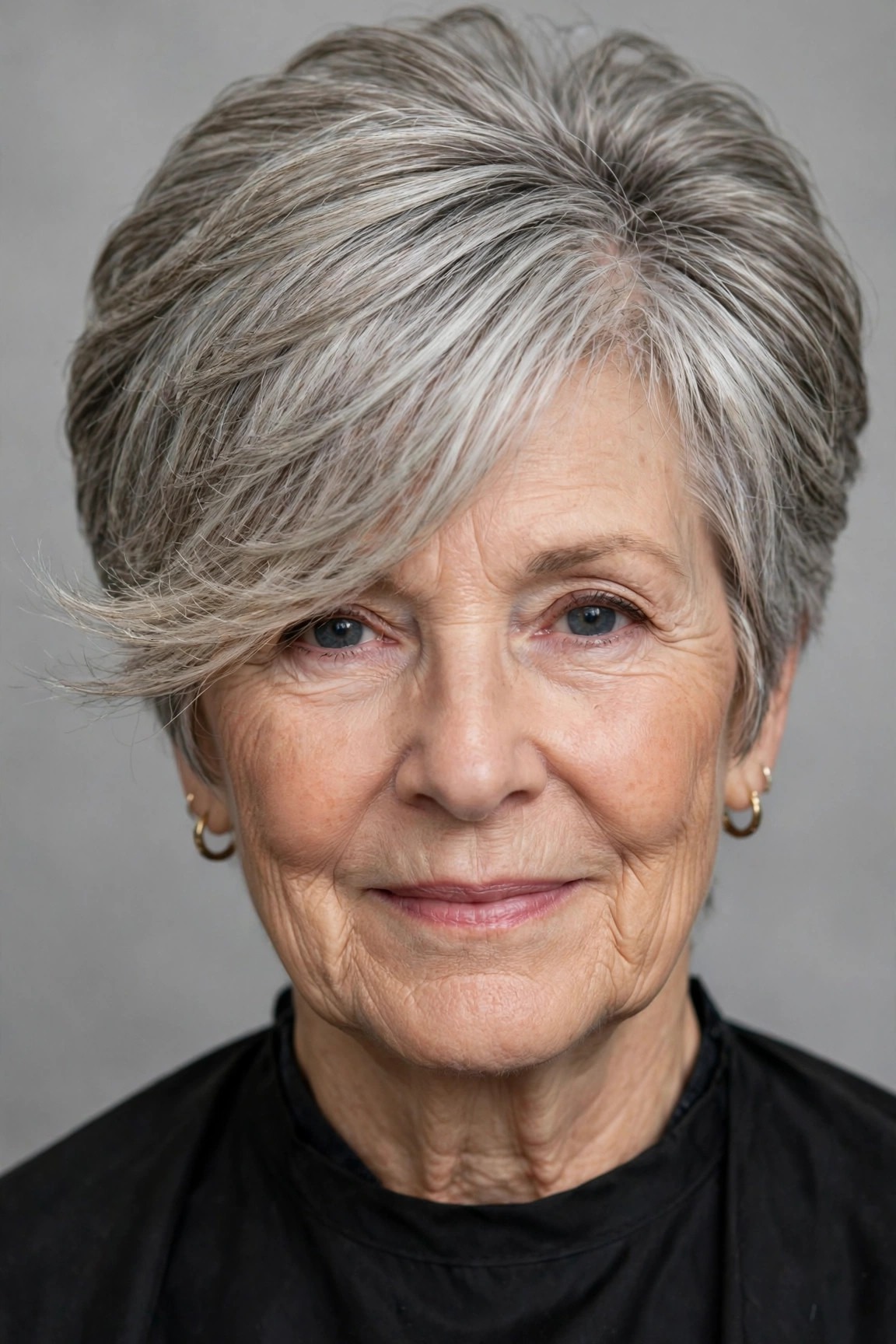
The look: stacked fullness at the back, longer sweep in front.
The wedge’s stacked back builds roundness where fine hair goes flat. The side-swept front keeps it soft around the face.
Styling tip: blow the crown upward for lift. Why it works: the back does the volumizing work.
9. 🌊 Shoulder Swing Layers
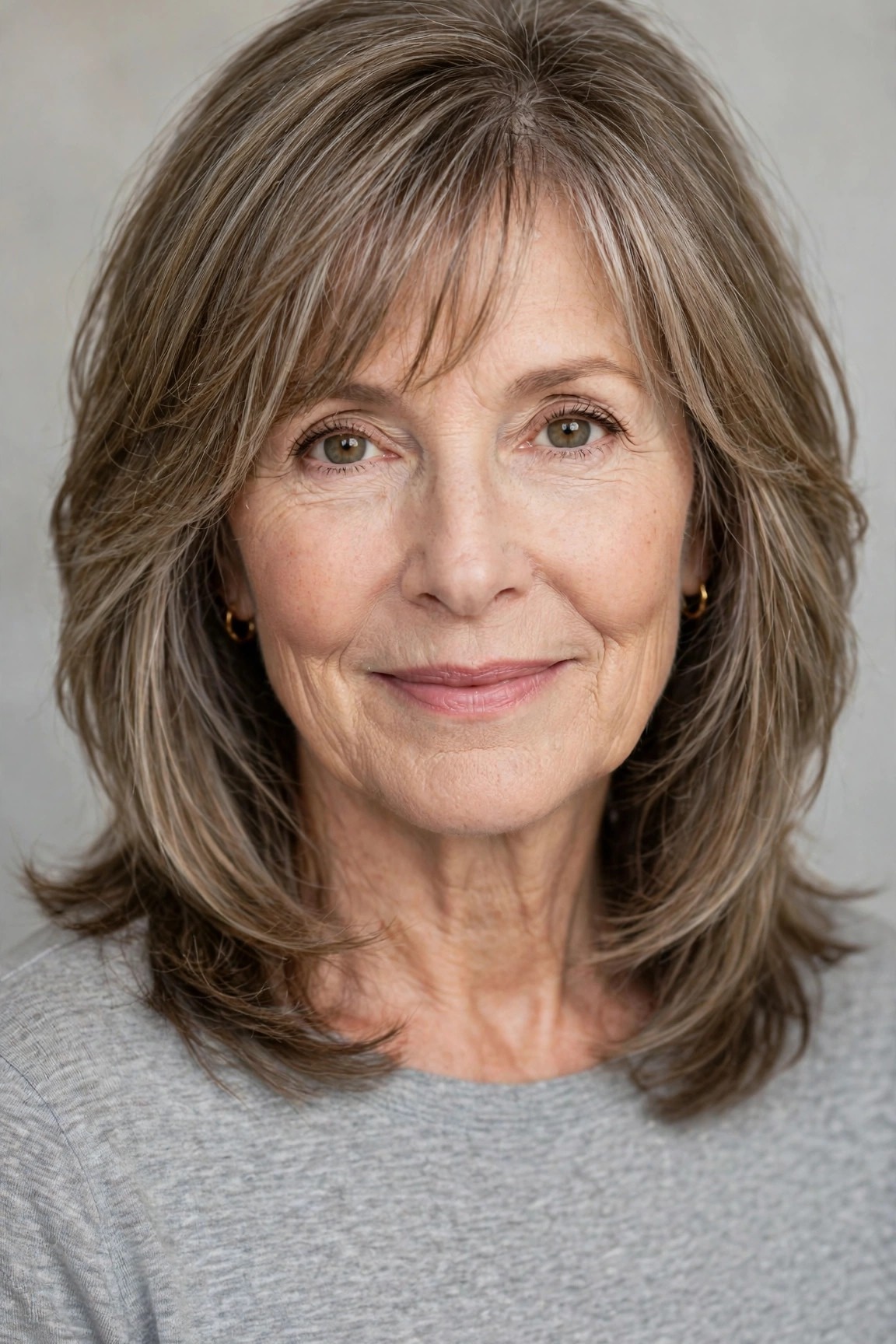
The look: shoulder length with light shaping.
For those keeping length — light layers remove just enough weight for movement while the ends stay respectable. Manageable and soft.
Best for: length loyalists. Styling tip: a medium round brush, ends flipped slightly.
10. 🪞 Sleek Jaw Bob
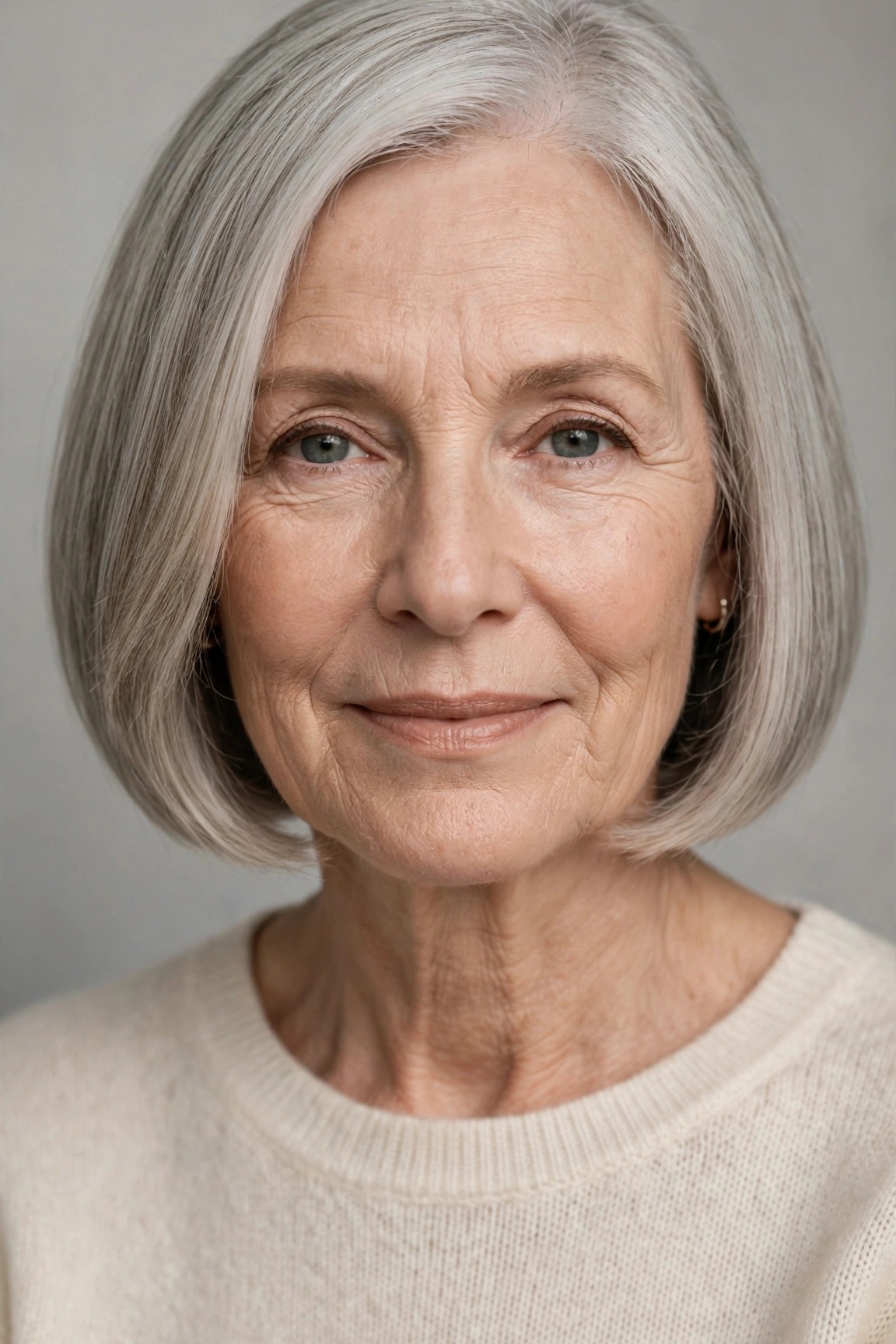
The look: sleek, even, tidy — the polished bob.
Sleekness makes the outline read clearly — and a clear outline reads as intentional fullness. The smooth styling keeps it sharp from every angle.
Styling tip: smoothing cream + light flat-iron. Why it works: polish suggests density.
11. 🕊️ Feather Front Pixie
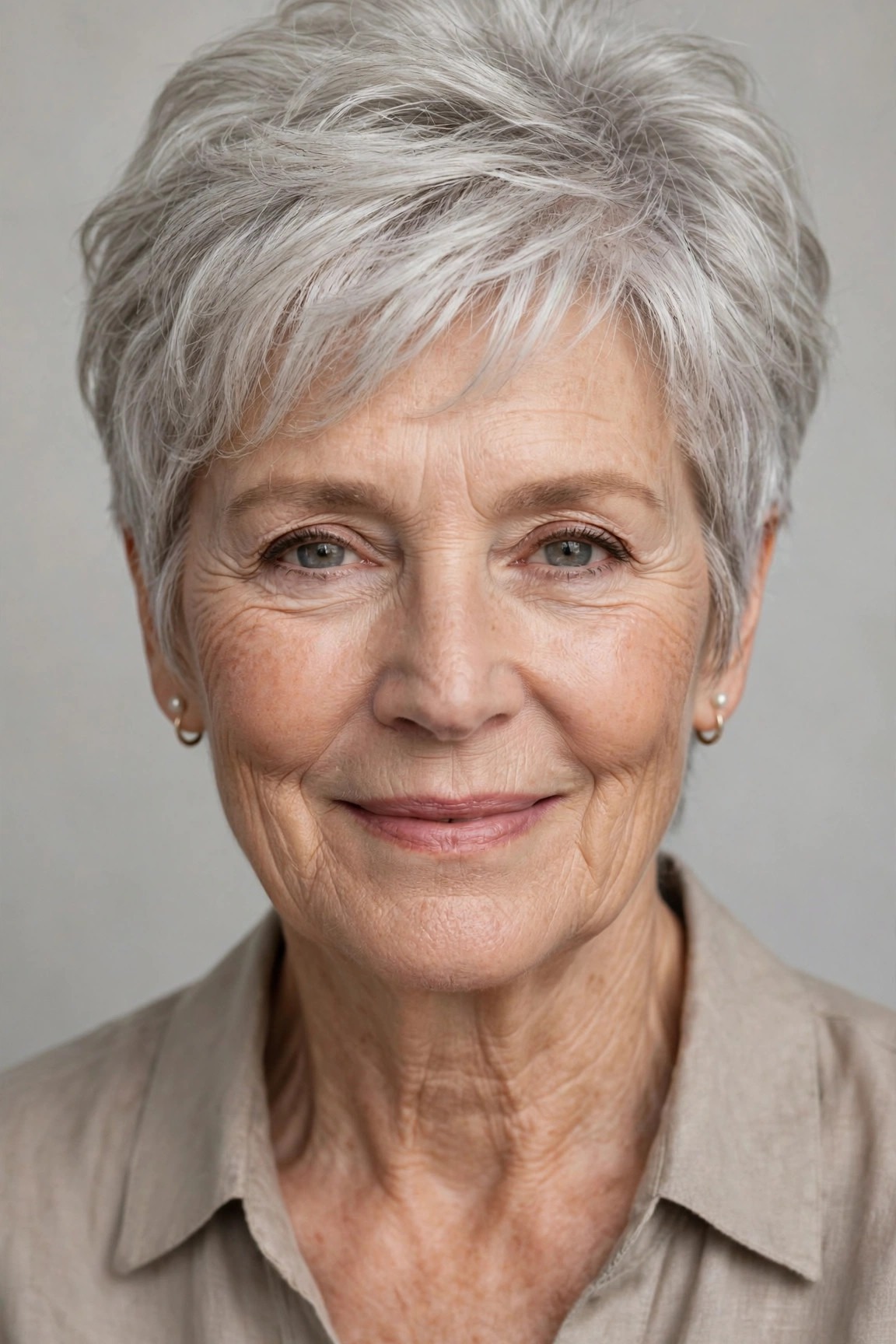
The look: feathered pixie with a lifted crown and soft front.
Crown volume + soft fringe = the pixie that flatters most. The feathered texture keeps it from ever looking severe or stiff.
Styling tip: lightweight mousse, dried upward at the roots. Why it works: height + softness in one cut.
12. 〰️ Loose Wave Lob
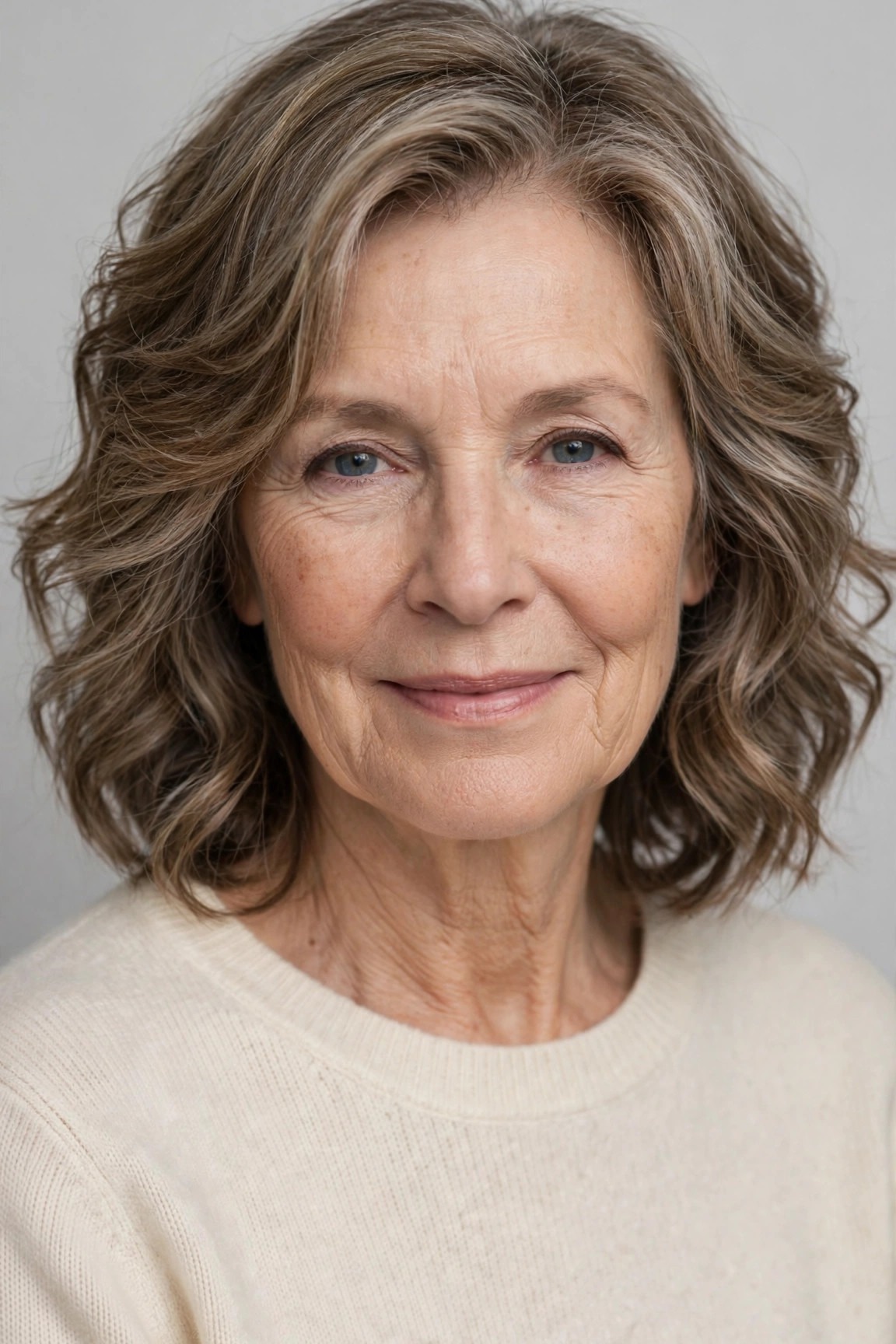
The look: loose waves giving the lob movement and body.
Waves are the lob’s best friend — the bend through the mid-lengths stops fine hair from falling flat. Enough length to hold the wave.
Styling tip: large sections on an iron, brushed out soft. Best for: fine hair with some natural bend.
💨 Lobs & Layers
Longer options that stay light.
13. ↔️ Side-Sweep Wedge
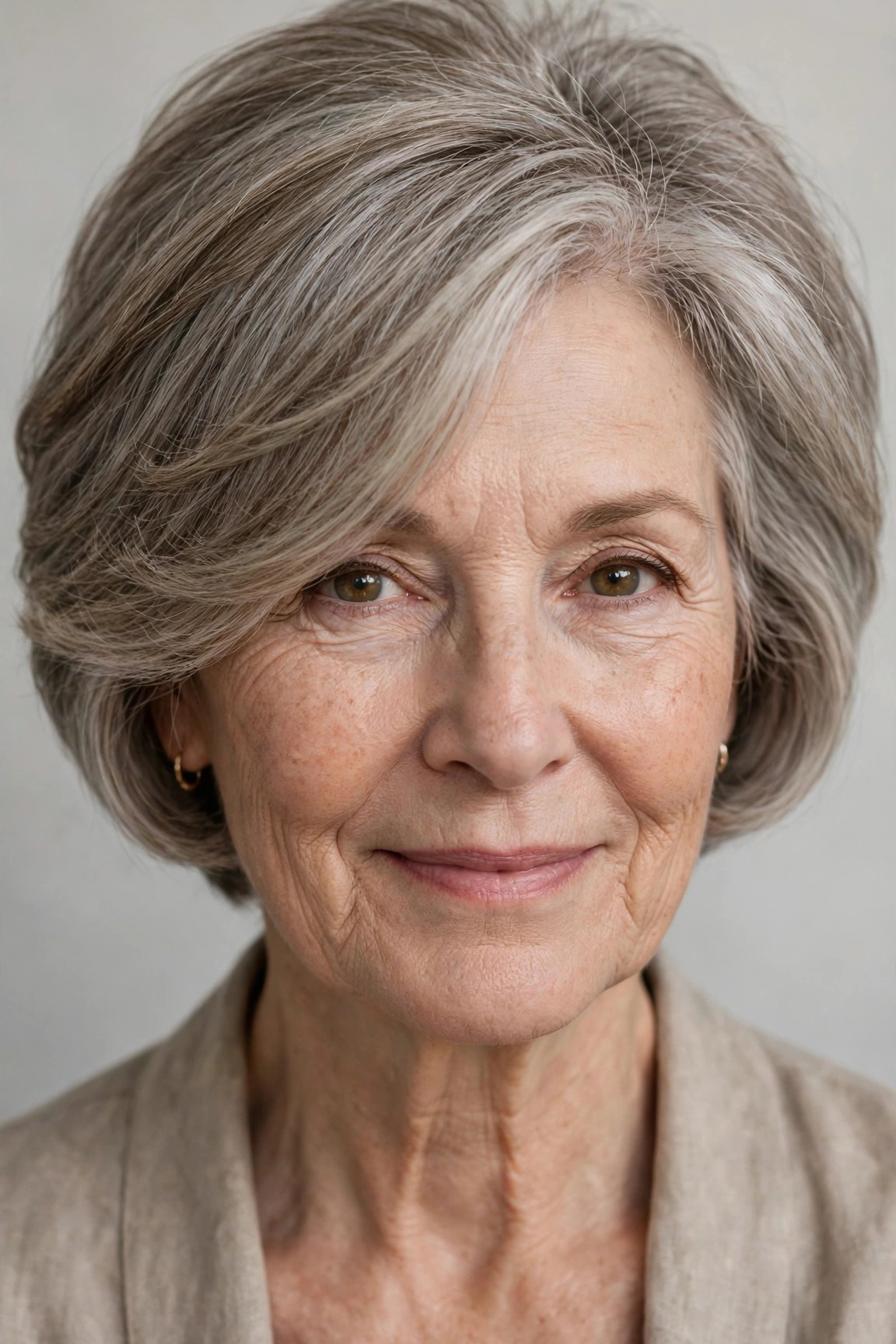
The look: gentle wedge fullness with a longer side-swept front.
The softer wedge — crown fullness without the dramatic stack. The side sweep keeps the front easy and flattering.
Styling tip: round brush the front across smoothly. Why it works: fullness where it counts, softness where it shows.
14. 📏 Straight Clean Lob

The look: a clean bottom line with whisper-light layers.
The blunt lob holds a clean line that makes fine hair look fuller — very light long layers keep it from hanging dead straight.
Styling tip: heat protectant + flat iron for the clean finish. Best for: minimalists.
15. ✂️ Taper Crown Pixie
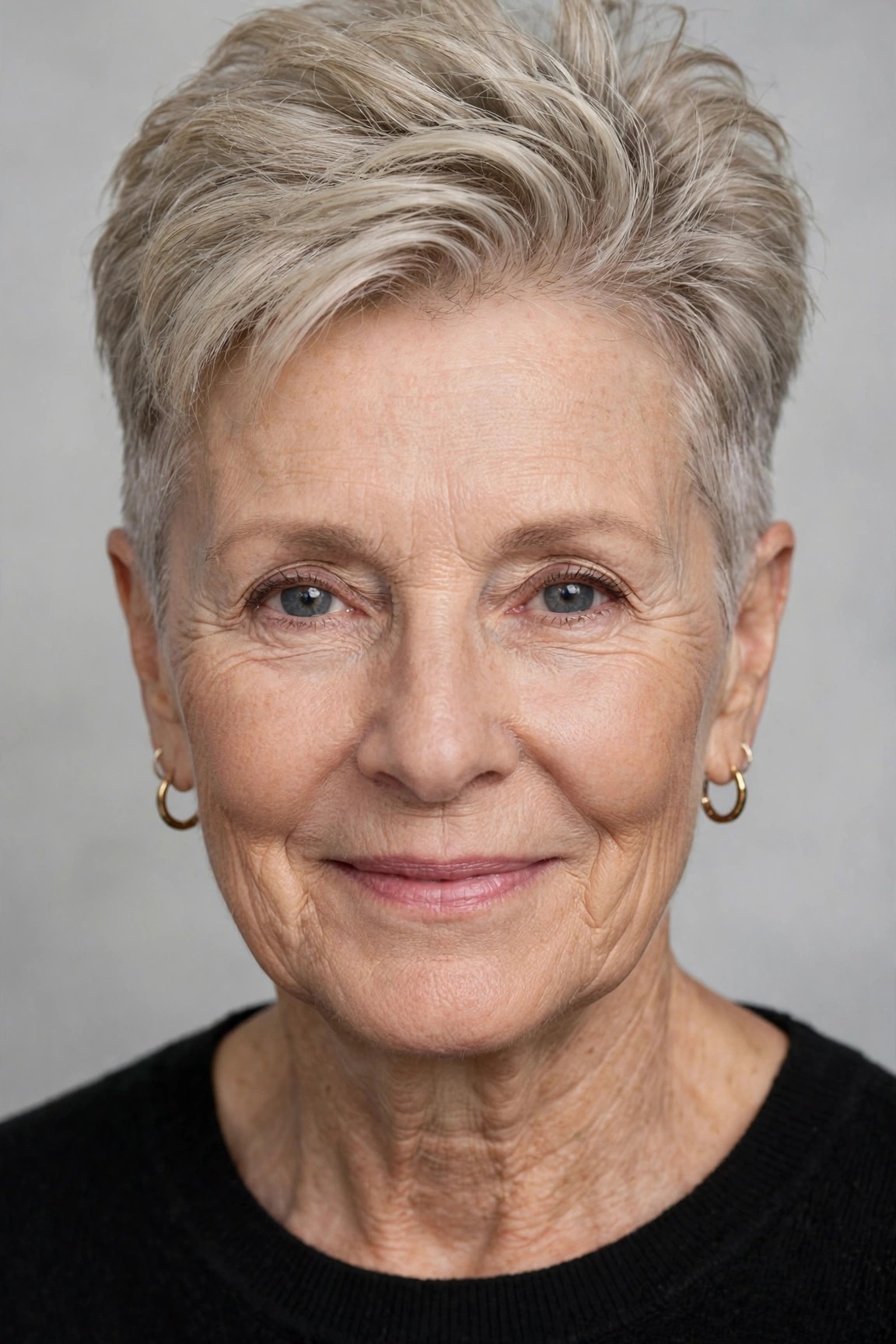
The look: close tapered sides with a longer, liftable top.
The contrast creates the fullness — neat sides make the longer top look even fuller by comparison. Root spray + fingers is the routine.
Why it works: the oldest trick in short hair. Best for: wash-and-go simplicity.
16. 💨 Airy Crown Crop

The look: choppy top layers with an airy, lifted crown.
Height is the headline — the airy crown pieces keep it light instead of bulky. Texture paste pinches the pieces into place.
Styling tip: a pea of paste, pinched — not raked. Why it works: lift without weight.
17. 🌀 Tousled Lift Cut
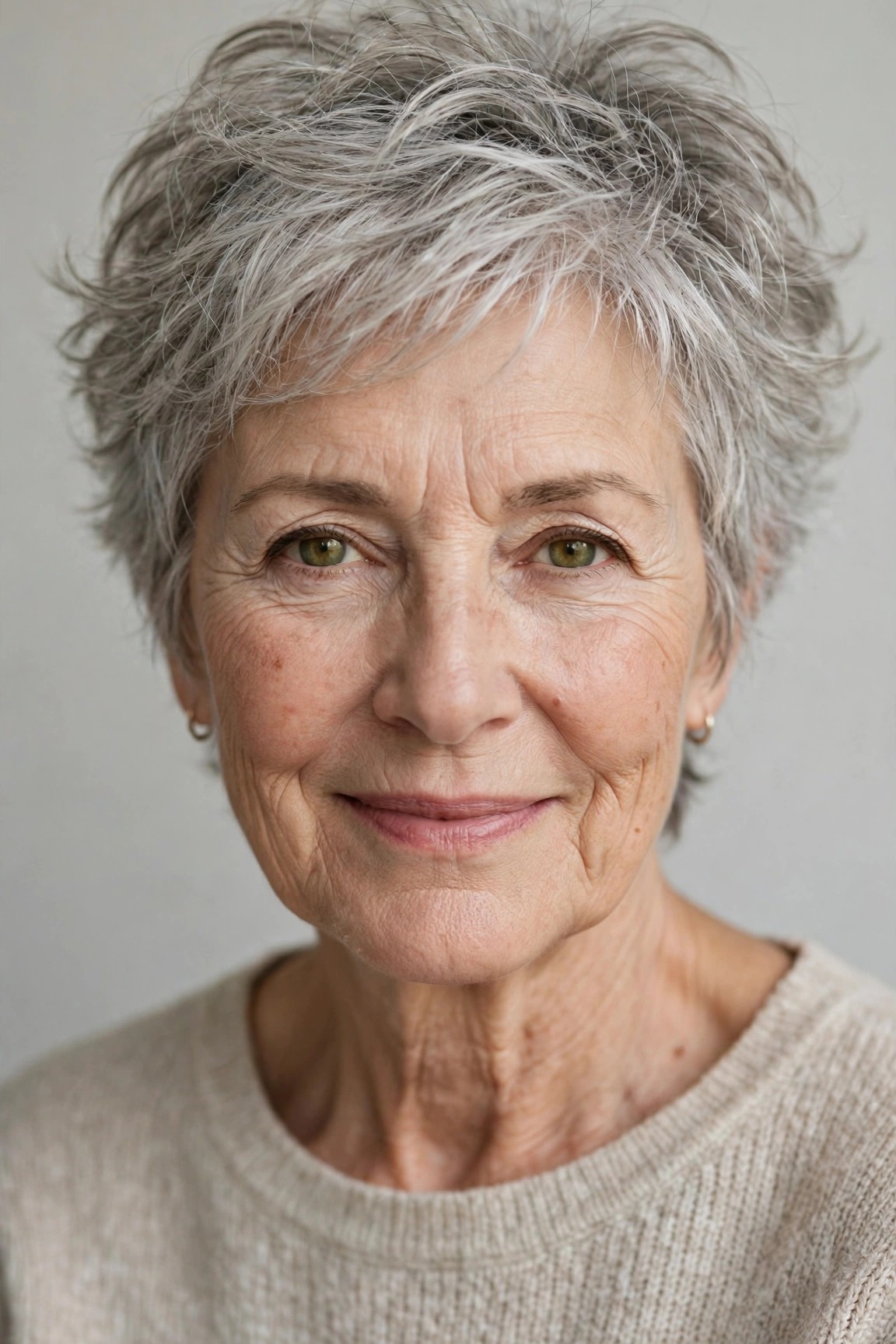
The look: soft tousle with enough crown lift to avoid flatness.
The tousled finish gives fine hair life — hands, not brushes, do the styling. The crown lift keeps the shape from collapsing.
Styling tip: texture spray + loose hand-styling. Best for: the anti-fuss.
🎨 Polish & Shine
Finishing shapes and luminous color.
18. 💫 Blowout Curve Bob
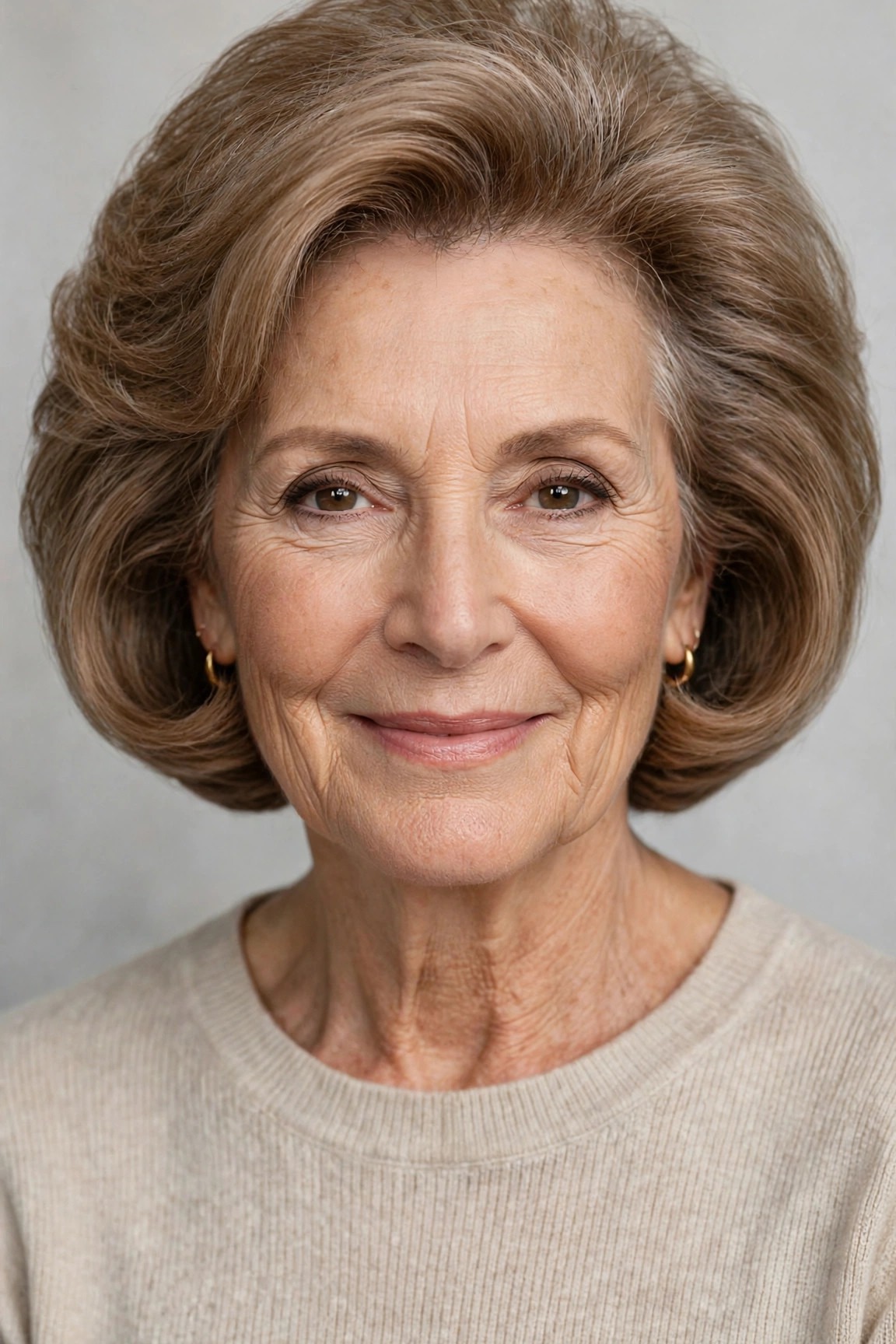
The look: smooth root lift with rounded tucked ends.
The blowout bob is fine hair’s red-carpet moment — volume at the roots, curve at the ends, thickness everywhere it counts.
Styling tip: medium round brush, ends rolled under. Why it works: the blowout creates body styling alone can’t fake.
19. 🌾 Wispy Movement Lob

The look: soft long layers with wispy movement.
Length with lightness — the wispy layers keep it from weighing down while the face-framing adds softness. Gentle bend, never over-styled.
Styling tip: a large iron for the gentle bend. Best for: fine hair wanting softness + length.
20. 🌗 Root-Depth Bob
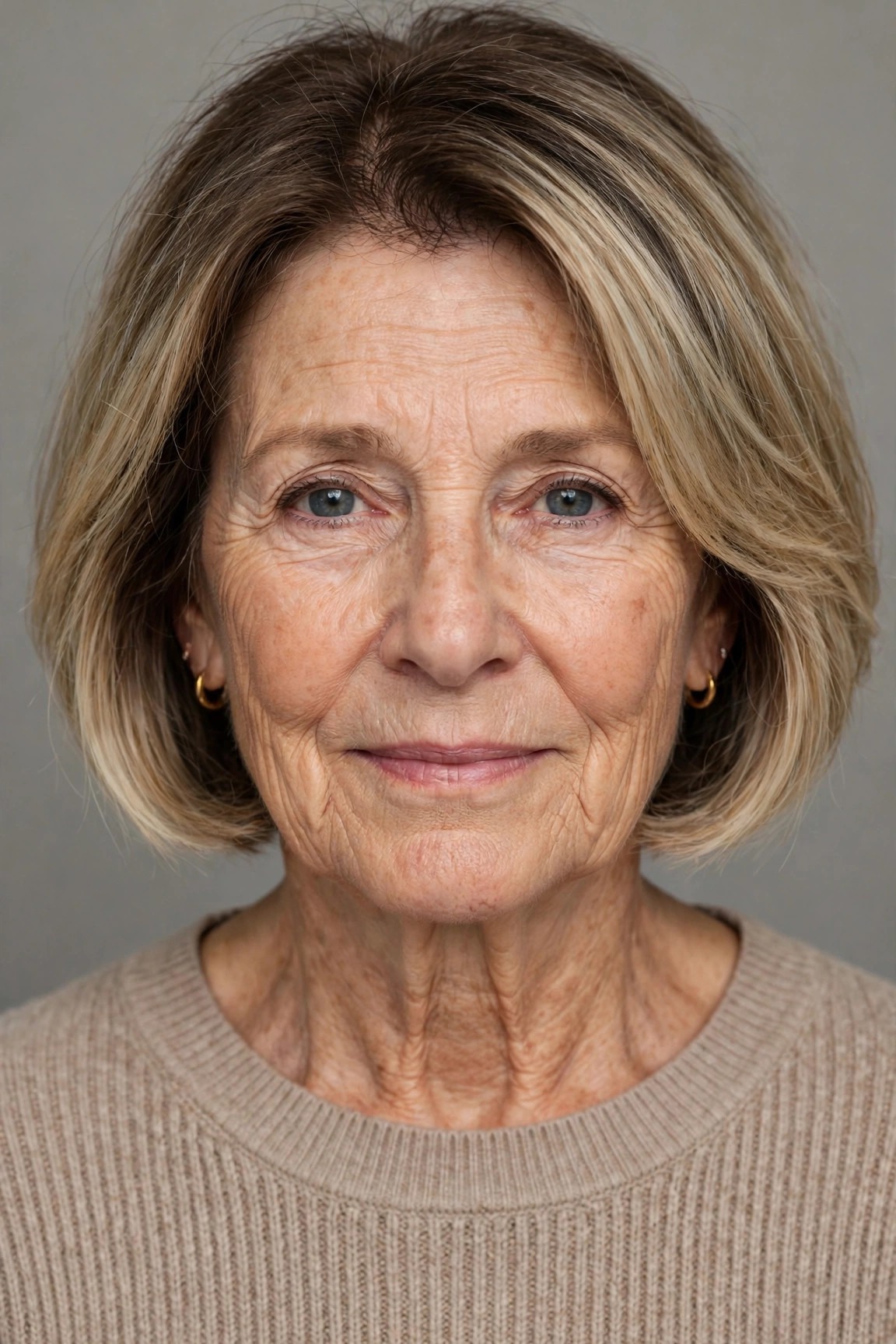
The look: deeper roots melting into lighter ends.
Depth at the roots is the color equivalent of a fuller hairline — it creates shadow that reads as density. The dimension does the volumizing.
Color formula: roots 1–2 levels deeper. Why it works: the most effective color trick for fine hair.
21. 🤍 Silver Silk Pixie
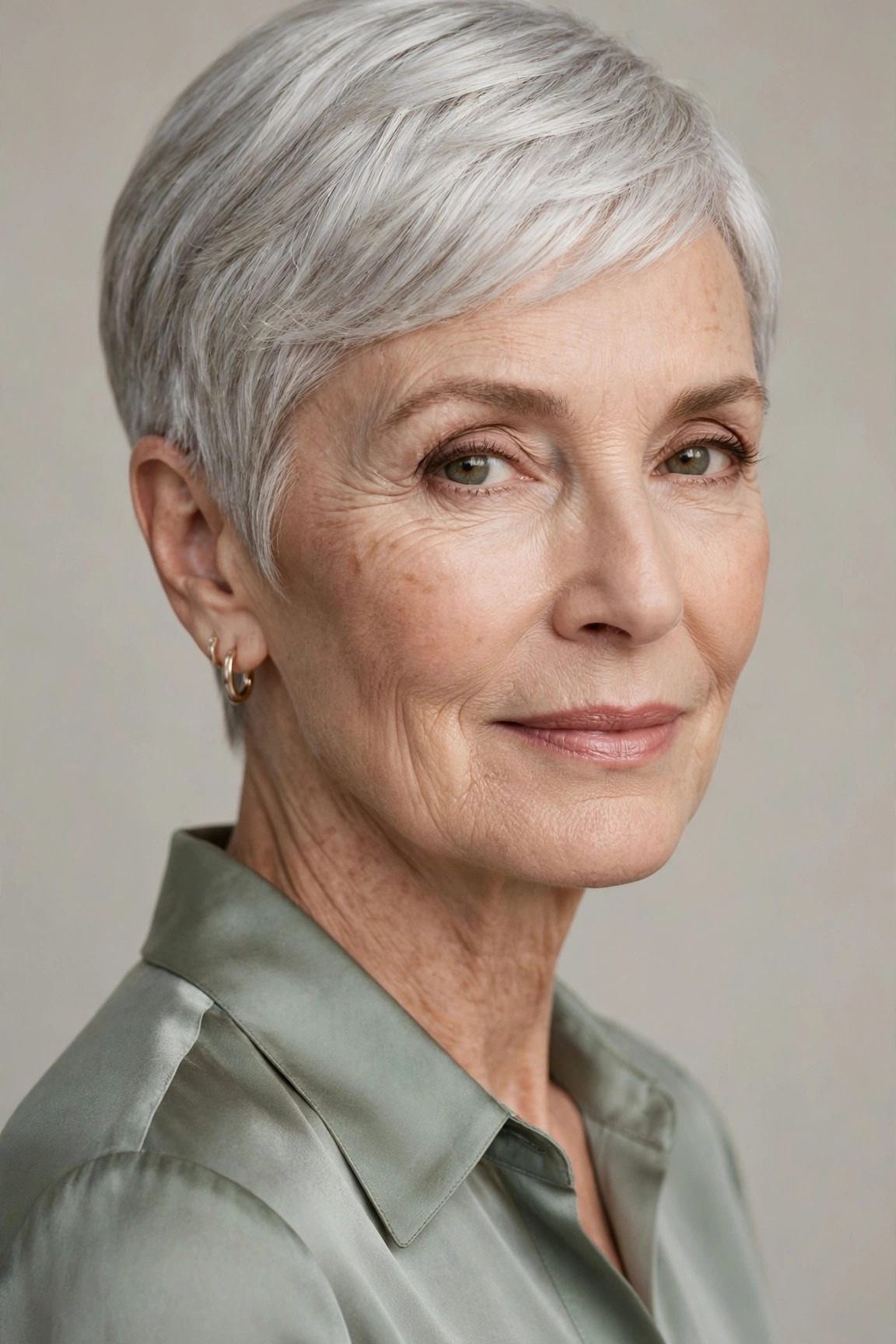
The look: silver smoothed to silk in a refined pixie.
Silver at its most elegant — sleek, luminous, precise. The smooth finish shows off silver’s natural shine beautifully.
Best for: fully silver hair. Styling tip: smoothing cream for the silk finish.
22. 🏖️ Warm Sand Lob
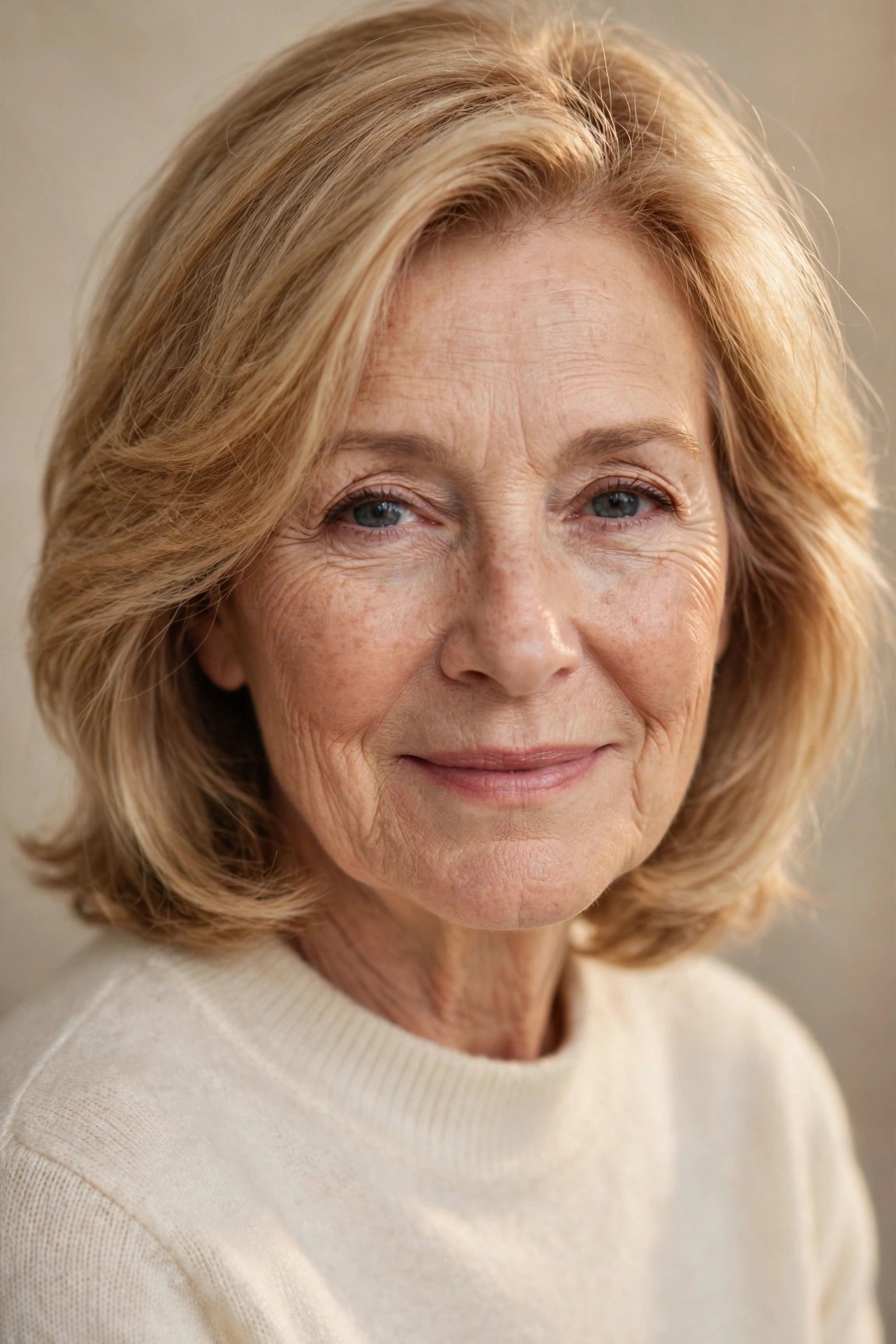
The look: warm sand blonde with soft dimension.
Warm sand brightens without harshness — the golden dimension makes fine hair’s texture glow. Soft and flattering.
Color formula: warm sand toner over balayage. Why it works: warmth + light = the most forgiving blonde.
23. 🦪 Pearl Mist Bob
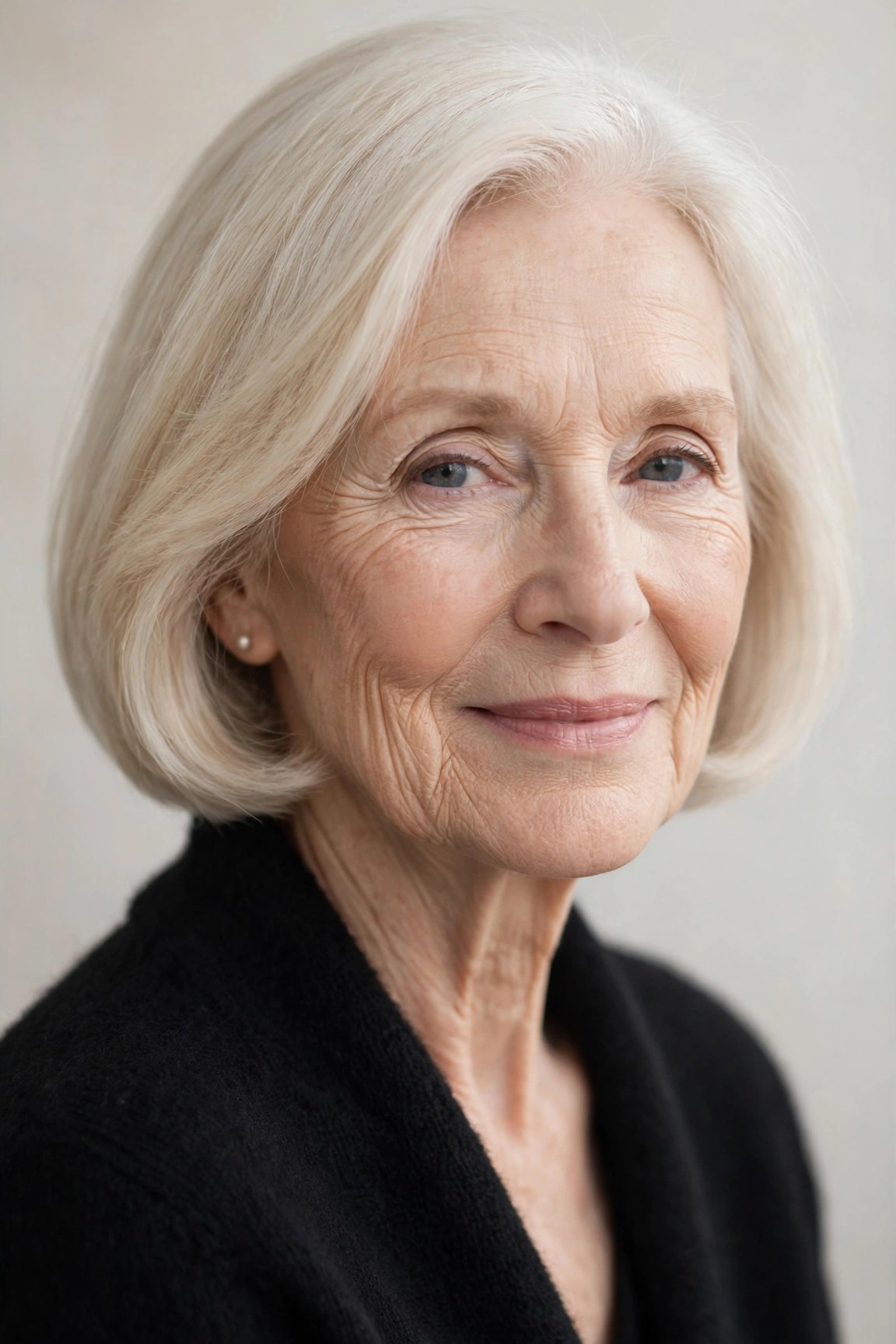
The look: pearl blonde with a misty, luminous finish.
The finale: pearl’s iridescence makes fine hair look lit from within — sophisticated lightness with depth no flat color can match.
Why it works: luminosity creates the illusion of abundance. Best for: cool to neutral undertones.
💡 Keep your hair happy:
Hair Care Routine for Women Over 50 · Short Hairstyles for Fine Thin Hair · Bob Hairstyles for Fine Hair
📋 Your Over-60 Fine-Hair Cheat Sheet
At the salon, say: “shape without stringiness” — and be honest about your daily styling limit. The cut must fit the routine.
Easiest shapes: bobs, pixies, and short layered cuts — they dry fast, need little styling, and look fuller.
Longer option: a blunt lob with whisper-light layers — the only long cut that reliably flatters fine hair.
The density rule: soft layers for movement, solid outline for fullness. Both, always — never layers alone.