How to Dress Like Diane Keaton Over 50 and Make It Your Own

Love the tailoring, the hats and the black-and-white confidence, but do not want to look dressed up as someone else? This guide borrows the logic — fit, proportion and a repeatable uniform — and leaves the costume behind.
It is written for women over 50 who want polish they can wear to lunch, the shops and the theatre. If you enjoy other borrowed signatures, compare dressing like Helen Mirren over 50 and the playfulness in Sarah Jessica Parker–inspired outfits.
Below: the proportion rules first, then the five-piece core uniform, then 12 wearable outfits. Every look uses one strong idea at a time.
Borrowed From the Boys, Tailored for You: The Fit-First Frame
Start with fit, not with a shopping list. A tailored piece should skim, never squeeze, and you should be able to sit, drive and reach a high shelf in it.
Budget for simple alterations — hemming trousers, shortening sleeves, easing a waist. Around $15–$30 per piece, tailoring is what turns borrowed shapes into your shapes.
The Proportion Rules: Volume in One Place Only
Rule 1: volume on top or below, never sloppy in both. Wide trousers need a tucked, half-tucked or cropped top layer.
Rule 2: show a waist point somewhere — a belt, a tuck, or a jacket that ends at the hip bone. The eye needs one anchor.
Rule 3: one statement per outfit. Hat, bold belt, checked blazer or dramatic coat — choose one, then let the rest stay quiet.
The Core Uniform: 5 Repeat Pieces That Recombine
1. One great trouser — black, wide or straight, in a fabric that holds a crease. 2. One crisp shirt — white or ivory cotton.
3. One fine turtleneck — black, in a light knit that layers. 4. One structured layer — a blazer, long vest or long coat.
5. One grounded shoe — loafers or slim boots that balance wide hems. These five pieces alone make most of the outfits below, and they slot neatly into a winter capsule wardrobe for women over 50.
1. Black Wide-Leg Trousers, White Shirt and Loafers
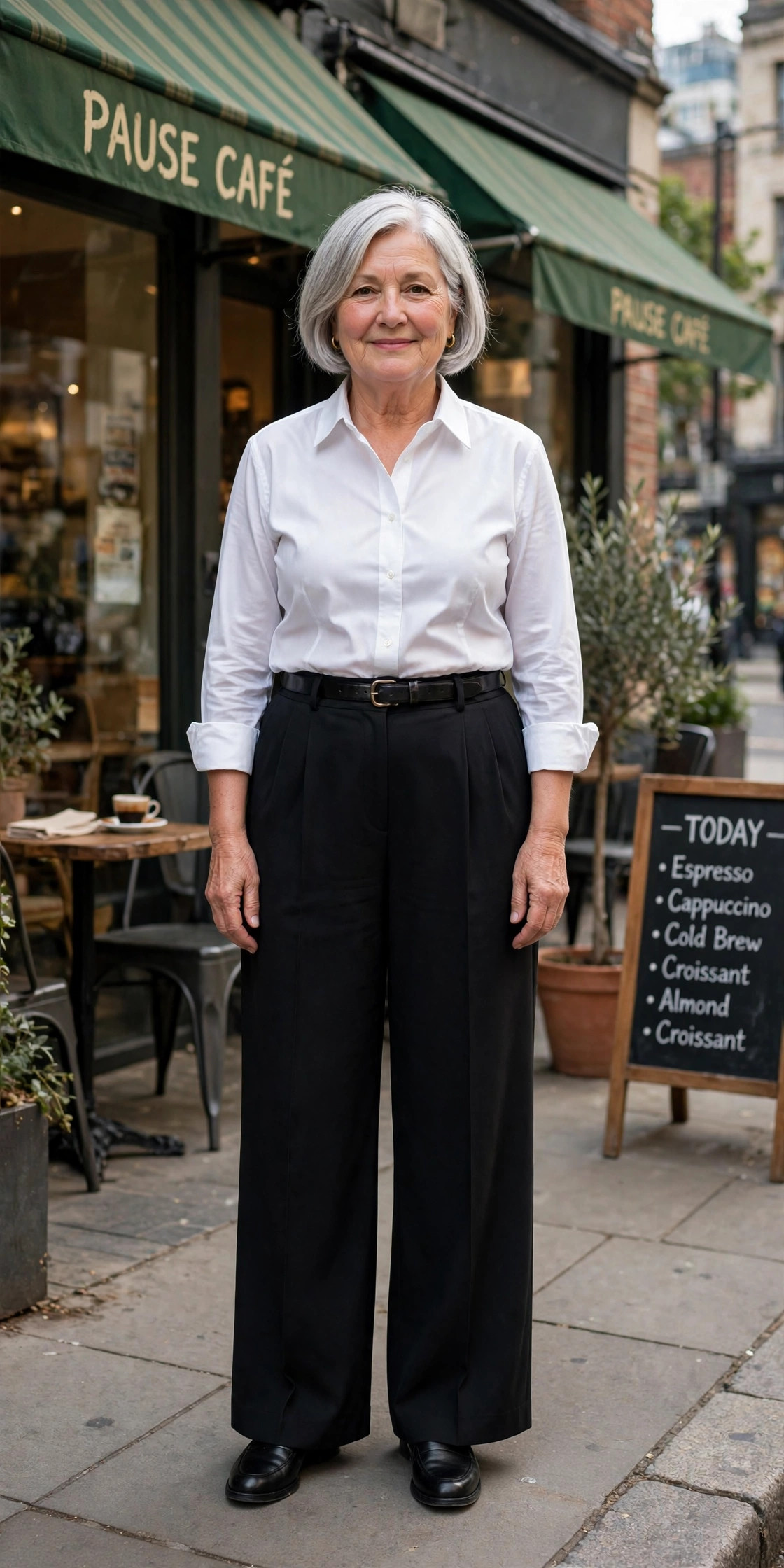
This is the starting point, and it fits first. Choose trousers that sit smoothly at your natural waist, skim the hip, and fall in one clean line to the shoe.
Tuck the shirt fully, add a plain leather belt, and keep the loafer polished. If the leg feels too wide, narrow it by an inch before you abandon the idea — proportion, not width, does the work.
2. The Long Vest Over a Fine Turtleneck

A long, sleeveless tailored vest gives you structure without another sleeve to bunch under a coat. Worn open, it draws a long vertical line down the body.
Keep the turtleneck fine, not chunky, and the trousers straight or softly wide. A good long vest costs $40–$90 second-hand and instantly lifts plain knitwear.
3. The Belted Blazer With Straight Trousers

An oversized blazer only looks intentional when something defines it. A belt over the blazer — or a tucked shirt and belted trousers under it — supplies that definition.
Check the shoulder seam first when you shop. If the shoulder is clean, the rest of the jacket can be relaxed and still look sharp.
4. A Soft Pinstripe Suit, Broken Up Your Way

A pinstripe suit is the boldest nod to borrowed tailoring, so soften how you wear it. Try a plain white T-shirt or fine knit underneath instead of a formal shirt.
You also get three outfits in one: suit together, blazer with jeans, trousers with a turtleneck. Bought as separates on sale, the set can come in under $120.
5. The Striped Shirt as Your One Pattern

A narrow black-and-white stripe gives a plain outfit graphic energy without colour or fuss. Tuck it in, belt it, and let everything else stay solid.
Keep the stripe scale in proportion to you: finer stripes if you are petite, slightly bolder if you are tall. One pattern per outfit is the rule that keeps this calm.
6. Cream Wide-Legs With a Black Turtleneck — Contrast in Reverse
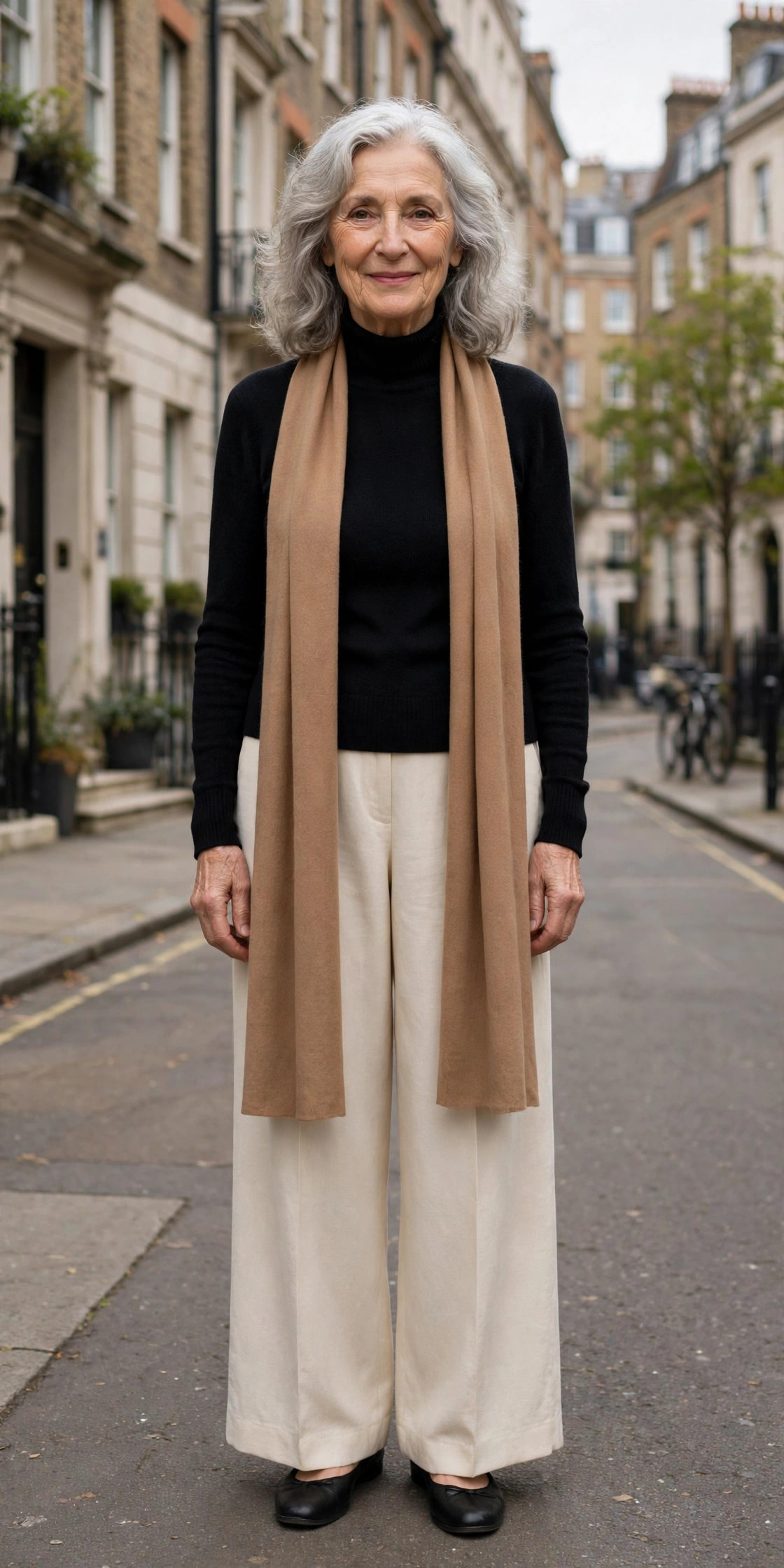
Flipping the usual contrast works beautifully after 50. Cream or ivory trousers below and black above feels fresh, especially with silver hair.
Choose a heavier cream fabric that does not show underwear lines, and hem it to just clear the shoe. A long scarf in camel adds warmth without adding bulk.
7. The Long Wool Coat Over Shirt and Trousers

A long coat is volume on purpose, so keep what is underneath neat: tucked shirt, straight trousers, slim boots. The coat becomes the whole statement.
Look for a coat that closes comfortably when you sit and drive. Thrift stores in spring are the best hunting ground — quality wool coats often go for $30–$70 out of season.
8. One Hat, Nothing Else Competing
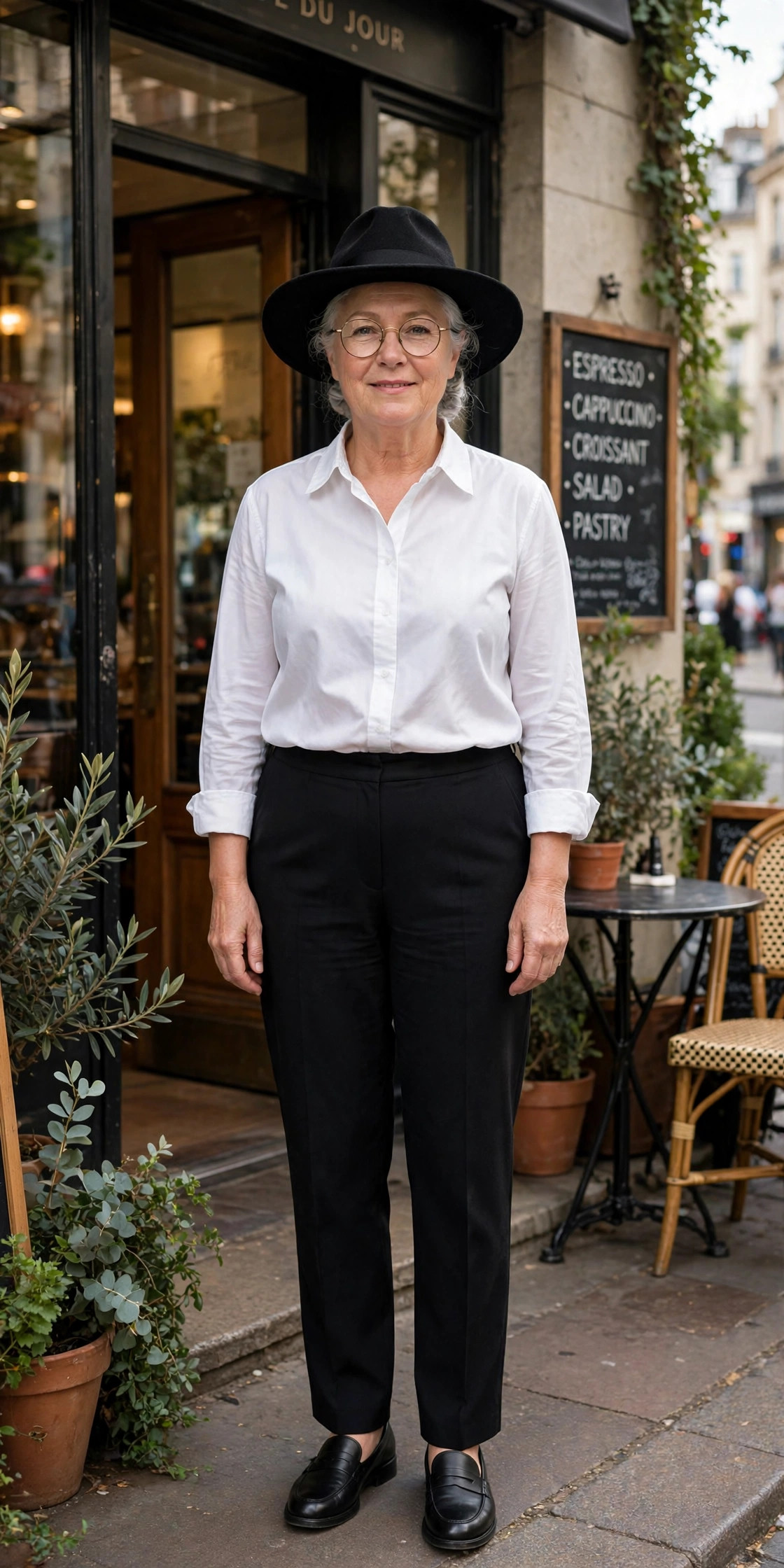
If you love hats, wear one well — and then stop. A wide-brim fedora or structured beret over a simple shirt-and-trousers outfit is confident, not costume.
Skip the tie, the oversized belt and the extra layers on hat days. Try hats on with your glasses, and check the brim width against your shoulders in a full-length mirror.
9. Wide-Leg Jeans, White Shirt and a Navy Blazer

This is the weekend version of the uniform. Dark, wide-leg denim keeps the long line, while the blazer stops it reading as casual denim.
Choose denim with no fading or distressing — it reads as tailoring, not jeans-and-a-tee. Brown loafers warm the navy up nicely.
10. The Checked Blazer With All-Black Underneath
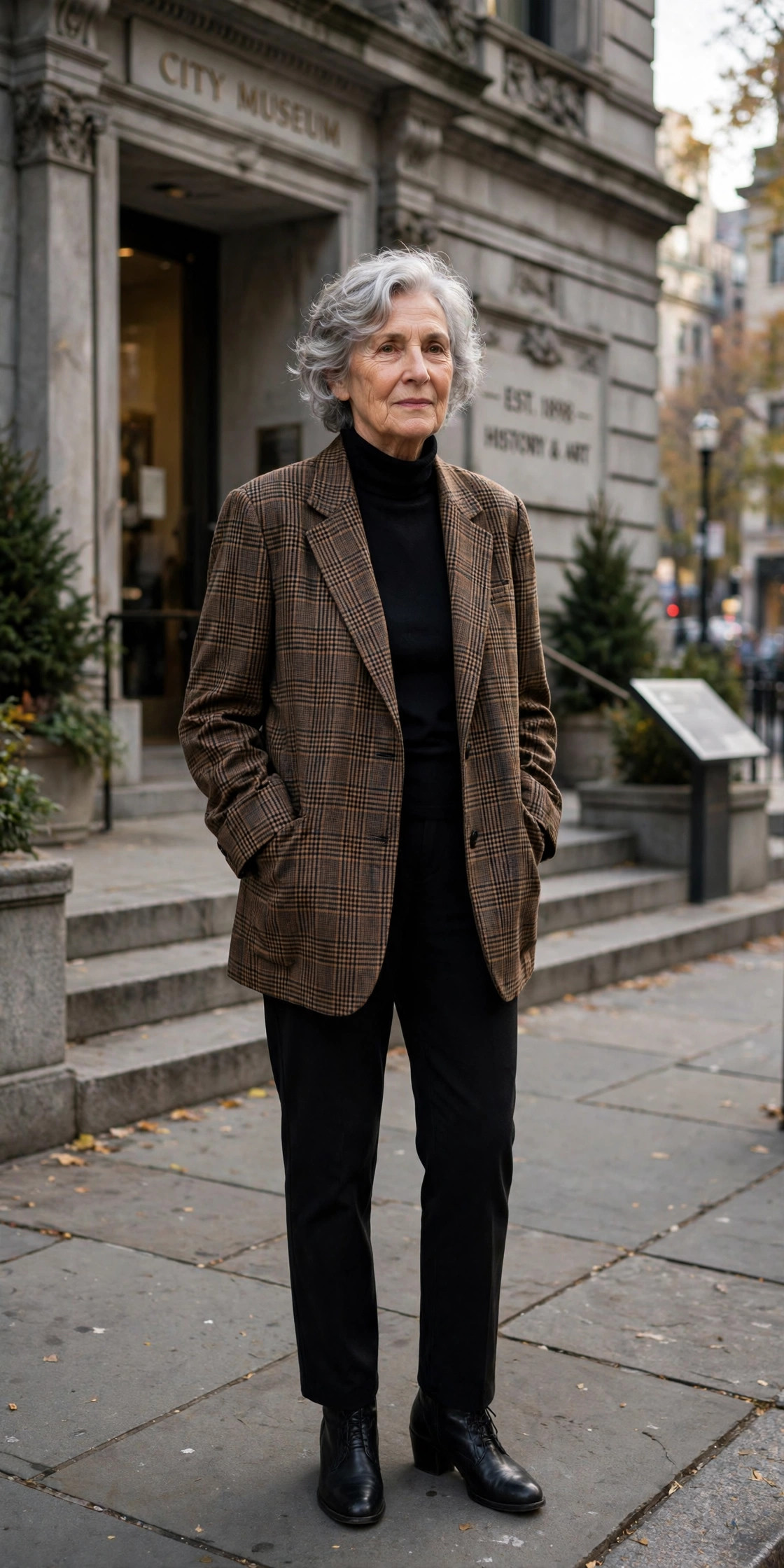
A plaid or checked blazer is a thrift-shop classic, and all-black underneath lets it speak. A black turtleneck and straight trousers keep the check from feeling busy.
When hunting vintage checks, check the lining, underarms and button strain. A $25 blazer plus $20 of tailoring — sleeves shortened, waist eased — beats a new, poor-fitting one.
11. All Black, Built on Texture Instead of Colour

Head-to-toe black works when the fabrics differ: matte knit, smooth wool, polished leather, a coat with a slight sheen. Texture replaces contrast.
Keep one lighter note near the face if black feels harsh — silver hair already does much of this work. A defined brow or a soft lip colour finishes it without breaking the palette.
12. The Softer Translation: Fluid Blouse, Tailored Trousers, One Keepsake Detail

Prefer softness to menswear? Keep the tailored trousers and swap the shirt for a fluid ivory blouse. The structure stays; the mood changes completely.
Replace the tie idea with a silk scarf or a brooch you actually love. That single personal detail — not a copied accessory — is what makes the look yours.
Making the Palette Work for Your Colouring
Black and white is the reference point, not a uniform you must obey. If bright white drains you, switch to ivory, cream or a soft blue stripe near the face.
If black feels severe, build the same shapes in navy, charcoal or chocolate. The silhouette carries the influence far more than the exact shade.
Silver hair is an asset here. It bridges black and white beautifully and makes camel, grey and cream look especially expensive.
What This Costs in Real Life
You do not need designer tailoring. A good trouser ($50–$80), a cotton shirt ($30–$50) and loafers you will wear for years cover the core.
Blazers, vests and coats are the thrift-friendly pieces. Spend on fit and fabric there, not on labels nobody sees.
Buy one piece a month in the order of the core uniform. By the third month, the outfits in this guide mostly dress themselves.
Thrift and Vintage Hunting Notes
The menswear racks are your friend. Vintage blazers, wool trousers and long coats are often better made than new budget versions.
Shop out of season, check linings and underarms, and try everything on with the shoes you will wear. Leave room in the budget for the tailor — that is where a $25 find becomes a signature piece.
Skip anything that needs more than two fixes. If the shoulder is wrong, walk away; shoulders are the one thing tailoring cannot cheaply rebuild.
Quick Checks Before You Leave the House
Is the volume balanced — one relaxed zone, one defined zone? Can you see a waist point in the mirror?
Is there exactly one statement piece? If there are two, remove the one you love less and save it for tomorrow.
Do the hems clear your shoes cleanly? A puddling hem undoes all the tailoring above it.
Frequently Asked Questions
What do I actually need to get this look?
Start with the five core pieces: good trousers, a crisp shirt, a fine turtleneck, one structured layer and loafers. Add a hat, belt or checked blazer later, one at a time.
Do I have to wear black and white?
No. Navy, charcoal, camel, cream and chocolate give the same quiet contrast. If black feels harsh near your face, lead with navy or charcoal instead.
Will wide-leg trousers overwhelm a petite frame?
Not if the width is moderate and the top is tucked or cropped. Hem them precisely to your shoe, and avoid volume on top at the same time.
Can I wear this style without a hat?
Yes. Hats are optional. A belt, distinctive glasses, a long vest or a checked blazer can carry the personality of the outfit instead.
How do I stop it looking like a costume?
Use one signature per outfit and soften one element — a fluid blouse, delicate earrings or pointed flats. Repeating your own uniform, rather than copying a famous outfit, is the whole point.
The Takeaway
Borrow the tailoring, the proportion rules and the habit of repeating what works. Then change the details until nobody thinks of anyone but you.
Start with one outfit from this list this week. Wear it twice, adjust the fit once, and you already have the beginning of a uniform.