
How to Wear a Trench Coat Over 50 Like a Parisian Woman
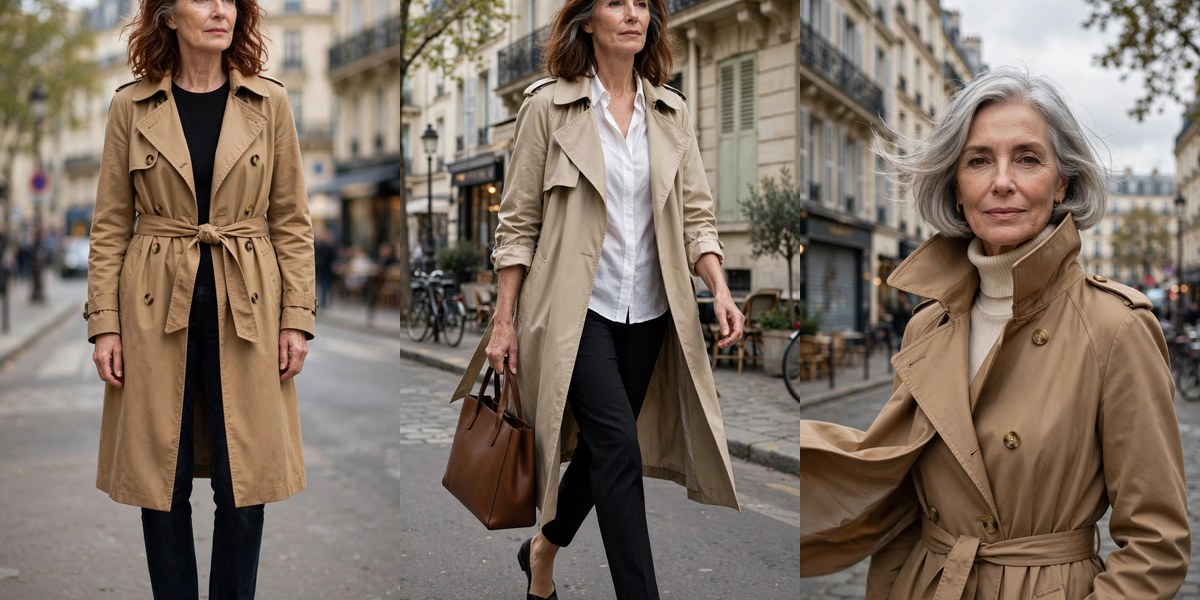
A trench coat is the one piece that can make a pair of jeans look deliberate. But past 50, it can also do the opposite — swamp your frame, read stiff, or turn into beige overload.
This guide is for women over 50 who want the Parisian ease without the guesswork: which trench to buy, how to wear the belt, collar and sleeves, and exactly what to put underneath.
First, an anatomy of the perfect trench — six details that decide everything. Then five days of real-life outfits built around one coat. For the wider French wardrobe, our sister read on French style secrets for dressing over 50 pairs beautifully with this deep-dive.
Part 1: The Anatomy of Your Perfect Trench
Before the outfits, the coat itself. Get these six details right and almost anything you wear underneath works.
1. Find Your Hem: The Length for Your Height
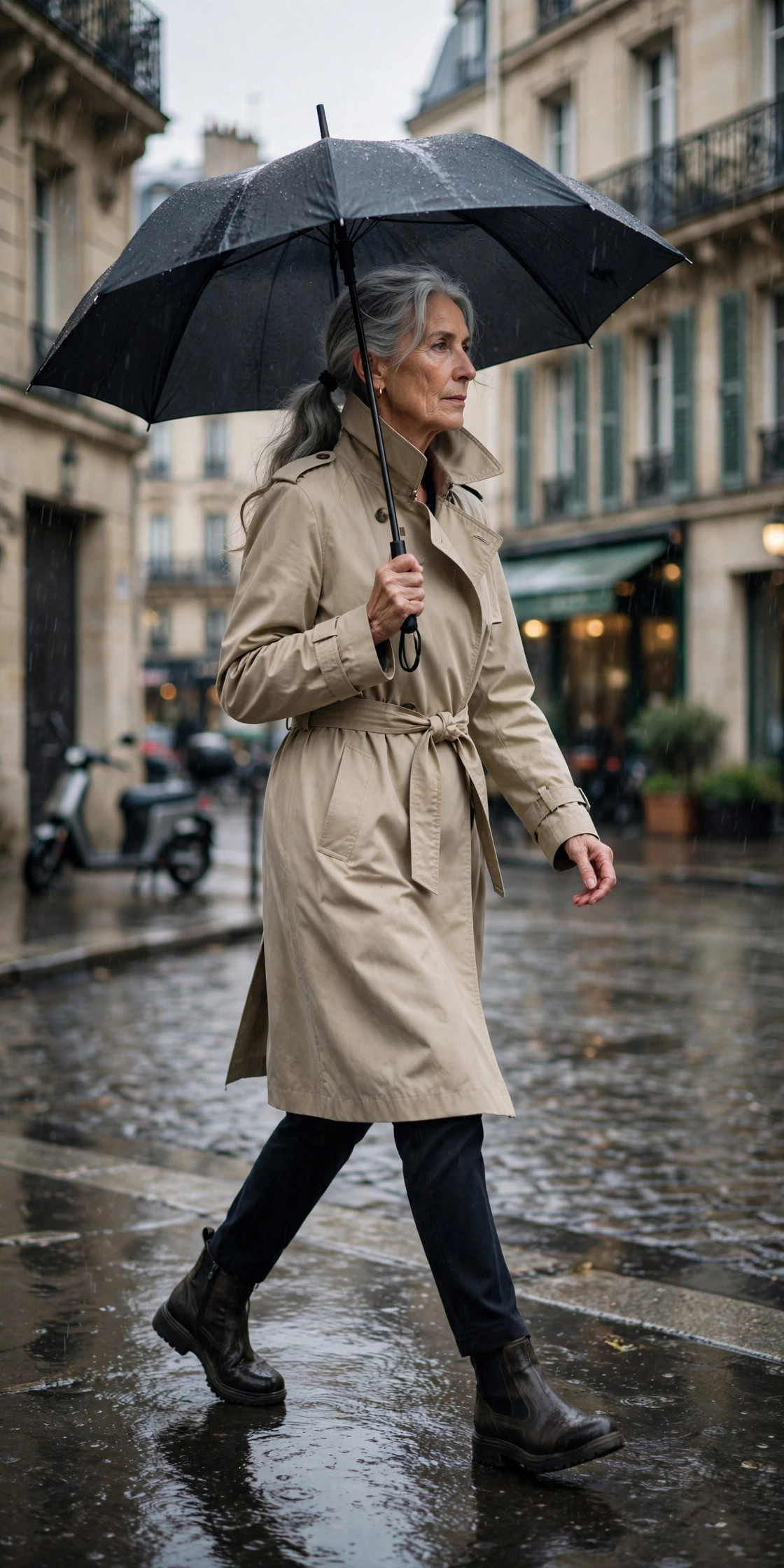
Length is the first decision, and the one that changes everything. A hem that lands just below the knee suits most women over 50 — long enough for that calm, classic line, short enough to show the leg.
Petite? Aim for a hem at or just above the knee so the coat doesn’t swallow you. Taller frames can carry mid-calf beautifully. Skip the thigh-length car-coat cut if you want the Parisian look — it’s sporty, not chic.
Fitting tip: when you try one on, raise your arms. If the coat pulls across the shoulders, size up and use the belt for shape rather than squeezing into a smaller size.
2. Single vs Double-Breasted After 50
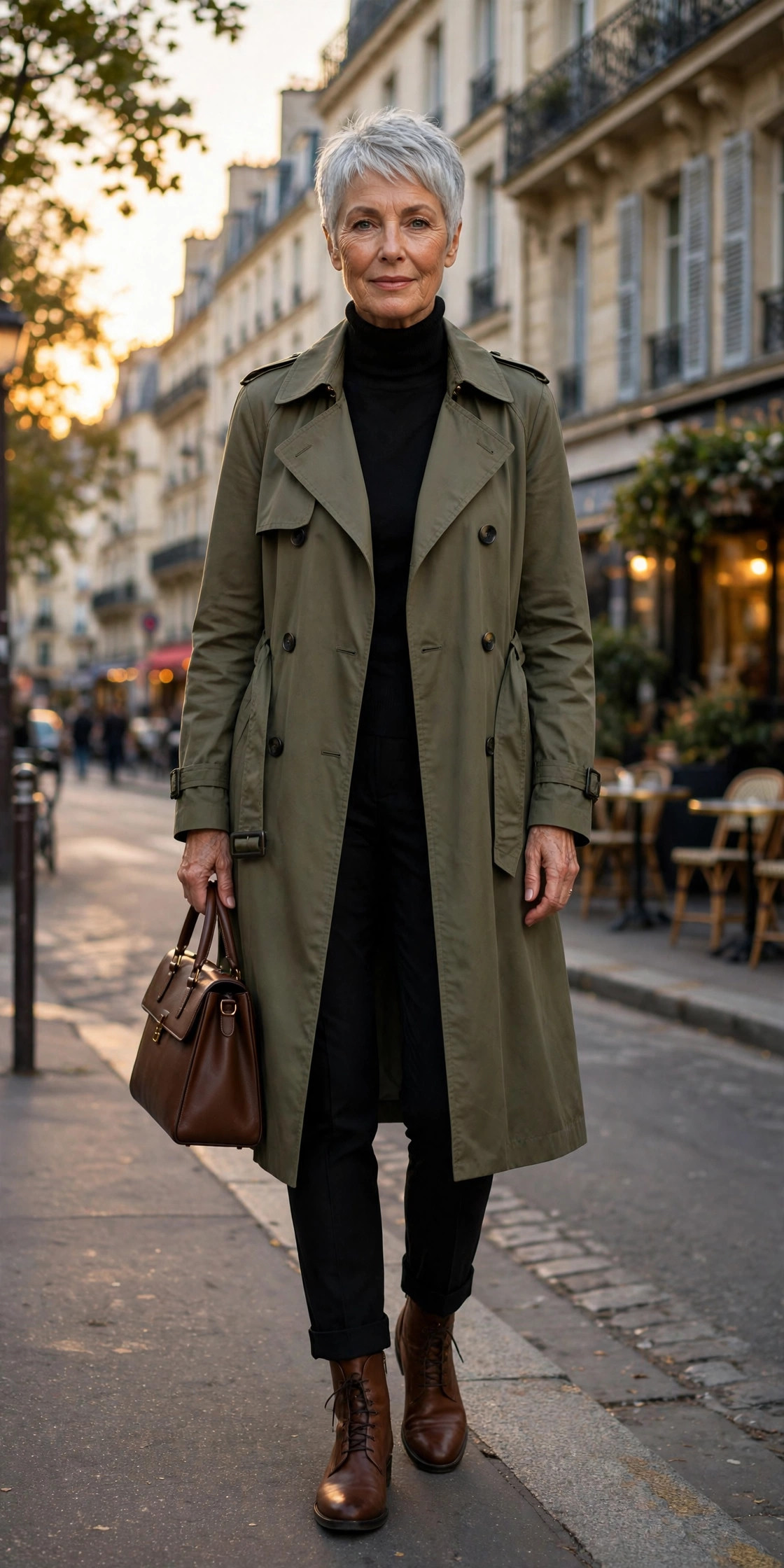
Double-breasted is the classic — two rows of buttons, wide lapels, that iconic silhouette. It’s also heavier-looking, so it suits straighter or taller frames best.
Single-breasted reads lighter and more modern, and it’s the smarter pick for a fuller bust or a petite frame. It drapes rather than dominates. Either way, raglan or softly structured shoulders beat sharp padding — padding plus a belt is how a trench starts looking like a costume.
3. The Belt, Parisian-Style: Knotted, Not Strangled
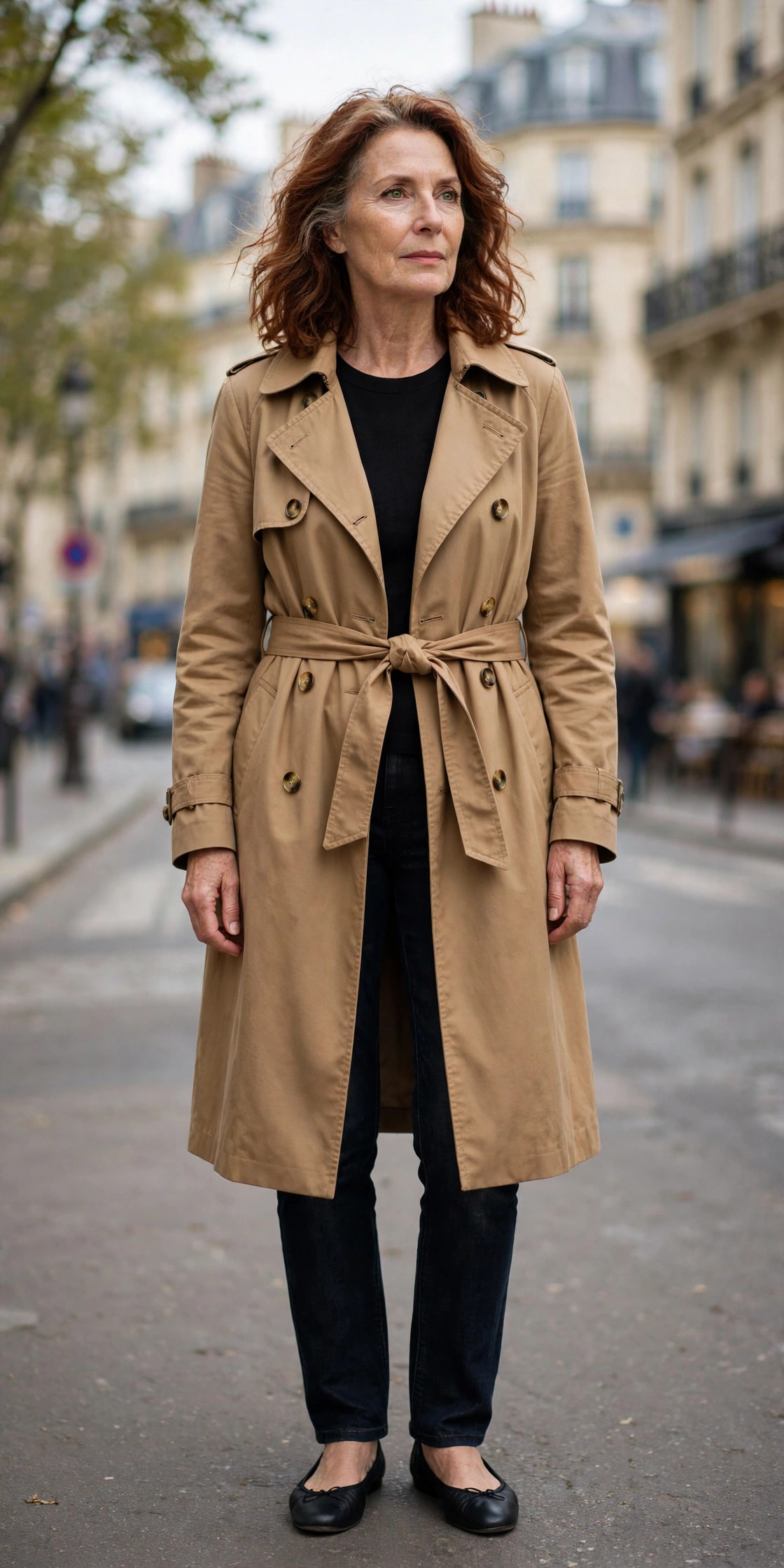
The belt is where most trench outfits go wrong. Buckled tight, it turns the coat into a uniform; left loose, it does nothing. The Parisian answer is the loose front knot — low, soft, a little off-center.
Two more moves worth knowing: tie the belt behind your back when you wear the coat open — it pulls the back in and keeps the front drape clean. Or let it hang entirely and rely on the coat’s own structure. All three beat the tight buckle.
4. The Collar Move: Up Against the Wind
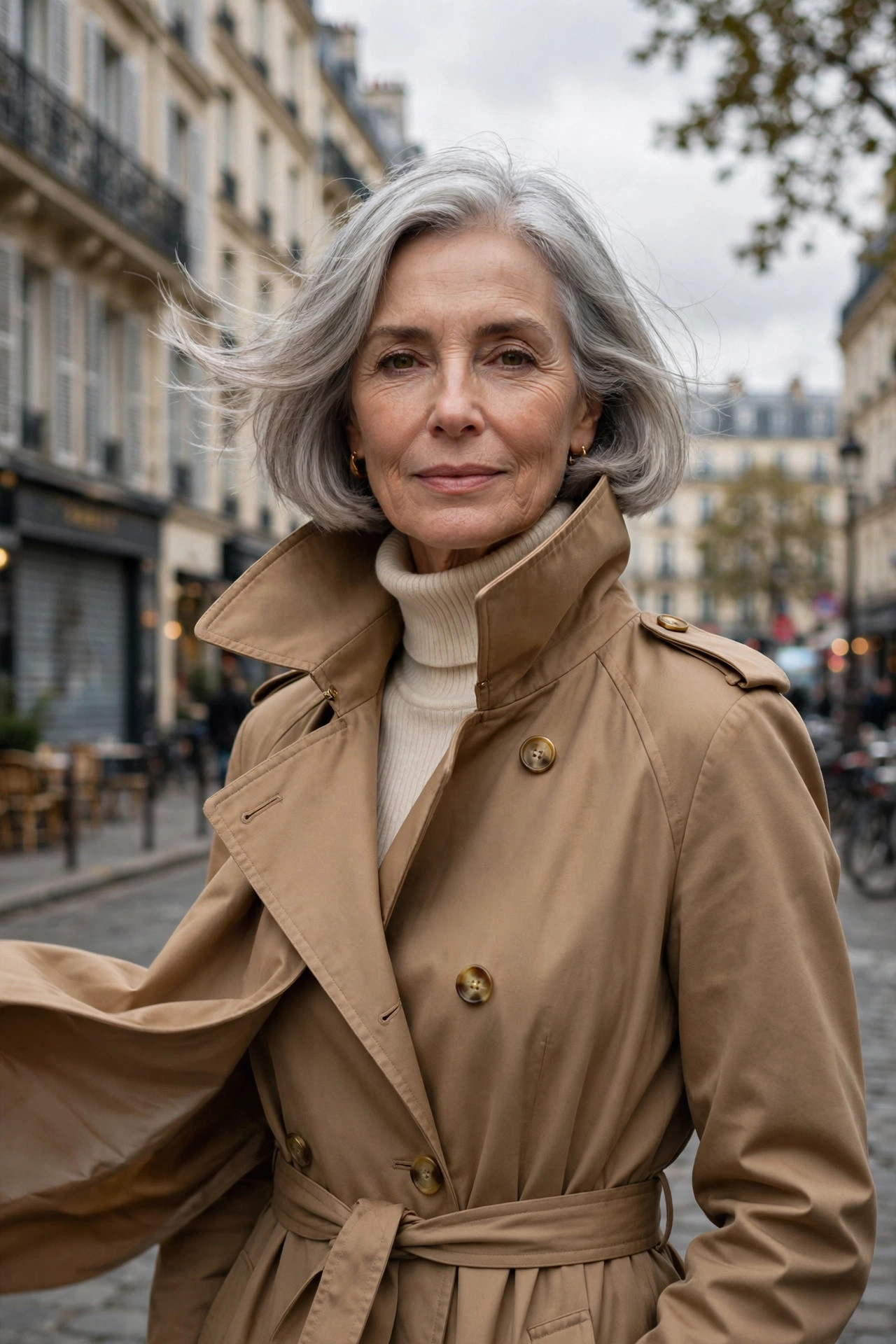
Pop the collar up and the whole outfit changes — suddenly it’s weather, mood, cinema. It frames the face, protects the neck, and makes even a basic black turtleneck look intentional.
Keep it up on windy days, grey days and evenings. Keep it down — lapels open — when the sun is out or the outfit underneath deserves to be seen. One rule: if the collar is up, skip the statement necklace. The collar is the statement.
5. The Sleeve Push

Pushing the sleeves to just below the elbow is the fastest way to make a trench look like you threw it on. It shows a flash of wrist, a watch, a bracelet — instant ease.
It also solves a practical problem: trench sleeves often run long. Rather than paying for alterations, push them up and let the fabric gather. It works best over a slim sleeve underneath — a silk blouse or a fine knit — so the cuff doesn’t bulk up.
6. Beyond Beige: Colour and Fabric Weight
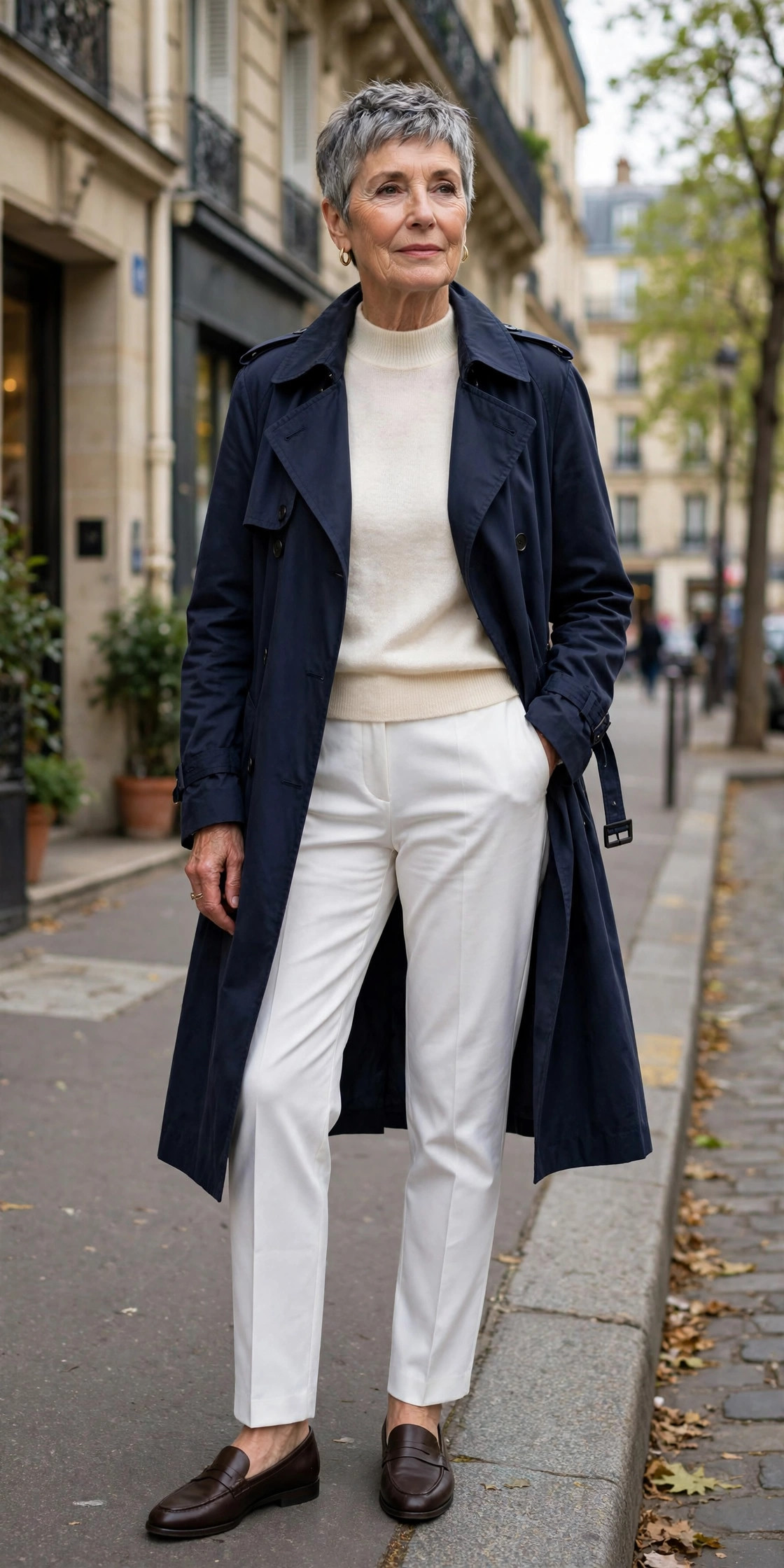
Beige is the classic, but it’s not the only — or even the most flattering — option. Olive, navy, stone and chocolate brown all read just as Parisian and often suit mature skin better than pale beige.
Fabric matters as much as colour. Cotton gabardine holds its shape in rain; a cotton blend with a little stretch moves better if you’re between sizes. Hold the fabric up to the light in the shop — if you can see through it, it’ll show every crease by noon.
Part 2: One Trench, Five Days
One beige trench, five real days. Same coat, five different lives.
7. Monday at Work: The Open Drape

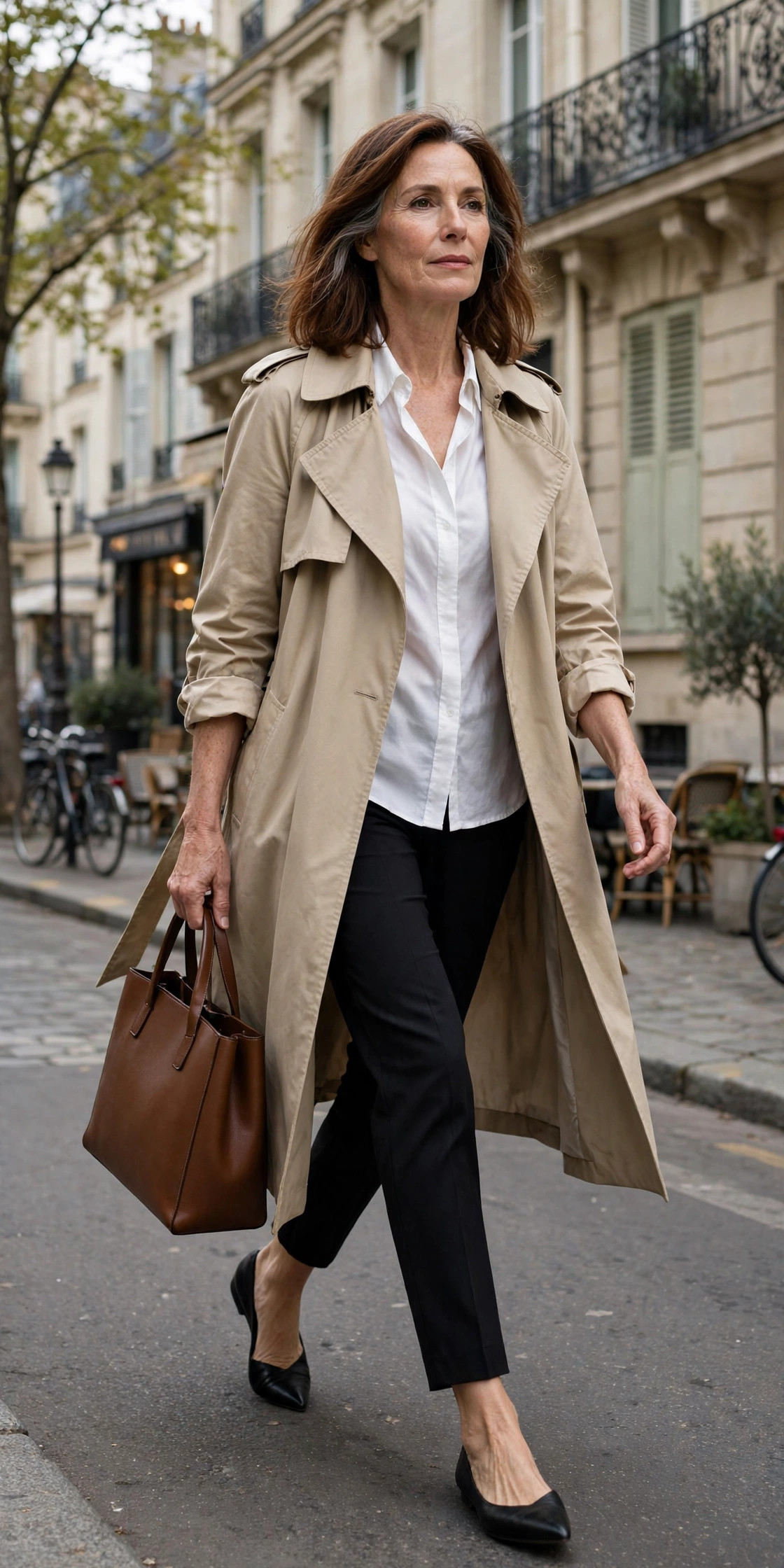
White shirt, black ankle-length trousers, pointed flats — and the trench worn open over the top. The coat becomes one long line that makes the whole outfit look tailored.
Keep the belt tied behind or removed entirely for the cleanest drape. A structured tote finishes it. This is the formula for every meeting you don’t want to think about.
8. Saturday Errands: Stripes, Jeans and Sneakers

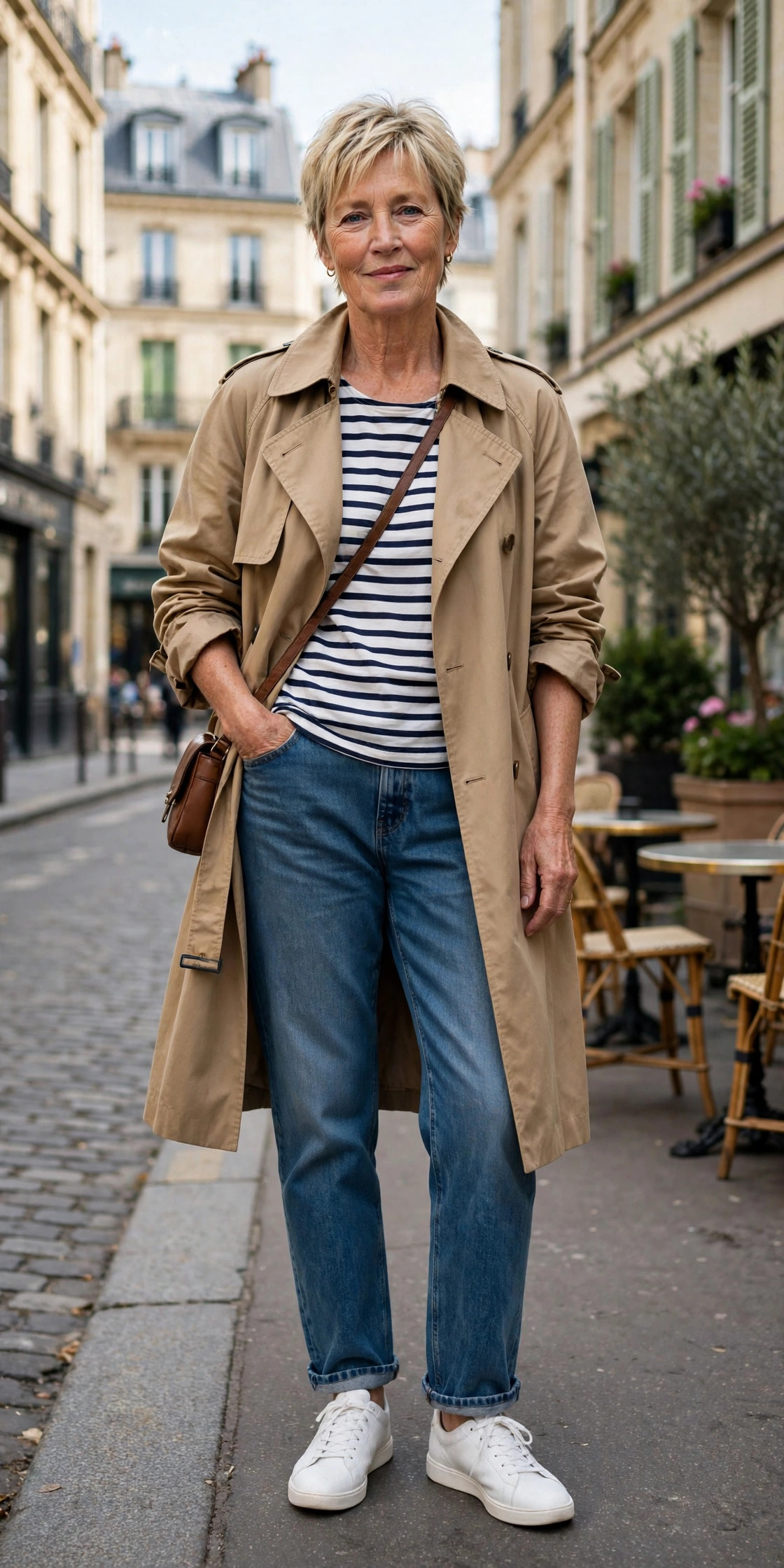
Camel trench, Breton stripe top, relaxed jeans, white leather sneakers. The stripes do the French work; the trench does the polish. Push the sleeves up and add a small crossbody you never have to think about.
The one rule for sneakers with a trench: keep them clean and slim. Bulky trainers fight the coat’s long line — a simple leather pair extends it.
9. Rainy Travel Day: Cinched and Closed
When the rain is real, close the coat properly — belted, collar up, umbrella in hand. A stone or khaki trench with dark slim trousers and water-resistant ankle boots is the Parisian rain uniform.
Practical notes: a back vent you can actually walk in matters more than you’d think. And keep a foldable tote inside your bag for anything you buy — wet shopping bags and trench pockets don’t mix.
10. Dinner Out: The Black Trench After Dark
A black trench over a burgundy midi dress is evening dressing without the effort. Tie the belt in a soft knot, add heeled ankle boots and a small clutch, and you’re done.
Black-on-dark reads rich rather than funereal when there’s texture contrast — satin or silk under matte cotton. This is where French restraint meets Italian-style evening drama, and it works beautifully after 50.
11. Sunday Lunch: A Dress and a Scarf
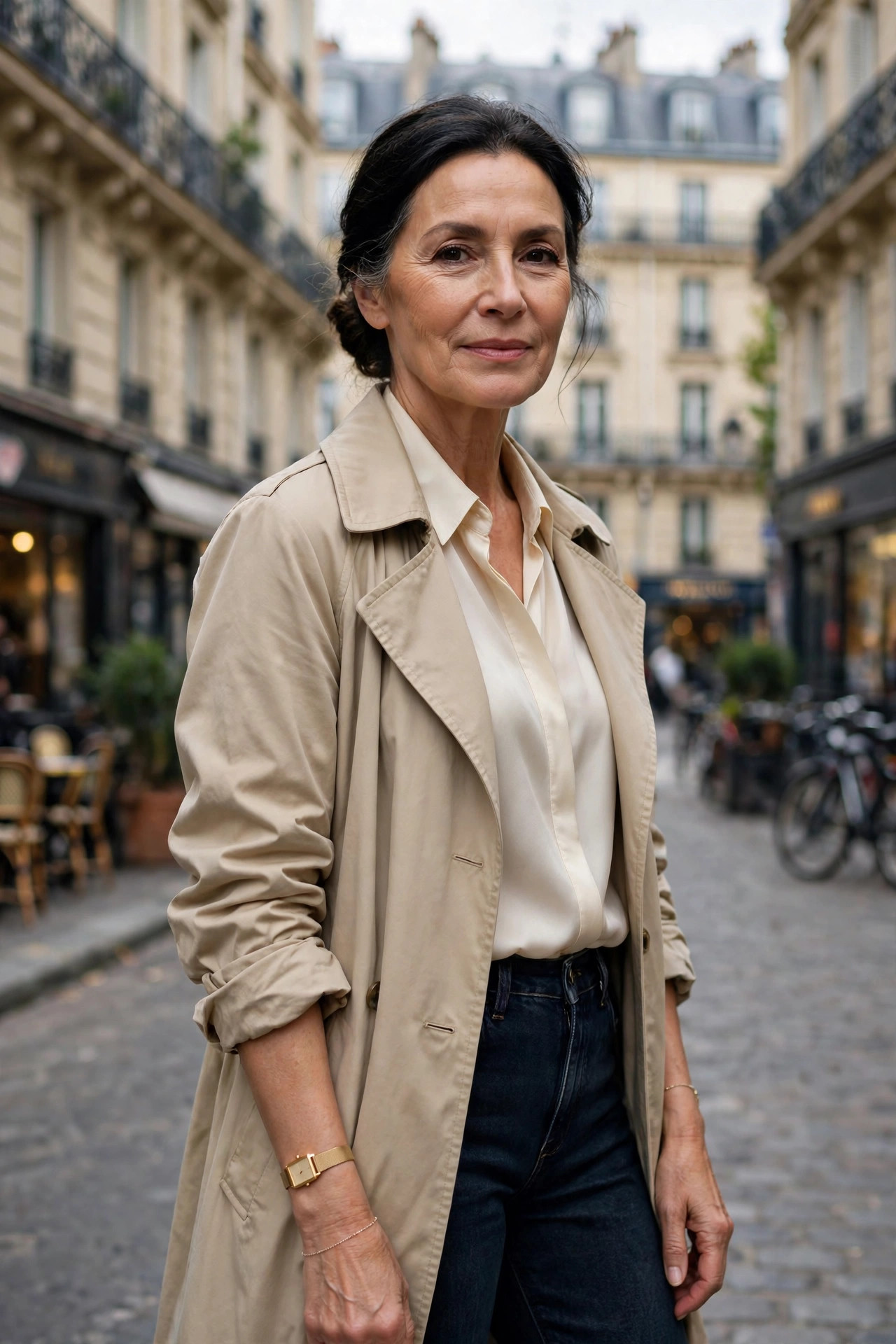
Beige trench open over a floral midi dress, a printed silk scarf knotted at the neck, loafers. The scarf picks up the dress’s colours and stops the neutrals from washing you out.
This is the outfit for long lunches and gallery afternoons. Keep the trench’s belt tied behind so it doesn’t compete with the dress’s print — one pattern per outfit is plenty.
Your Trench-Buying Checklist
Shopping for the one? Run through this list before you buy.
- Hem hits at or just below the knee — at the knee if you’re petite
- Room for a fine knit underneath without pulling at the shoulders
- Sleeves reach the wrist or slightly beyond
- Belt is long enough to tie in a loose knot, not just buckle
- Fabric is cotton gabardine or a substantial blend, never flimsy
- Colour works with at least four pieces you already own
- Back vent lets you walk and sit comfortably
You don’t need to spend a fortune — a well-cut trench on a budget beats a designer one in the wrong size. Our guide to quiet luxury on a budget shows where to save and where it matters.
Frequently Asked Questions
Should a trench coat be fitted or oversized over 50?
Skim, don’t cling and don’t drown. Choose a size that fits your shoulders with room for a knit underneath, then use the belt for shape. True oversized only works if everything underneath stays slim.
What is the most flattering trench length after 50?
Just below the knee for most women. Petite frames do best at the knee; taller women can go mid-calf. Very short cuts read sporty rather than Parisian.
Can you wear a trench coat with sneakers over 50?
Absolutely — it’s one of the chicest combinations. Choose clean, slim leather sneakers in white or a neutral. Bulky athletic trainers fight the coat’s long line.
Should you button a trench coat or leave it open?
Both, depending on the day. Open shows the outfit and feels relaxed; closed and belted gives structure and weather protection. The belt tied behind your back is the best of both worlds.
What goes under a trench coat for a Parisian look?
Simple, well-fitting pieces: straight jeans, black trousers, a white shirt, a Breton stripe, a fine knit or a midi dress. Keep the palette quiet and let the coat be the statement.
The Takeaway
The Parisian trench isn’t about owning the perfect coat — it’s about knowing how to wear the one you have. Length for your height, a belt that knots instead of strangles, a collar you actually use.
Master those small moves and one trench becomes five outfits, three seasons, and the easiest decision in your wardrobe.





One Comment
Comments are closed.