15 Lessons From People Who Look Back at 70 Without Bitterness

Ask a woman who radiates peace at 70 what her secret is, and she will not hand you a philosophy degree. She will hand you a habit — small, unglamorous, and repeated daily for decades.
Bitterness does not arrive all at once. It accrues in tiny installments: the replayed argument, the apology you were owed, the story you keep telling about what life cost you. This guide is for women over 50 who want a different accrual plan.
Inside: 15 lessons from people who look back at 70 without bitterness, each paired with a one-month practice so you do not just read the idea — you start living it. Before the lessons, run a quick audit of where you stand today.
🧾 The 60-Second Bitterness Audit
Answer honestly. Count your “yes” answers:
- You rehearse old arguments in the shower.
- You check whether a certain person noticed your success.
- An apology you are still waiting for has a name and a year attached.
- You bring up decade-old events during brand-new disagreements.
- Your jaw tightens when one particular name comes up.
- You would rather be “right about the past” than happy about today.
0–1: you are traveling light. 2–3: a few bags to set down. 4+: this guide was written for you.
1. 🚪 Lock the Door — and Throw Away the Keychain

There is a difference between protecting your peace and punishing the past. Women who reach 70 without bitterness learned it early: some people get a locked door, not a lecture.
Locking the door is not cruelty. It is hygiene. You do not have to announce the boundary or win the argument about why it exists — you simply stop leaving the porch light on for chaos. If saying no still feels rude, start with our guide to stopping people-pleasing after 50; it is the doorway skill for this lesson.
The bitter version: keeping the door locked but peeking through the window every single day. The free version: locking it, walking out to the garden, and forgetting the keychain exists.
Practice it this month: Pick the one relationship that spikes your blood pressure. Write the boundary down in one sentence. Then stop re-litigating it — a closed door needs no closing ceremony.
2. 📮 Stop Waiting for the Apology Letter

“If they would just admit it, I could move on” is the most expensive sentence in the English language. The apology almost never comes, and the waiting costs you years of perfectly good Tuesdays.
People who look back without bitterness decided early that closure is a DIY project. They grieved the acknowledgment they would never receive, gave it to themselves in writing, and filed the case closed.
The bitter version: keeping your heart’s mailbox flagged up for a letter that is not coming. The free version: writing the apology yourself, reading it once, and recycling it.
Try this tonight: Write the three-sentence apology you wish you had received. Read it aloud. Then put it in an envelope, mark it “received,” and throw it away.
3. 🧹 Treat Forgiveness Like Housekeeping

Forgiveness is not a gift you wrap for the person who hurt you. It is taking out your own trash. The mess still happened — you are simply not living in it anymore.
The women who get this right do not pretend the past was acceptable. They refuse to keep paying rent on a room the other person moved out of decades ago.
The bitter version: leaving the stain as “evidence.” The free version: scrubbing it out and enjoying the clean counter.
Your move this week: Name the one resentment you dust around but never touch. Spend ten minutes writing what it cost you this week alone — then decide whether the rent is worth it.
4. 🪞 Make Peace With the Woman in the Old Photos

Look at your twenty-eight-year-old self and it is tempting to scold her for staying too long, marrying too fast, or quitting too soon. But she was working with the map she had.
Self-compassion is not letting yourself off the hook — it is handing the hook to someone who did not know better yet. Women who look back without bitterness stopped prosecuting a person who no longer exists.
The bitter version: using today’s wisdom as a weapon against yesterday’s girl. The free version: thanking her for getting you here with the tools she had.
Practice it this month: Pull out one old photo. Instead of critiquing her choices, name one thing she did right with what she knew. Say it out loud.
5. 🎞️ Close the Mental Photo Album

You know the album — the one your mind opens at 11pm. That dinner in 2009. That phone call. The comebacks you finally invented, seventeen years late.
Closing it does not mean the pictures were not real. It means you have stopped charging yourself admission to a museum that only exhibits your worst moments.
The bitter version: rearranging the same exhibits every night. The free version: walking past the museum without going in.
Try this tonight: When the album opens, say aloud: “That happened, it was unfair, and it is over.” Then stand up and do one physical thing — fold laundry, stretch, step outside.
6. 🎉 Measure Life by Present Joy, Not Past Fairness

The ledger will never balance. Someone got more, suffered less, apologized never. Women who look back at 70 without bitterness stopped auditing a book that has no auditor.
They switched ledgers entirely — from “what was fair” to “what is good right now.” The morning light. The grandchild’s laugh. The cake that came out right. Fairness is a courtroom; joy is a kitchen.
The bitter version: keeping score of a game nobody else is playing. The free version: keeping a different scoreboard — today’s small wins.
Your move this week: Each evening, write down three things that were simply good today. Do it for seven days and watch the old ledger lose its grip.
7. 🎭 Fire the Internal Litigator
There is a voice that drafts speeches to people from 1998 while you are folding towels. It feels productive. It is not. It is a lawyer with no court and no client.
The free-at-70 crowd learned to fire that lawyer early. When the speech starts, they interrupt it — with movement, with water, with the actual task in front of them.
The bitter version: letting the litigator bill you hours every single day. The free version: noticing the opening argument and declining the case.
Practice it this month: Catch yourself mid-speech three times. Each time, physically change rooms. The loop breaks faster than you think.
8. 🌙 Put a Curfew on Rumination

Nothing good has ever been resolved at 1am. Night turns every old wound into an emergency and every small slight into a saga. Bitterness loves the dark.
Peaceful women gave rumination a bedtime. When a grievance surfaces after 9pm, they write three words in a notebook — “sister, 2011, dinner” — and close it until morning. Ninety percent never get reopened.
The bitter version: holding all-night court sessions with no judge. The free version: a strict curfew and a notebook that mostly stays shut.
Try this tonight: Put a notepad by your bed. Anything that shows up after 9pm gets three words, then lights out.
9. 📦 Treat the Past as Data, Not a Verdict

Every regret is either a prison sentence or a research finding. Women who look back without bitterness run their history like scientists, not judges — what did this teach me about my limits, my needs, my deal-breakers?
Extract the lesson and the “wasted years” stop being waste. The bad marriage taught you what safety feels like. The bad job taught you what work should never cost. The regrets people carry into their 70s are the ones never mined for their lesson.
The bitter version: reading the past as a verdict on your worth. The free version: reading it as field notes from a life well studied.
Your move this week: Pick your biggest “wasted” chapter. Write one sentence: “That era taught me ___.” Keep the sentence; release the chapter.
10. 🌱 Water Today’s Garden

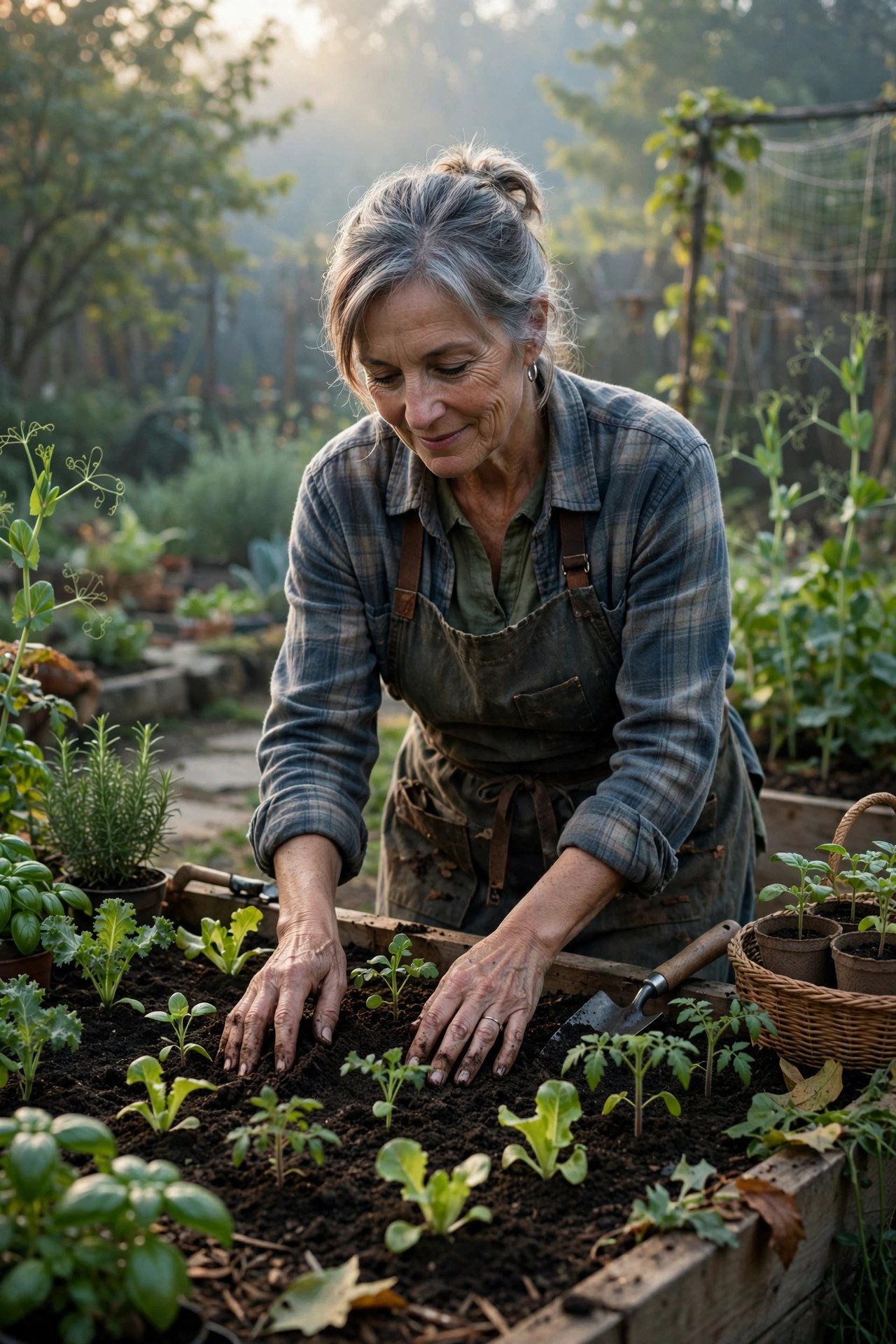
Attention is a watering can — whatever you pour it on grows. Pour it on 1994 and the weeds of 1994 grow. Pour it on today and today’s garden grows.
This is why the contented 70-year-olds you admire always seem busy in the best way: a class, a garden, a grandchild, a cause. They are not distracting themselves from the past. They are outgrowing it.
The bitter version: watering old weeds with your attention. The free version: choosing what grows by choosing where you look.
Practice it this month: Start one forward-facing project — however small — that has nothing to do with fixing the past. A skill, a hobby, a friendship.
11. 🧊 Aim for Neutrality, Not Warmth

Here is the finish line most people miss: you do not have to feel warmly about the person who hurt you. You just have to feel nothing much at all. Neutrality is the real victory.
Test yourself: their name comes up at dinner. Does your chest tighten? Do you launch the highlight reel of their crimes? Or do you nod, mild as weather, and pass the potatoes? That mildness is freedom.
The bitter version: mistaking hatred for resolution. The free version: a shrug where a spike used to be.
Try this tonight: Picture the name surfacing at a dinner table. Rehearse the mild nod, the changed subject. Practice peace like a party trick until it becomes a reflex.
12. 🔋 Run the Numbers on Carrying

Every grudge has a carrying cost, and nobody ever shows you the invoice. Tally it once and the math gets stark: the midnight hours, the shortened patience, the conversations poisoned sideways by an unrelated old wound.
Women who look back without bitterness did this audit in their 50s and put the bag down. Not because they were saints — because they were accountants of their own energy.
The bitter version: paying the invoice forever without ever reading it. The free version: doing the math once and quitting the subscription.
Your move this week: Estimate the hours this month you spent on one old grievance. Multiply by 240 — twenty years of months. Read the total. Then choose.
13. ☕ Sit at Tables With Forward-Facing People

Bitterness is contagious — so is peace. The women who arrive at 70 lighthearted curated their company the way you would curate a garden: keep what blooms, compost what drains.
You do not need a dramatic friend breakup. You need a ratio adjustment: more tables where people talk about what is next, fewer where the main course is reheated grievances.
The bitter version: loyalty to every relationship, including the ones that pickle you. The free version: choosing your tables on purpose.
Practice it this month: Initiate one plan with someone whose conversation leaves you lighter. Notice the difference. Repeat.
14. 🌹 Let Small Good Moments Count Double

The past steals the present one comparison at a time — “this would have been nice back then.” Women without bitterness refuse the trade. They let the rose smell like a rose, not like a reminder.
Savoring is not denial; it is defiance. Every time you fully enjoy a small good thing — the soup, the sunset, the song — you vote for today over yesterday.
The bitter version: letting good moments pass through a filter of “too late.” The free version: counting each small joy at face value, no discount.
Try this tonight: Pick one small pleasure and give it your full attention for two minutes. No phone, no comparison. Just the thing itself.
15. 📖 Write Your Own Ending

Nobody else gets to narrate your life — not the ex, not the difficult parent, not the boss from 2003. The women who look back without bitterness took the pen back early and never handed it over again.
Your story is not “what they did to me.” It is “what I built anyway.” Write that version — in a journal, in conversations, in the way you introduce yourself — and the old version quietly retires.
The bitter version: letting old characters co-author your chapters. The free version: full creative control, from today forward.
Practice it this month: Write a one-paragraph version of your last decade where you are the protagonist, not the victim. Read it weekly.
🧭 Your Next 30 Minutes
- ☐ Do the 60-second audit at the top — honestly.
- ☐ Pick ONE lesson from this list and start its practice this week.
- ☐ Put a notepad by your bed tonight for the 9pm rule.
- ☐ Write the three-sentence apology you wish you had received — and release it.
Bitterness is not a personality trait; it is a habit of attention. And habits can be replaced — one locked door, one closed album, one curfew at a time. The women in their 80s who look back fondly all say some version of the same thing: the decades ahead matter more than the decades behind.
Your 70-year-old self is watching what you do with this afternoon. Give her something good to look back on.