25 Short Shag Haircuts for Fine Hair
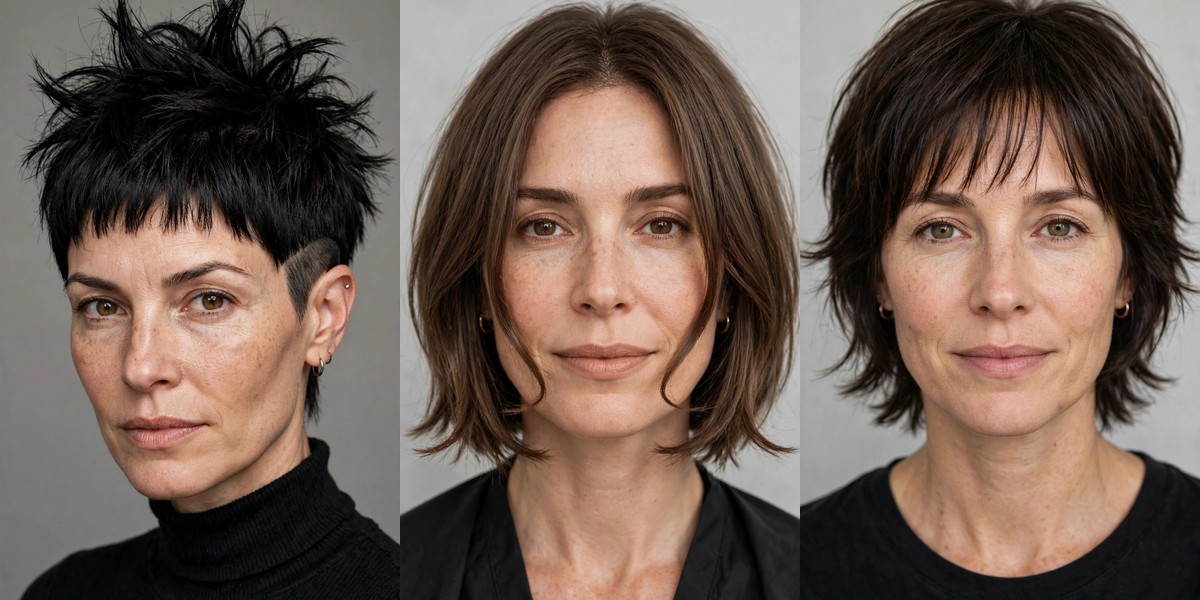
Fine hair can absolutely wear a shag — the question is never whether, but how. The winning formula: strategic layering (not thinning everywhere), a solid perimeter, lift at the crown, and color that makes the layers visible.
These 25 cuts are built on that formula. Pixie-shags that protect density, shag-bobs with full edges, and the fringe choices that add shape without stealing fullness.
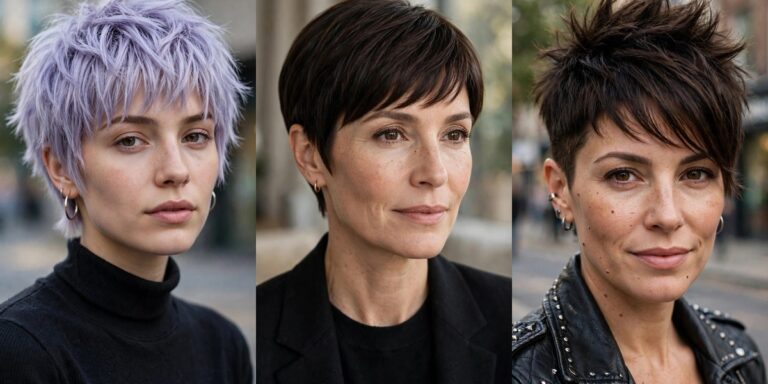
✂️ Pixie-Shags That Protect Density
Short cuts where every layer earns its place.
1. 📐 Pointed-Nape Pixie Shag
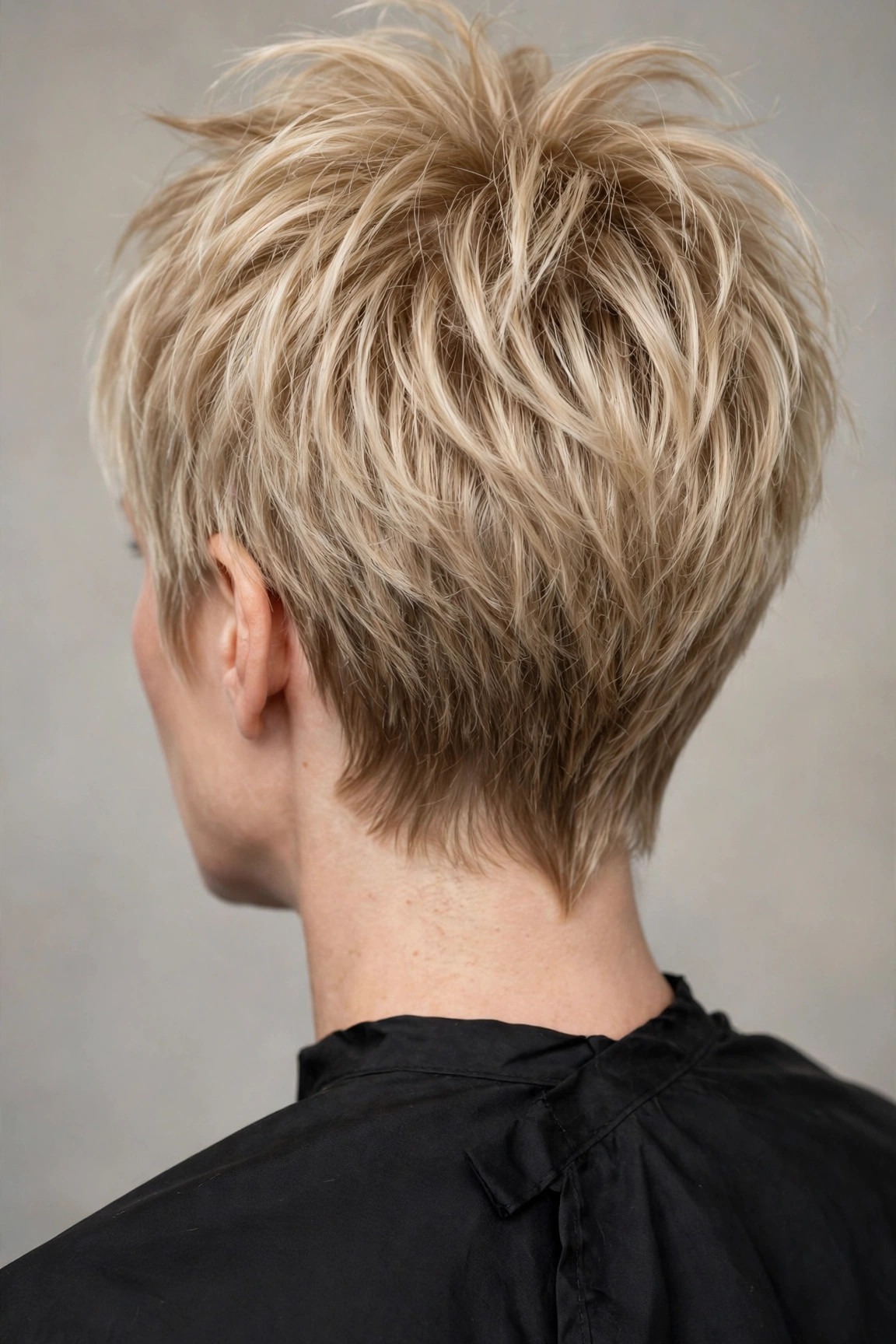
The look: longer broken crown pieces narrowing to a neat pointed nape.
The back view is the star — the crown stays long and airy while the nape tapers to a clean point. Beige-blonde ribbons trace every layer so the shape reads clearly.
Why it works: weight stays up top where lift happens. Ask your stylist for: “longer crown layers, tapered neckline — keep weight through the lower back.”
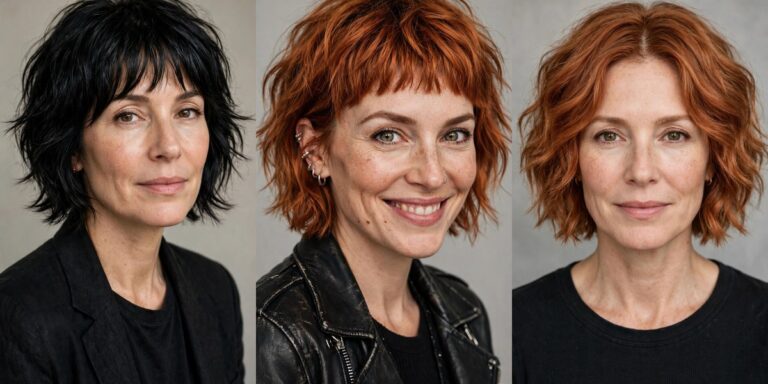
2. 🧡 Copper Bob-Mullet Shag
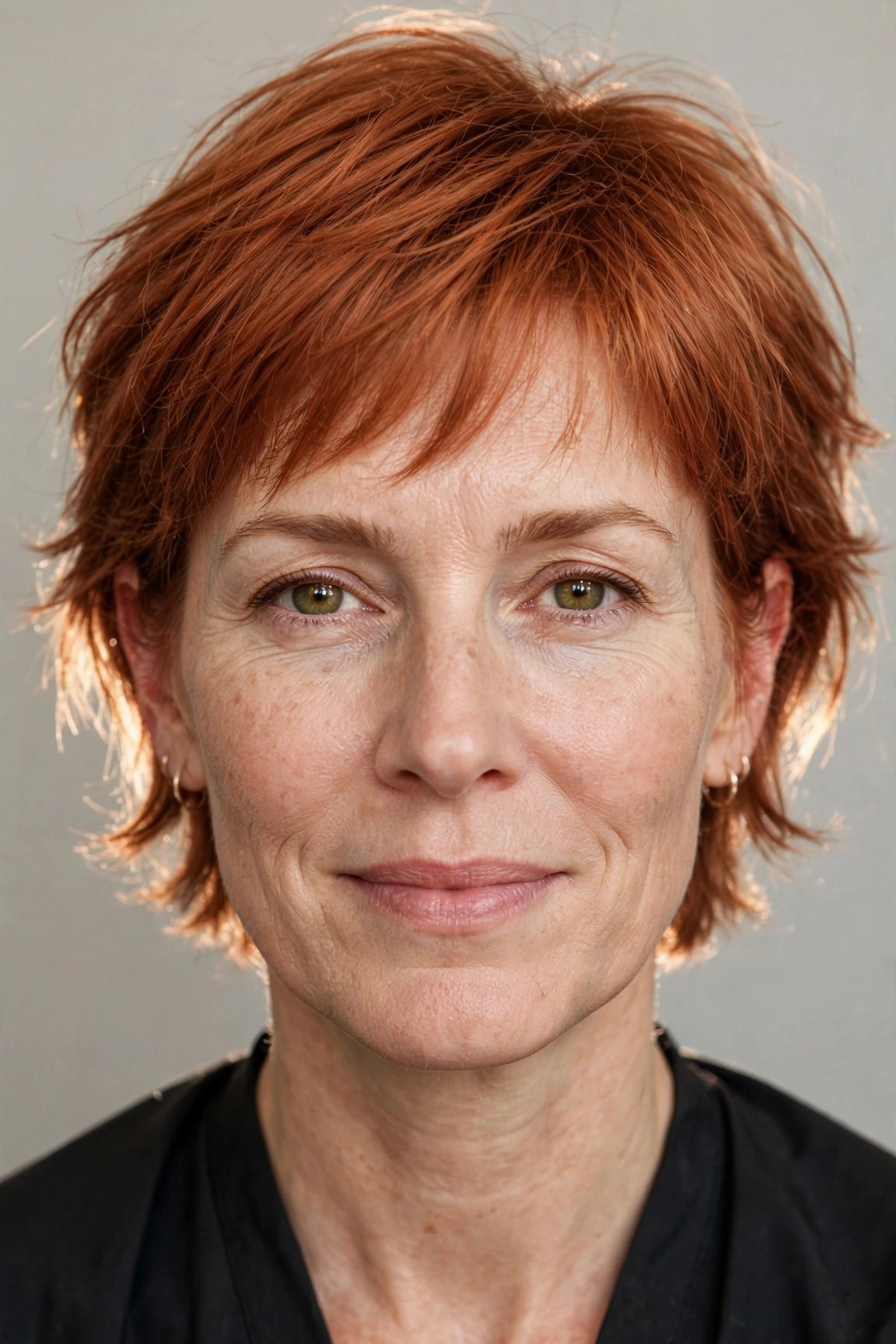
The look: copper-red with a choppy flipped back and broken wispy bangs.
The perimeter stays visible (crucial for fine hair) while shallow piecey layers add movement above it. Copper’s warmth makes the texture glow.
Styling tip: keep face-framing pieces separate from the fringe so they move independently. Best for: fine hair that wants edge.
3. ⚡ Micro-Bang Spiky Pixie
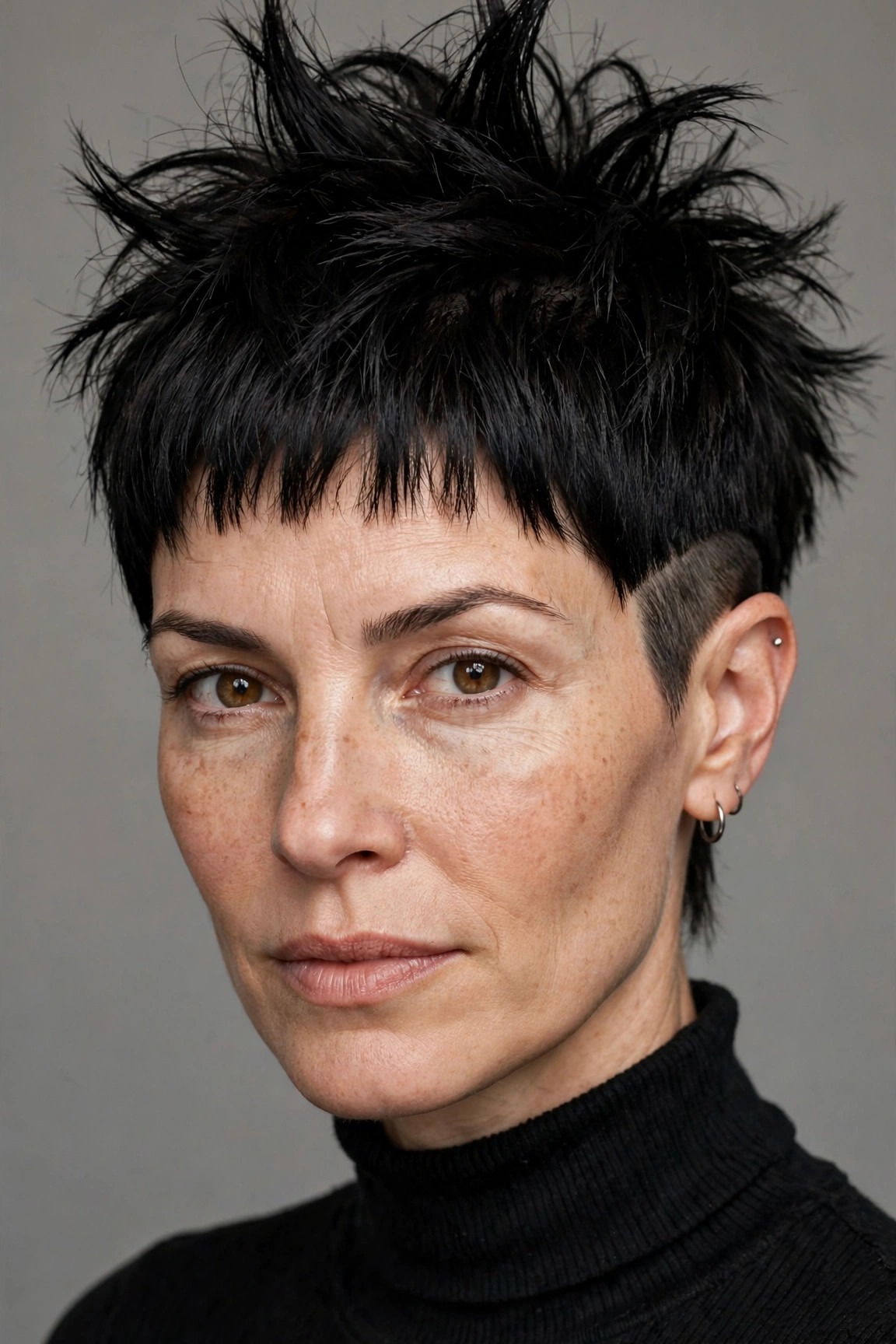
The look: tiny uneven bangs, close sides, spiky lifted crown.
The shortest shag here — the compact perimeter makes the longer top the star. The spiky crown creates height that fine hair rarely achieves on its own.
Why it works: a small perimeter needs less hair to look full. Styling tip: matte paste, pea-sized, pinched through fingertips only.
4. 🪶 Wispy Taper Pixie Shag
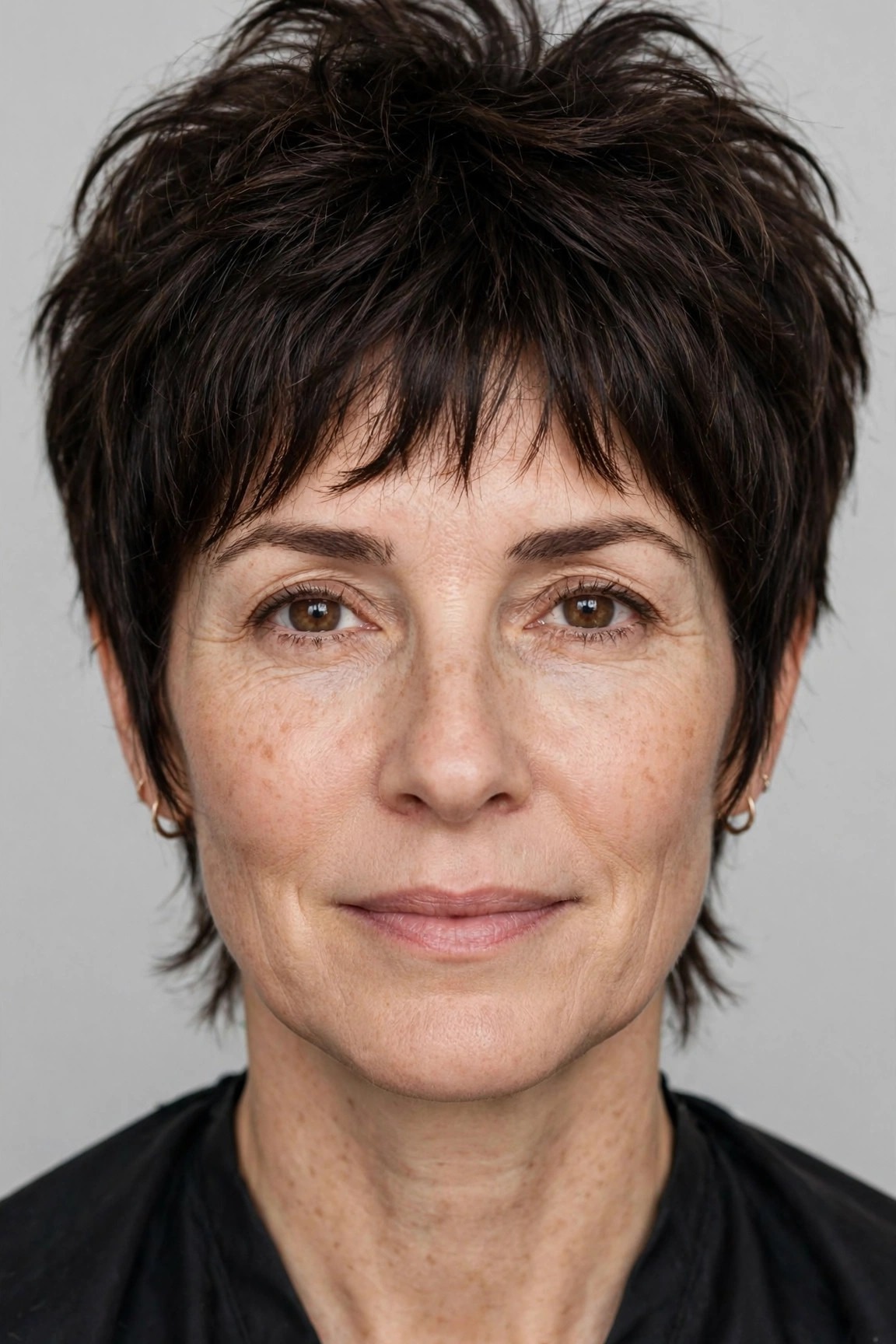
The look: a rounded tousled top melting into a wispy tapered nape.
Gentle graduation instead of carved-out weight — the nape stays wispy rather than clippered. The short fringe blends into face-framing for softness.
Best for: fine hair with flat roots — dry the crown against its growth direction first. Why it works: soft graduation, zero harsh lines.
5. ↔️ Side-Swept Piecey Pixie

The look: neat close sides with a longer top swept diagonally.
The diagonal sweep creates direction and height — fine hair’s two best friends. Keeping the fringe long enough to sweep (not blunt) preserves styling options.
Styling tip: root-lift spray before blow-drying beats heavy wax after. Why it works: the piecey finish stops dark color looking heavy.
6. 🍂 Feathered Flip Shag
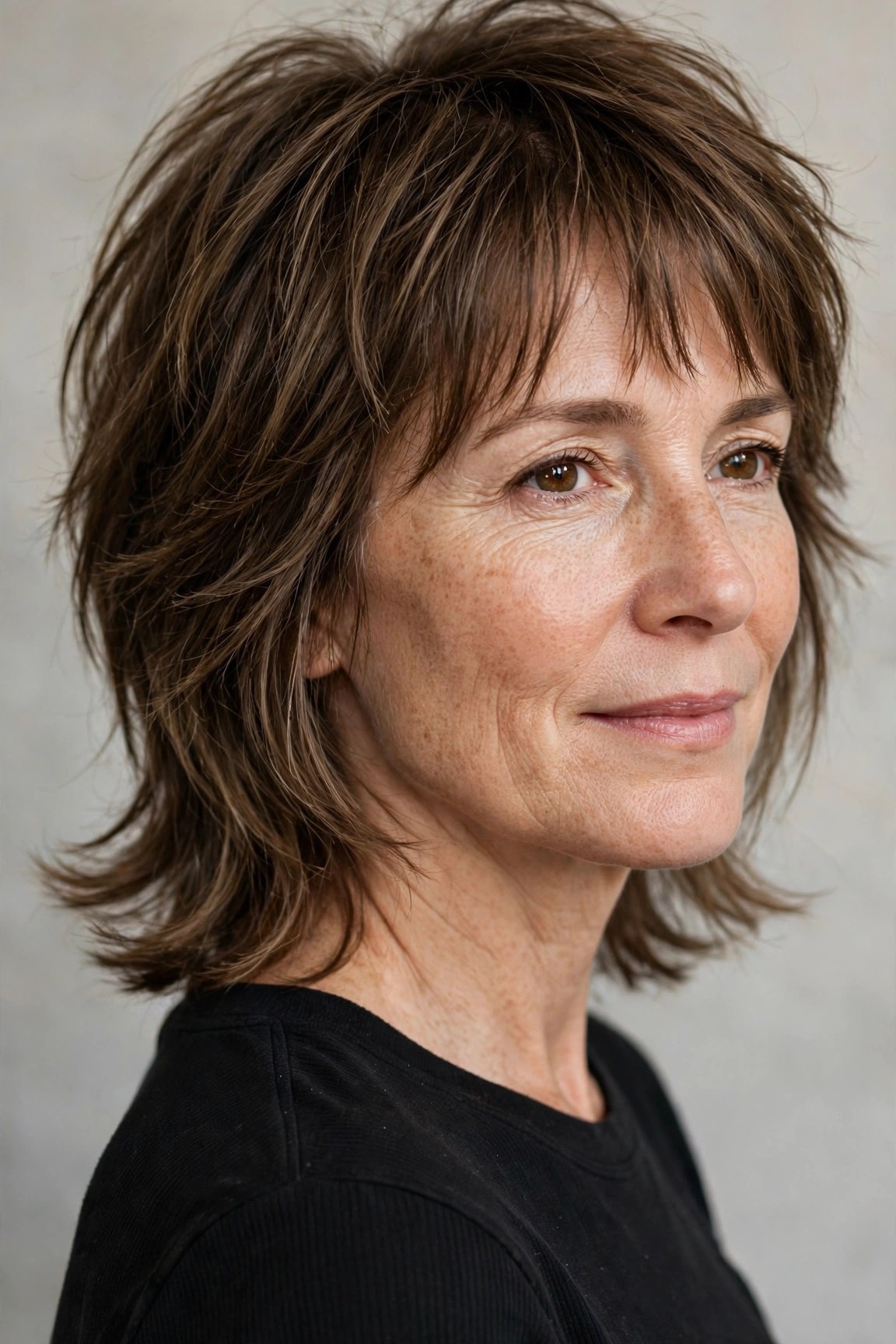
The look: feathered layers beginning at the cheekbone, ends flipped outward.
Feathering is fine hair’s gentlest texture — it creates movement without removing bulk. The flipped ends keep the shape from hugging the head.
Ask your stylist for: “feathered layers, lowest edge kept strong.” Best for: fine hair that’s also on the thinner side.
7. 🖼️ Long-Frame Shaggy Bob
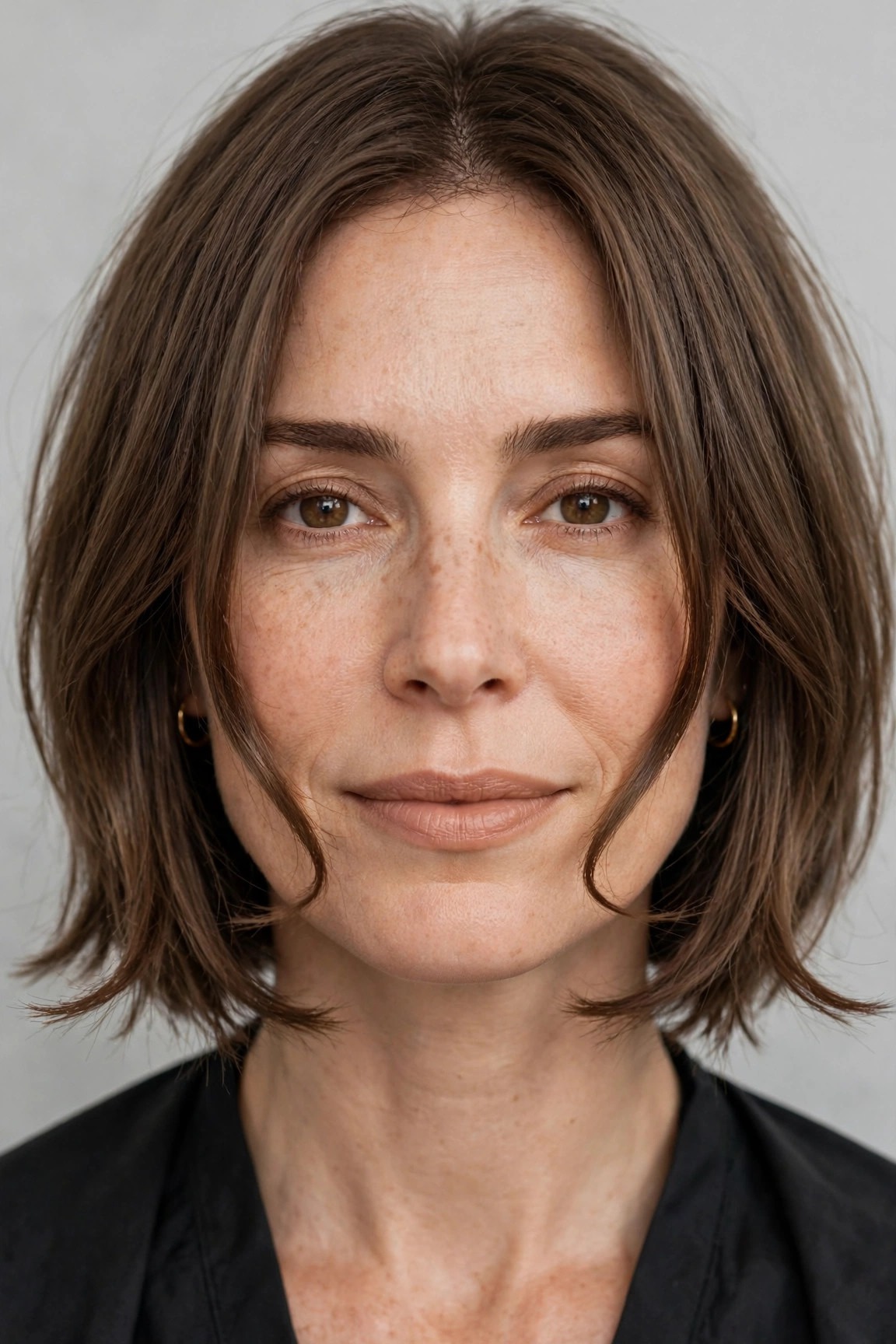
The look: a smoother shaggy bob with long front sections curving past the chin.
The face frame stays deliberately longer than the crown — the contrast creates the shag feel without short layers everywhere. Interior layers add movement invisibly.
Why it works: long front pieces preserve the most density. Styling tip: bend ends with a flat iron; volumizing foam before drying.
💨 Shag-Bobs with Full Perimeters
Bob length, shag soul, solid edges.
8. ❄️ Platinum Curtain Shag
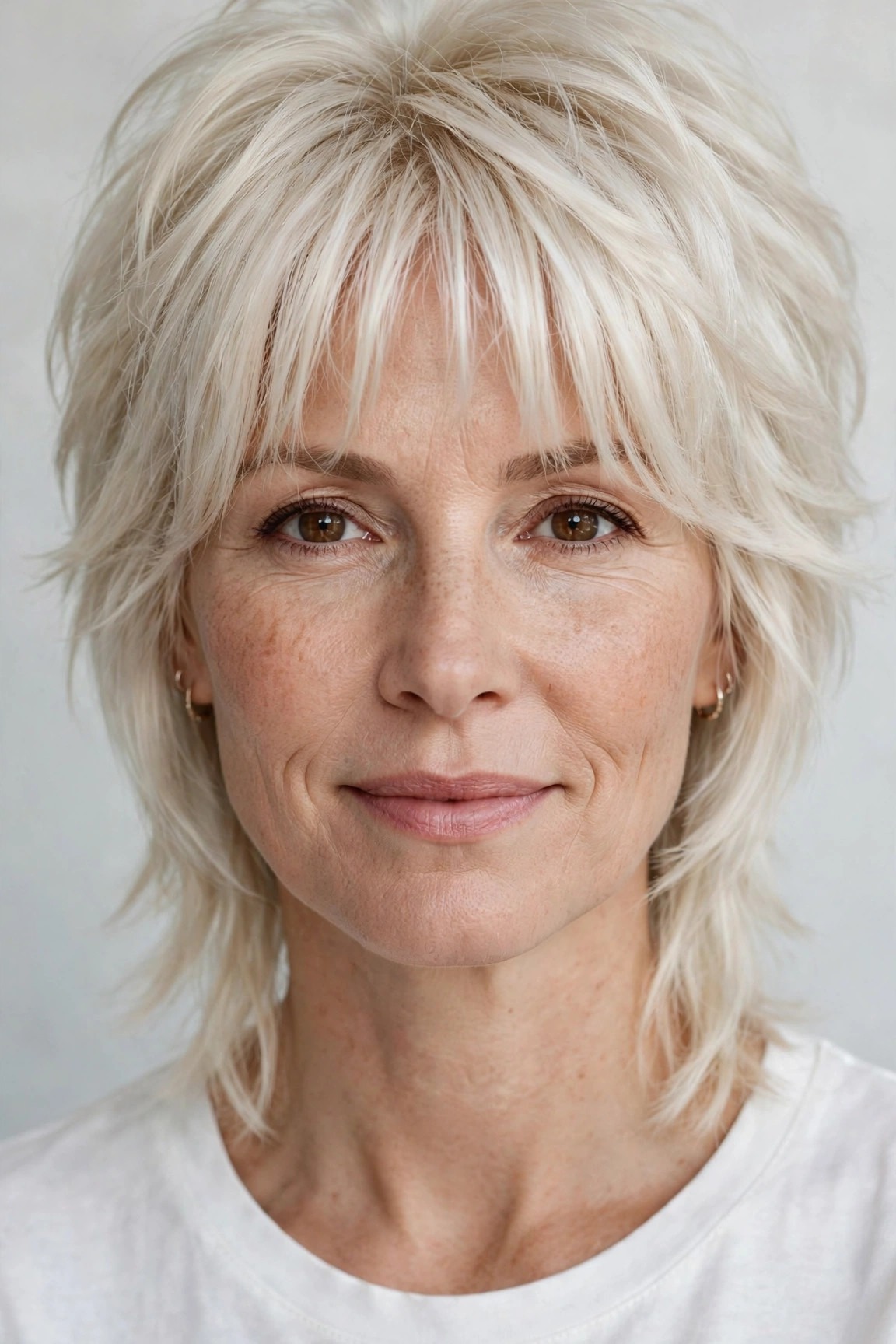
The look: near-white platinum with an airy curtain fringe.
Platinum makes every bend visible — on fine hair, that visibility reads as thickness. The curtain fringe connects to longer temple pieces for flow.
Color caution: ask what your hair can tolerate before combining bleach with heavy layering. Why it works: the palest color shows texture best.
9. 🌗 Diagonal Sweep Shag Bob
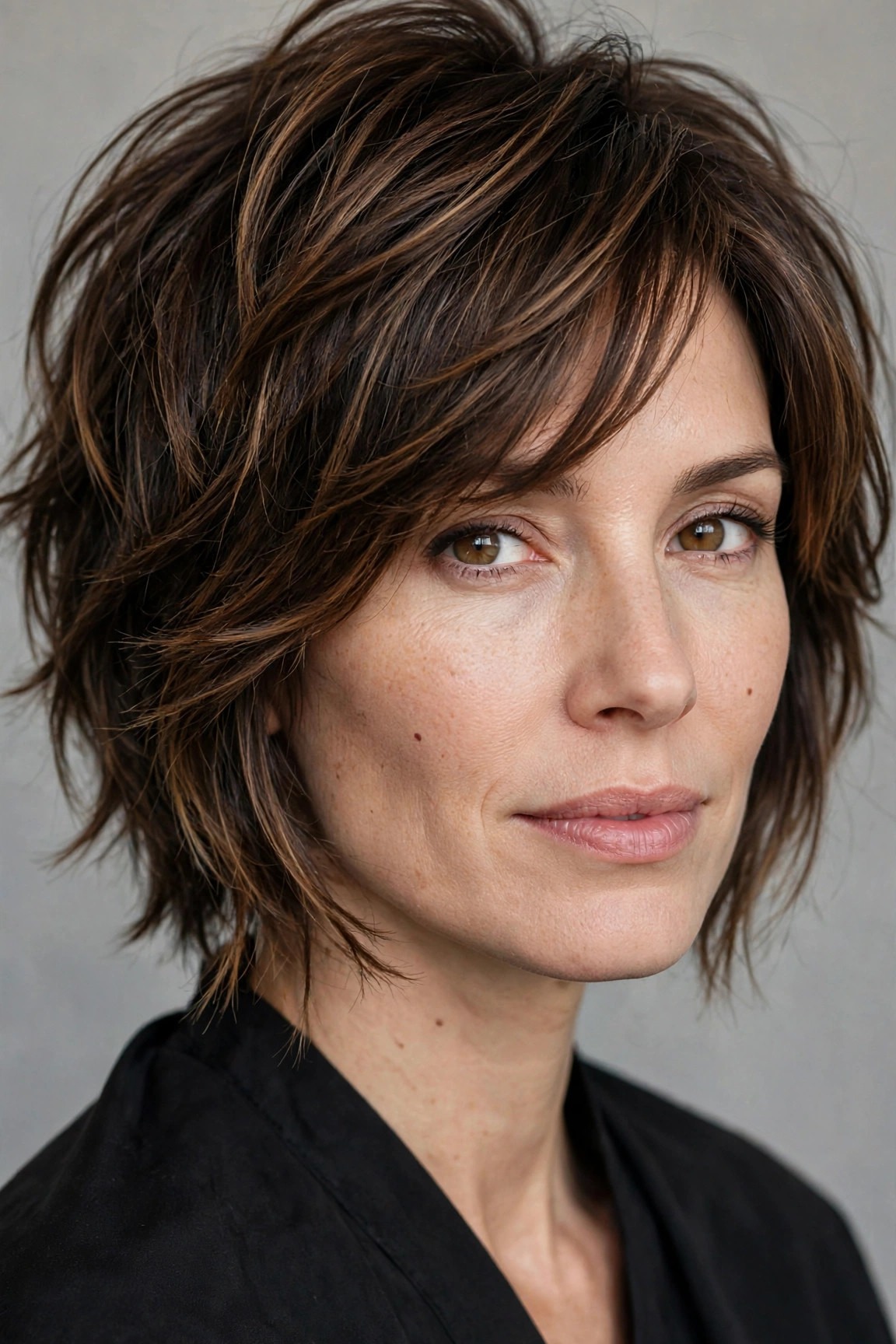
The look: long diagonal layers crossing the forehead over a fuller crown.
The side sweep replaces a separate bang — one continuous diagonal from part to jaw. Fine caramel ribbons break up the dark base and spotlight the layers.
Ask your stylist for: “highlights where the layers naturally separate.” Styling tip: a side part + quick root blow-dry reinforces the sweep.
10. 👶 Baby-Bang Pixie Shag
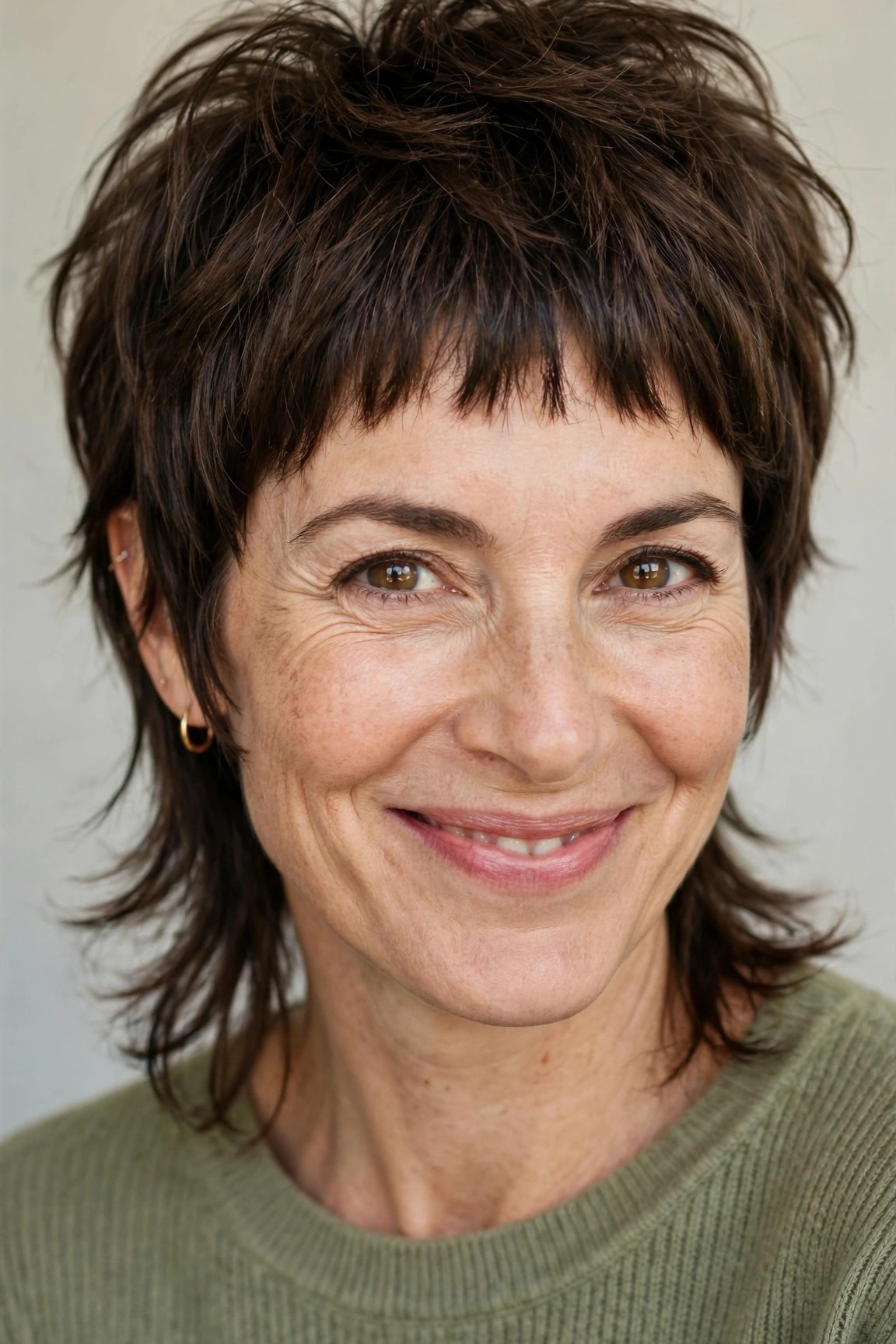
The look: short point-cut baby bangs over a softly tousled pixie-shag.
Baby bangs use the least hair of any fringe — ideal when density is precious. Point-cut (not blunt) keeps them light and piecey.
Why it works: playful without the weight cost. Styling tip: dry texture spray, scrunched — never placed piece by piece.
11. 🌾 Long Wispy-Fringe Shag

The look: jaw-length sides with a long, narrow, separated fringe.
The fringe stays eyebrow-skimming and wispy — thick enough to frame, sheer enough to preserve density. Crown layers create lift above it.
Fine-hair rule: don’t over-texturize the bottom inch — you need that density for the flipped ends to show. Best for: longer foreheads.
12. 〰️ Wavy Bend Shag
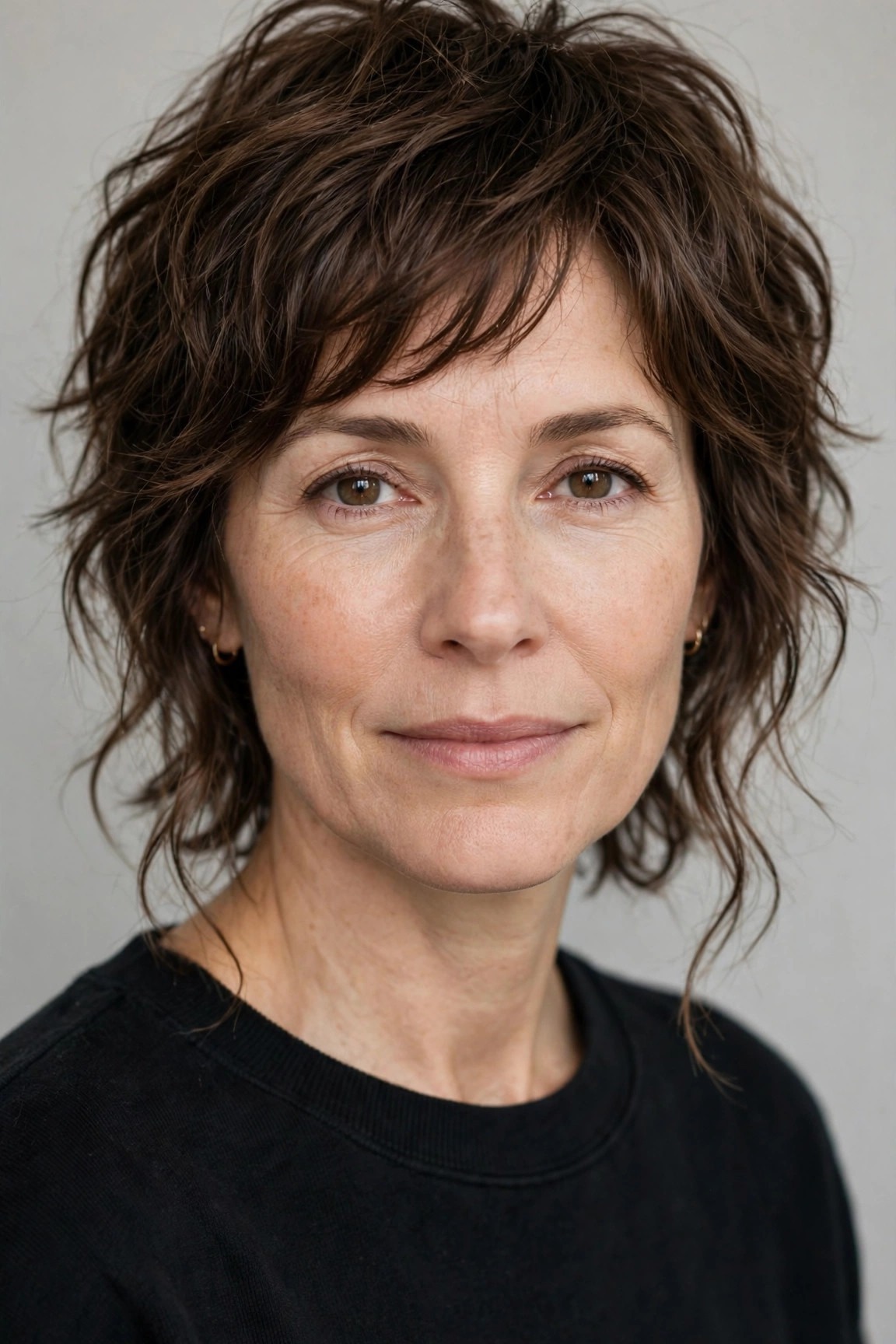
The look: loose bends with layers shaped around the natural wave.
Layers cut to follow your wave pattern (not against it) — shorter crown pieces, longer ear wisps, ends turning every which way. Your texture does the work.
Styling tip: mousse + low-diffuse, never brushed smooth. Why it works: wave + layer = free volume.
13. ⬛ Charcoal Curtain Shag-Bob

The look: deep charcoal-brunette with a center-parted curtain fringe.
The dark tone keeps it sleek while the curtain bangs and flipped nape add movement. Keeping weight through the lower sides prevents wispiness.
Why it works: dark + sleek reads expensive; the texture keeps it modern. Styling tip: a small round brush at the fringe, quick outward bend at ends.
🎭 Texture & Fringe Play
Where the personality lives.
14. ✂️ Micro-Fringe Nape Shag
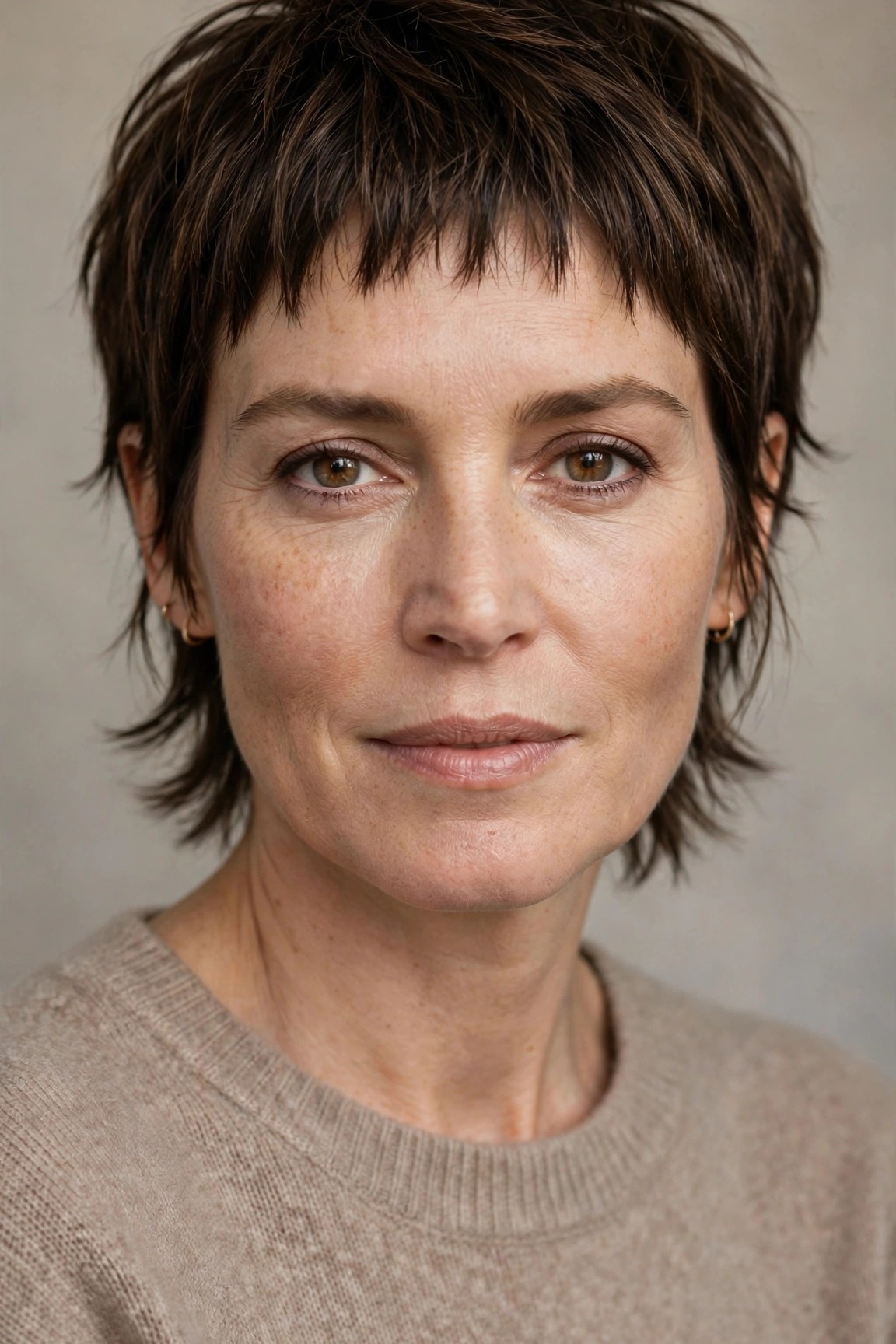
The look: very short fringe with a longer, piecey nape.
The length contrast — cropped front, textured back — creates a subtle mullet line that feels wearable. Point-cutting (not thinning) keeps fine hair full.
Ask your stylist for: “dense crown, separated tips only.” Best for: fine hair that wants visible texture safely.
15. ⭕ Rounded Soft Pixie Shag
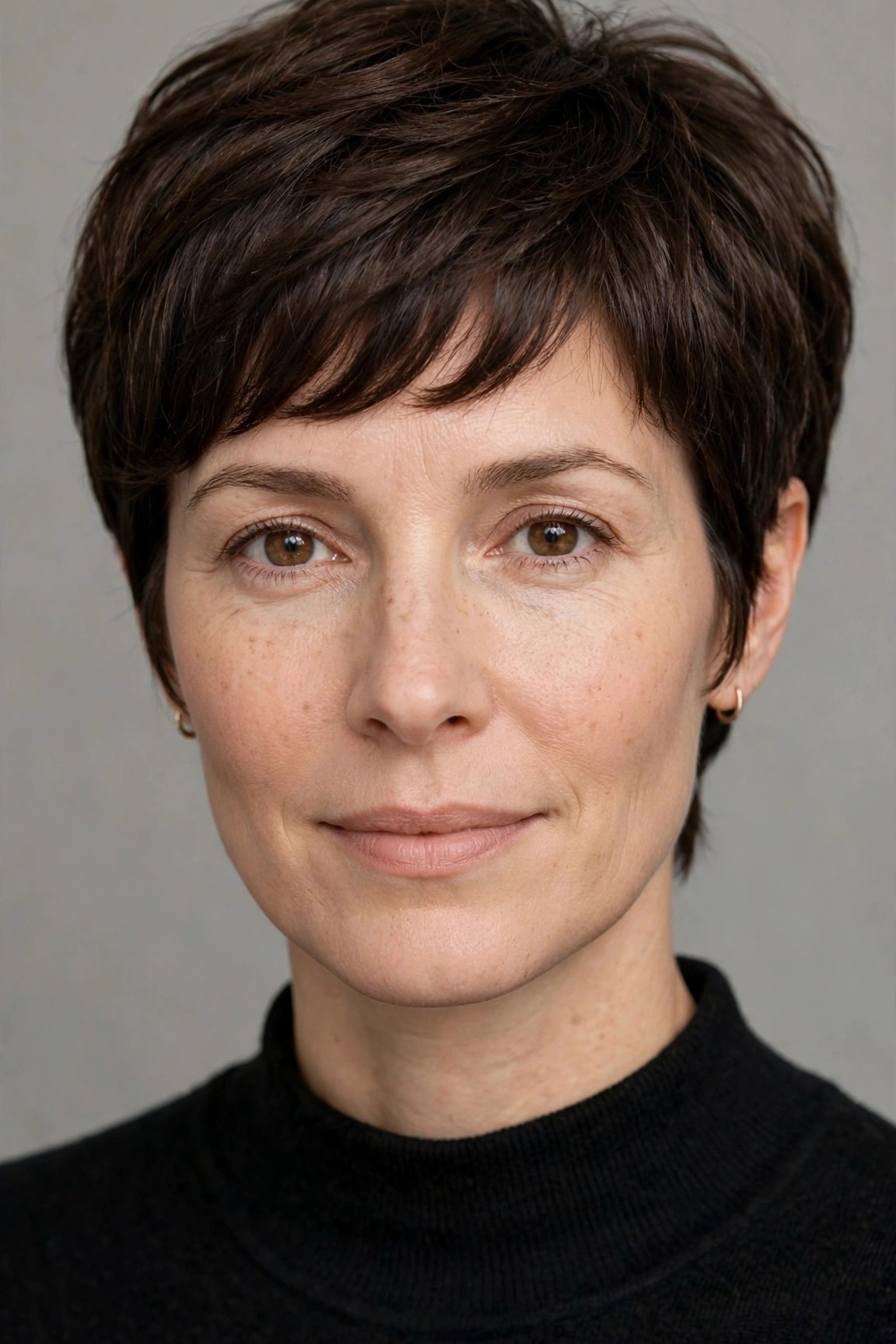
The look: a smoother, rounder pixie-shag with overlapping crown layers.
Less spiky than its cousins — the crown layers overlap softly and the nape tapers neatly. A short curved fringe keeps the profile light.
Best for: polish lovers. Styling tip: paddle brush blow-dry + whisper of flexible hairspray.
16. 🌬️ Delicate Air Shag

The look: soft texture, narrow airy fringe, close delicate silhouette.
The most delicate shag here — fine point-cutting at fringe and ends, interior left intact. Proof that texture doesn’t have to mean choppy.
Why it works: interior density preserved = fuller look. Styling tip: volumizing mist at roots is enough on most days.
17. ⚡ Beige Spiky Pixie Shag
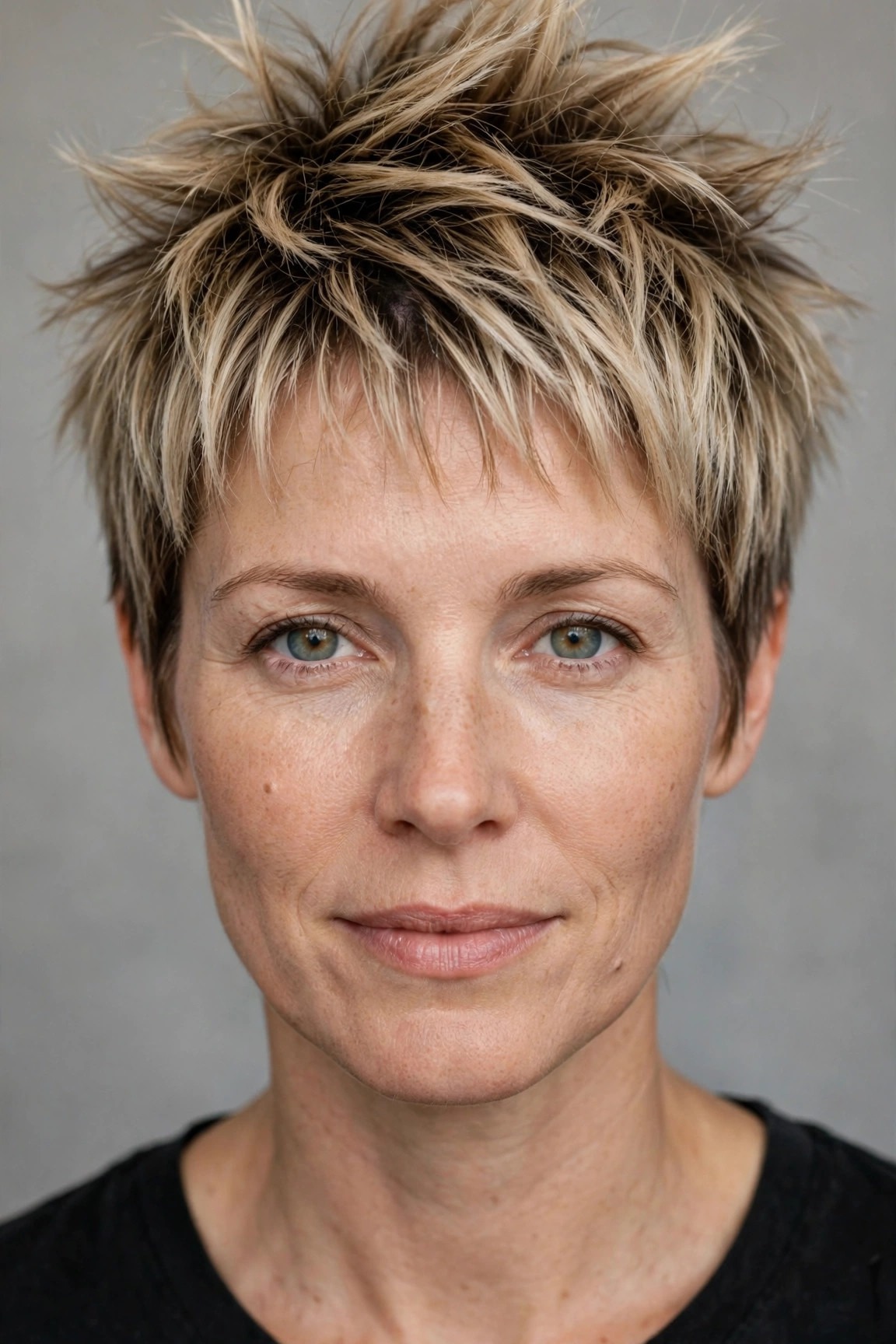
The look: cropped perimeter with dramatically separated spiky texture on top.
The spikes are the style — lifted highlighted pieces against a darker root for depth. Beige-blonde keeps it soft, not harsh.
Color trick: darker roots under blonde = instant dimension. Styling tip: lift sections with dry paste; never flatten with pomade.
18. 🎗️ Ribbon Highlight Pixie Shag
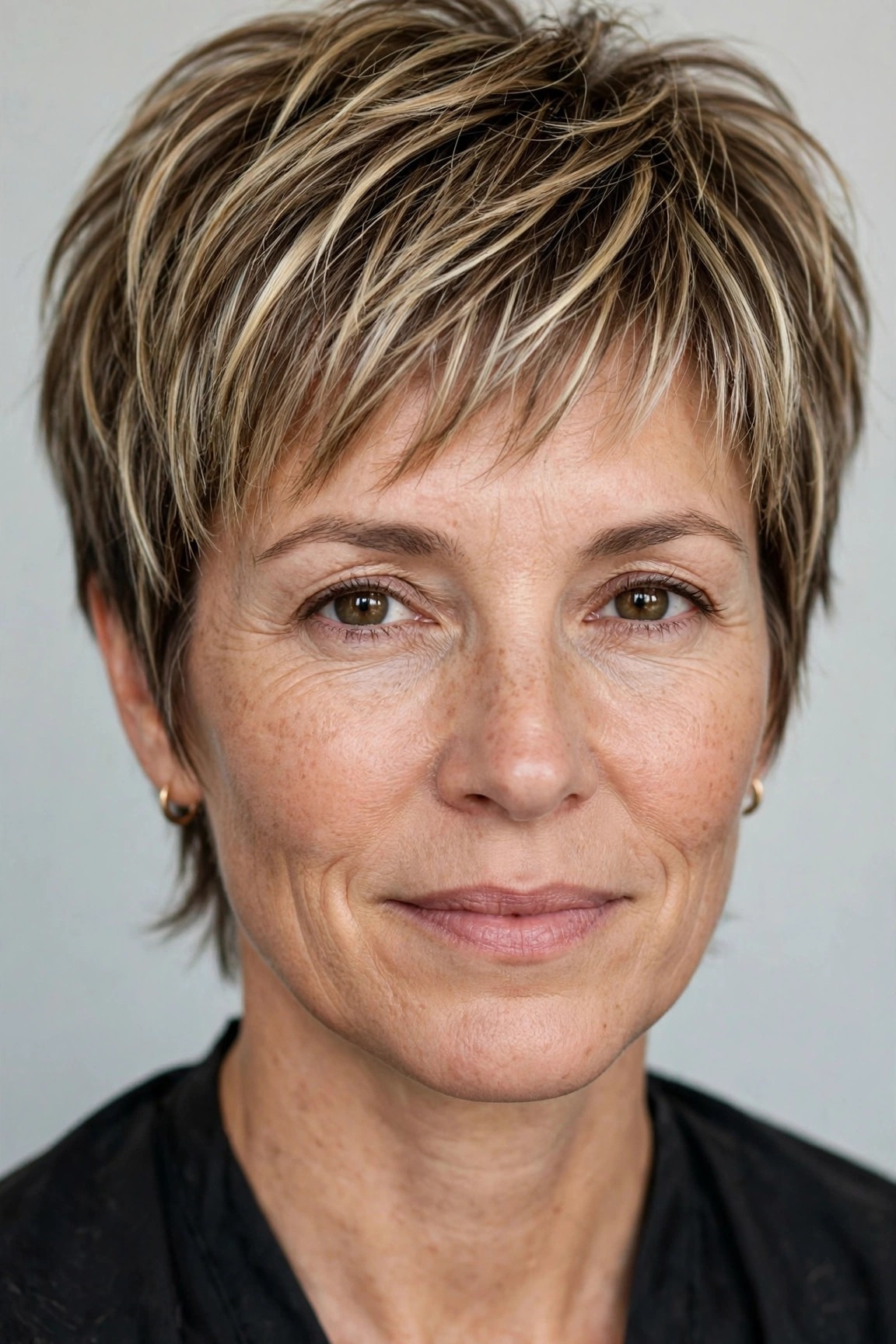
The look: thin blonde ribbons over a deeper base, tracing the layers.
Highlights that follow the top layers — every direction change catches light. More crown length than the spikier pixies, with a wispy cropped fringe.
Why it works: ribbon dimension makes layers visible = thicker look. Styling tip: rough-dry, then fingertip-shape a few pieces.
19. 🦡 Pixie-Mullet Long Nape

The look: compact temples and fringe, longer textured pieces down the nape.
The clear length difference creates movement without curls — but on fine hair, the back perimeter must stay substantial or it goes stringy.
Ask your stylist for: “layered transition, substantial back edge.” Styling tip: texture spray at crown, tiny bend at the nape.
🎨 Fine-Hair Color Boosters
Shade as a volumizing tool.
20. 🌀 Tousled Wave Shag-Bob
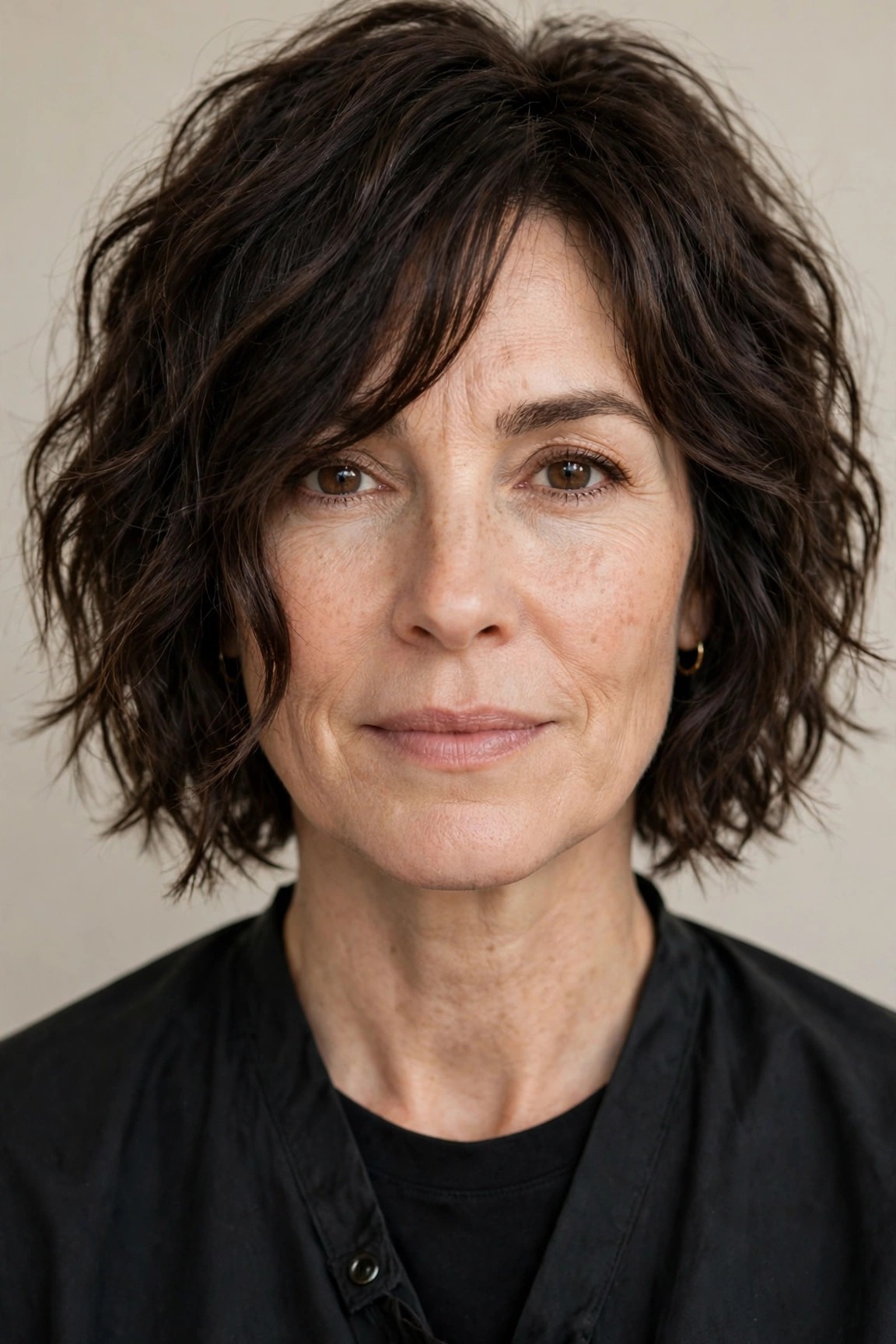
The look: loose irregular waves with a long side fringe.
Waves from crown to ends with the fringe blending into the cheek — movement everywhere, heaviness nowhere. Jaw length keeps it bouncy.
Styling tip: bend random sections with a flat iron, brush out. Why it works: irregular texture reads as natural fullness.
21. 🤎 Warm Taper Pixie Shag
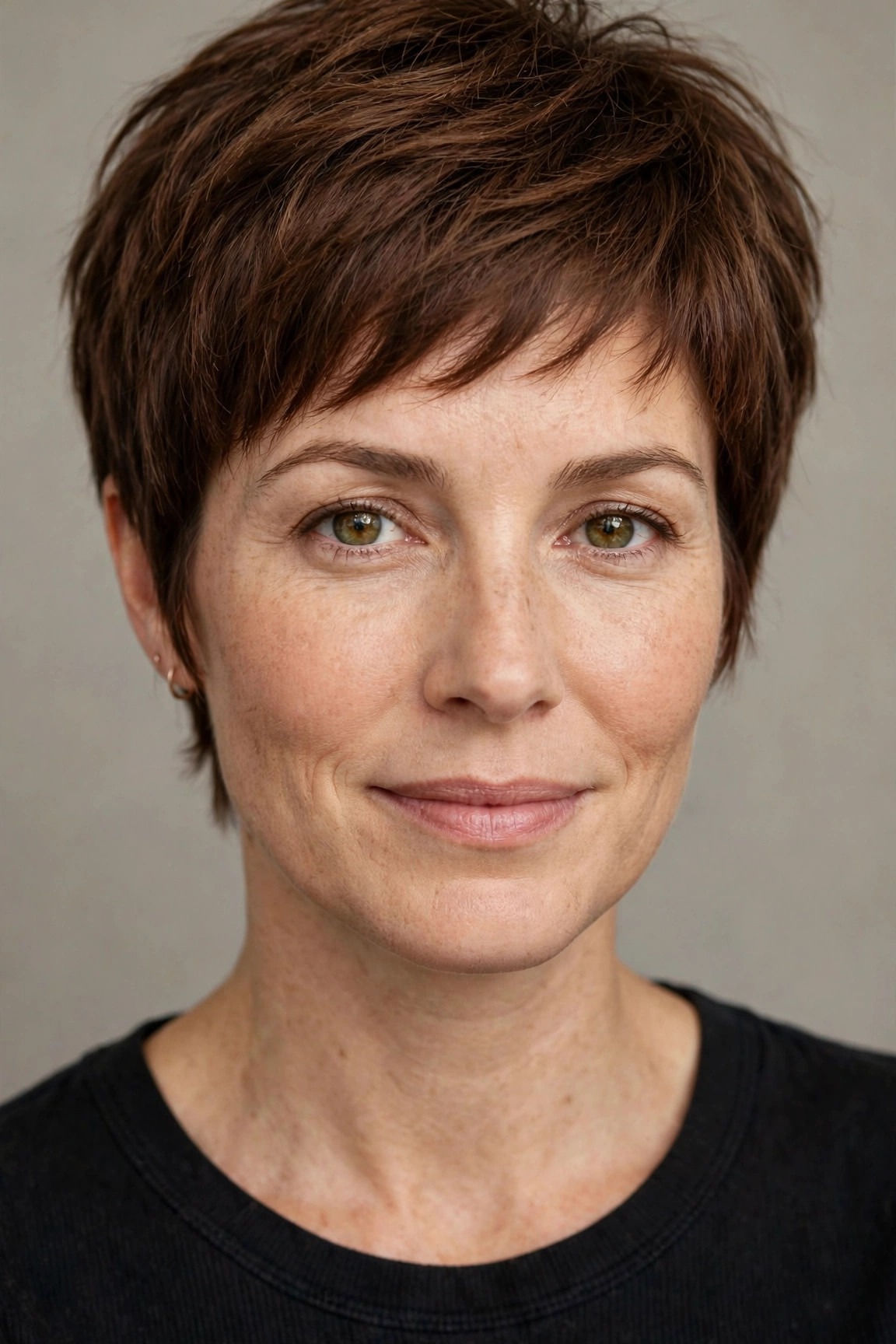
The look: warm brunette in a softly tapered, wearable pixie-shag.
Warmth brings richness that flat dark brown lacks — and on fine hair, richness reads as density. The soft taper keeps it feminine.
Color formula: warm brunette + gloss. Best for: warm undertones wanting low-maintenance color.
22. 🥂 Champagne Whisper Shag

The look: champagne blonde with whisper-light layering.
Champagne’s brightness makes even the lightest layers visible — crucial for fine hair where texture can disappear. Luminous without being stark.
Why it works: light color + visible texture = the fullness illusion. Best for: fine hair going lighter for the first time.
23. 🌫️ Ash Veil Shag

The look: cool sheer ash tones with delicate piecey texture.
Ash creates shadow-depth that warm blondes can’t — and shadow is what the eye reads as thickness. The veil-like sheer tone keeps it modern.
Best for: cool undertones. Maintenance note: purple shampoo keeps the ash from warming.
24. 🍯 Honeycomb Pixie Shag
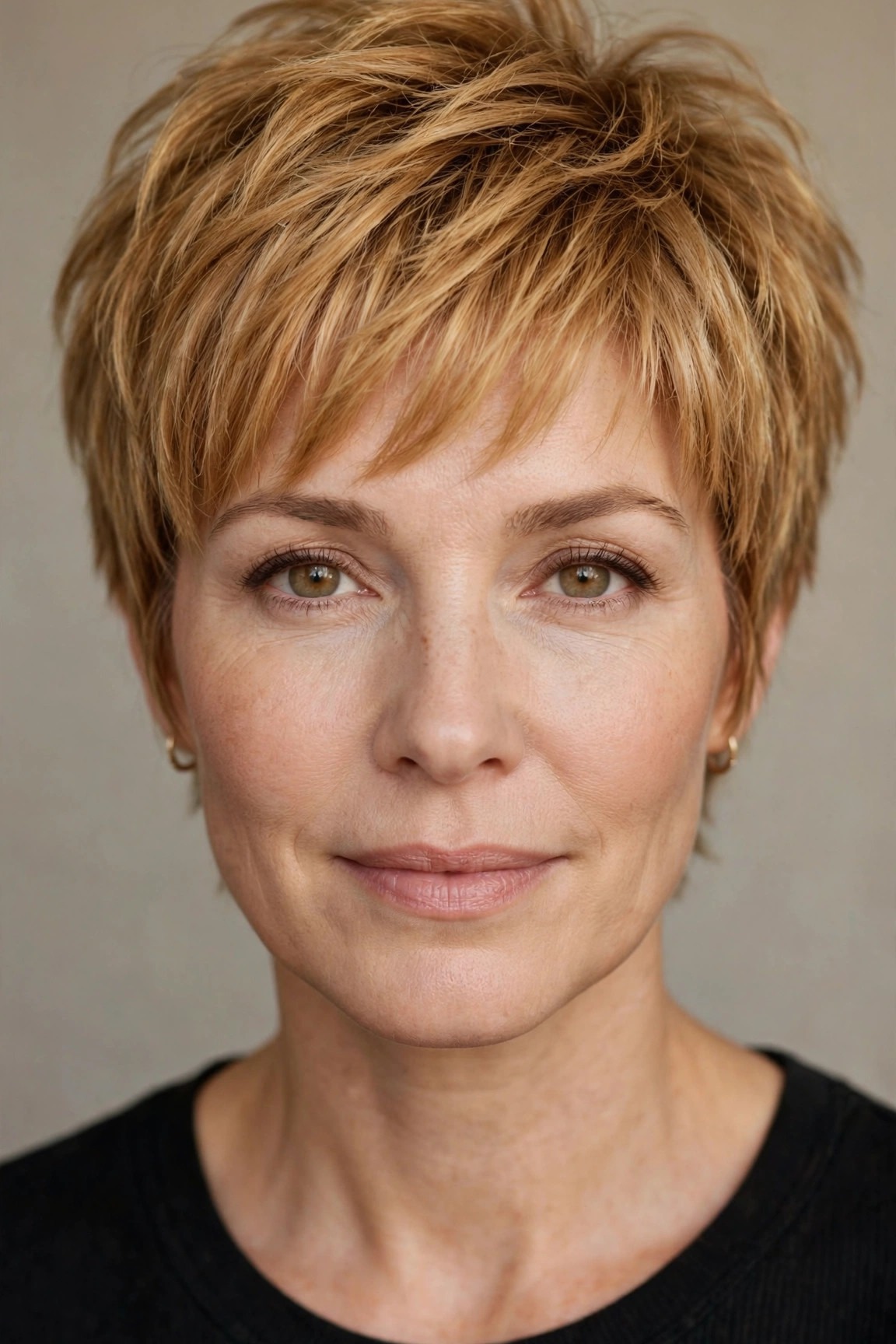
The look: warm honey-gold over a softly lifted pixie shag.
Honeycomb blonde is dimensional by nature — golden ribbons over warmth. On a pixie shag it makes every lifted piece glow.
Color formula: honey balayage pieces over a golden base. Why it works: multi-tonal warmth = visible texture.
25. 🦪 Pearl Mist Shag Bob
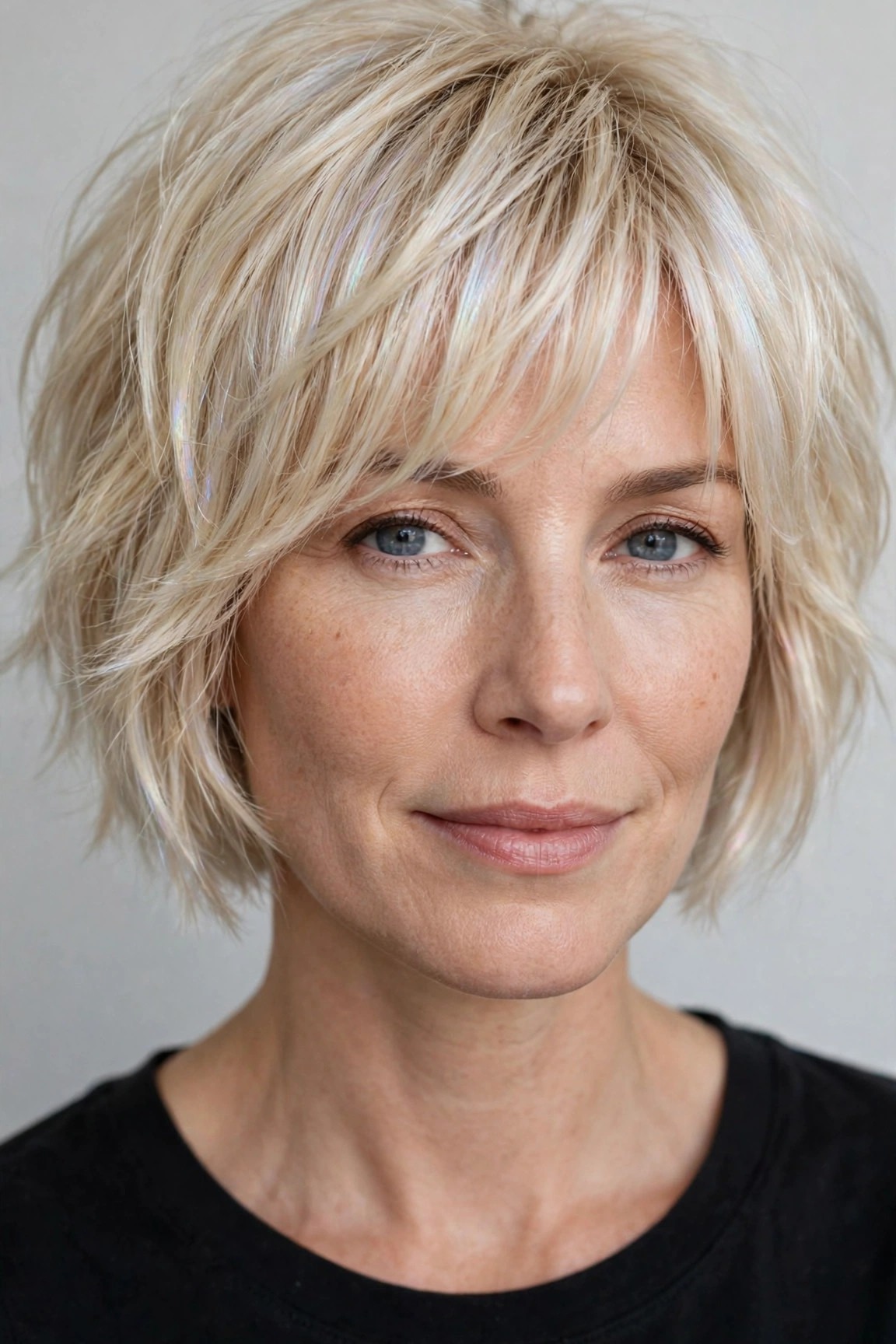
The look: pearl blonde with a soft iridescent finish.
The finale: pearl’s subtle iridescence makes fine hair look almost luminous — light refracts instead of just reflecting. Gentle texture completes it.
Best for: cool to neutral undertones. Why it works: iridescence creates depth no flat color can match.
💡 More for fine hair:
Short Hairstyles for Fine Thin Hair · Best Hairstyles for Thin Fine Wavy Hair · Bob Hairstyles for Fine Hair
📋 Your Fine-Hair Shag Cheat Sheet
At the salon, say: “strategic layering, solid perimeter” — then point to exactly where you want lift (usually the crown).
The density equation: layers create the shape; the perimeter creates the fullness. Never sacrifice the second for the first.
Fringe economics: baby bangs and wispy fringes cost the least hair; full fringes cost the most. Spend accordingly.
Color = volume: ribbons, dimension, or even a gloss make layers visible — invisible layers on fine hair just look thin.