13 Signs Someone Is Truly Lonely, According to Psychologists
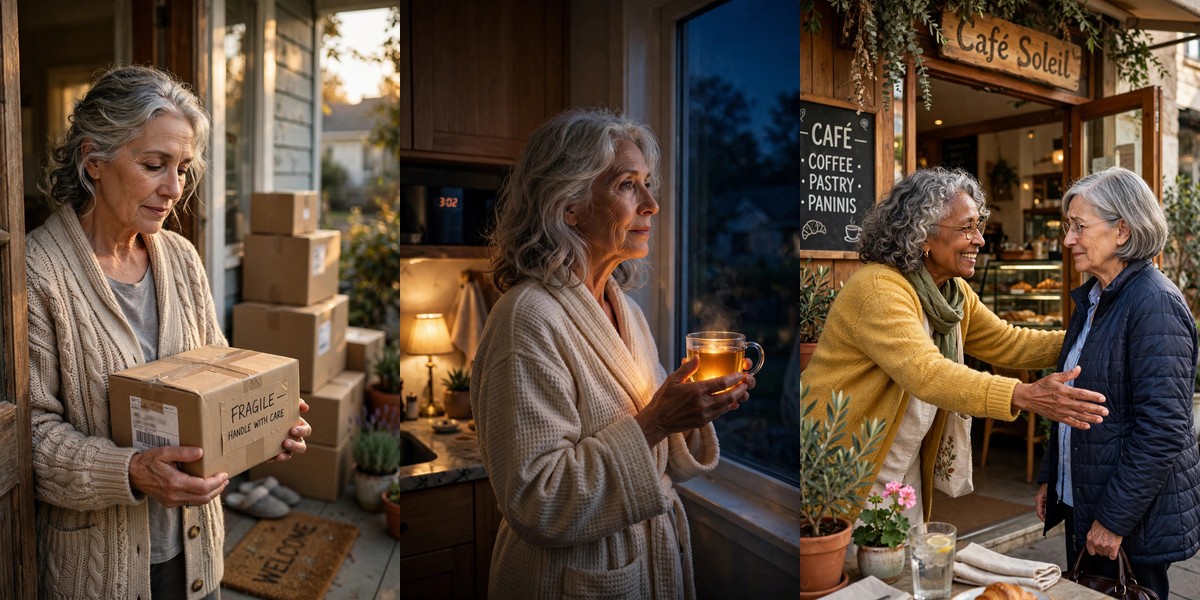
True loneliness rarely looks the way we picture it. It is seldom a person weeping in a dark room. More often, it is a porch stacked with parcels, a planner crammed with errands, and a cheerful voice insisting, “I’m fine, really.”
Psychologists who study isolation say the loneliest people are often the hardest to spot — they stay busy, stay polite, and stay just out of reach. This guide is for anyone who worries about a friend, a neighbor, or a parent: how to read the quiet signs, and how to respond in a way that actually helps. It might start with the neighbor who always waves but never stays for coffee, or an old school friend you keep meaning to reconnect with.
One rule before you read on: look for patterns, not moments. A single cancelled dinner means nothing. A cluster of these signs, stretching over weeks or months, means it may be time to reach out.
💖 First, a quick decoder: loneliness vs. solitude
Solitude is chosen and refreshing — a woman who loves her quiet garden mornings and declines a party is not lonely. Loneliness is disconnection you did not choose: craving company and not having it. The signs below describe the second kind. Never use them to label someone; use them to notice who might need you.
📦 1. The doorstep is stacked with parcels

What it looks like: boxes arrive almost daily, filled with gadgets and bits and pieces nobody truly needed. The porch, the hallway, the kitchen table slowly fill with cardboard.
What it may mean: each delivery is a tiny guaranteed moment of contact — the driver’s greeting, the anticipation of opening something new. Shopping fills the silence with noise, and the transaction briefly stands in for companionship.
Watch for: a buying spike after a life change — retirement, a move, a child leaving home, a bereavement.
Gentle response: never mock the parcels. Instead, offer the real thing underneath: “I’m running to the shops Saturday — come with me, and we’ll have lunch after.”
📅 2. Every hour is booked, none of it with people

What it looks like: the planner is a work of art — oil change, reorganizing the pantry, three separate errands on the same day. Every minute accounted for, and almost none of it involves another human being.
What it may mean: a packed schedule is a socially admired way to burn through daylight. Frantic solo activity keeps the quiet house at bay and gives a ready excuse for turning down invitations.
Watch for: the aftermath. A busy person finishes and rests; a deeply lonely person finishes and immediately hunts for the next distraction.
Gentle response: “You’re so busy these days. What if we blocked one hour just for coffee — no errands, no lists, just us?”
☎ 3. Phone calls that never quite end

What it looks like: forty minutes on the grocery receipt, the weather forecast, the neighbor’s hedge. The moment you try to wrap up, her voice rises and the topics multiply.
What it may mean: long rambles on trivial subjects are a way to stay connected without risking vulnerability. It is not about the hedge — it is about the dread of the silence that follows “goodbye.”
Don’t say: “I have to run” on repeat. Try saying: “What was the best part of your week?” One real question can give her the emotional contact she was manufacturing, and let the call end peacefully.
🤒 4. Every sniffle becomes breaking news

What it looks like: a scratchy throat turns into hourly text updates about water intake and resting pulse. Minor ailments get reported like weather events.
What it may mean: society grants us permission to ask for comfort when we are physically unwell. A small illness becomes a socially approved ticket to request nurturing without ever admitting to being alone.
Don’t say: “It’s just a cold.” Try saying: “That sounds miserable. I’m coming over with soup — and staying for the tea.” Notice whether she wanted a cure, or simply wanted you to stay on the line.
🌙 5. Their clock has slipped into the night

What it looks like: she is wide awake at 3 a.m. and dozing through the afternoon. Meals, calls, and outings all drift later and later until her days barely overlap with anyone else’s.
What it may mean: the night offers psychological cover — nobody expects a call at 3 a.m., so being alone feels like a choice rather than a deficit. The exhaustion then keeps her asleep through the hours when people are awake.
Watch for: a sleep schedule that inverts after a major transition — divorce, retirement, an empty nest, a loss.
Gentle response: anchor the mornings with something kind and unmissable: “I’m at the café every Thursday at ten. I saved you a seat.”
📺 6. The television characters feel like family

What it looks like: series get rewatched like reunions. She talks about fictional people with real affection, on first-name terms, the way you would speak of a sibling.
What it may mean: long evenings alone can quietly turn screen time into a relationship substitute — steady company with zero risk of rejection. It asks for no emotional output and delivers predictable comfort.
Don’t say: “You watch too much TV.” Try saying: “You love that show — tell me about it over lunch this week?” Validate the interest, then offer a bridge to a real table.
💪 7. “I don’t need anyone” — said a little too firmly

What it looks like: every offer of help is declined, sometimes sharply. She drags the heavy bags herself, fixes the shelf herself, insists she is “completely fine on her own.”
What it may mean: fierce independence can be a defensive shell. After long stretches alone, accepting help starts to feel like a debt — and needing someone feels like a weakness she refuses to admit.
Gentle response: don’t ask “do you need help?” — she will say no. Instead, arrive with something small and specific: “I made too much soup; I’m bringing you half.” Giving, not offering, is the key.
❌ 8. They say yes, then cancel at the last minute

What it looks like: Tuesday’s dinner becomes Friday’s apologetic text. She genuinely wants to come when she agrees — then the anticipation builds into anxiety, and cancelling brings instant relief.
What it may mean: the initial yes is real. For someone chronically isolated, the days between agreeing and arriving fill with worry about keeping up conversation, reading social cues, and being a burden.
Gentle response: don’t withdraw the invitations — that is how the cycle becomes permanent. Make it low-stakes: “No need to dress up, just come as you are.” And when she does accept, celebrate it: here’s what to wear to a 60th birthday party over 50 so she has one less thing to worry about.
🔄 9. Routines that cannot be interrupted

What it looks like: the same walk at the same hour, lunch at noon sharp, the evening arranged to the minute. A surprise visit or a spontaneous call visibly rattles her.
What it may mean: strict repetition is a substitute for the rhythm other people normally provide. Without anyone’s unpredictability, routine becomes the framework holding the day — and her — together.
Watch for: anger or distress that seems out of proportion to the interruption itself. The routine is load-bearing.
Gentle response: don’t ambush her. Slip gently inside the routine instead: “I’ll join your Tuesday walk — I’ll meet you at the corner at ten.”
🤗 10. A hug feels like a surprise party — stiff or clinging

What it looks like: she flinches at a casual shoulder touch — or holds on to a hug a beat too long. Both are uncalibrated responses from a body out of practice with simple contact.
What it may mean: prolonged isolation can leave people touch-starved. A hug stops being background warmth and becomes startlingly significant, which is exactly why it overwhelms.
Gentle response: move slowly and narrate your affection: “It is so good to see you — let me give you a gentle side hug.” A few words of warning give her body the fraction of a second it needs to accept the warmth.
🍴 11. Dinner is always for one — with the television as company

What it looks like: she cooks properly — real plates, real food — but eats every meal solo in front of a glowing screen. Nobody ever sits in the other chair.
What it may mean: shared meals are one of the oldest forms of human connection, and the television is standing in for the conversation that should be across the table. The care she puts into cooking makes the empty chair louder, not quieter.
Watch for: meals drifting to odd hours or turning into grazing, a sign the structure around eating is loosening.
Gentle response: make yourself a regular seat: “I’m coming for dinner Thursday. You cook, I’ll do the dishes.” Consistency matters more than occasion.
📱 12. Always online, never truly talking

What it looks like: she likes every family photo and comments on every update, yet her own messages stay short and surface-level. She is everywhere on the screen and nowhere in the conversation.
What it may mean: scrolling creates the sensation of being in the loop while requiring almost nothing — no small talk to sustain, no pauses to fill. It is a window into everyone’s life that she watches from the outside.
Watch for: affectionate public comments paired with zero real check-ins. The likes are a lifeline, but they are one-directional.
Gentle response: turn the scroll into a call: “I saw your comment on the grandkids’ photo — tell me everything.” Then actually listen.
🎂 13. Milestones pass without a mention

What it looks like: her birthday comes and goes in silence. Anniversaries, the anniversary of a loss, the day the last child moved out — she marks them alone, or pretends not to.
What it may mean: announcing a milestone and having nobody respond hurts more than staying quiet. Silence becomes safer than hope, so she stops mentioning the days that matter most.
Watch for: a birthday she “forgets” to tell anyone about, or a milestone she mentions only weeks after it passed.
Gentle response: mark the calendar yourself and show up first: “I know your birthday is Tuesday. I’m taking you to lunch — and you’re wearing the good earrings.”
🕊 When a sign becomes a situation worth naming
One sign is a quirk. Several of them, lasting for months, is a situation — and a gentle nudge is appropriate. Psychologists suggest paying attention when:
- the signs cluster together and don’t lift after a few weeks
- appetite, weight, or everyday self-care start slipping
- she says things like “what’s the point” or talks about feeling invisible
- grief, divorce, or a major loss sits underneath it all
You are not diagnosing anyone — you are simply saying, with love: “I think talking to someone outside the family might help, and I’ll go with you if you like.” That sentence is a bridge, not a verdict.
💌 The quietest way to help
The antidote to loneliness is rarely one grand gesture. It is small, steady invitations: the Thursday coffee that never moves, the weekly walk, the phone call that always comes.
If any of these signs feel familiar — not in someone else, but in your own days — let this be your invitation. Start small: say yes to the next plan, take the walk with a neighbor, or plan one low-pressure evening out — our guide to what to wear for date night over 50 is a lovely excuse to get dressed and go.
Someone in your life is waiting for exactly this — not pity, not advice, just company. Go be the person who notices.