What to Wear to a Wedding Over 50: Elegant Without Upstaging Anyone
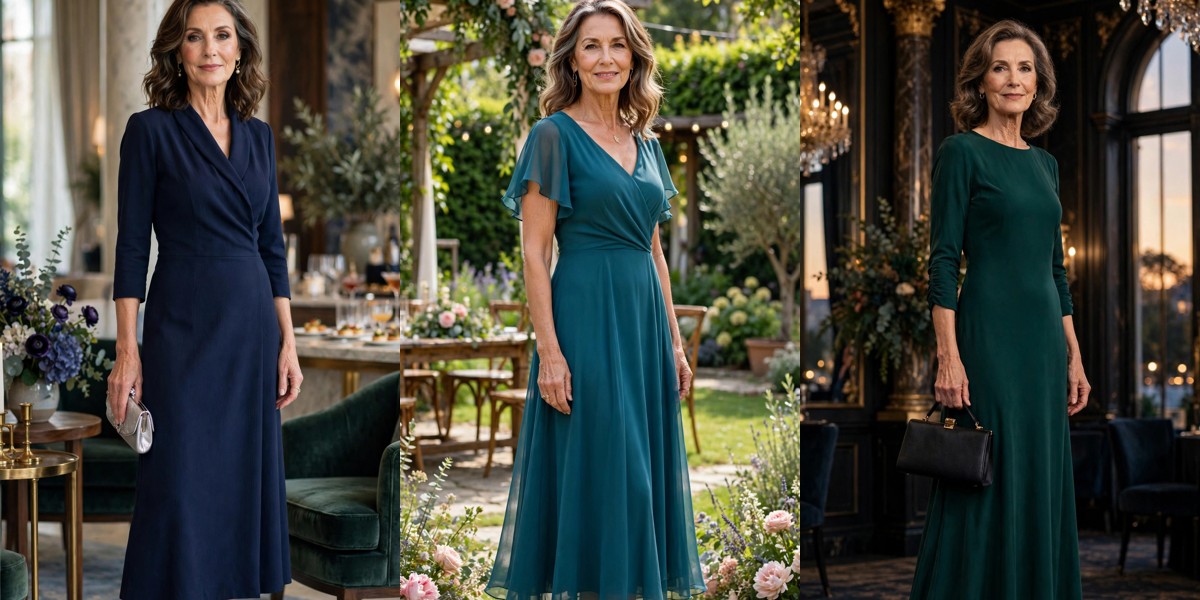
The invitation arrives, and within a day the same three worries start circling: Will I look overdressed? Will I look like I didn’t try? And the quietest one of all — will anything I own actually feel comfortable from the first photograph to the last dance?
Here is the reassuring truth about wedding-guest dressing after 50: elegance is not about out-shining anyone, and it was never about sequins or suffering in shoes you can barely walk in. It comes from matching the occasion, choosing a silhouette that moves with you, and letting one beautiful detail do the talking.
This guide starts with a dress-code decoder — what the words on the invitation really ask of you — and then walks through 11 complete outfits matched to those codes, from garden afternoons to black-tie evenings. If you are dressing for a starring family role instead, our guides to what to wear as mother of the bride over 50 and mother of the groom outfits over 50 go deeper on those days.
What the Invitation Really Means: A Dress-Code Decoder
Most wedding stress is really translation stress. Couples use dress-code shorthand that means something quite specific — decode it first, and half your outfit chooses itself.
| On the invitation | What it really means for you | Skip this |
|---|---|---|
| Black tie | Floor-length or a very formal midi in a rich fabric; evening shoes; your best jewellery, worn sparingly. | Anything you’d wear to a nice lunch. |
| Black-tie optional / formal | A long dress if you love one, or a polished midi or trouser suit in satin, crepe or velvet. | Daytime florals and flat sandals. |
| Cocktail | The sweet spot: a midi dress, an elegant jumpsuit or dressy separates, with a heel you can stand in. | A full ballgown — and jeans-adjacent anything. |
| Semi-formal / dressy casual | A pretty midi or pleated skirt outfit; softer fabrics, lower heels, daytime colour welcome. | Office suiting that reads “meeting at eleven.” |
| Casual / backyard | A floral or printed midi, block heels or dressy flats that survive grass, and a layer for evening. | Trainers, denim, and anything you’d garden in. |
Two decoder footnotes that save endless second-guessing: a daytime ceremony almost always means a lighter touch than the same words would mean at 7 p.m., and the venue is part of the code — a barn, a beach and a ballroom can share a dress code and still call for three different shoes.
1. The Navy Crepe Midi — the Cocktail Answer That Never Misses
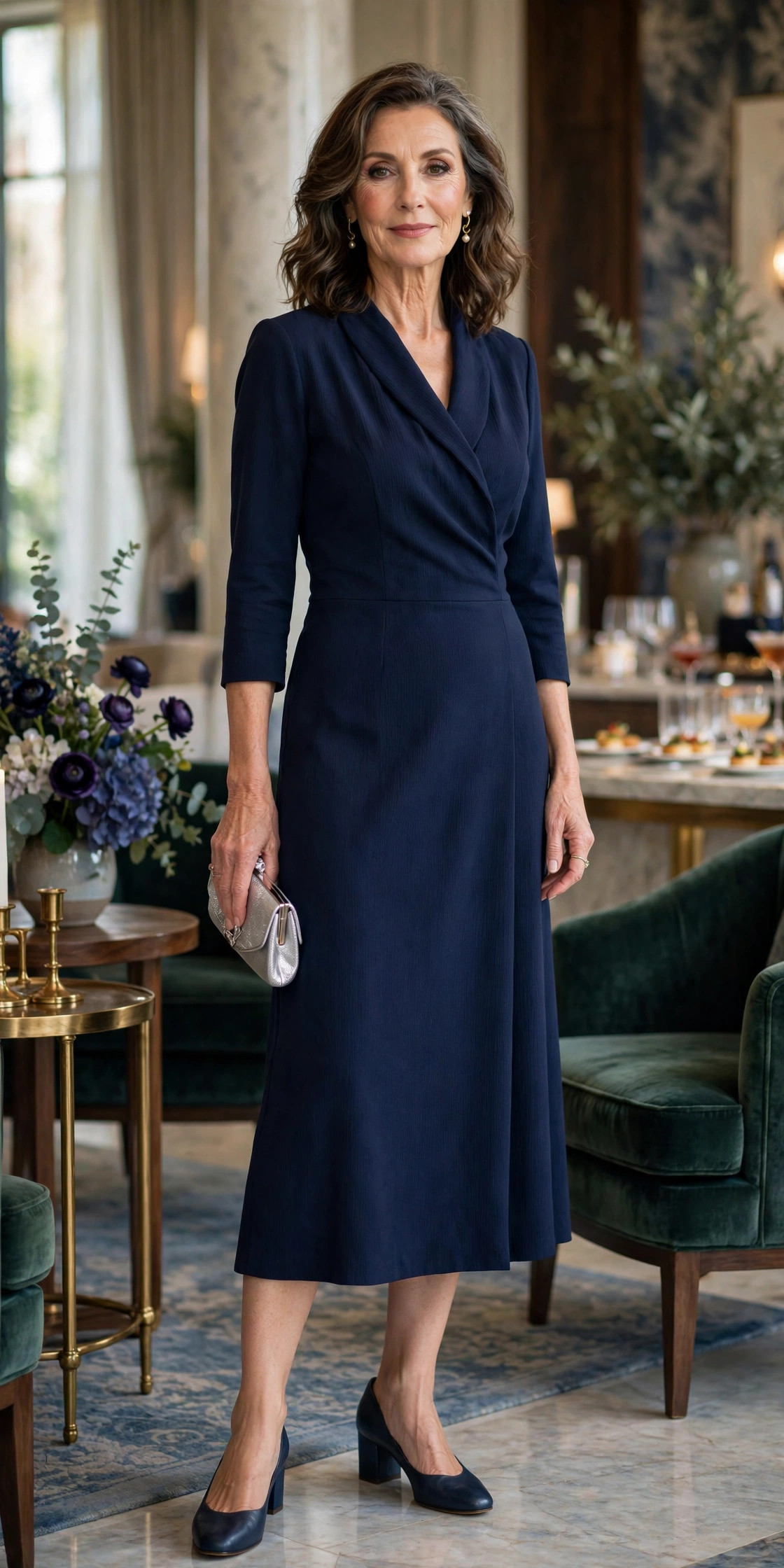
Decoder level: cocktail, semi-formal, evening. If every invitation in your diary blurred together, this is the one dress that would carry you through nearly all of them. Navy crepe skims rather than clings, photographs beautifully next to almost any colour the bridal party chooses, and reads formal without ever looking like it is trying to compete.
Look for three-quarter sleeves and a wrap-style or shawl neckline — both give shape and coverage in one move, with nothing to adjust all day. Finish with a low block heel and a small metallic clutch: the single glint of silver is your focal point, so keep earrings small and skip the necklace entirely.
Do: let the clutch be the jewellery. Don’t: add a matching navy wrap, shoes and bag — head-to-toe one colour, exactly matched, is what tips navy from elegant to uniform.
2. The Burgundy Satin Wrap Midi — Evening Polish Without a Single Sequin
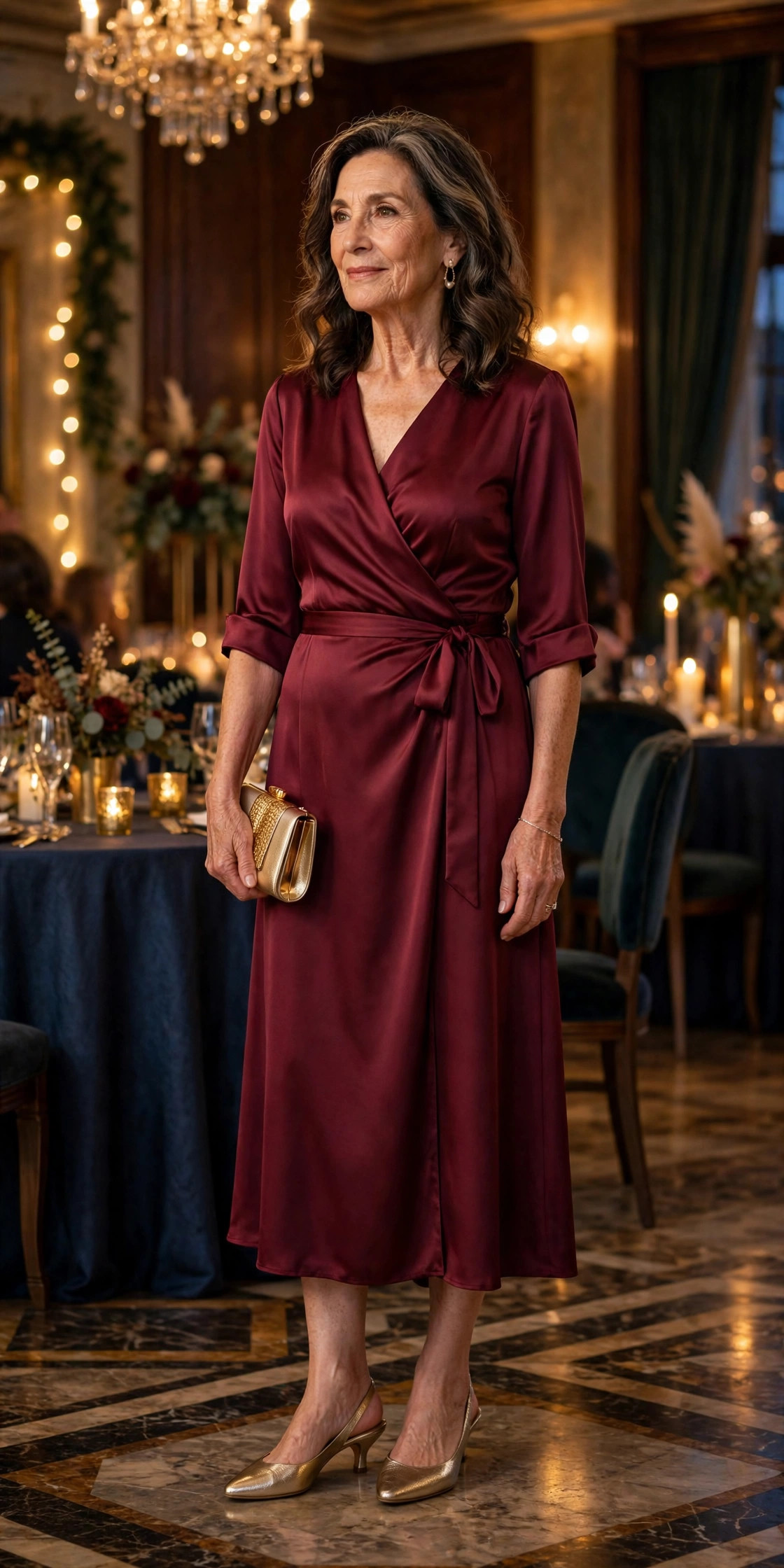
Decoder level: cocktail into formal evening. Burgundy is the colour women reach for when black feels too stark and red feels too loud — it flatters almost every skin tone, deepens beautifully under evening light, and looks expensive in photographs. In soft satin with a wrap bodice, it needs no embellishment at all; the fabric’s gentle sheen does the work.
The wrap shape earns its keep twice: it defines a waist without a tight band you will feel by dessert, and the elbow-length sleeve gives coverage that still shows a pretty forearm and bracelet. Gold or champagne low heels warm the colour up — the same trick we lean on when styling evening looks that glow without going overdone.
Do: tie the wrap firmly and add a discreet safety pin at the crossover. Don’t: choose high-shine satin head to toe plus metallic everything — one sheen per outfit.
3. The Teal Chiffon A-Line — Made for Garden Afternoons
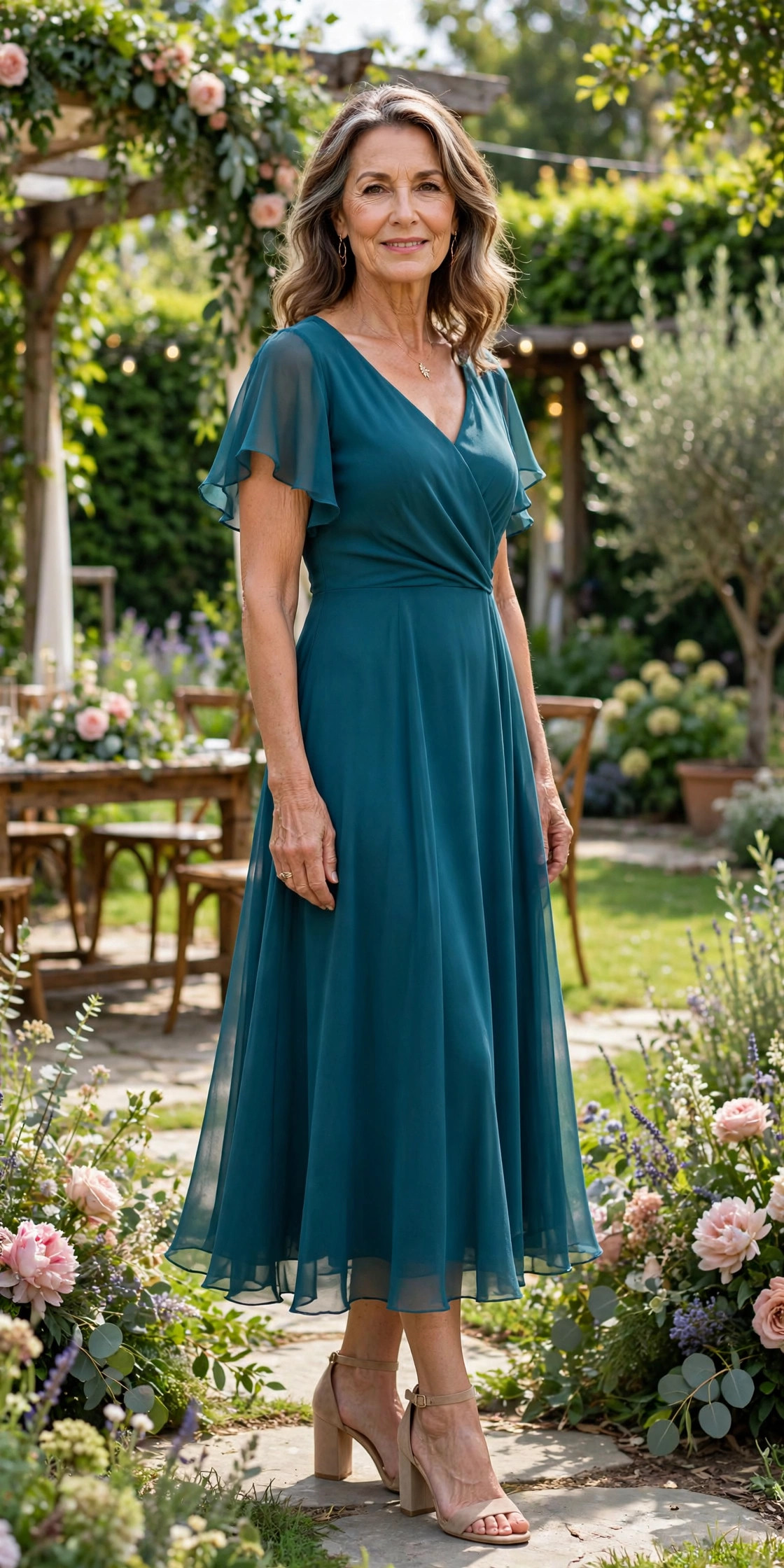
Decoder level: daytime, garden, semi-formal. Outdoor weddings punish stiff fabrics and reward movement. A teal chiffon A-line floats when you walk, breathes through a warm ceremony, and its flutter sleeves solve the “I want my arms covered but not sweltering” problem in the prettiest way possible.
Teal is the garden guest’s secret weapon: it holds its own against green lawns (where pale pastels wash out) and looks joyful rather than formal in daylight. Keep shoes practical and pretty — a nude block-heel sandal that will not sink into grass — and carry the wrap you hope you won’t need, because garden evenings turn cool faster than anyone expects.
Do: check the lining reaches mid-thigh at least; chiffon against sunlight is unforgiving. Don’t: wear a stiletto on lawn — you will spend the day aerating it.
4. The Plum Wide-Leg Jumpsuit — the Modern Answer to “I Don’t Do Dresses”
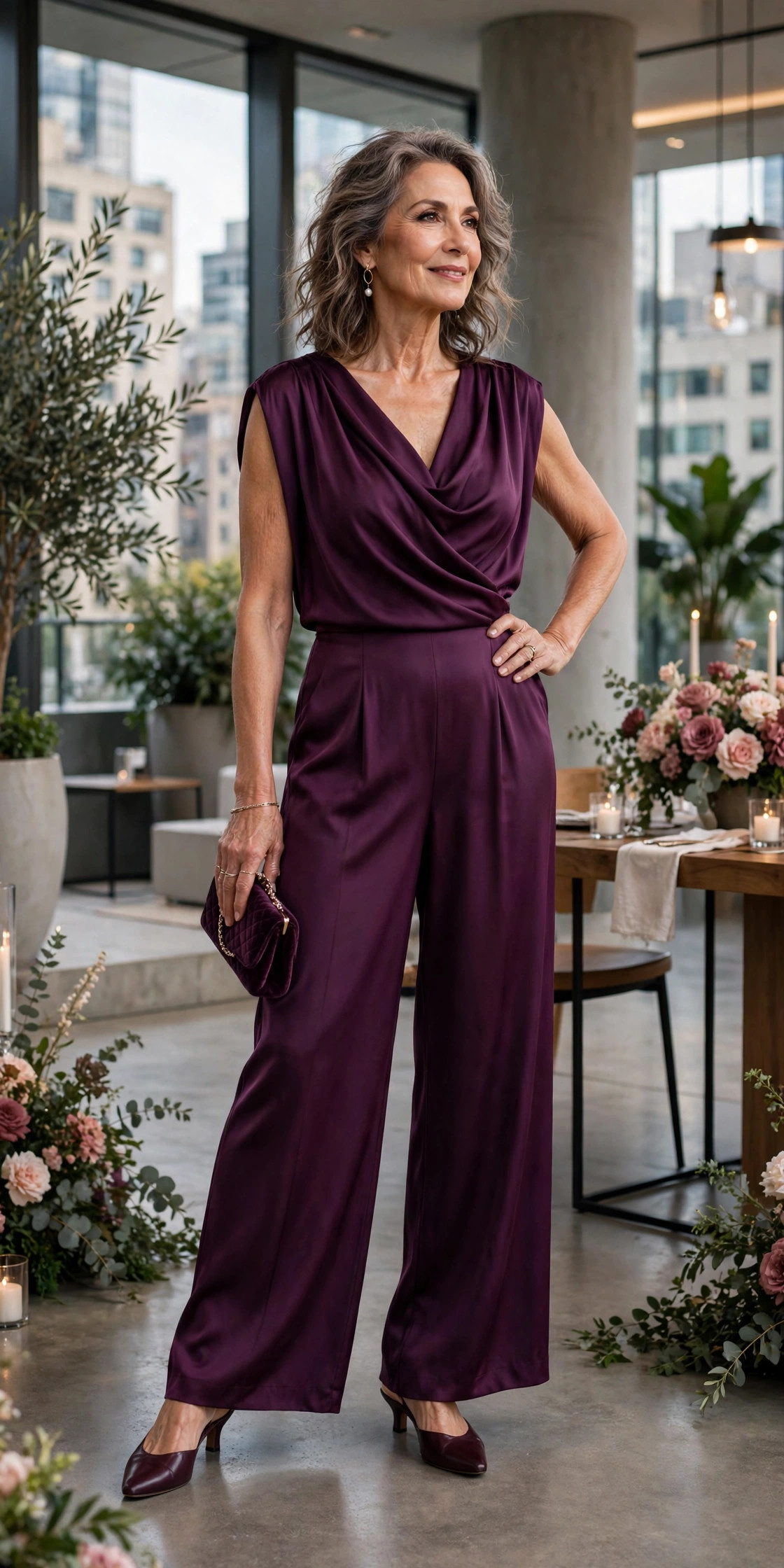
Decoder level: cocktail, city weddings. A wide-leg jumpsuit in deep plum gives you the one-piece ease of a dress with the confidence of trousers — no worrying about hemlines on windy terraces, no tights decisions, and a long, unbroken line that photographs as elegantly as any gown at its level.
The details decide whether it reads “wedding” or “work”: choose a draped or crossover neckline, fabric with real fluidity, and a waist that is defined but not nipped. Then dress it up deliberately — a clutch (never a shoulder bag), a pointed low heel just visible under the hem, and one pair of earrings with presence.
Do: have the hem tailored to your wedding shoes; pooling fabric is the one thing that cheapens this look. Don’t: add a blazer “just in case” — a soft wrap keeps the occasion feeling.
5. The Rose Floral Midi — Spring’s Easiest Yes
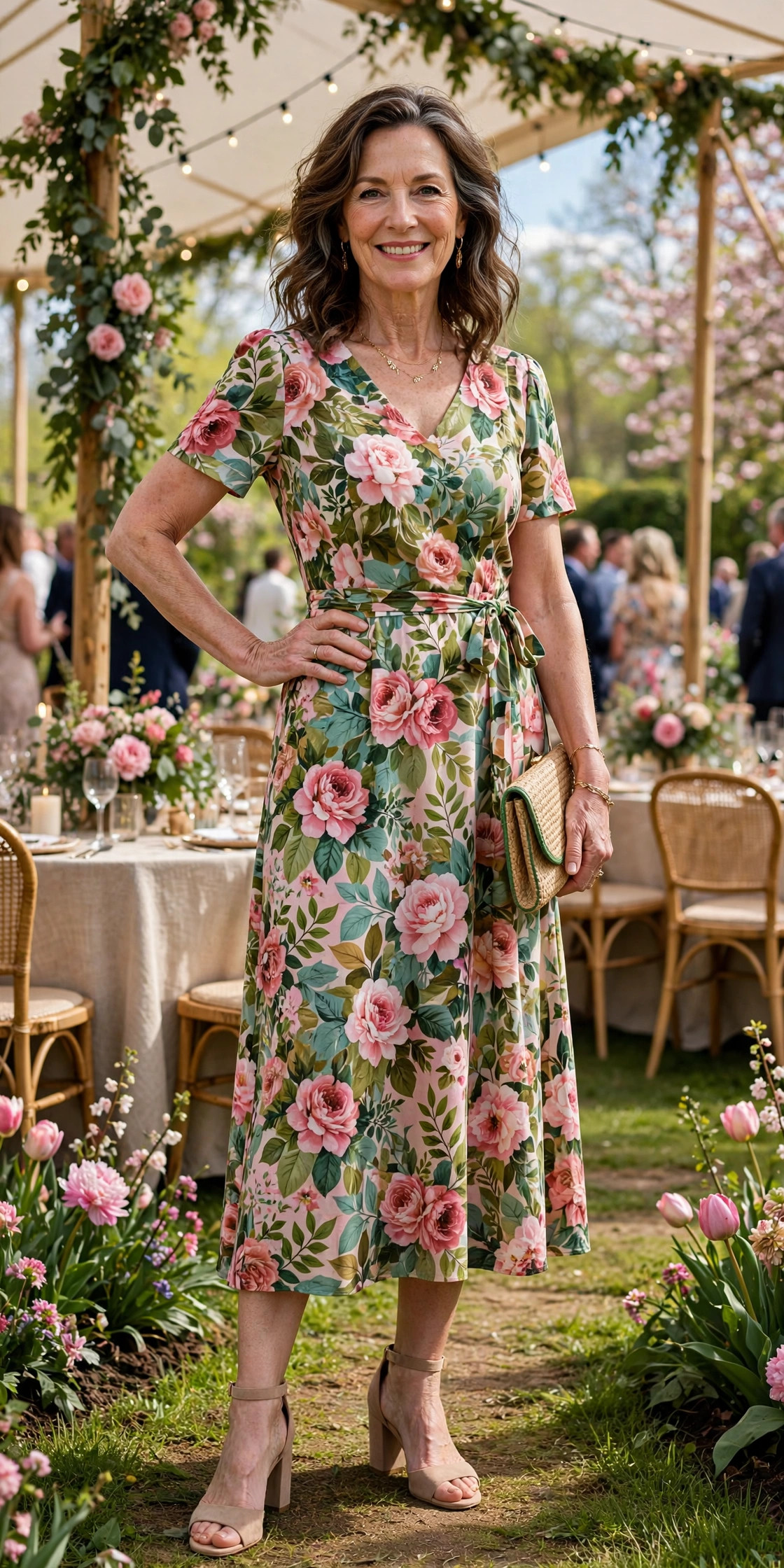
Decoder level: daytime, dressy casual into cocktail. A bold floral midi on a coloured ground is the happiest outfit in this guide, and the most forgiving: a lively print hides a multitude of fit worries, needs almost no jewellery, and always looks like you dressed for a celebration rather than an obligation.
Scale is everything after 50. Choose prints with flowers large enough to read clearly in photographs — ditsy patterns can look busy and dated in pictures — on a pink, sage, navy or burgundy ground rather than a white one, so the dress never drifts toward bridal territory. A wrap or belted waist keeps the volume tailored.
Do: pull one colour from the print for your bag or shoes. Don’t: wear floral head-to-toe with a floral wrap — the print is the outfit.
6. The Emerald Column Gown — Black Tie, Handled Calmly

Decoder level: black tie. A true black-tie invitation is the one time floor-length is genuinely expected — and a deep emerald column gown answers it with the least fuss imaginable. The long, clean line is the elegance; there is no print to manage, no neckline engineering, nothing between you and simply standing tall.
Three-quarter sleeves make this gown quietly brilliant for its age group: full coverage, no wrap to clutch all evening, and a silhouette that stays dignified in every photograph. Keep accessories architectural and few — a structured clutch, small studs or drops, a sleek low heel — because at this level of formality, restraint is what reads as luxury.
Do: have it hemmed to just brush your shoes, never pool. Don’t: bring a casual pashmina; if you need a layer, it should be a proper evening stole or tailored coat.
7. The Dusty Rose Trouser Suit — City Weddings, Sharply Done

Decoder level: formal, city, registry-office chic. A soft-colour trouser suit is the polished power move of wedding dressing: structured enough for a grand hotel, comfortable enough for a long day, and blissfully immune to wind. Dusty rose keeps tailoring feminine and celebratory rather than corporate.
The difference between “wedding suit” and “work suit” lives in the styling. Wear a silky camisole or soft blouse underneath instead of anything shirt-like, choose pointed flats or a low heel in a tonal shade, and add one piece of real jewellery. Trousers should be wide or softly straight, breaking just over the shoe.
Do: steam or press it the day before — creased tailoring reads tired instantly. Don’t: carry a work tote; a clutch changes the whole register.
8. The Dusty Blue Lace-Sleeve Midi — for Church Doors and Family Photographs

Decoder level: traditional daytime, semi-formal. Some weddings ask for a little more decorum — a church ceremony, a conservative family, photographs that will sit on mantelpieces for decades. A dusty blue midi with lace sleeves is the graceful answer: covered shoulders, a modest neckline, and texture doing the decorating so you don’t have to.
Lace belongs on the sleeves, panels or overlay rather than a full lace dress at this age — it looks lighter, modern and far less “mother of the bride costume.” Dusty blue flatters silver hair particularly beautifully and sits calmly beside almost any bridesmaid colour. If your role is in fact mother of the bride or groom, the dedicated guides linked in the introduction cover the extra etiquette of those dresses.
Do: match your clutch to the dress’s tone for a serene, put-together photograph. Don’t: add a fascinator unless the wedding’s style clearly calls for one.
9. The Champagne Pleated Skirt and Silk Blouse — Separates That Outperform a Dress
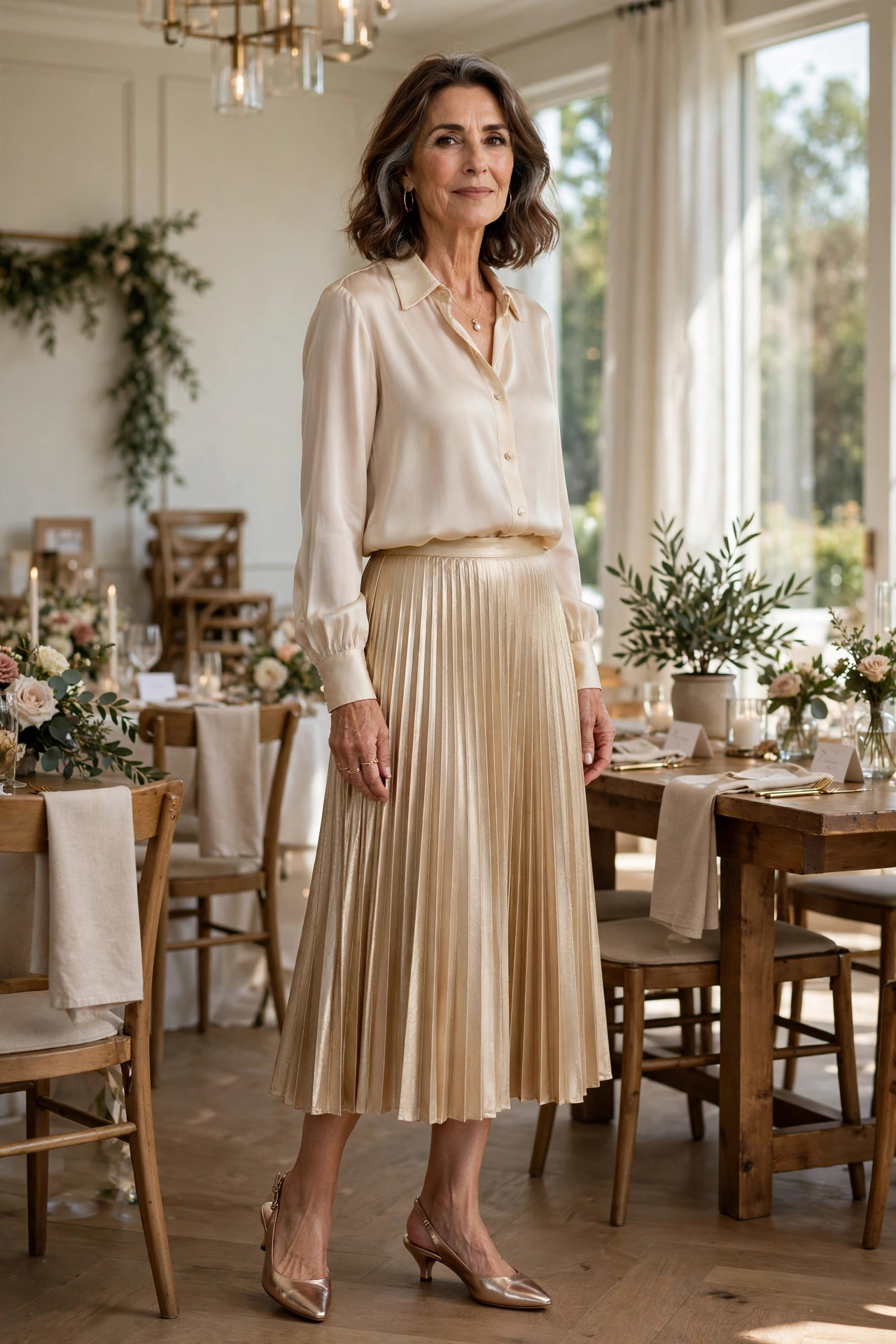
Decoder level: semi-formal into cocktail. If dresses never quite fit — one size on top, another below — separates end the compromise. A champagne pleated midi skirt moves like water when you walk and dance, and a silk blouse in the same warm family of tones reads as one intentional, luxurious outfit.
Champagne is the careful way to wear the pale, luminous colours that suit you without entering bridal territory: it is clearly gold-toned, never white or ivory, especially in a skirt paired with a blouse rather than a dress silhouette. Afterwards, both pieces earn their keep separately — the skirt with a fine knit for dinners, the blouse with trousers.
Do: tuck the blouse fully and add a slim belt if the waistband is plain. Don’t: wear both pieces in clashing sheens — matte with soft shine, never glitter with glitter.
10. The Black Midi, Softened — Evening City Weddings
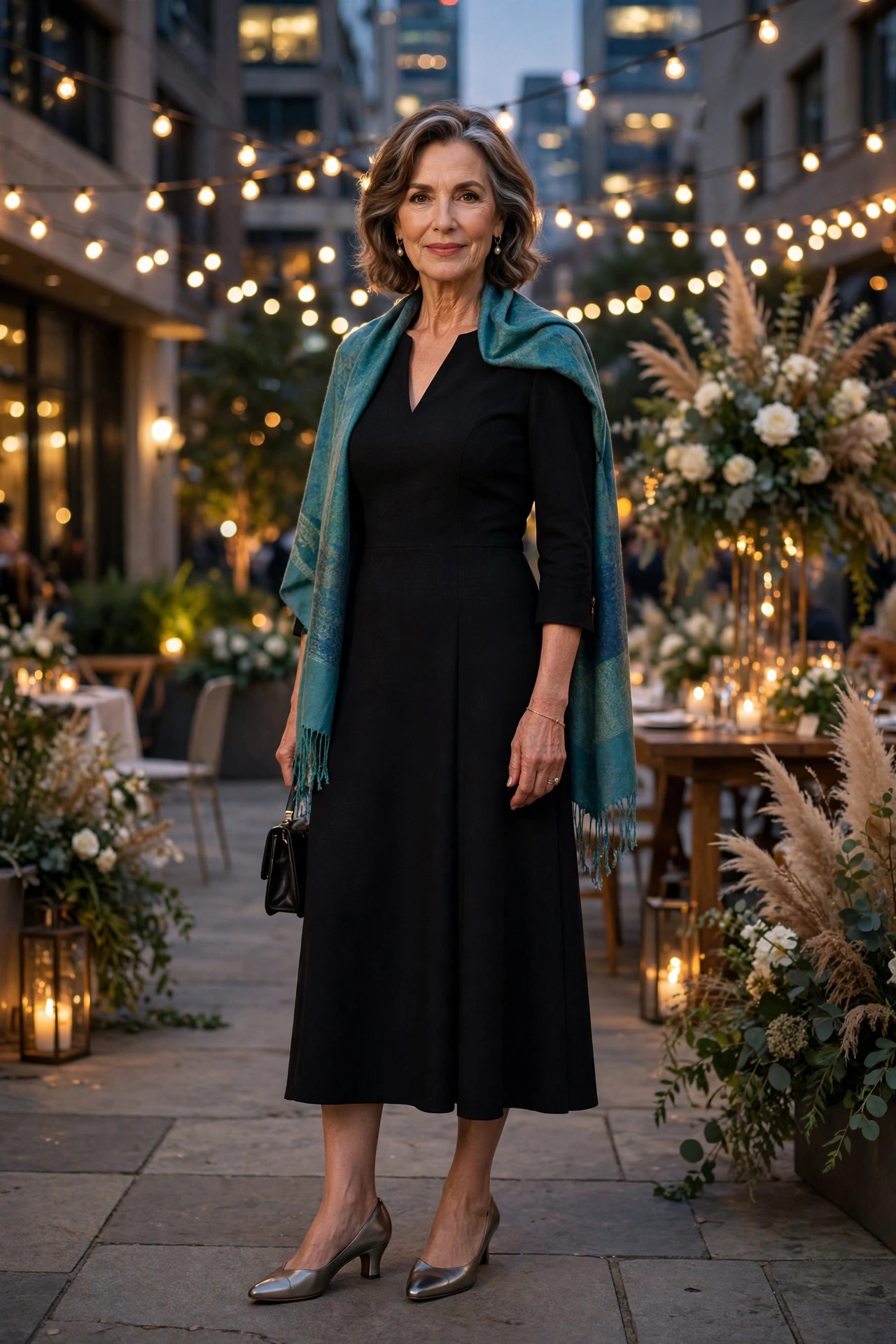
Decoder level: evening cocktail, city. Yes, you can wear black to a wedding — at an evening or city celebration it is now completely mainstream — provided you style it like a guest, not a mourner. The recipe is warmth and contrast: one strong colour against the black, skin showing somewhere, and a shoe with light in it.
Here, a teal wrap over the shoulders transforms a simple black midi instantly, adding colour near the face, coverage for a cool evening, and movement in photographs. Pewter or silver heels and small pearl or crystal earrings complete the softening. For a daytime wedding, lift black further with a coloured shoe and bag — or honestly, choose navy instead.
Do: keep makeup fresh and lips warm; all-black plus pale makeup is what tips this sombre. Don’t: wear black to a morning garden ceremony if the couple is traditional — read the room.
11. The Forest Velvet Midi — Winter Weddings, Warmly Solved
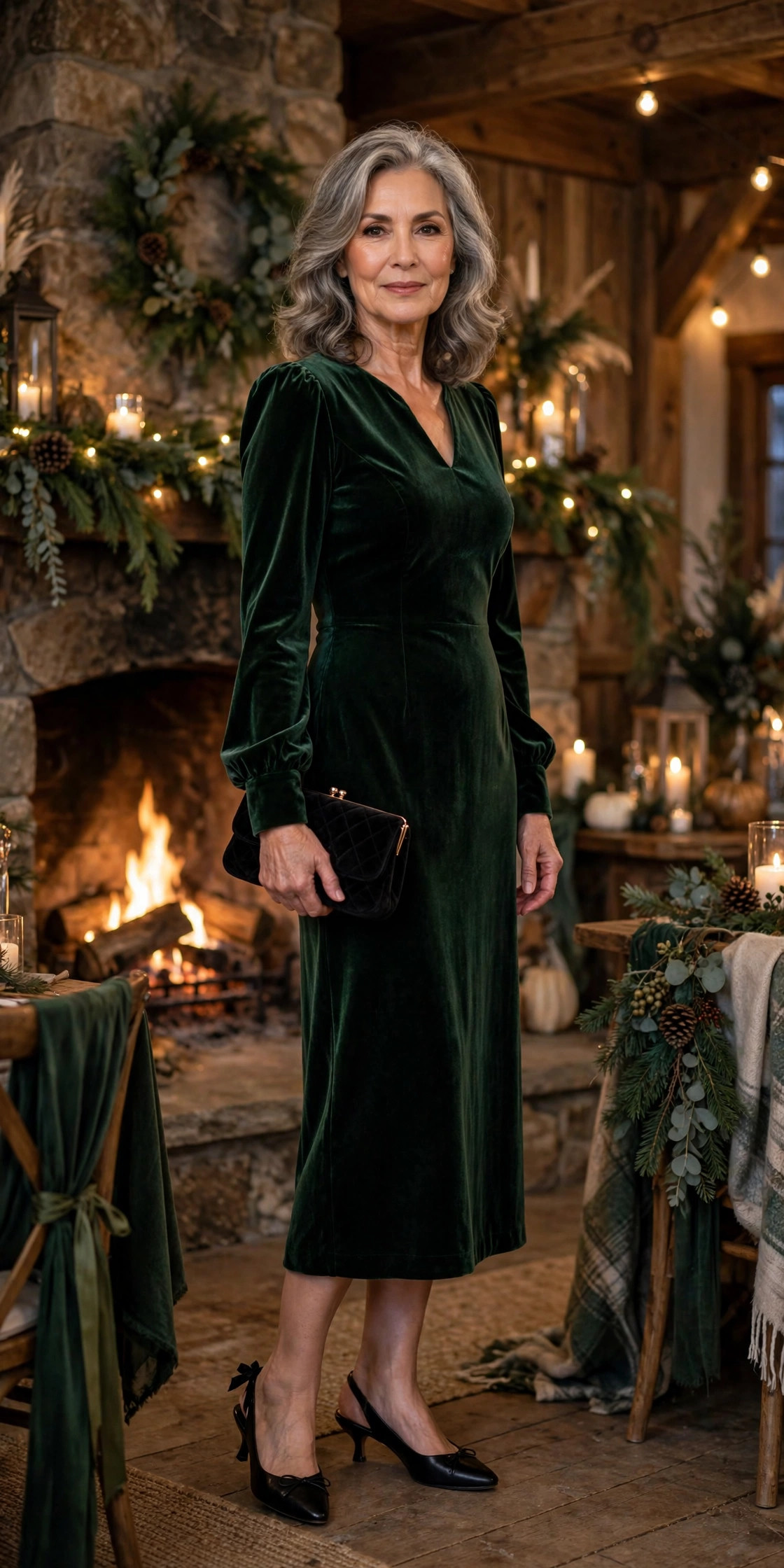
Decoder level: winter formal and cocktail. Winter weddings defeat most guest wardrobes: summer dresses shiver, and the good coat hides everything anyway. Velvet solves it in one fabric — genuinely warm, deeply light-absorbing so it photographs richly, and formal by its very nature. A forest green velvet midi with long sleeves needs no layer until you step outside.
Keep the shape simple, because velvet adds visual weight on its own; a gentle V-neck and a defined-but-soft waist are plenty. Black slingbacks or kitten heels and a small dark clutch keep the mood evening-appropriate, and your real coat can be any smart wool style — velvet forgives whatever goes over it.
Do: hang velvet in a steamy bathroom rather than ironing it. Don’t: pair velvet with more velvet accessories; one plush texture per outfit.
The Final Ten-Minute Check Before You Leave
- Colour check: nothing white, ivory or pale enough to photograph white — and nothing that matches the bridesmaids if you know their colour.
- Sit, walk, stairs, dance: do all four at home. If you adjust anything twice, change it now, not at the venue.
- Shoes: worn-in, with gel insoles if it’s a long day, and heel protectors if there’s lawn.
- The layer: a wrap or tailored coat you’ve actually tried over the outfit — air-conditioned venues are famously arctic.
- Bag audit: phone, lipstick, tissues, blister plasters, and a safety pin. The safety pin has saved more wedding days than any stylist.
- Photograph test: one phone photo in daylight. Prints, shine and fit all confess on camera before they confess in person.
Frequently Asked Questions
What colours should a wedding guest over 50 avoid?
White, ivory and anything pale enough to photograph white belong to the bride. Beyond that, the cautious list is short: very bright red can dominate photographs at some traditional weddings, and matching the bridesmaids’ colour exactly is best avoided when you know it. Navy, burgundy, teal, plum, emerald, dusty blue and champagne are reliably elegant choices.
Can I wear trousers or a jumpsuit to a wedding?
Absolutely — a wide-leg jumpsuit or a soft tailored trouser suit reads every bit as formal as a dress at the same level. The keys are celebratory fabric (crepe, satin, velvet rather than workday suiting), a defined shape, and dressing it up with a clutch and proper jewellery so it never reads as office wear.
Do I have to wear heels to a wedding?
No. A pointed flat, an elegant slingback or a low block heel can all look completely polished — the shape of the shoe matters far more than its height. What matters is that the shoe looks deliberate, is broken in, and suits the ground you’ll actually walk on, especially grass.
How do I look elegant without looking like I’m competing with the bride?
Choose one focal point — a colour, a neckline, a pair of earrings — and let everything else support it quietly. Avoid bridal colours and silhouettes, keep embellishment to one element, and match your formality to the invitation rather than exceeding it. Elegance at a wedding is calibration, not maximum effort.
What should I wear to a winter wedding over 50?
Start with a warm formal fabric — velvet, heavy crepe or a satin midi with sleeves — then plan the coat as part of the outfit, not an afterthought. Closed shoes or elegant boots, a wrap for draughty venues, and deeper colours like forest green, burgundy and plum all suit the season beautifully.
Whatever the invitation says, the goal is the same: to arrive looking like the most polished version of yourself, comfortable enough to hug, dance, cry a little and be in the photographs without a second thought. Decode the dress code, pick the outfit above that matches it — and then stop second-guessing and enjoy the day.