How to Choose the Right Handbag When You’re Over 50
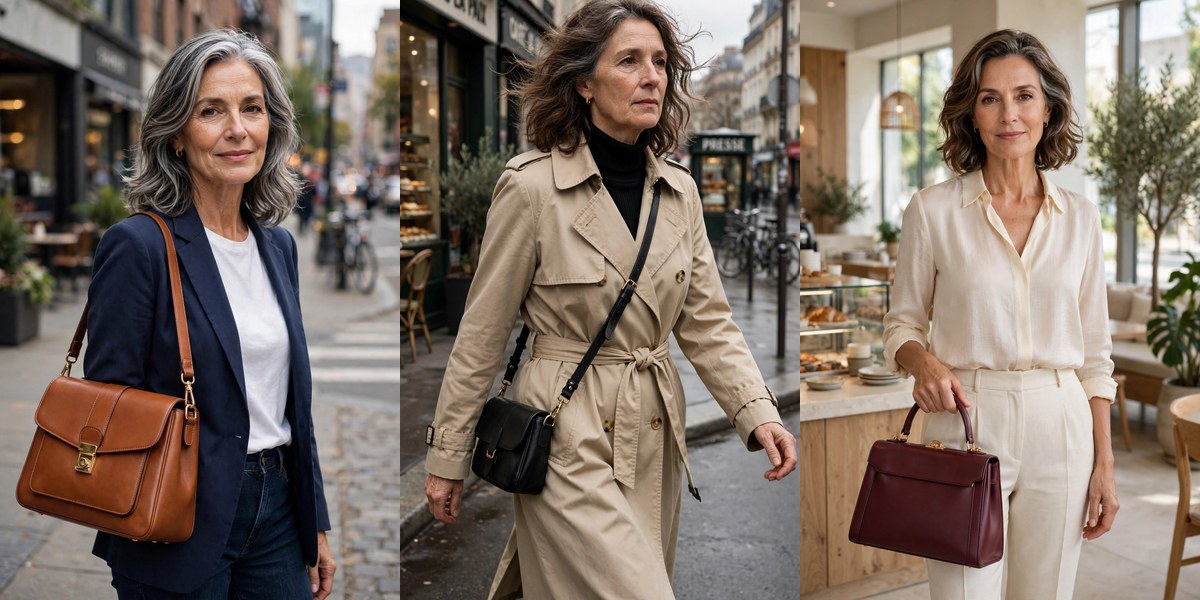
The right handbag over 50 is not about spending more. It is about choosing a size, strap and weight that work with your body, your outfits and your real days.
Most handbag mistakes have nothing to do with taste. They come from a bag that is too heavy, too big for the frame, or a strap that digs in by noon. Fix those three things and almost any bag looks good on you.
This guide builds you a small, hard-working handbag wardrobe — the six bag styles worth owning — then fixes the four traps that drag a look down, and finishes with a five-minute in-store checklist. Think of it as the practical companion to pieces like quiet luxury on a budget and old-money outfits for women over 50, where the bag does the quiet talking.
1. The Everyday Shoulder Bag (Your Workhorse)
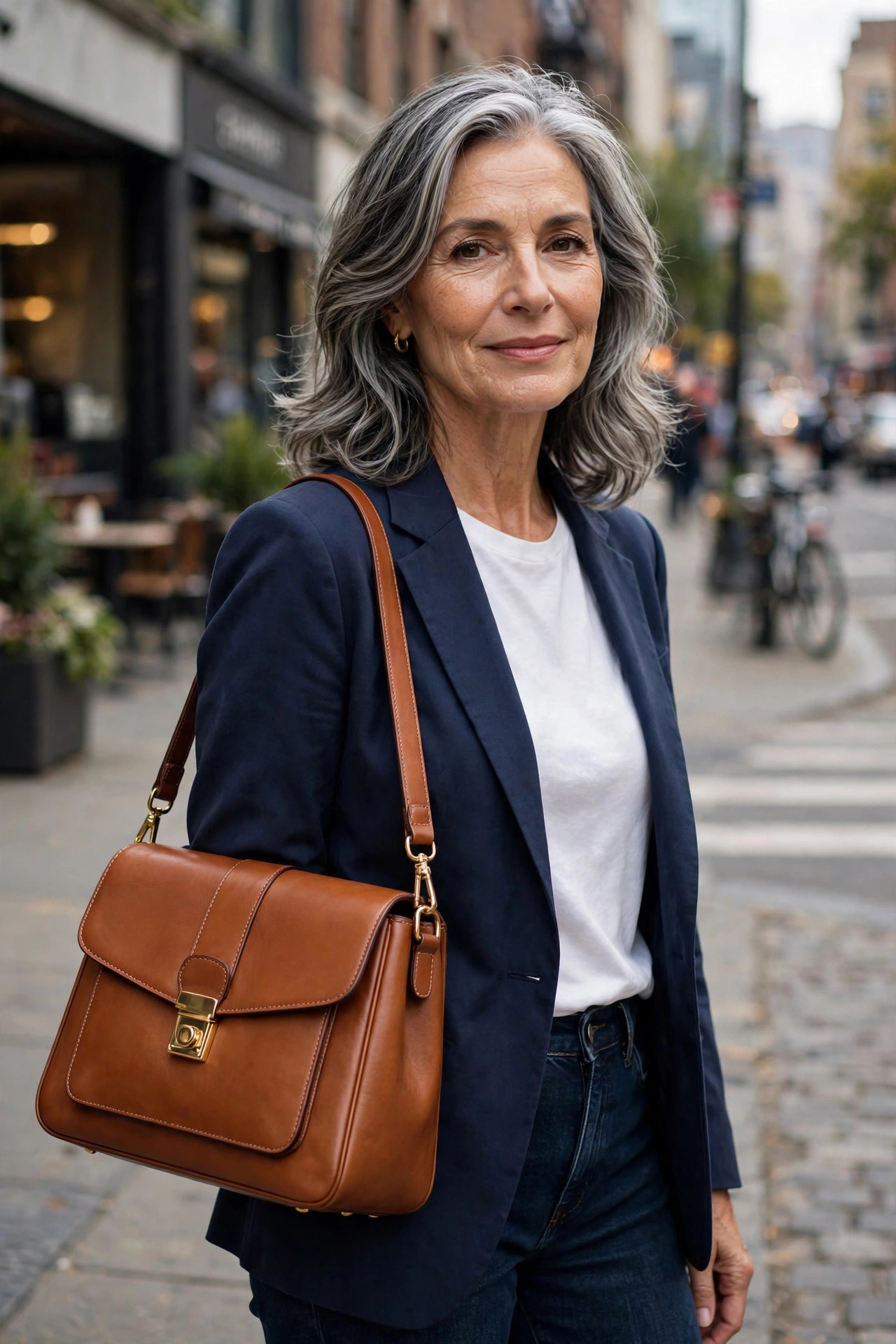
Who it’s for: Anyone who wants one bag that covers errands, lunch dates and appointments without a second thought. This is the bag that should work with 80% of your closet.
The over-50 comfort check: The strap must sit without sliding when you wear a coat. Look for a strap at least 1.5 inches wide — narrow straps concentrate weight on the shoulder and neck, which is exactly where most of us feel it first.
What to look for: A medium structured shoulder bag in your best neutral, with a zip or flap closure and an interior you can actually reach into. Tan, cognac or taupe connect to more outfits than black does for most wardrobes.
2. The Crossbody (The Free-Hands Hero)
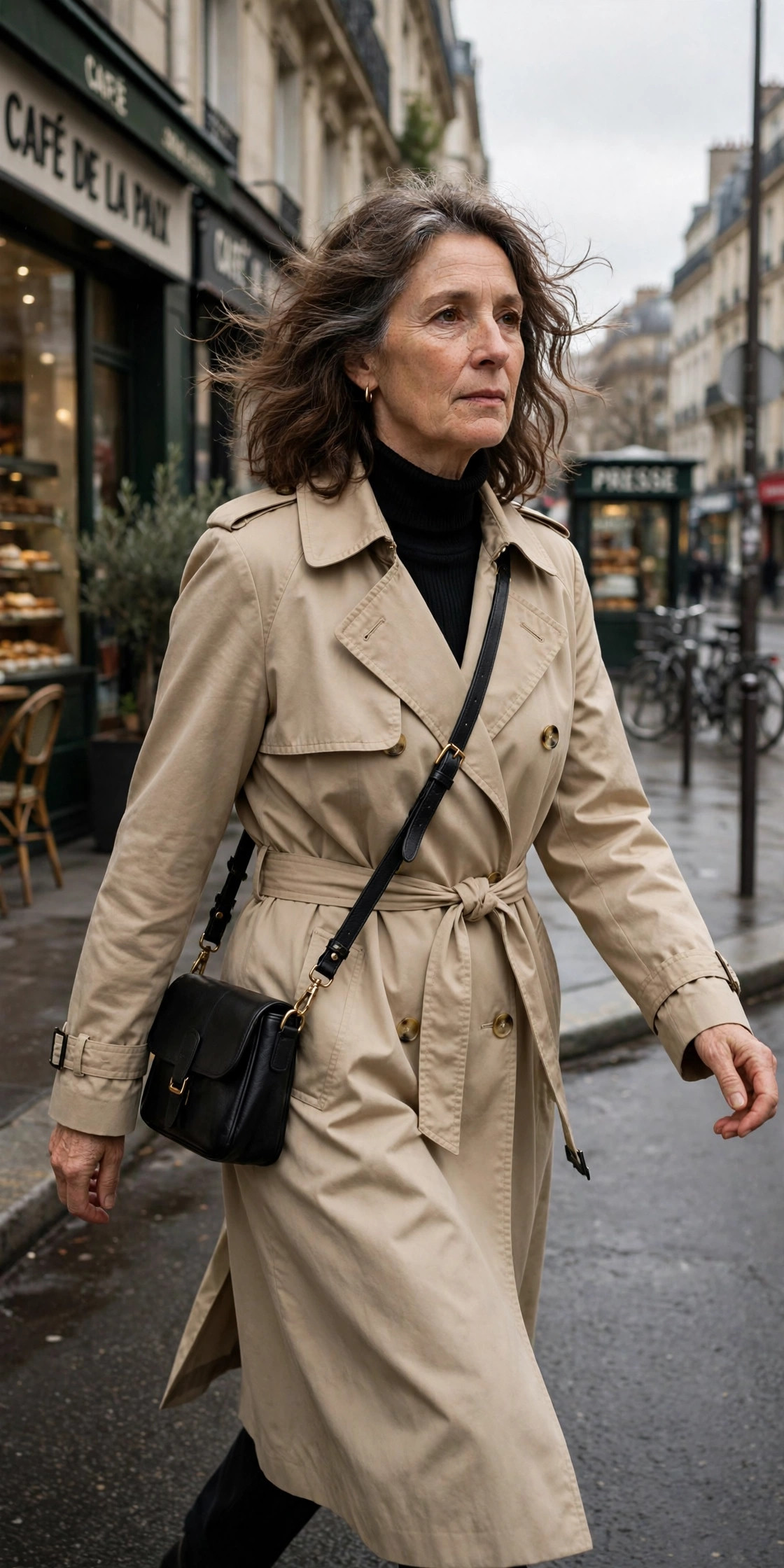
Who it’s for: Travel days, markets, grandchild duty and any day your hands need to be free. Nothing beats a crossbody for all-day comfort with zero shoulder slip.
The over-50 comfort check: The strap must be adjustable, and wide enough not to cut across the chest. Wear it a touch longer so the bag rests near the hip rather than high on the ribcage — it looks more relaxed and swings less when you walk.
What to look for: A clean-lined crossbody with a simple turn-lock or zip, room for phone, wallet, glasses and keys. One strap, no chains, no dangling charms — simplicity is what keeps it looking polished at any age.
3. The Top-Handle (Desk-to-Dinner Polish)

Who it’s for: Days that need a little ceremony — appointments, client lunches, evening events. A top-handle instantly reads intentional, the way Italian-style dressing leans on one polished piece per outfit.
The over-50 comfort check: Test the handle drop with your whole hand, not just your fingers. A handle you have to pinch is a bag you’ll set down and forget. Bonus points for a detachable shoulder strap, which turns it into a shoulder bag when your hand tires.
What to look for: Medium scale, simple hardware, leather firm enough to hold its shape. Deep burgundy, forest or chocolate reads expensive without the price tag.
4. The Roomy Tote (Travel and Carry-More Days)

Who it’s for: Anyone who carries a book, a water bottle, a scarf and the contents of their life. A good tote keeps big-carry days from looking bulky and chaotic.
The over-50 comfort check: Pick up the empty bag. If it already feels substantial, walk away — totes tempt you to load them up, and a heavy empty bag becomes a punishment once filled. Double as a carry-on only if it zips shut.
What to look for: Supple leather or sturdy canvas, strong handles long enough to go over the shoulder (not just the hand), and an interior pocket so small items don’t vanish. A tote with a flat base stands up instead of collapsing.
5. The Evening Clutch (Small, Dressy, Done)
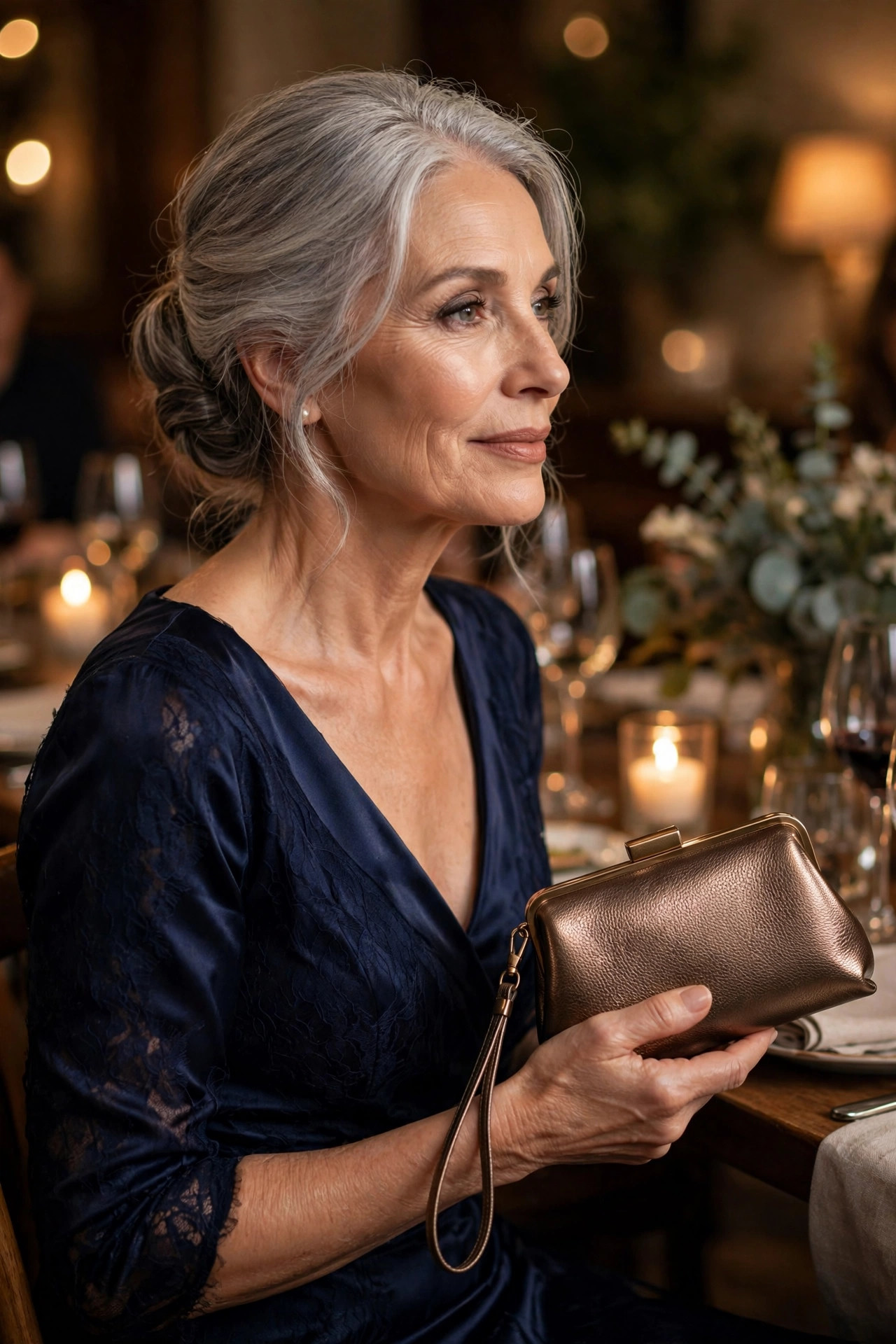
Who it’s for: Dinners, weddings, concerts — any outfit your daytime bags would ruin. A small polished bag is the fastest way to tell an outfit it’s evening.
The over-50 comfort check: A wristlet strap or a short detachable chain saves your fingers during a long evening. Test it: can you hold a glass comfortably while the bag hangs from your wrist?
What to look for: Big enough for phone, lipstick, card case and keys — no smaller. Matte metallics like pewter, bronze or soft gold read modern without screaming; black satin with simple hardware never misses.
6. The Soft Hobo (The Comfort Pick)
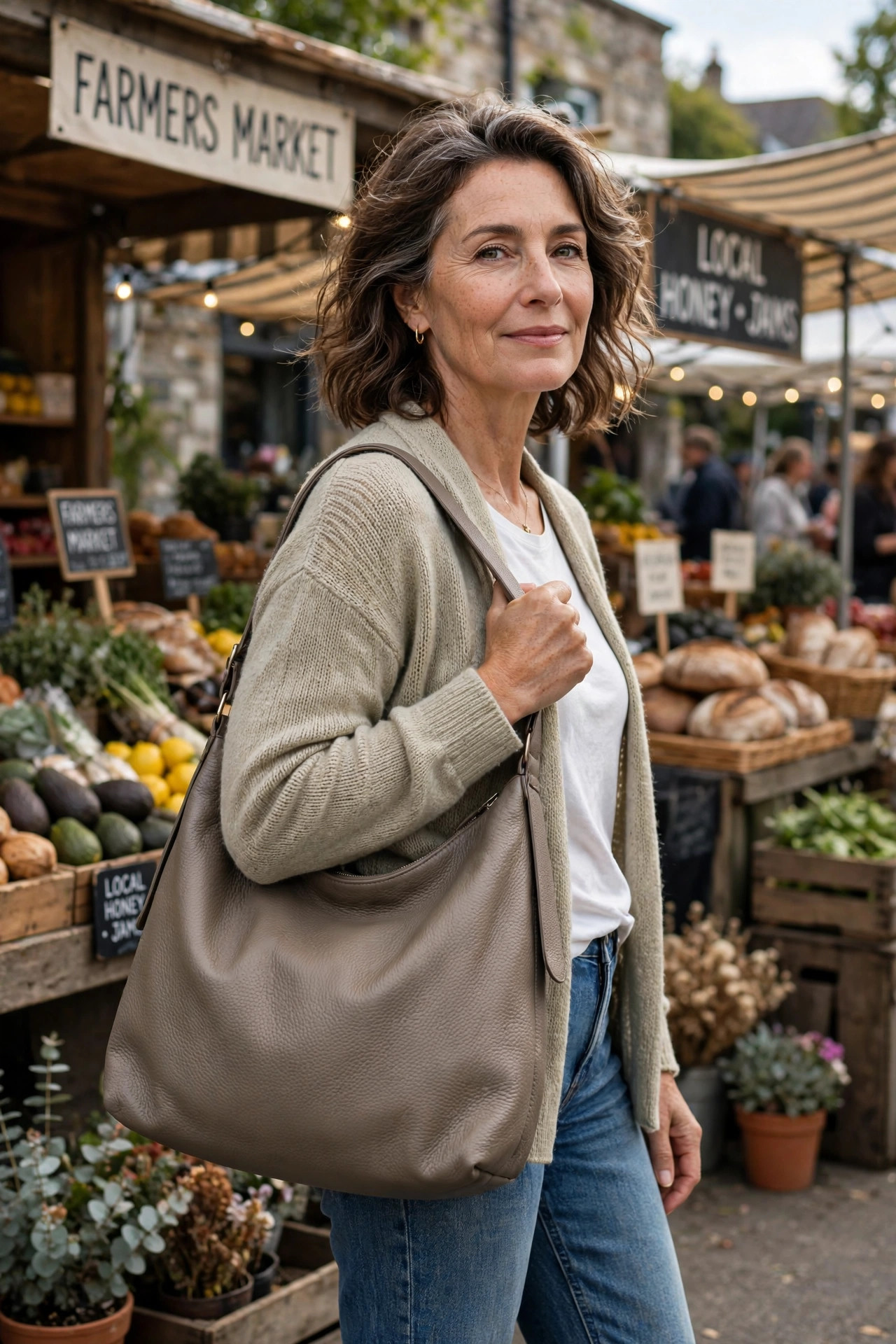
Who it’s for: Women who hate rigid bags and want softness — with tailored or minimal outfits, a little slouch keeps the look from going stiff.
The over-50 comfort check: Slouch is good; collapse is not. The bag should drape, not puddle — controlled softness with a reinforced base. Wide, flat straps that sit on the shoulder without digging.
What to look for: Pebbled or washed leather that forgives scratches, muted tones (taupe, warm grey, cognac), and a secure closure so a slouchy bag still protects your things.
7. The Too-Big Trap
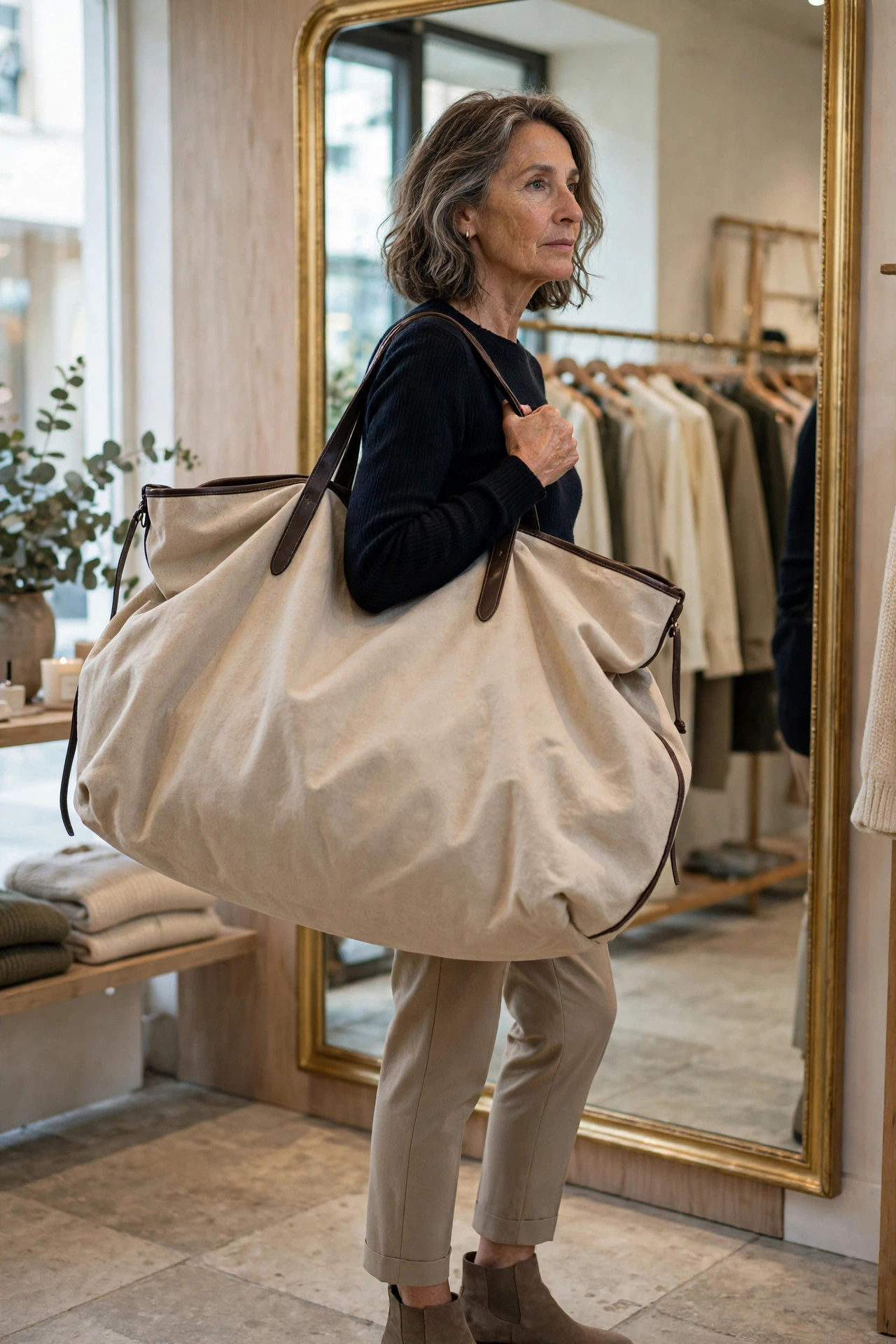
The trap: A giant bag makes a petite or slim-framed woman look smaller and the outfit look heavier. The bag wears you instead of the other way round.
The fix: Match the bag’s volume to your clothing, not your height. With a substantial winter coat, a medium-large bag is balanced; with a slim knit and ankle trousers, a medium bag is plenty. Quick mirror test: if the bag is the first thing you notice, size down one step.
8. The Too-Heavy Trap
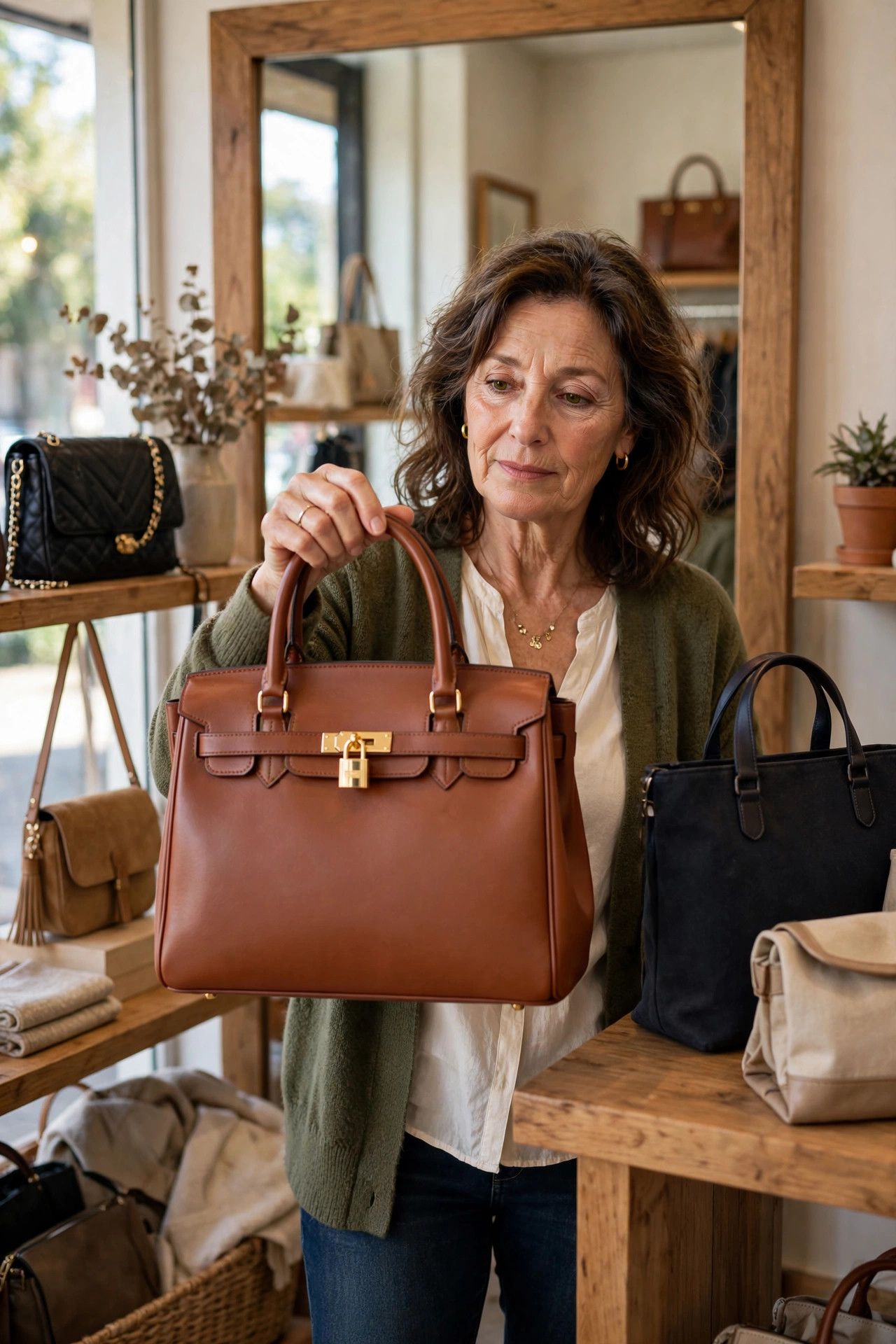
The trap: Heavy hardware, chunky chains and dense leather make some bags surprisingly heavy before you put a single thing inside. An hour on the shoulder becomes an ache in the neck.
The fix: Shop with weight as a spec. Load the bag with your usual contents before judging it — phone, glasses case, wallet, keys. A bag that feels fine empty can double its weight once packed. Choose lighter hardware and wider straps over decorative metal.
9. The Matchy-Matchy Trap
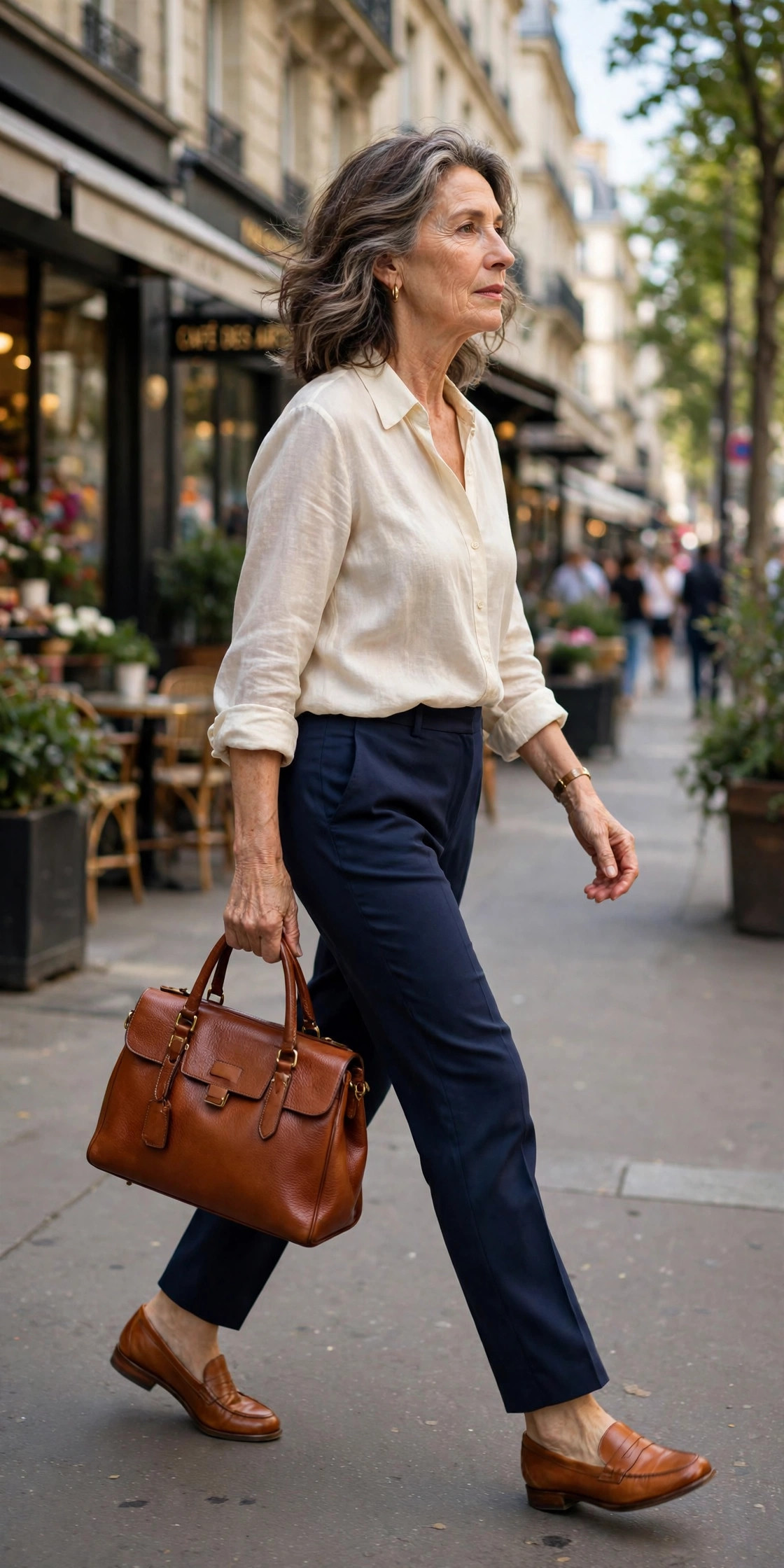
The trap: Shoes, bag, belt and jewellery all in the identical shade — it was the rule in the eighties, and now it dates everything instantly.
The fix: Harmonize, don’t match. Cognac bag with tan loafers, black shoes with a burgundy bag, cream bag with ivory trousers. Repeating the general colour family looks relaxed and current; exact matching looks like effort in the wrong place.
10. The Hardware-and-Logo Trap

The trap: Oversized logos, busy clasps, tassels and multiple decorative zippers fight with your outfit — and with your jewellery. A loud bag shrinks the rest of what you’re wearing.
The fix: The most flattering detail level after 50 is simple: clean lines, one piece of hardware, good leather. If you love a statement bag, treat it as the statement — keep the rest of the outfit calm. French-inspired restraint wins here, as the French style secrets piece argues.
11. The 5-Minute In-Store Checklist

Who it’s for: Every bag you’re tempted to buy. Run this before the register, and you’ll never bring home a bag you resent.
The over-50 comfort check: Fill the bag with store items (or yours), wear your coat, walk the aisle for two minutes, sit down with the bag on, and check the mirror from three metres away. If it slides, digs, drags or shouts — it’s not your bag.
What to look for: Even stitching (no loose threads), a lining that doesn’t bunch, zips that glide, hardware with real weight but not excess, and leather that feels supple rather than stiff or plasticky.
Quality Signals That Actually Matter
You don’t need a brand name to get a good bag. Stitching, lining and hardware tell the truth. Look for tight, even stitches with no loose threads; a fitted lining that doesn’t bunch or pull; zippers that glide smoothly; and leather that feels supple and smells like leather, not plastic.
Signals that don’t matter: a big logo plate, “designer-inspired” claims, and elaborate dust-bag theatre. Pay for construction, not marketing.
Frequently Asked Questions
What handbag colour works with the most outfits after 50?
Usually your wardrobe’s neutral, not black by default. Cognac, taupe, burgundy and navy often connect to more outfits. Audit your shoes, coats and trousers first, then pick the colour that links several of them.
Should women over 50 carry large or small handbags?
Either can work — choose by outfit volume and comfort. Medium bags are the easiest default because they balance jeans, tailoring, dresses and outerwear without overwhelming anything.
Are crossbody bags stylish for women over 50?
Yes, when they’re simple. A clean crossbody with an adjustable strap is one of the most practical everyday choices. Keep hardware minimal and proportions moderate.
How many handbags do I really need?
Three well-chosen bags cover almost everything: an everyday shoulder or crossbody, a roomy tote, and a small polished bag for evenings. If you own more, keep the ones you actually reach for.
How do I know if a bag is too heavy for me?
Load it with your usual items in the store and walk for two minutes. If you feel it in your shoulder or neck, it’s too heavy. Empty-bag weight is the real spec — the load always adds more.
Your Next Bag Is a Good One
You don’t need more bags. You need the right few — the right size for your frame, a strap that stays put, weight you can carry all day, and colours that harmonize with your real wardrobe.
Start with the workhorse, add the tote and the evening bag, run every candidate through the five-minute checklist, and skip the traps. The rest is just carrying it well.