
How to Wear Jeans Over 50 and Look Absolutely Fabulous

Jeans don’t stop working at 50 — but the jeans that used to work might. If your old favorites now gap at the back, pinch at the waist, or look tired by lunchtime, the problem is rarely your body. It’s the cut, the rise, and the fabric, and all three are fixable.
This guide is for every woman over 50 who wants denim that fits, flatters, and lasts the whole day. Welcome to The Denim Fitting Clinic — twelve fit files that decode rise, fabric, cut, wash, hem, and styling rules, each ending with a fitting-room test you can use today.
By the end you’ll know exactly what to look for (and what to skip) — and how to make the pairs you already own work harder. A wardrobe that fits right starts with knowing your personal style over 50, and great jeans are often its hardest-working piece.
The Denim Fitting Clinic: 12 Fit Files
Think of each fit file below as one appointment: a quick diagnosis, a clear prescription, and one test to run before you buy or keep a pair. Work through them in order and denim stops being a gamble.
Chapter One: The Rise Decoder
Fit File 1: The Rise Decision — Mid vs High

Rise is the single biggest factor in how jeans feel after 50. A mid-rise that sits just below the natural waist is forgiving; a comfortable high-rise that reaches the waist creates the cleanest line under tops and jackets. Both beat a low-rise, which fights the natural curve of the midsection and demands constant tugging.
Choose based on your torso: longer torsos usually suit a mid-rise, shorter torsos benefit from a high-rise that lengthens the leg. Fitting-Room Test: zip them up and bend forward — if you feel exposed or a gap opens at the back, the rise is too low for real life.
Fit File 2: The Sit-Down Test

Standing in the mirror tells you only half the story. Denim that looks perfect standing can dig, crease, or gap the moment you sit — and most of a day is spent seated. A pair that fails the seated test will never feel good, no matter how it looks in the first photo.
Sit down, cross your legs, and stand back up three times in the fitting room. Fitting-Room Test: if the waistband cuts in when you sit, they’re too tight; if the knees bag out when you stand, the fabric lacks recovery. Both are pass reasons.
Chapter Two: The Fabric Decoder
Fit File 3: The Fabric Rule — Structure Over Squeeze

The secret to jeans that still look good at 6pm is structure, not stiffness. Denim with real body — cotton-rich with just 1–2% elastane — skims the hips and thighs instead of clinging. Ultra-stretchy thin denim collapses around the hip, thigh, knee, and waist and looks tired within hours.
Check the label: roughly 98% cotton to 2% elastane is the sweet spot for shape that moves with you. Fitting-Room Test: pinch the fabric at the thigh — if it feels paper-thin or snaps back like swimwear, keep looking.
Fit File 4: The Waistband Gap Fix
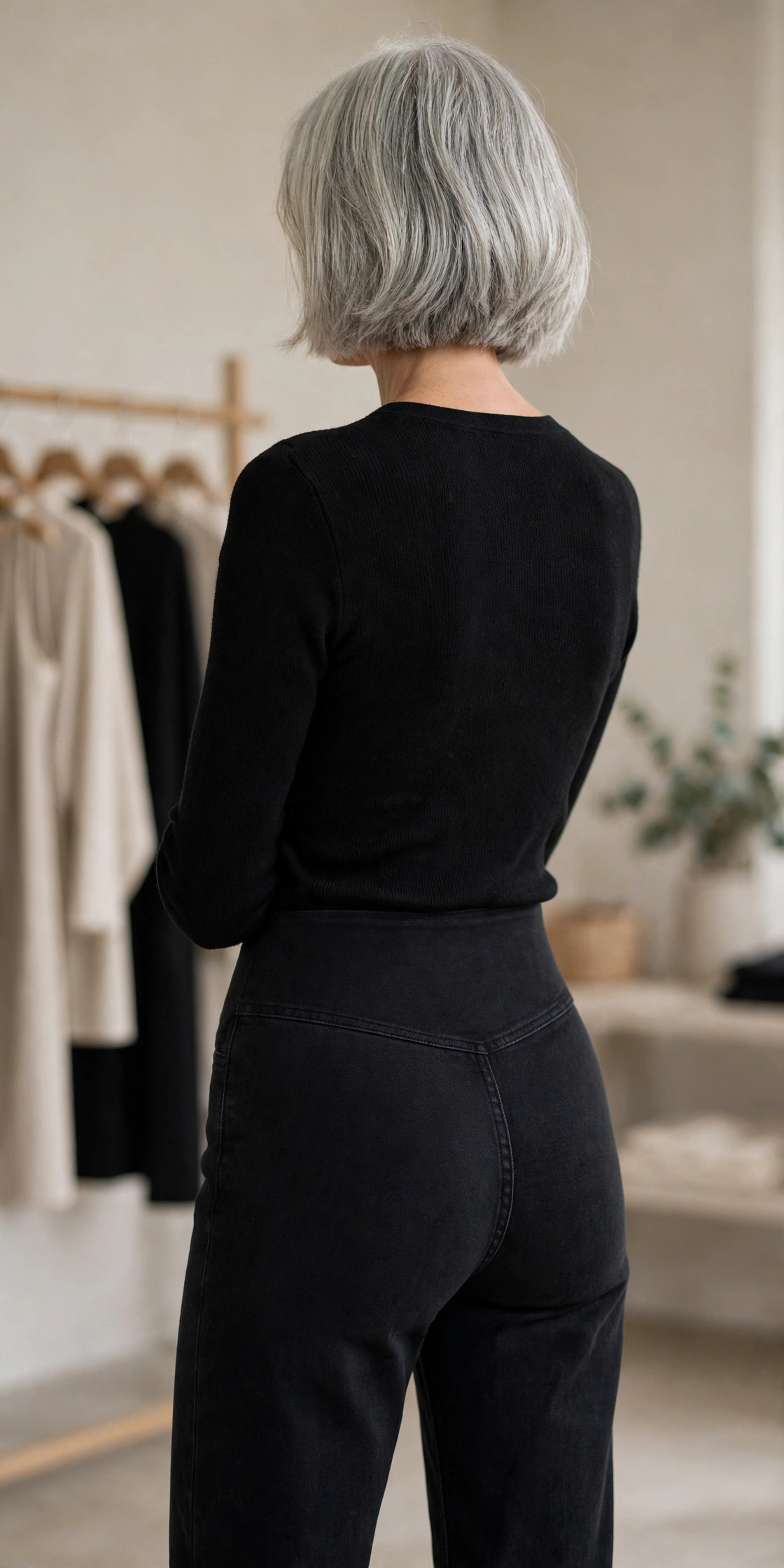
The back-waist gap is the most common denim complaint after 50 — jeans that fit the hip gape at the back. This is a design issue, not a body issue: straight-cut waistbands are cut for a straight torso, and most real bodies curve. Contoured or curved waistbands are cut higher at the back to close that gap.
If your favorite pair gaps, a tailor can take in the back waist for the price of a lunch — cheaper than another failed purchase. Fitting-Room Test: stand sideways to the mirror; if you can slide more than two fingers into the back waistband, try a contoured waistband, a different rise, or tailoring before sizing down.
Chapter Three: The Cut Decoder
Fit File 5: The Back-View Check — Pockets Matter

Nobody shows the back view in the store mirror, but it’s the angle everyone else sees. Pockets placed too low or too far apart visually widen the seat; medium-sized pockets set slightly high and close together lift it. It’s one of the cheapest optical upgrades in denim.
Glance at the back before you commit — even a phone photo over your shoulder works. Fitting-Room Test: if the pockets look tiny relative to your seat, or sit at mid-thigh level, the pair is wrong; good pockets sit centered and look proportional.
Fit File 6: The Straight Leg — Your Most Reliable Cut

If you buy only one cut, make it a straight leg. It runs the same width from hip to ankle, which balances fuller hips, slimmer legs, and everything between — nothing exaggerated, nothing fighting your shape. It’s the cut that works with the most shoes and the most tops you already own.
A dark straight leg with a silky blouse and pointed flats dresses up for dinner; the same jean with a tee and sneakers runs errands. Fitting-Room Test: look at the leg from the front — if the outer seam hangs plumb-straight without twisting, the cut is sitting right.
Fit File 7: The Bootcut — A Quiet Hourglass Trick

A gentle bootcut is the friendliest cut for wider hips because the slight flare balances the leg from the knee down, creating an hourglass line without any drama. It also hides the ankle — useful when you want boots or a modest coverage option.
The hem should nearly meet the shoe: too long and it puddles, too short and it reads as cropped. Fitting-Room Test: try them with the boots you’ll actually wear; the hem should just kiss the top of the shoe with you standing.
Fit File 8: The Relaxed Taper — Comfort Without Frump

A relaxed taper gives room through the hip and thigh, then narrows toward the ankle — all the comfort of a relaxed jean with a finished ending. The trick to keeping it polished is a neat cuff or clean ankle hem, which gives the eye a stopping point instead of a sloppy trail.
Pair it with something crisp on top — an oxford shirt, a neat knit — so the relaxed leg reads intentional. Fitting-Room Test: check the back of the thigh; relaxed is fine, but excess fabric sagging under the seat means size down or a different cut.
Chapter Four: The Finish Decoder
Fit File 9: The Wash Rulebook — Dark, Medium, White, Black

Wash changes everything a jean says. Dark indigo is the most forgiving and dressiest — it reads almost like trousers and slims the silhouette. Medium blue is the friendly everyday wash; black and soft gray dress down for evening; white denim, surprisingly, works at any age when the fit is structured and the top is polished.
Heavy whiskering and heavy distressing both spotlight exactly the areas most women would rather soften. Fitting-Room Test: hold the pair at arm’s length — if the wash is doing all the talking, it will date fast; clean denim stays current longer.
Fit File 10: The Hem-and-Shoe Match
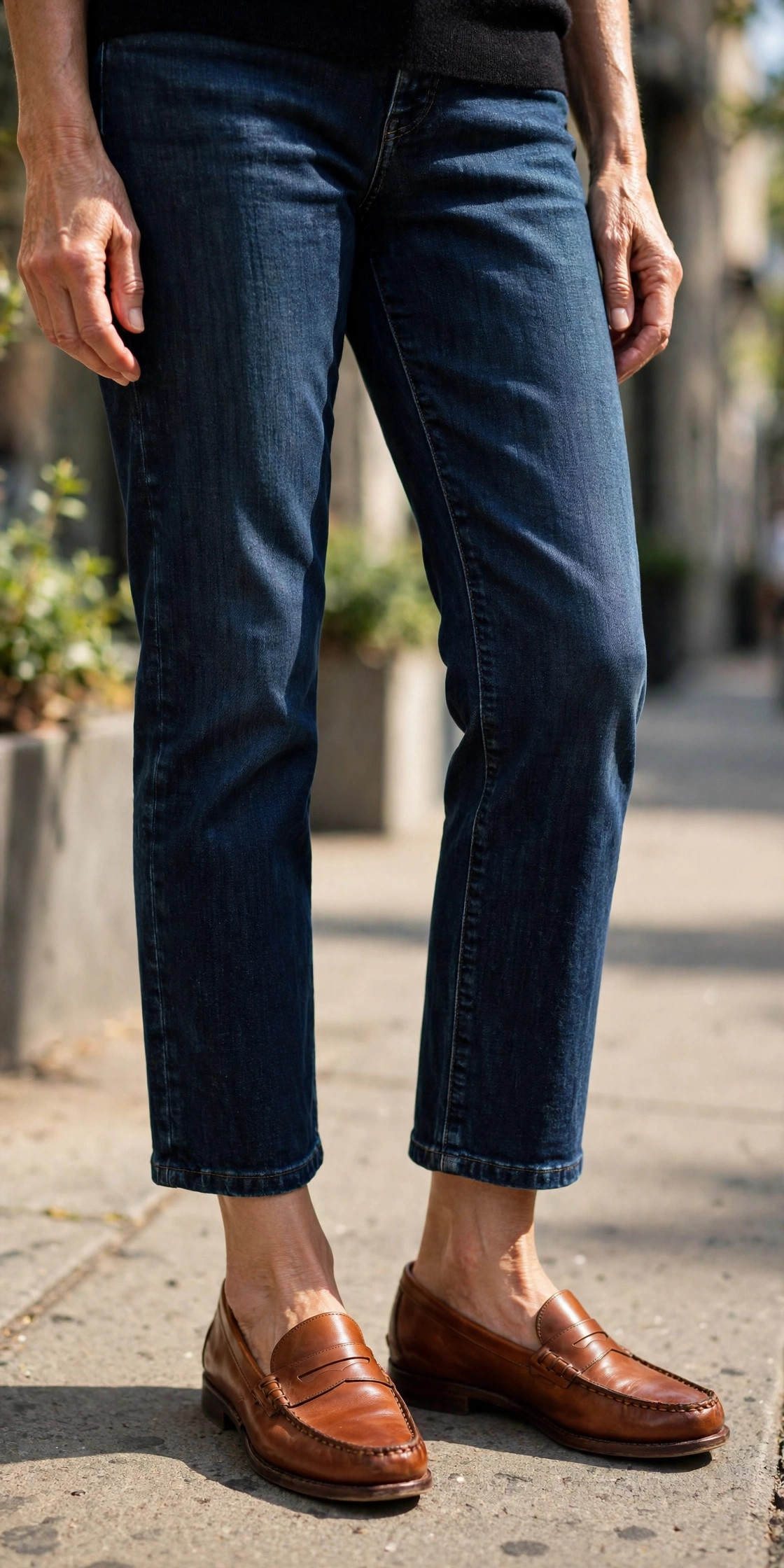
A hem that puddles over the shoe can make even great jeans look tired — it breaks the line the shoe was building. Ankle-length jeans ending just above the ankle bone let loafers, flats, and sneakers look intentional; full-length jeans should fall cleanly to the floor-grazing point for boots.
One tailor visit turns a puddling pair into a perfect one, and hemming is the cheapest denim upgrade there is. Fitting-Room Test: stand in the shoes you own most — if the fabric stacks at the ankle, budget a hem before the first wear.
Fit File 11: The One-Structured, One-Relaxed Rule

When jeans look frumpy, it’s usually not the jeans — it’s the pairing. The rule: one part of the outfit gives structure, the other relaxes. Relaxed jeans plus a crisp shirt or sharp blazer reads modern; relaxed jeans plus a slouchy sweater reads pajamas.
A small tuck, a shorter jacket, or a cleaner shoe often fixes an unbalanced outfit in seconds. For more pairing formulas, the fashion tips from a stylist guide covers this balance principle across the whole wardrobe. Fitting-Room Test: squint at the mirror — if you can’t tell where one garment ends and another begins, add structure somewhere.
Fit File 12: The Three-Pair Rotation

You don’t need ten pairs — you need three great ones. A dark straight leg for dressier days, a relaxed everyday pair for comfort, and one dressier option like black, white, or trouser-style denim covers almost every occasion. Two or three perfect pairs beat a drawer of almosts.
Buy for the life you actually live: long walkers need shoe-friendly lengths, travelers need stretch that recovers. Well-chosen jeans anchor everything around them — see how a few basics pull outfits together in every woman’s closet list. Fitting-Room Test: before buying, name three tops you already own that each pair works with — if you can’t, it’s a one-outfit jean.
The 2-Minute Fitting Room Checklist
Print this mentally and run it every time before you buy or keep a pair:
- Sit, bend, walk: comfort while seated matters as much as the standing mirror.
- Two-finger waistband rule: more than two fingers of gap at the back means a different rise or tailoring.
- Pinch the fabric: it should have body and light stretch, not paper-thin give.
- Check the back view: pocket placement and seat smoothness tell the real story.
- Match the hem to your shoes: puddling hems age a good pair by years.
- Name three tops: every pair should work with what you already reach for.
- Give it the overnight test: if you’re hesitating, go home — the right pair is obvious next day.
Smart shopping is a skill, and it pays off — these tips for shopping for clothes over 50 make every fitting-room trip shorter and cheaper.
Frequently Asked Questions
Should women over 50 wear skinny jeans?
They can — a dark, structured slim jean with ankle boots or a longer top still works. But straight, slim-straight, and bootcut cuts flatter more body types with less fuss, and they’re easier to style year after year.
What is the best rise for jeans after 50?
Mid-rise or a comfortable high-rise suits most women over 50 because it connects the top and bottom halves of the outfit and stays secure when you sit. The right rise is whichever one passes the sit-and-bend test without digging or gaping.
How tight should jeans be at the waist and hips?
Secure but not squeezing: you should fit one or two fingers inside the waistband comfortably, and the fabric should skim rather than cling over the hip. If you spend the day tugging or checking the mirror, the fit is wrong.
Can women over 50 wear white jeans?
Absolutely — white denim looks fresh and elegant at any age. Choose a structured pair in a straight or slim cut, and style with navy, tan, or a crisp top so the look stays polished rather than casual.
How should I care for jeans so they keep their shape?
Wash less often in cold water, skip the dryer, and give pairs a rest day between wears so the fibers recover. Denim with 1–2% elastane keeps its shape longest when it’s allowed to rest.
The Last Word
The right jeans after 50 aren’t about hiding anything — they’re about fit that holds up from morning coffee to evening plans. Work through the twelve fit files, run the checklist in the fitting room, and keep the three-pair rotation that earns its space in your closet.






One Comment
Comments are closed.