How to Shop for Clothes Over 50 and Stop Coming Home With Mistakes

Most of us have a small museum at home: the shelf of clothes that looked promising in the store and turned disappointing at home. The waist pulls. The neckline sits strangely. The beautiful jacket works with absolutely nothing you already own.
This guide is for women over 50 who want to stop funding that museum. Below you’ll find ten shopping mistakes filed like case notes — each with why it happens, how to fix it, and a one-line rule to take with you.
Because great dressing doesn’t start at the checkout. It starts before you ever leave the house, and it continues long after — which is exactly what a well-planned winter capsule wardrobe teaches: buy from what you own, and everything gets easier.
Mistake #1: Shopping for a Life You Don’t Actually Live

It’s easy to buy for the calendar you wish you had. Dramatic blouses for dinners that never happen, while your real week runs on errands, lunches, coffee with friends, and comfortable days. That’s how a closet ends up full of beautiful clothes you never reach for.
The fix is to give every garment a job before it leaves the store. If you can’t picture a real Tuesday wearing it — a real lunch, a real walk, a real workday — put it back. Shopping becomes easy the moment you describe a specific need instead of browsing for inspiration.
Filed away: If it doesn’t fit your real week, it doesn’t fit your closet.
Mistake #2: Treating the Size Tag as the Truth

Few things poison a fitting room faster than clinging to one size across every brand. Cut, fabric, and stretch change how a size sits, so the same number can fit beautifully in one store and pinch miserably in the next.
Treat the tag as a starting point only. Take two sizes in, and judge each by how it hangs, moves, and feels — never by the number you hoped it would be. Give extra attention to shoulders, armholes, and trouser rise, since those are the expensive areas to alter.
Filed away: Fit the body you’re dressing today, not the size on the tag.
Mistake #3: Falling for the Cut and Skipping the Fabric Test

A flattering shape can still disappoint if the fabric fights back — clinging where it should skim, creasing beyond rescue, or revealing every seam underneath. The cut gets you into the fitting room; the fabric decides whether the piece ever gets worn.
Test it before you commit. Scrunch a handful gently: if it stays badly creased, ask whether you’ll honestly steam it every time you wear it. Watch how it drapes when you move, and check whether stretch springs back or simply gives up. Midweight fabrics usually behave better than anything extremely thin or extremely bulky.
Filed away: Great fabric makes a good cut look expensive; bad fabric ruins it.
Mistake #4: Judging Clothes While Standing Perfectly Still
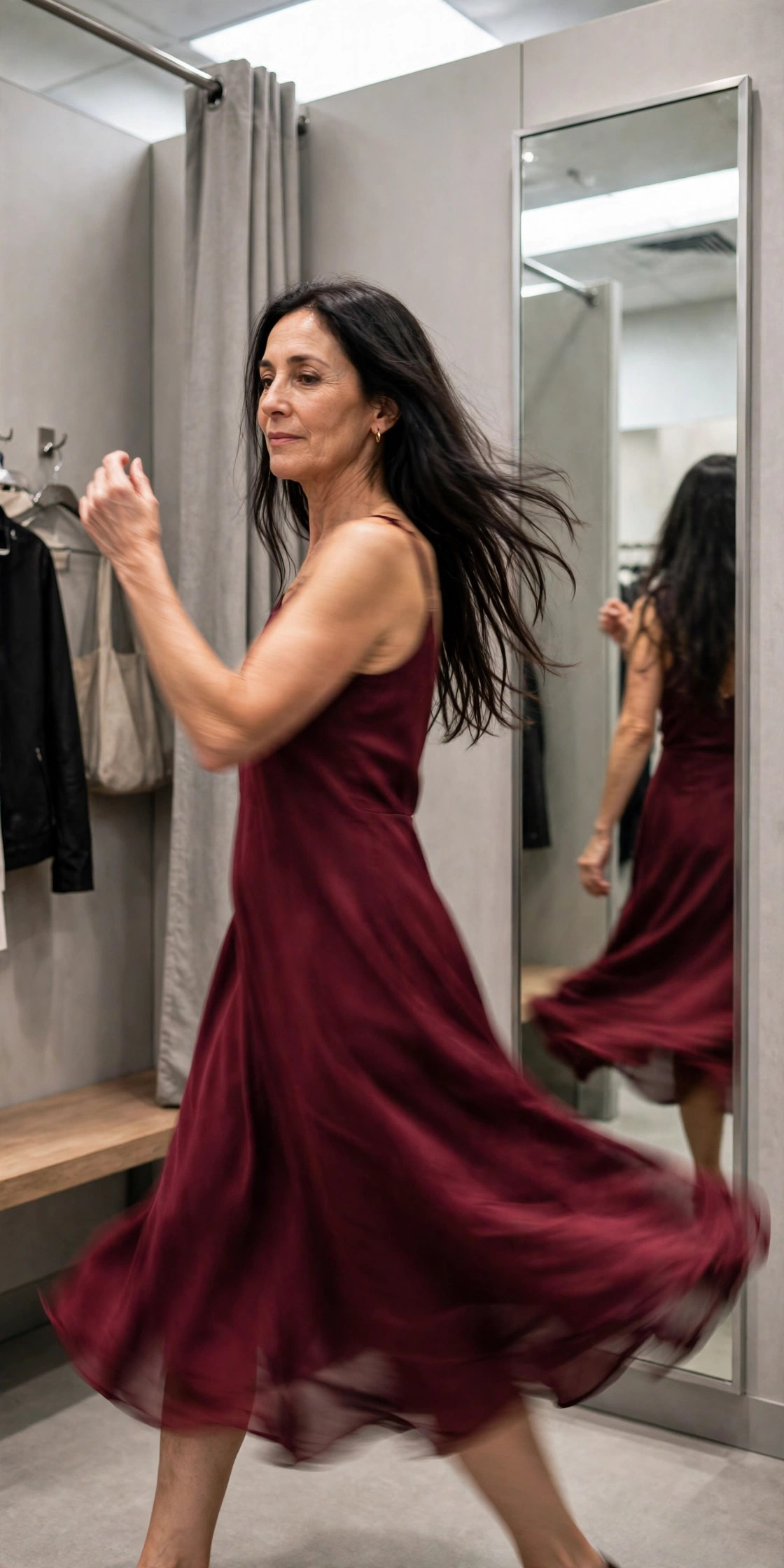
The mirror is kind to garments that never have to work. Standing still with your shoulders back tells you almost nothing about how a dress behaves when you reach for a shelf, climb stairs, or sit through a long lunch.
Put every candidate through a movement check: sit down, walk, cross your arms, reach forward, bend to pick something up. Anything that pulls, twists, rides, or demands constant adjusting gets left behind. Real clothes have to survive real life.
Filed away: If you can’t move in it, don’t buy it.
Mistake #5: Blaming Your Body When the Proportions Are Off

Sometimes a piece isn’t wrong — its context is. A long loose top with very wide trousers can blur into one shapeless block, and a lovely sweater can look odd in the fitting room simply because you’re testing it against leggings instead of the jeans you’d actually wear.
Shop in, or bring along, clothes close to what you’d pair the piece with — shoes included. Small balance moves rescue more outfits than new purchases ever will: a half-tuck, an opened neckline, a structured layer, or a straighter bottom half. Ask what the piece needs around it, not whether you’re allowed to wear it.
Filed away: Check the proportions before you blame your body.
Mistake #6: Letting the Sale Sign Do the Thinking
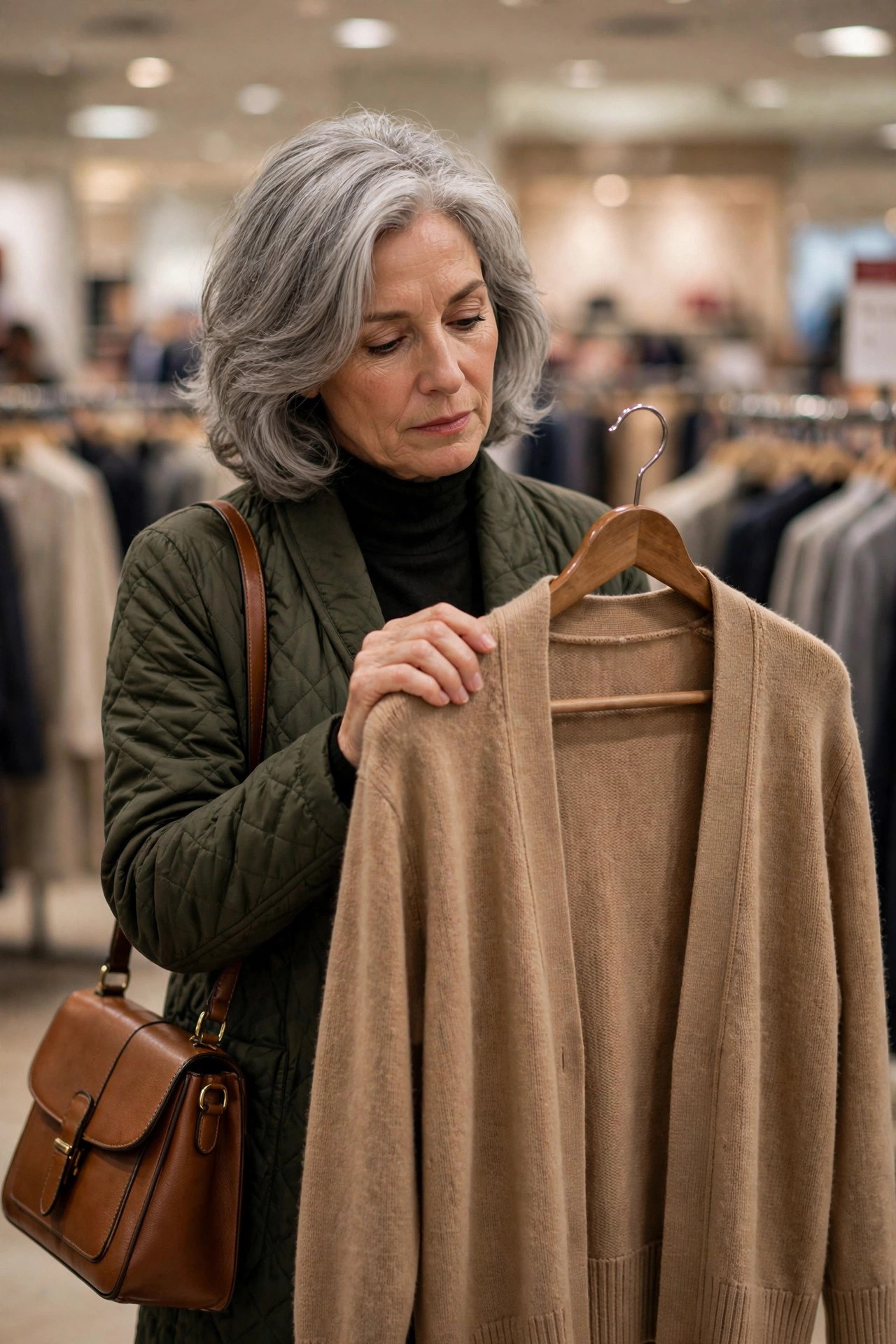
A heavy discount has a way of making almost-right feel exactly-right. But a bargain that never leaves the closet is the most expensive purchase of all — you paid less, and you got nothing.
Ask one question: would I still want this closer to full price? If the answer is no, the sale wasn’t a deal — it was a detour. Buy for the garment, not the percentage.
Filed away: A discount never fixed a garment you don’t love.
Mistake #7: Buying “Almost Right” and Promising to Fix It Later

The blouse that needs constant adjusting, the waistband that rolls, the sleeve that almost fits — these are the pieces that fill wardrobes and frustrate mornings. “I’ll get it altered” quietly becomes “I’ll wear it someday,” and someday never comes.
Apply the honest rule: buy it only if it’s right as it is, or if you already know your tailor and the exact cost of the fix. If a piece demands fiddling in the fitting room, it will demand fiddling every single morning.
Filed away: If it needs fixing before you buy it, leave it behind.
Mistake #8: Shopping for a Future Body or a Future Life

The smaller size for “when I slim down” and the adventurous piece for “the woman I’m becoming” are hopeful — and they usually end up unworn. Dressing for a hypothetical you means never dressing well for the actual one.
Buy for the body and the life you have right now. Clothes that fit and flatter you today build confidence, and confidence changes how everything looks on you. The future gets its own shopping trip when it arrives.
Filed away: Dress the woman you are, not the woman you might be.
Mistake #9: Bringing Home a Lonely Piece That Needs Five New Friends

Some beautiful pieces are secretly expensive. That gorgeous jacket becomes a project once it needs new trousers, different shoes, a special top, and a new bag just to work. Its true price isn’t on the tag — it’s the entire outfit it demands.
Use the three-outfit rule: name three outfits from pieces you already own before buying. A camel cardigan that works with dark jeans and loafers, black trousers and flats, then a printed midi skirt and boots is already earning its place. A piece with no connections is a purchase that multiplies.
Filed away: Every new piece should connect to three you already own.
Mistake #10: Walking In Without a List

List-free shopping is where impulse spending lives. Without a plan, you respond to whatever catches your eye instead of solving the wardrobe problems that actually make mornings hard.
Build your list from the outfits that keep failing. Notice what every broken outfit is missing — a comfortable dark trouser, a lightweight third layer, shoes that work with your dresses — and write it down specifically. “Black straight-leg trousers, mid-rise, flat front” is a list; “black trousers” is a wish. Note your wardrobe’s color family too, so a new color can join it rather than isolate itself. These fall wardrobe essentials are a good reference for the pieces worth writing down first.
Filed away: The best shopping starts at home, with a specific list.
The Pre-Shop Checklist: Do This Before You Spend a Penny
Ten mistakes, ten fixes — but the real transformation happens before the trip. Run this quick checklist and you’ll walk in focused, walk out lighter, and come home without the museum pieces.
- Audit the failures. Open your closet and name the outfits that keep failing. The missing piece behind them is your shopping list.
- Write it specifically. Cut, rise, color, fabric, occasion. Specific lists make fast, confident decisions.
- Check your shoes first. Lay out the pairs you’d actually wear with the new piece. If none work, you’re buying an outfit, not a garment.
- Check the color family. Hold any new color next to the pieces you wear most. It should expand your wardrobe, not isolate itself.
- Set your rules in advance. No “almost right,” no fixing-later promises, no sale-sign logic. Decided rules beat in-store emotions.
- Bring the right foundation. Proper underwear and shoes close to your usuals make fitting rooms tell the truth.
- Photograph the shortlist. Snap your fitting-room finalists and review them at home. Anything you’re unsure about rarely survives the second look.
Frequently Asked Questions
How do I stop buying clothes I never wear?
Give every purchase a job before it leaves the store. Name three pieces you already own that it works with, and one real occasion you’d wear it to. If you can’t do either, the piece is attractive but not useful.
Should I buy a different size than usual after 50?
Use sizes as a starting point, not a verdict. Cut and fabric vary between brands, so try two sizes and judge how the garment hangs, moves, and feels. The body you’re dressing today is the only one that matters.
How can I tell if clothes fit properly in the fitting room?
Move, don’t just stand. Sit, walk, reach, cross your arms, and bend. Look for pulling, twisting, gaping, or anything you immediately want to adjust — those warning signs never improve at home.
Is it better to buy fewer, pricier clothes after 50?
Price alone doesn’t decide value. A moderately priced jacket worn twice a week offers better cost-per-wear than an expensive dress worn once. Judge by fit, fabric, usefulness, care needs, and how often it fits your real life.
How often should I review my wardrobe before shopping?
A quick audit each season is enough. Pull out the pieces you keep avoiding, notice what’s missing, and write a short, specific list before you buy anything new.
Shopping mistakes were never a style problem — they were a process problem. With these ten files closed and your pre-shop checklist in hand, the next trip out should feel lighter, cheaper, and almost suspiciously easy. And when you’re ready to rebuild from what you already own, learning how to find your personal style over 50 turns every future purchase into a yes that stays yes.