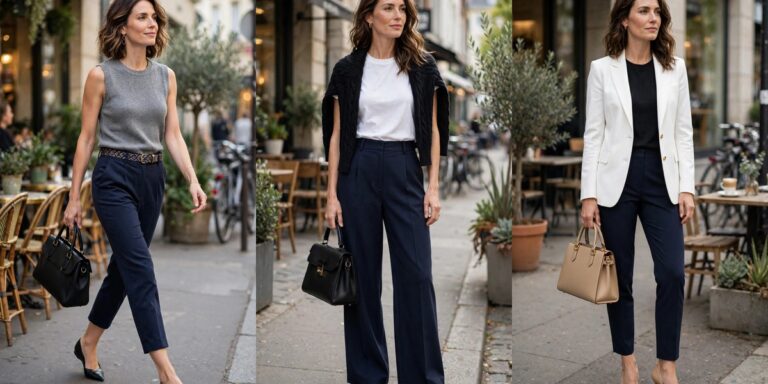
How to Dress Italian Style Over 50 for Real Life
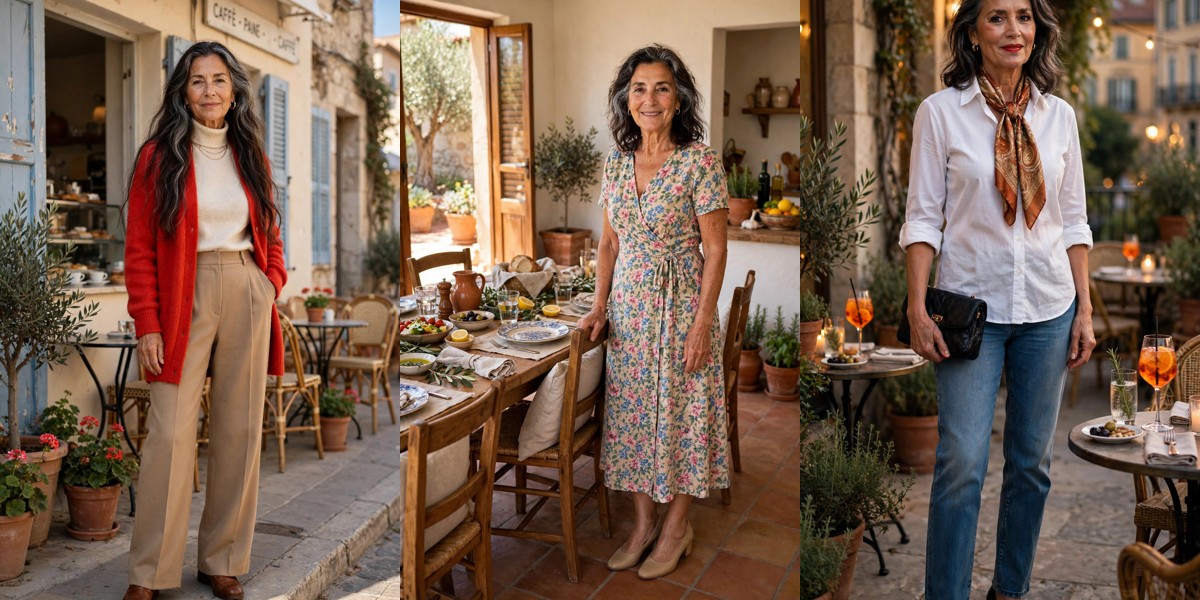
Italian women are famous for looking polished at the market, at work, and at a long family lunch — never just on holiday. The secret is not a bigger wardrobe. It is a handful of habits, repeated daily.
This guide translates those habits into real life for women over 50: school runs, office days, errands, and evenings out. Each rule below is decoded first, then turned into an outfit you can wear this week.
For more real-life outfit building, see our guide to how to wear linen over 50 and the relaxed polish of a coastal grandmother capsule wardrobe.
Rule 1: Start With Less — One Focal Point Only
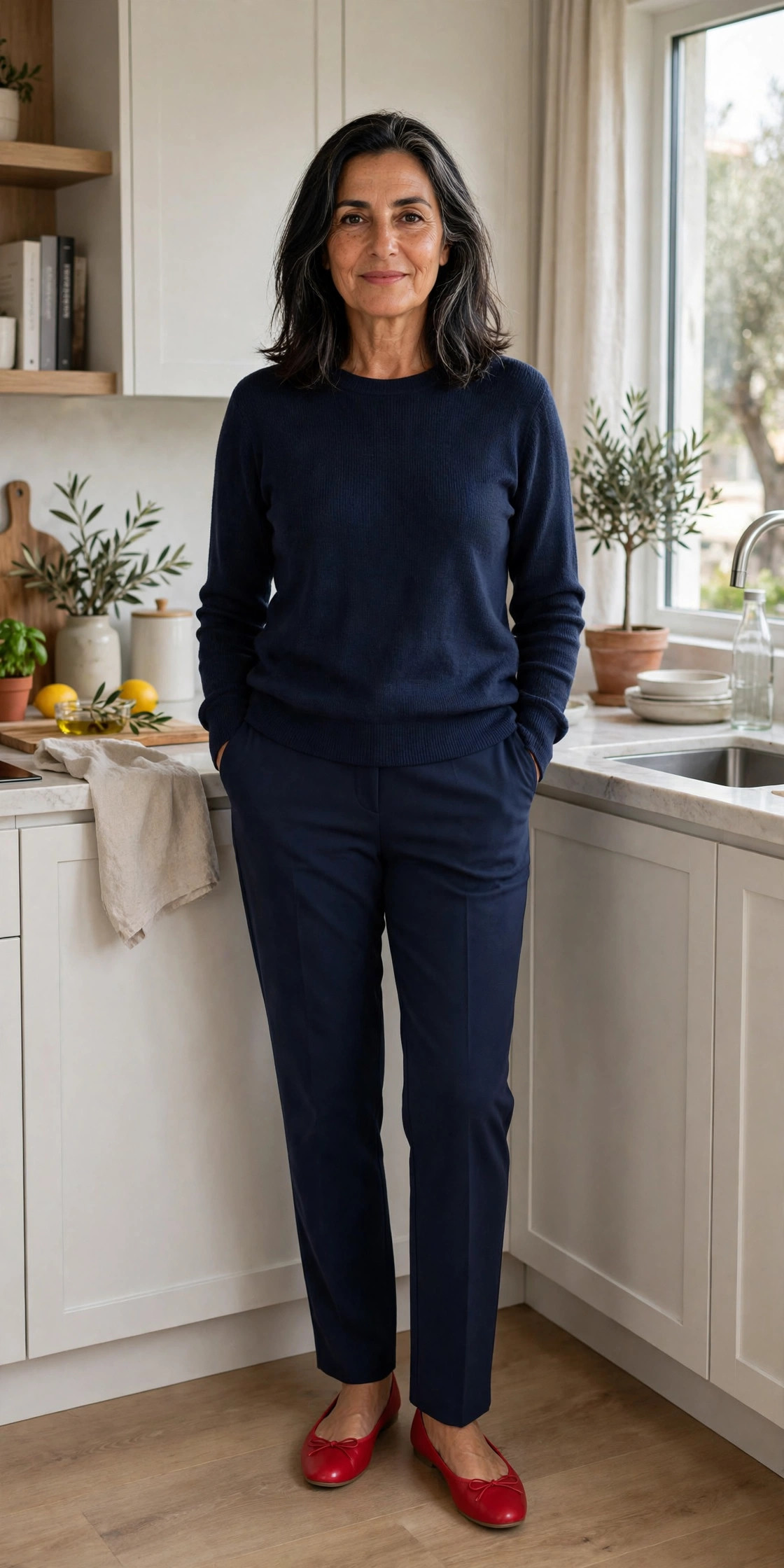
Watch an Italian woman get dressed and you will notice what she leaves off. The outfit is simple; one piece is allowed to speak. Everything else stays quiet.
Try it with a plain navy knit and trousers, then add exactly one focal point — red ballet flats. The whole look lifts, yet nothing competes.
Real-life translation: before you leave, remove one accessory. If the bag, earrings, scarf and shoes all shout, the outfit looks busy instead of elegant.
Rule 2: Tailoring That Breathes
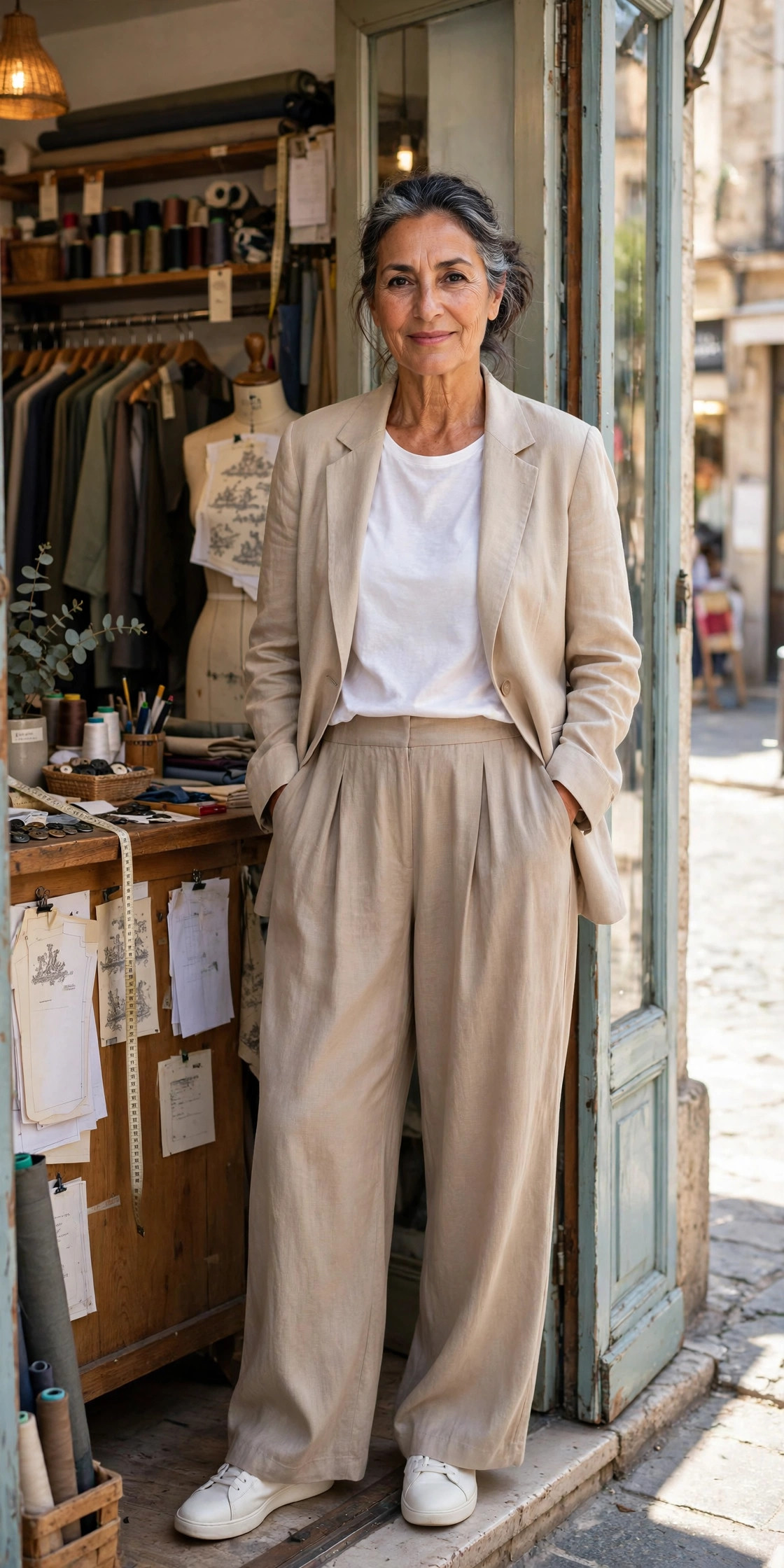
Italian tailoring is structured, never tight. A blazer holds its shoulder line but lets you move, layer, and sit through a long lunch comfortably.
Look for fluid trousers that fall cleanly from the hip and jackets with soft construction. If you cannot raise your arms or bend easily, it is not tailoring — it is a costume.
Real-life translation: take one trusted piece to a tailor. Shortening a sleeve or trouser hem by an inch does more for polish than buying something new.
Rule 3: Balance the Volume
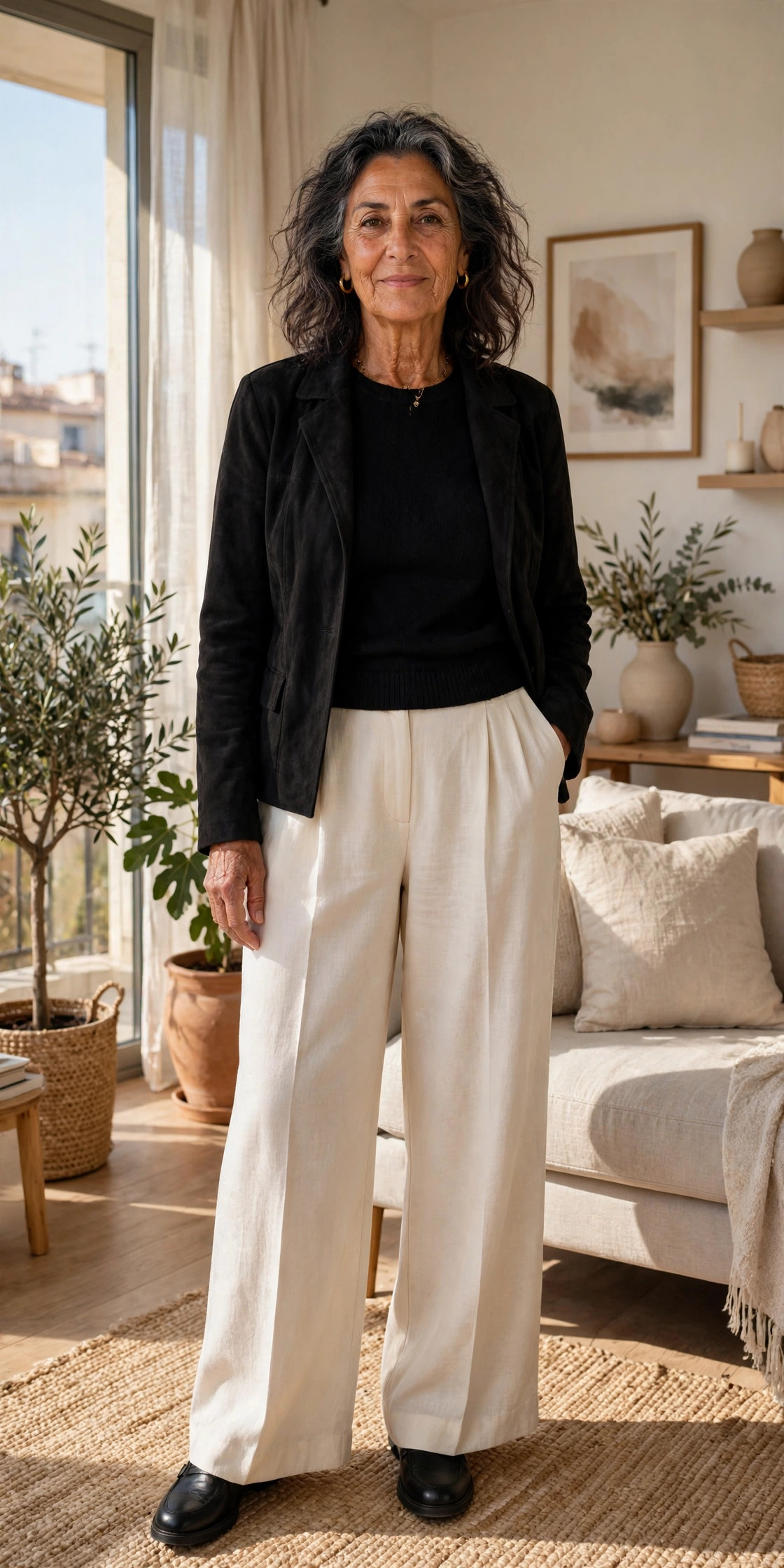
Italian dressing rarely tries to make everything slim. Instead, volume is placed deliberately — wide below, neater above, or the reverse.
Wide-leg cream trousers work because the top is fitted and tucked. The waist shows, the leg flows, and the silhouette looks intentional rather than oversized.
Real-life translation: if both halves feel loose, add one point of definition — a tuck, a pushed-up sleeve, or an open jacket.
Rule 4: Warm Neutrals First, Then One Bold Colour
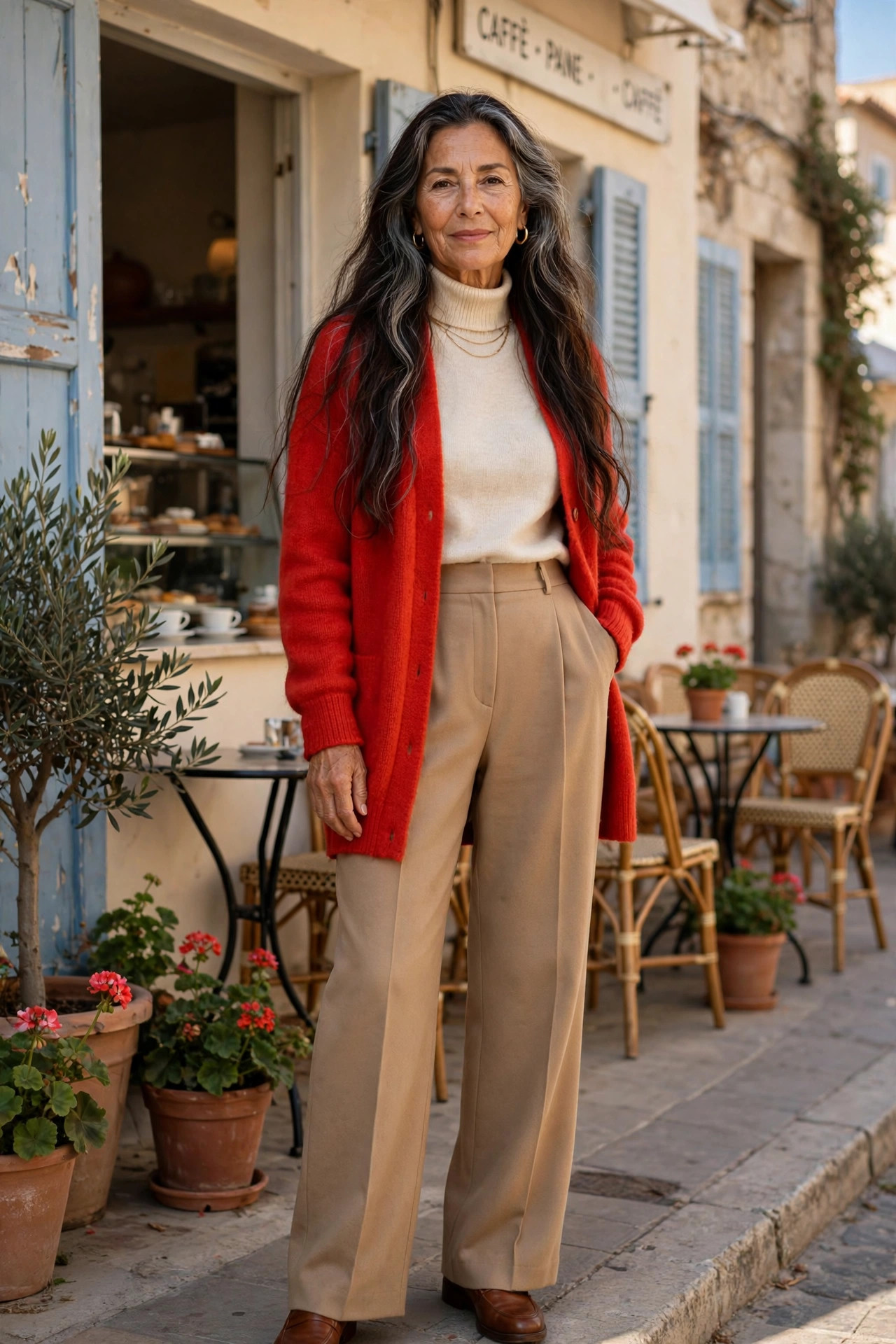
The Italian base is warm: camel, cream, chocolate, olive, navy. These shades mix endlessly, which is why getting dressed takes minutes, not negotiations.
Then comes the confidence — one deliberate colour worn like you mean it. A tomato-red cardigan over neutrals is joyful, Mediterranean, and completely age-appropriate.
Real-life translation: keep roughly eighty percent of the outfit neutral. Spend the colour on the piece closest to your face or the one you love most.
Rule 5: Fabrics You Can Feel
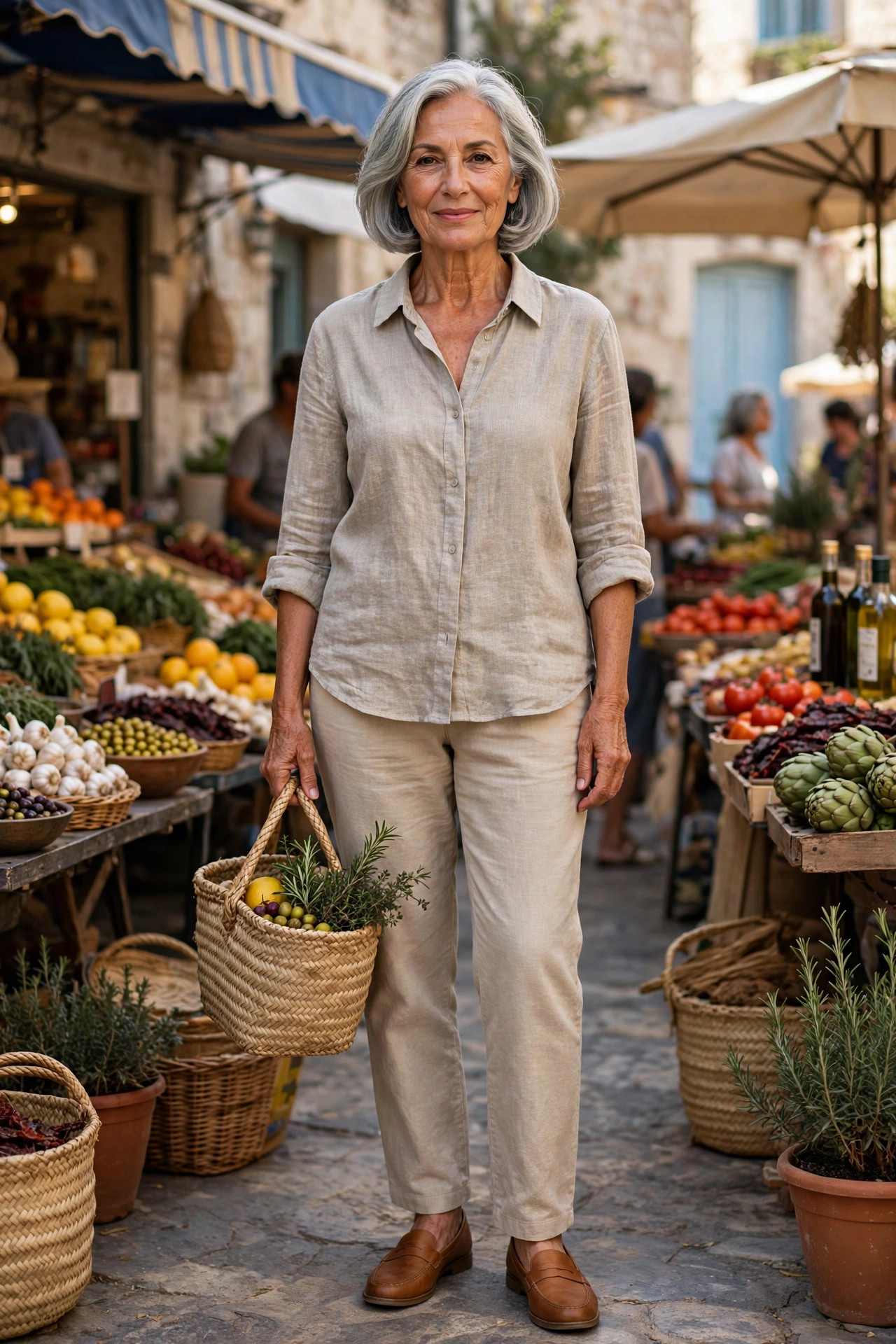
Texture is the quiet luxury of Italian style. Linen blends, cotton, wool, silk and soft leather give even the simplest outfit visible quality.
Natural fabrics also suit real life: they breathe at a summer market, layer in winter, and age gracefully instead of pilling after three washes. Our linen guide for women over 50 shows how to wear the most Italian fabric of all without the creased look.
Real-life translation: when shopping, touch first, look second. If a knit feels thin and scratchy in your hand, it will look tired on you too.
Rule 6: The Good Shoe Rule
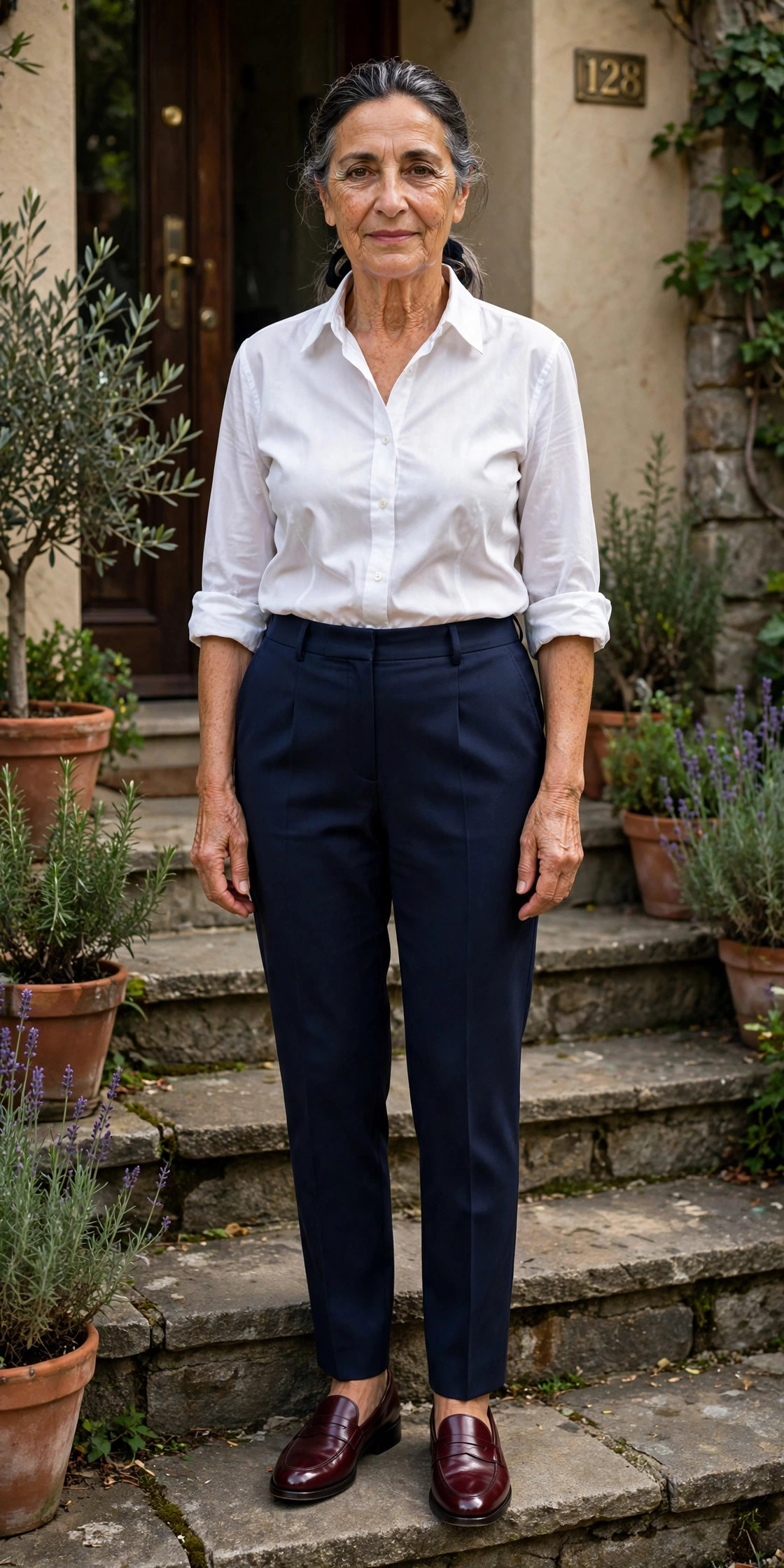
Italian women invest in shoes because shoes set the level of the whole outfit. The same trousers read casual with trainers and polished with loafers.
Burgundy loafers, sleek flats, or a low block heel in good leather will carry dozens of outfits. Comfort matters — a cushioned, well-made flat beats a beautiful shoe you cannot walk in.
Real-life translation: clean and condition your best pair this week. Scuffed shoes undo an otherwise careful outfit in seconds.
Rule 7: One Great Bag, Carried Every Day
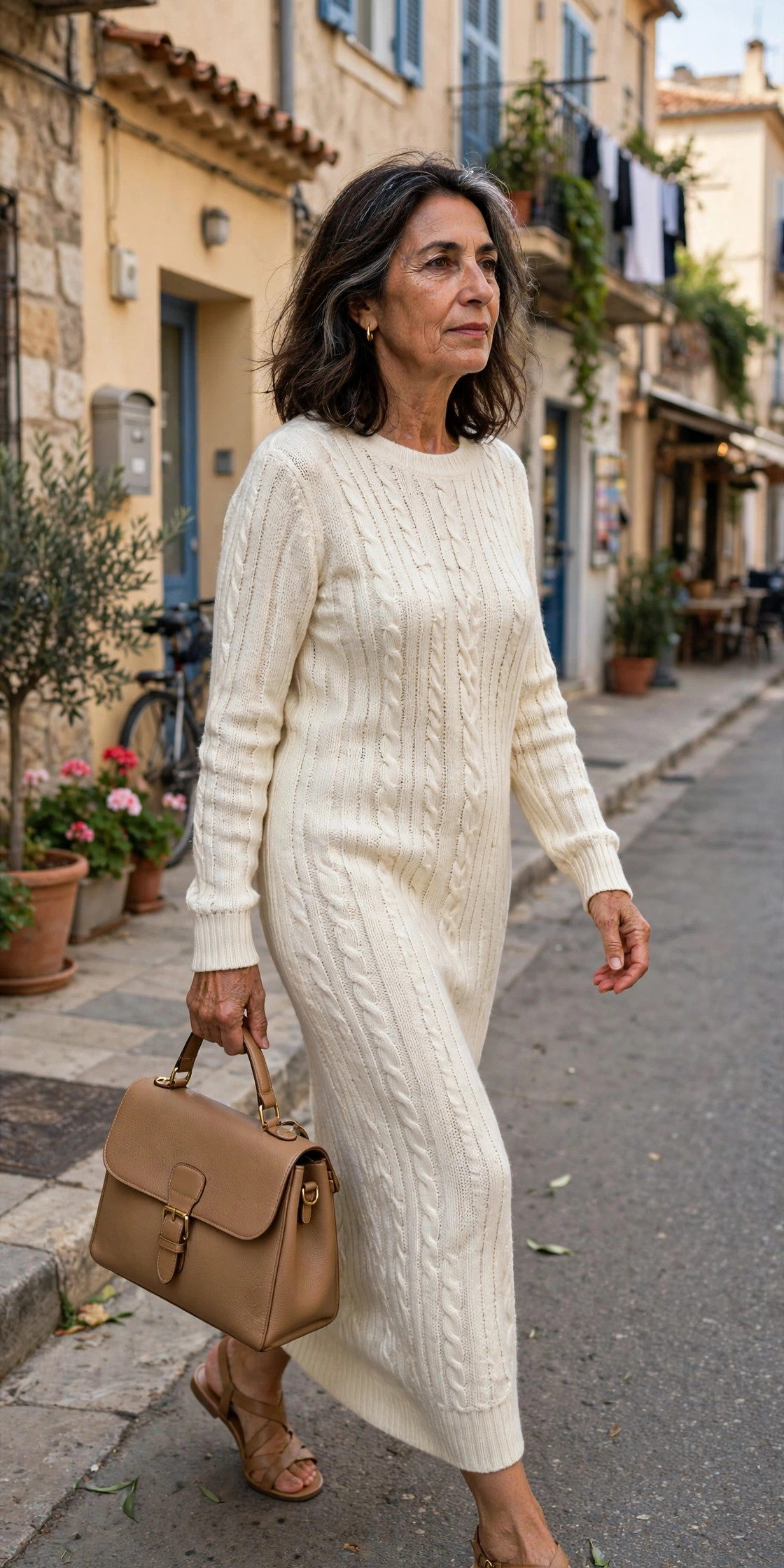
Rather than rotating ten bags, the Italian habit is one excellent leather bag used daily until it becomes part of your signature. It goes with everything because it was chosen to.
Pick a structured shape in tan, chocolate, or black, sized for what you actually carry. Cost per wear on a daily bag beats any bargain that stays in the wardrobe.
Real-life translation: empty and wipe your bag weekly. A tidy, cared-for bag looks expensive at any price.
Rule 8: Sunglasses and Simple Gold — The Finishing Habit
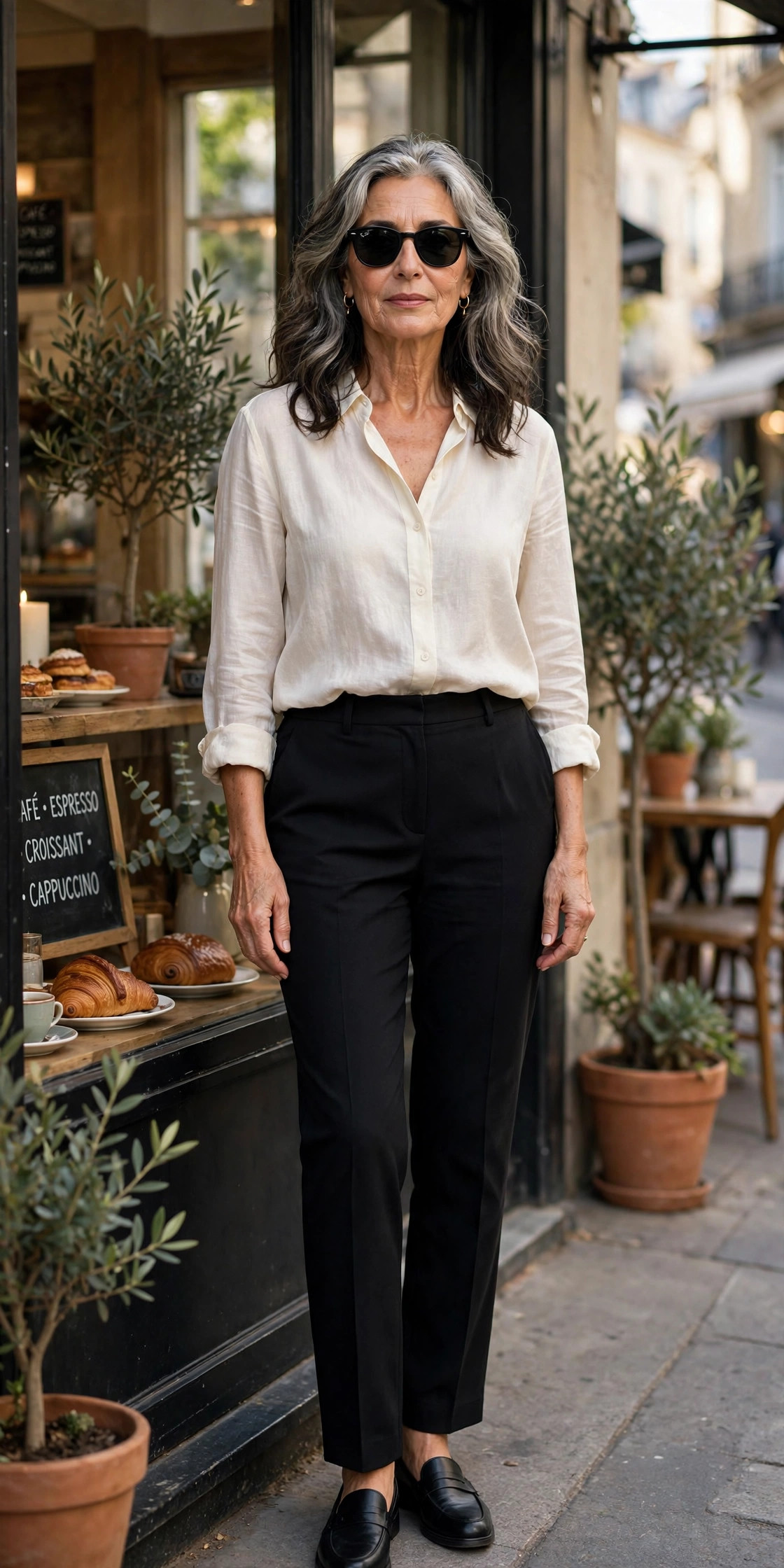
Accessories in Italy are a finish, not a performance. Classic sunglasses and one piece of simple gold jewelry add light near the face and stop there.
This habit is a gift on busy mornings: an ordinary blouse-and-trousers outfit looks deliberate the moment the sunglasses go on. For more finishing-touch inspiration, browse our style icons over 50 worth following.
Real-life translation: choose your daily jewelry once — hoops or studs, one watch or bracelet — and stop re-deciding every morning.
Rule 9: Groomed, Not Done-Up
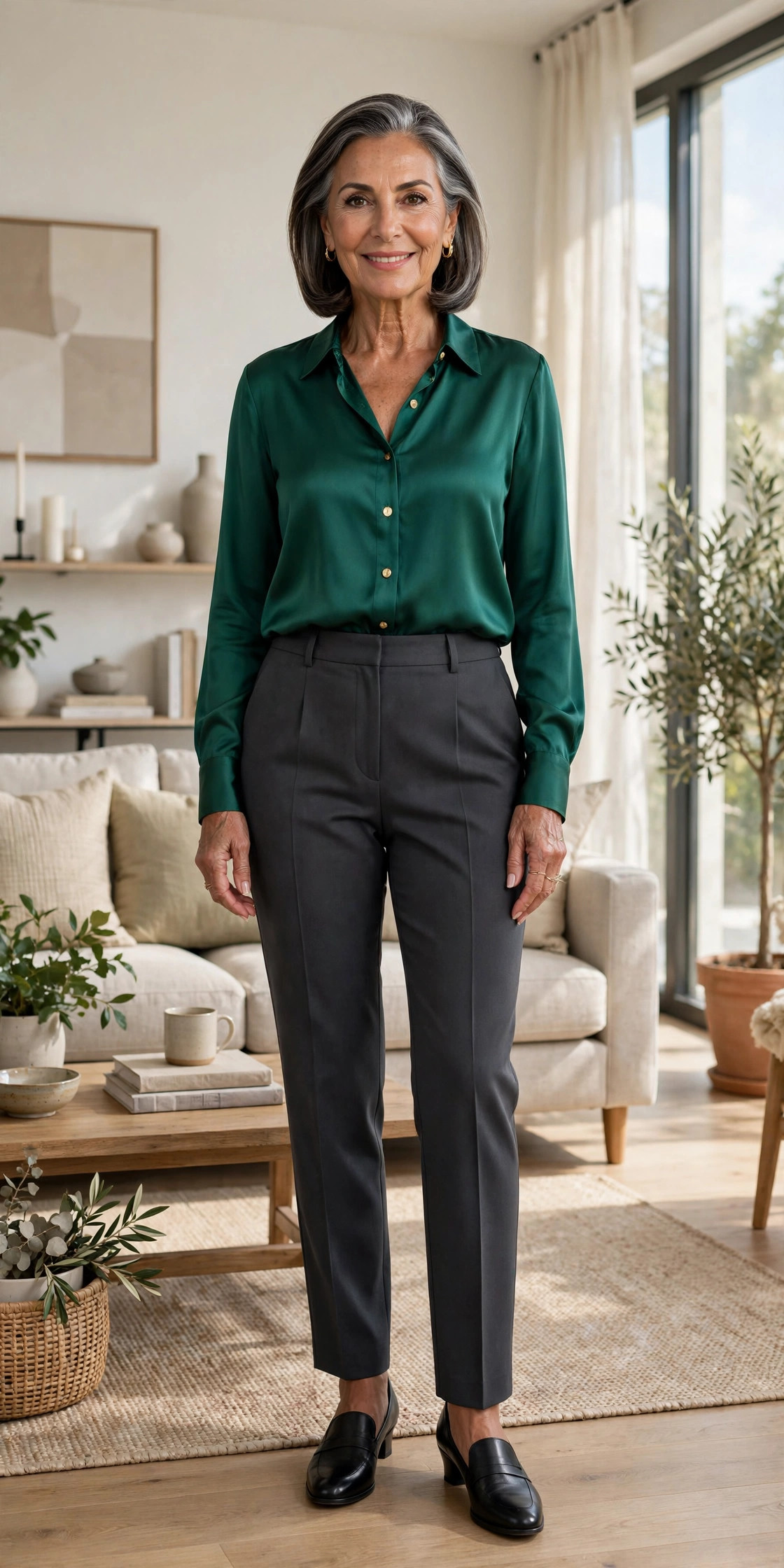
The most copied Italian habit is not an item of clothing. It is grooming: glossy hair, cared-for nails, brows defined, skin moisturised. The clothes can be simple when the finish is not.
This is also the most forgiving habit over 50. You do not need heavy makeup — neat hair and a healthy glow make a plain outfit look expensive.
Real-life translation: book the trim before you shop for clothes. Fresh hair changes how every outfit sits on you.
Rule 10: The Sunday Family Lunch Formula
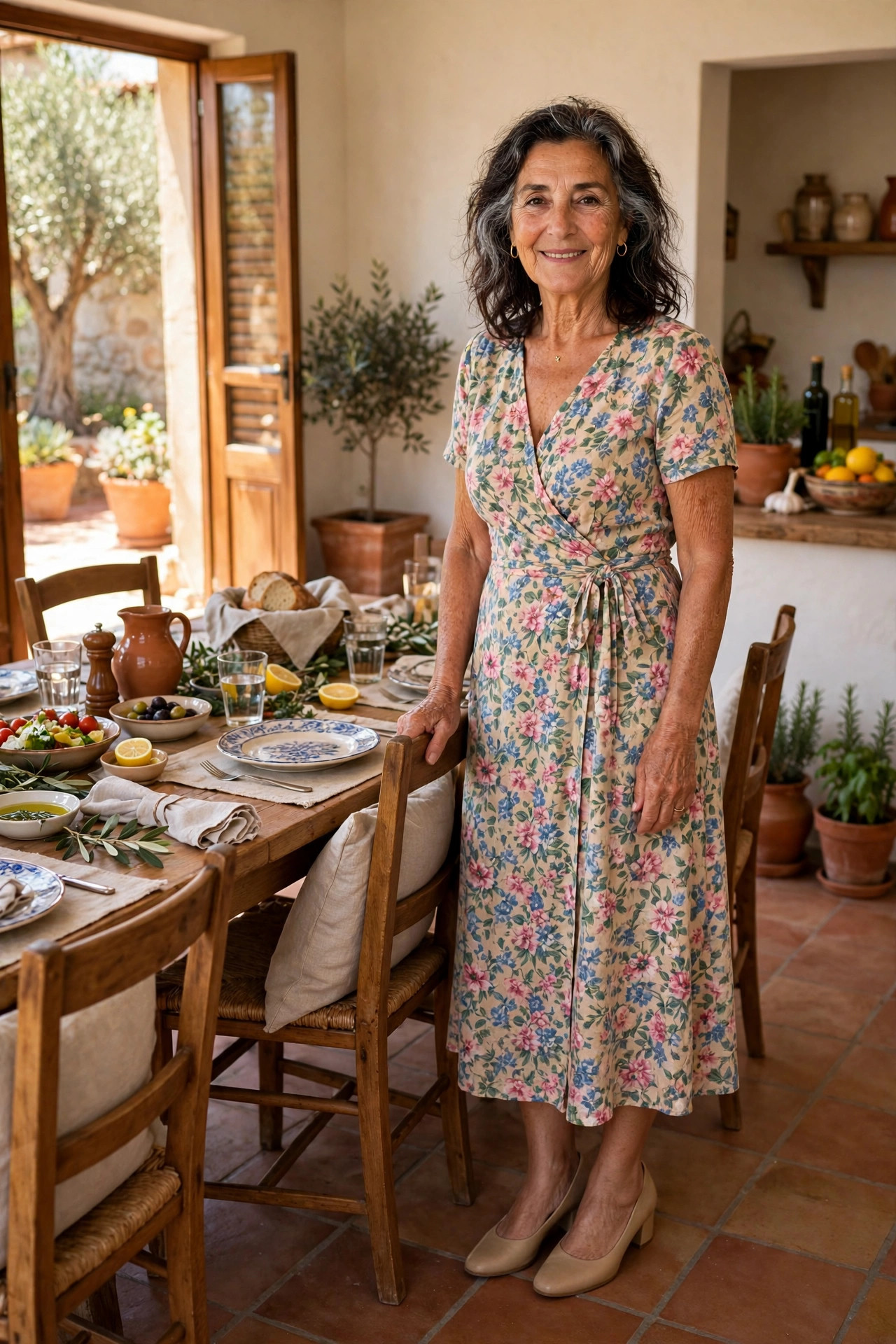
Sunday lunch is where Italian style proves itself: dressed up enough to honour the table, comfortable enough to eat, help, and hug grandchildren.
A floral midi dress with low block heels does all of it. The waist is defined but forgiving, the print hides a splash of sauce, and you look like you tried — because you did, a little.
Real-life translation: keep one “lunch dress” always ready. Being the woman who never has to panic-dress is the real luxury.
Rule 11: The Aperitivo Switch
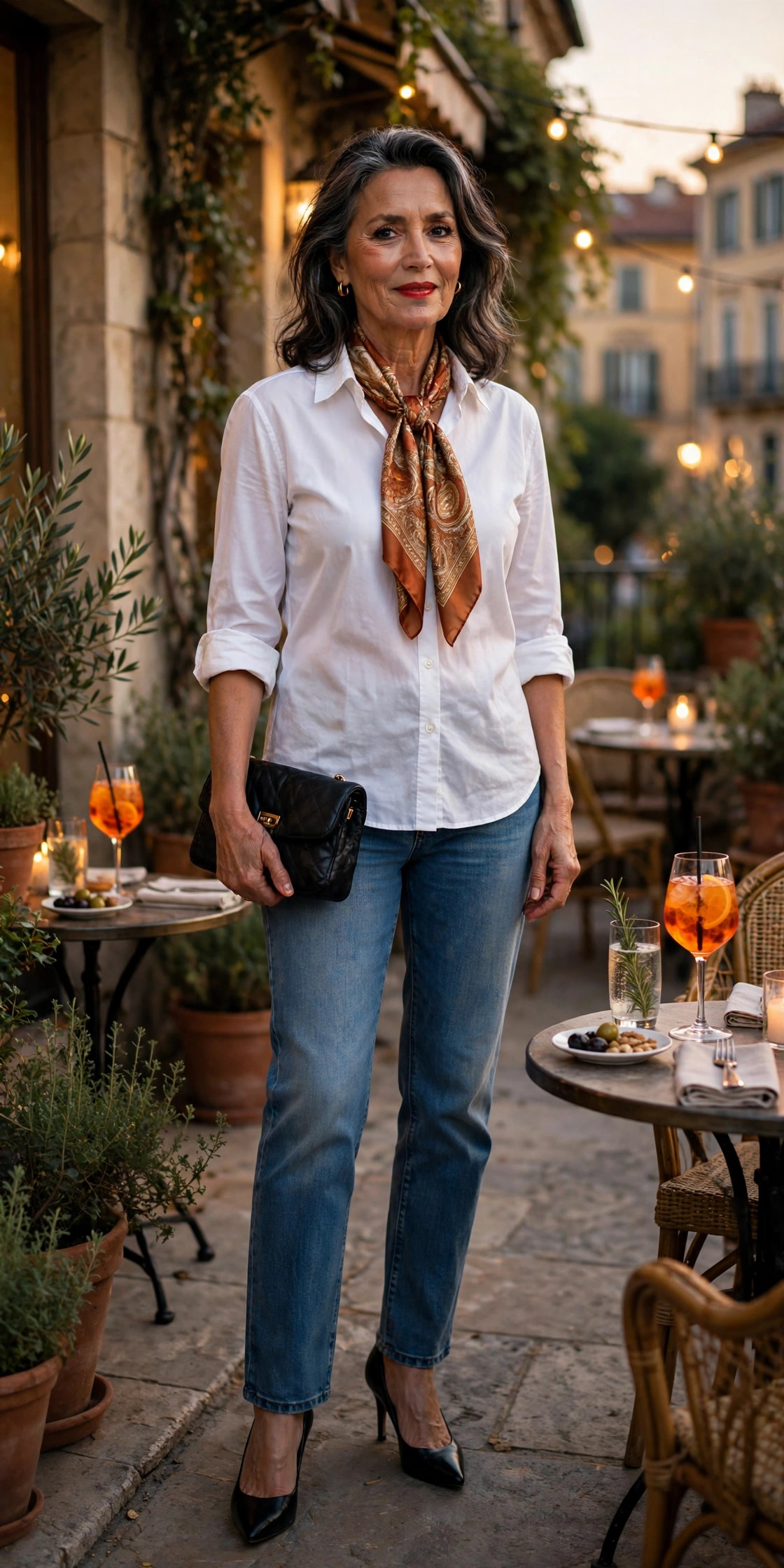
Evenings in Italy often grow out of the day, so Italian women master the five-minute switch. The jeans and white shirt stay; the details change.
Add a silk scarf, swap the tote for a clutch, refresh your lipstick. Suddenly the school-run outfit is sitting at a terrace table looking completely at home.
Real-life translation: keep a small evening kit — scarf, clutch, lipstick — in one drawer or your car. The switch should never require going home.
Rule 12: Sprezzatura — Leave One Thing Relaxed
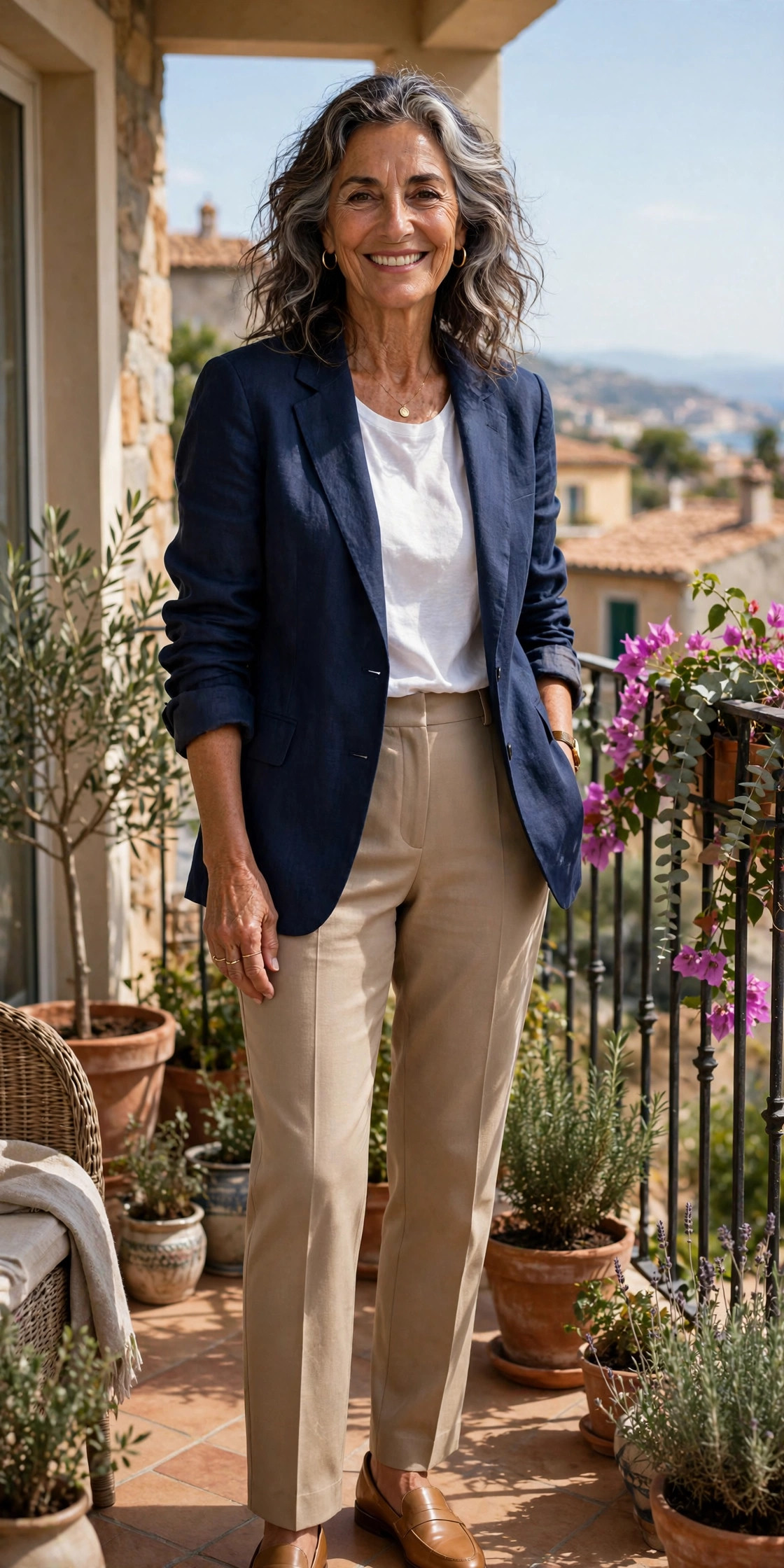
Sprezzatura is the famous Italian art of studied effortlessness. The outfit is considered, but one element is deliberately undone so it never looks stiff.
Push the blazer sleeves to the forearm. Leave the shirt untucked at one side. Let the hair be a little soft. Perfection looks like a costume; ease looks like confidence.
Real-life translation: when you feel overdressed, do not change the outfit — relax one piece of it. That single adjustment solves most “too much” moments.
One Base, Three Real Days
School run and errands: straight trousers, a fine knit, loafers, your one good bag. Add sunglasses and you are done in four minutes — polished, comfortable, nothing fussy.
Office day: the same trousers with a crisp shirt and the relaxed blazer from Rule 2. The structure reads professional, while the soft tailoring keeps a long day bearable.
Evening aperitivo: keep the base, apply Rule 11. Scarf, clutch, lipstick, one piece of gold — the day outfit becomes an evening outfit without a single change of clothes.
The Italian Rules at a Glance — Your Real-Day Checklist
- Morning mirror test: one focal point only; remove one thing if three pieces compete.
- Fit check: shoulders, sleeve length and trouser hem — tailor before you replace.
- Colour check: warm neutrals underneath, one bold colour worn deliberately.
- Finish check: clean shoes, tidy bag, hair brushed, one piece of jewelry.
- Day-to-evening: scarf, clutch, lipstick — the aperitivo switch lives in one drawer.
- Comfort check: can you sit, walk, eat and hug in it? If not, it fails the real-life test.
Frequently Asked Questions
What is the main difference between Italian and French style over 50?
French style leans cooler and more minimal; Italian style is warmer and bolder. Expect richer colour, statement shoes or bags, and a more groomed finish — Mediterranean confidence rather than Parisian restraint.
Do I need expensive clothes to dress Italian style?
No. The habits matter more than labels: good fit, natural fabrics, clean shoes and one focal point. A tailored high-street blazer worn daily will always beat a designer piece that does not fit.
What colours should I start with?
Build on camel, cream, navy, chocolate and olive, which mix with almost everything. Then add one colour you love — red, burgundy, emerald or cobalt — and wear it deliberately.
Can I wear trainers with Italian-style outfits?
Yes, if they are clean and streamlined. Keep the rest of the outfit structured — tailored trousers, a blazer, a good bag — so the trainers read as a choice, not an afterthought.
How do I look Italian-inspired without feeling overdressed?
Pair one polished piece with everyday basics: a blazer with jeans, loafers with a simple knit. Then relax one element — pushed-up sleeves or an untucked shirt corner — for sprezzatura.
Italian style over 50 is not a holiday wardrobe. It is twelve small habits — less, better, warmer, and finished — working quietly on an ordinary Tuesday. Start with three rules this week and let the rest follow.