How to Wear Linen Over 50 Without Looking Like You Forgot to Iron
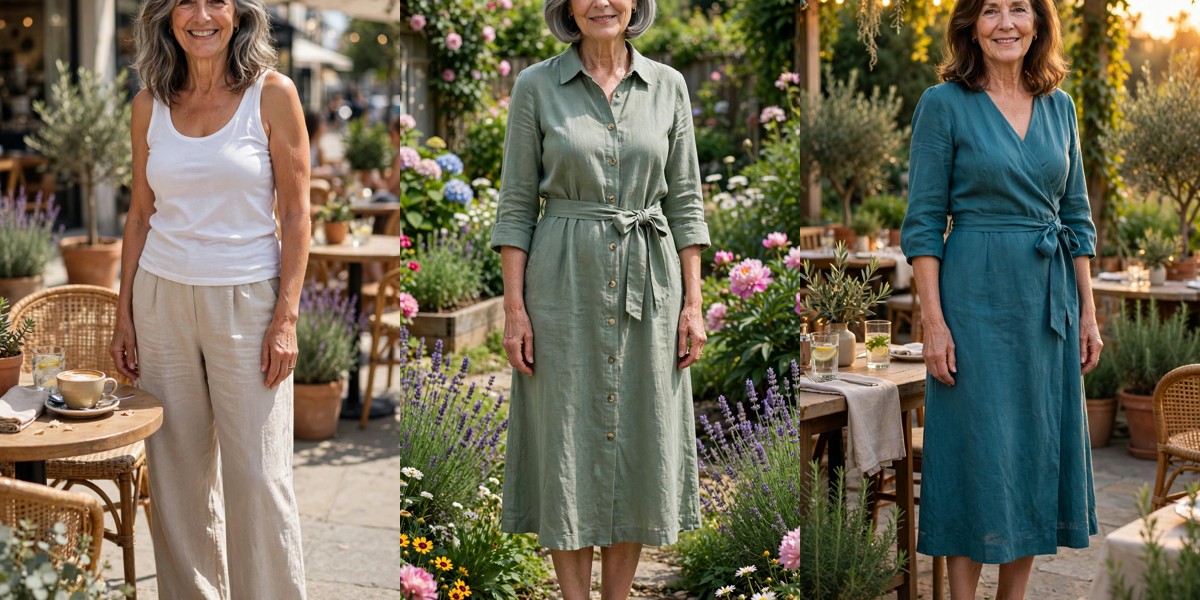
Linen is the coolest fabric you can wear in summer — and the one most likely to make you feel scruffy by lunchtime. One car ride, one café chair, and the creases seem to take over.
Here is the reassuring truth: polished linen was never about having no wrinkles at all. This guide shows women over 50 how to wear linen piece by piece, so it looks relaxed and intentional — never like you forgot to iron. If you love warm-weather dressing, our snowbird outfits for women over 50 pair beautifully with the ideas below.
Forget the ironing-board marathon. The secret is choosing the right pieces, blends and colours, then letting the soft creases that remain read as part of the look.
The Wrinkle Reality: Chic Creases vs Sloppy Creases
Not all wrinkles are equal. Soft, shallow creases that follow your movement — across an elbow, down a trouser leg — simply say natural fabric. They are the texture people expect, and even love, about linen.
Sloppy creases look different. They are sharp, deep and bunched, usually where fabric is too tight, too thin or pulled across the lap and knees.
That distinction changes everything. Your job is not to eliminate creasing; it is to avoid the tight, thin, bunched kind and let the soft kind be.
- Reads chic: gentle folds in a relaxed, mid-weight piece with one structured element — a collar, a flat waistband, a tailored shoulder.
- Reads sloppy: deep horizontal lines across a tight lap, bagging knees, or sheer fabric clinging and crumpling everywhere at once.
The Fabric-Blend Decoder
Pure, featherweight linen creases fastest. A blend keeps the breathability while adding the one thing linen lacks on its own: recovery.
Check the label before you buy. These are the combinations worth knowing:
| Blend | What it feels like | Best for |
|---|---|---|
| Linen–cotton | Crisp, sturdy, holds a press longer | Shirts, trousers, blazers |
| Linen–viscose | Fluid and drapey, softer creases | Dresses, wide-leg trousers, skirts |
| Linen–rayon | Smooth against skin, less scratchy | Tops and pieces worn all day |
| Mid-weight pure linen | Textured, substantial, creases softly | Shirt dresses, co-ords, jumpsuits |
Avoid anything you can see your hand through. If the fabric is gauzy on the hanger, it will look tired on you within the hour.
Before You Buy: The 30-Second Linen Check
Hold the garment up to the light. If you can clearly see your hand through it, put it back — thin linen creases fastest and clings most.
Scrunch a corner in your fist for five seconds, then let go. Good linen springs mostly back with soft folds; poor linen keeps a tight, crumpled ball shape.
Finally, sit down in the fitting room. If the lap pulls tight or the knees strain, the creases at home will be twice as obvious.
1. Wide-Leg Linen Trousers That Skim, Never Cling
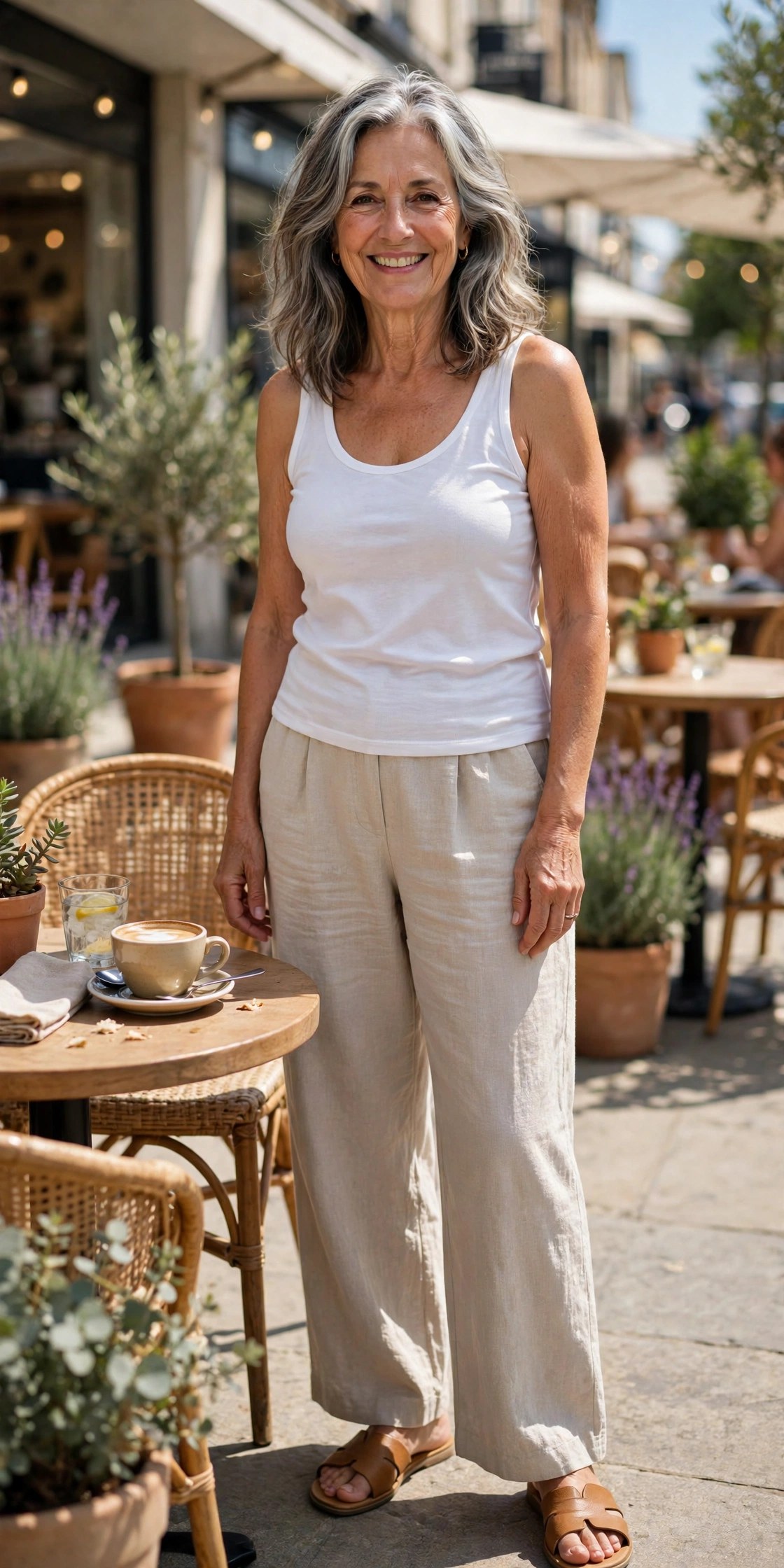
Start with the hardest-working piece: a wide-leg trouser in a mid-weight linen–cotton blend. The leg falls away from the thigh, so sitting creases stay soft instead of digging in.
Choose a flat front and a clean waistband. Pair with a smooth cotton tank so the contrast of textures does the polishing for you, and finish with leather slides.
2. A Structured Linen Blazer Over Something Simple

A tailored shoulder changes how every crease underneath is judged. A linen blazer with real structure frames the outfit, so natural softening in the sleeves reads as ease, not neglect.
Wear it over a plain tee and straight linen trousers for lunch out or a breezy evening walk. Push the sleeves to the forearm for an intentionally relaxed finish.
Fit matters more than pressing here. Shoulders should sit exactly on your shoulder line, and the hem should clear the hip — that clean outline is what the eye remembers.
3. The Linen Shirt Worn Open as a Light Layer

An overshirt solves two problems at once: sun on the shoulders and air-conditioning indoors. Worn open, it moves constantly, so creases never settle into one sharp line.
Pick a slightly longer length that covers the hip. Roll the cuffs once, keep the layer beneath smooth and fitted, and the whole look stays tidy.
4. A Belted Linen Shirt Dress
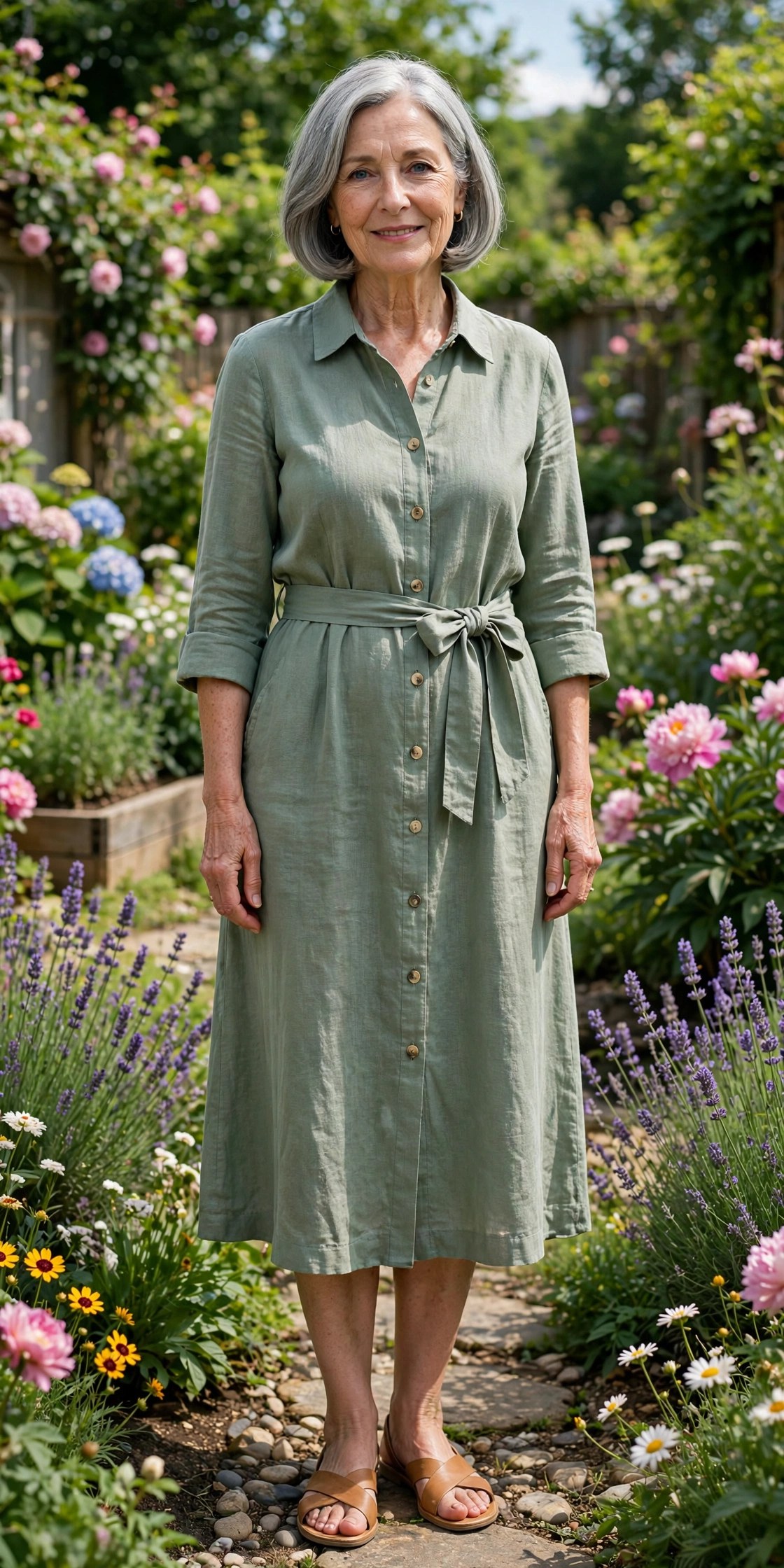
The shirt dress is linen with built-in manners: a collar, buttons and a defined waist. That structure carries the outfit even as the skirt softens through the day.
Tie the belt loosely rather than cinching. It is a forgiving, one-and-done option for garden lunches — and a close cousin of the fresh looks in our Easter outfits over 50 guide.
5. An A-Line Linen Midi Skirt That Moves
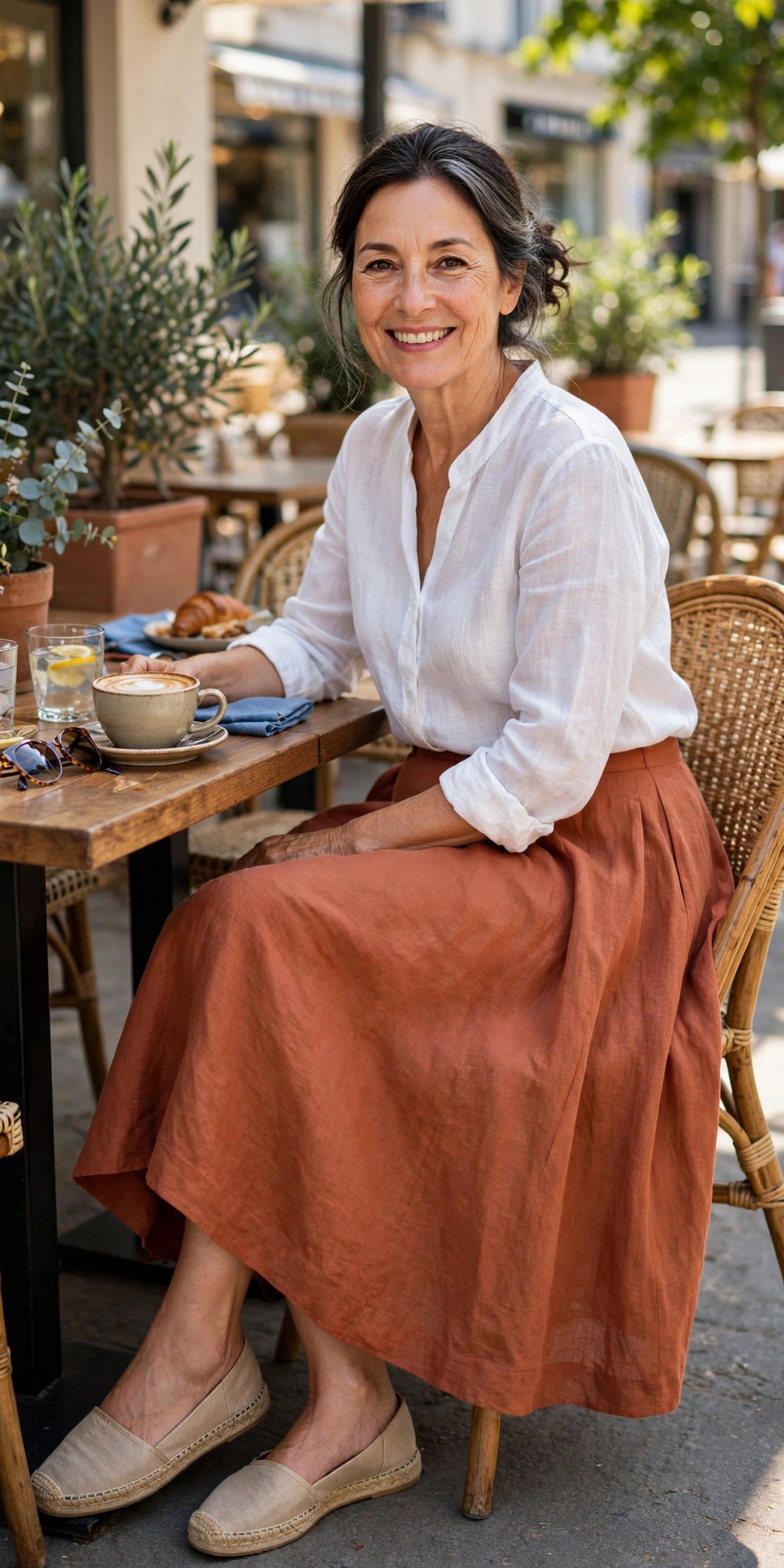
A pencil shape traps creases across the lap the moment you sit. An A-line does the opposite: the fabric swings and settles, so folds hide inside the movement of the skirt itself.
Look for a lined or slightly heavier weave in a warm, earthy tone. A simple tucked blouse and flat espadrilles keep it café-ready all afternoon.
Length helps, too. A midi that ends below the widest part of the calf moves more freely — and moving fabric simply shows fewer settled creases than a shorter, straighter cut.
6. A Sleeveless Linen Shift Dress in a Darker Colour

The shift is the lowest-maintenance dress shape in linen. It hangs from the shoulders, touches almost nothing, and therefore has almost nowhere for deep creases to form.
Choose navy or another deeper shade and creases become even harder to spot. Add simple gold earrings and flat sandals for an easy evening-by-the-water look.
7. A Matching Linen Co-Ord Set

A matching shirt-and-trouser set looks deliberate by design. Because top and bottom share colour and texture, the eye reads one polished column — minor creasing simply blends in.
It also multiplies your wardrobe: wear the shirt with white jeans, or the trousers with a striped tee. White sneakers keep the set modern, not matchy.
One caution: buy the set in a blend, not gauzy pure linen. Two matching pieces double the visible creasing if the fabric is too thin to hold itself up.
8. Knee-Length Linen Bermuda Shorts

Longer linen shorts give you airflow without the cling of short, fitted styles. A knee-skimming Bermuda in a tailored cut looks grown-up and stays comfortable for hours outdoors.
Team them with a breathable tee and an open linen overshirt on active days. The layering logic is similar to our hiking outfits for women over 50 — practical pieces, each doing a job.
9. A Relaxed Linen Jumpsuit With a Defined Waist
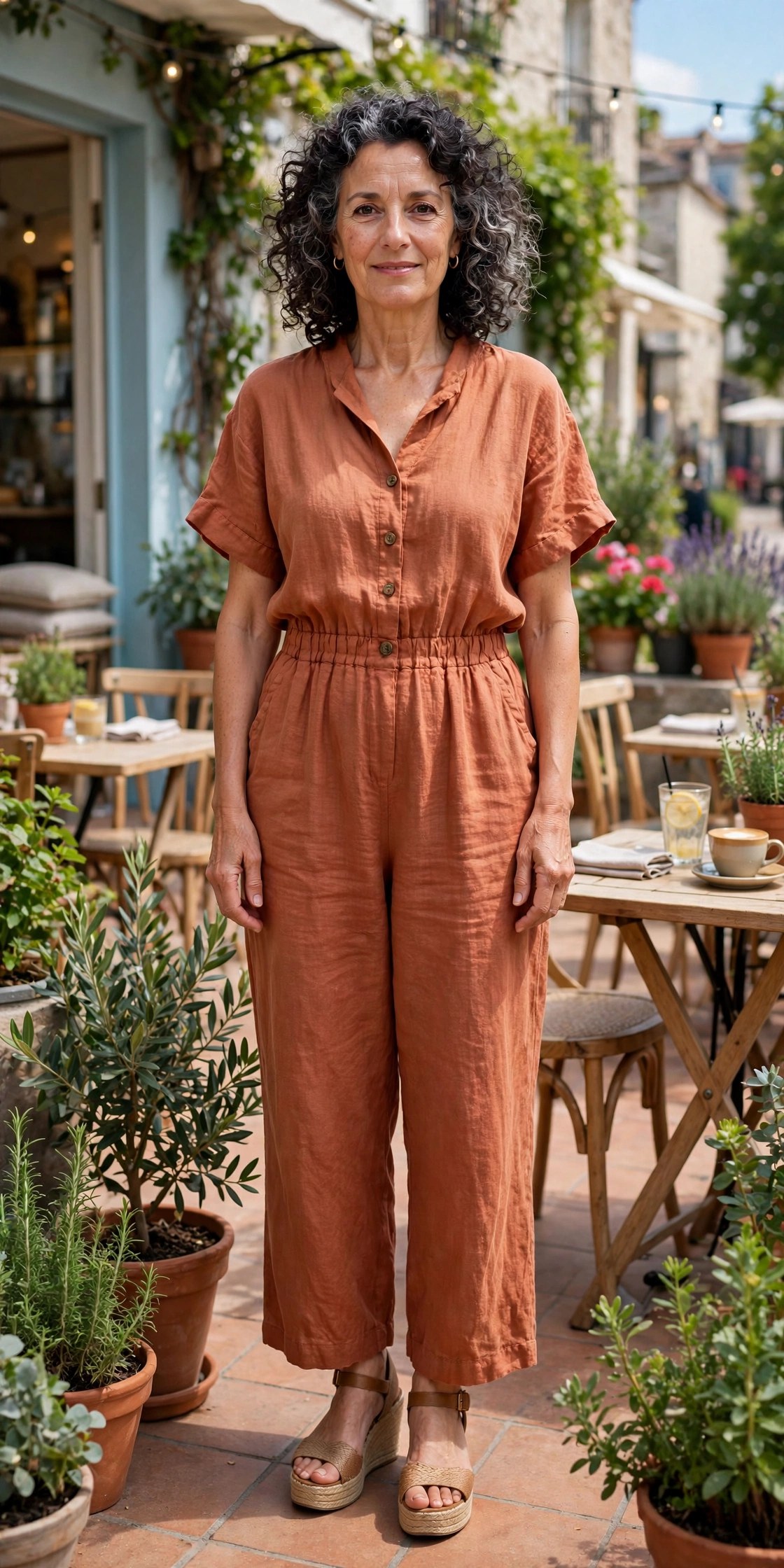
One piece, zero decisions. A jumpsuit in linen–viscose drapes instead of crumpling, and a gathered or tie waist stops the relaxed fabric from looking shapeless.
Check the rise and leg length before you buy — comfort when sitting matters most. Wedge espadrilles add height while keeping the mood easy and summery.
10. White Linen Trousers, Done the Safe Way
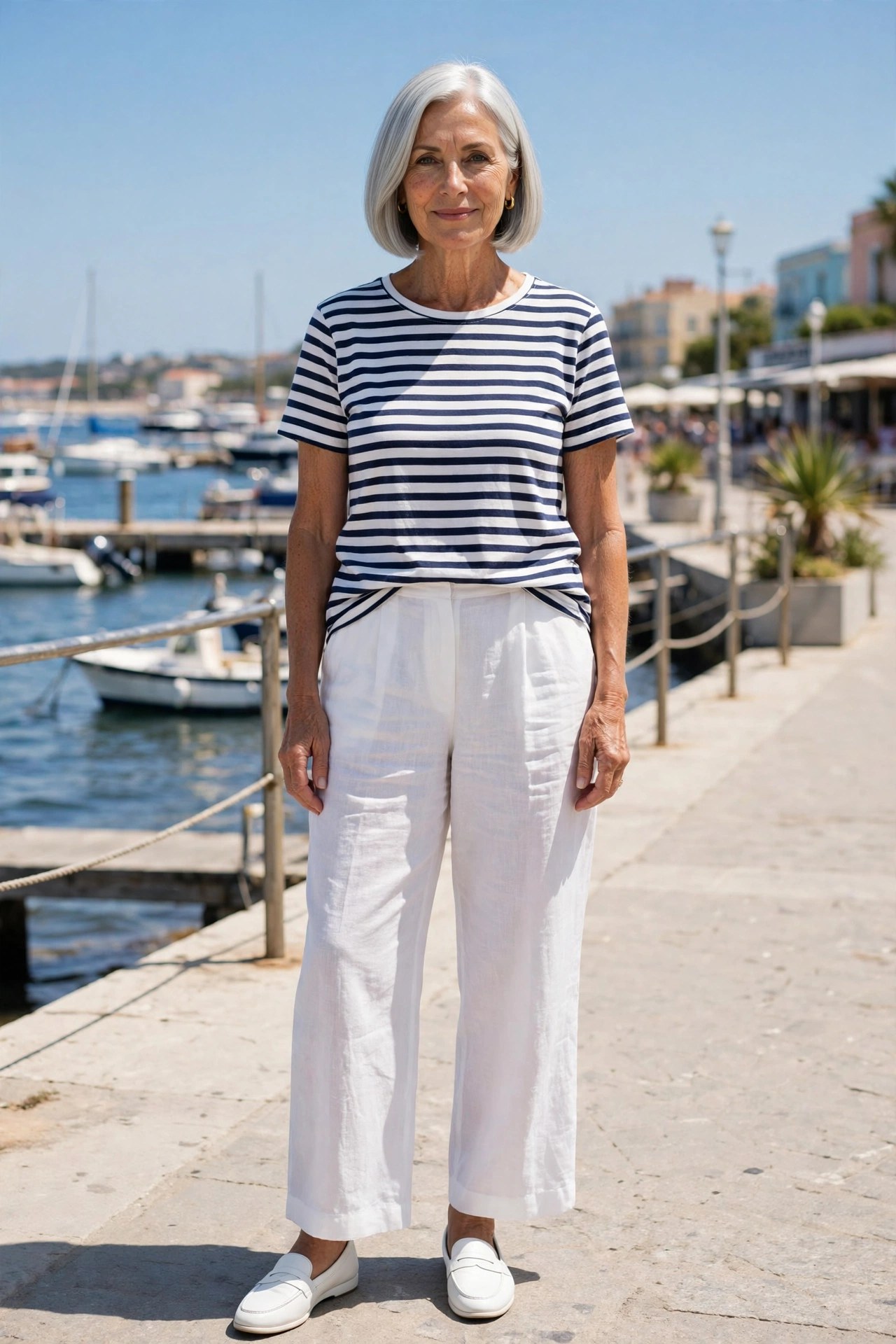
White linen is the piece women abandon first, yet it is easy to rescue. The rules: a lined or opaque weave, nude-toned underwear, and a relaxed leg that never strains.
A striped cotton top is the classic partner — smooth against textured, crisp against soft. White loafers keep the finish clean from head to toe.
Still nervous? Start with off-white or stone instead of bright white. You get the same fresh effect, with far more forgiveness for both creases and coffee.
11. A Linen Wrap Dress for Evenings
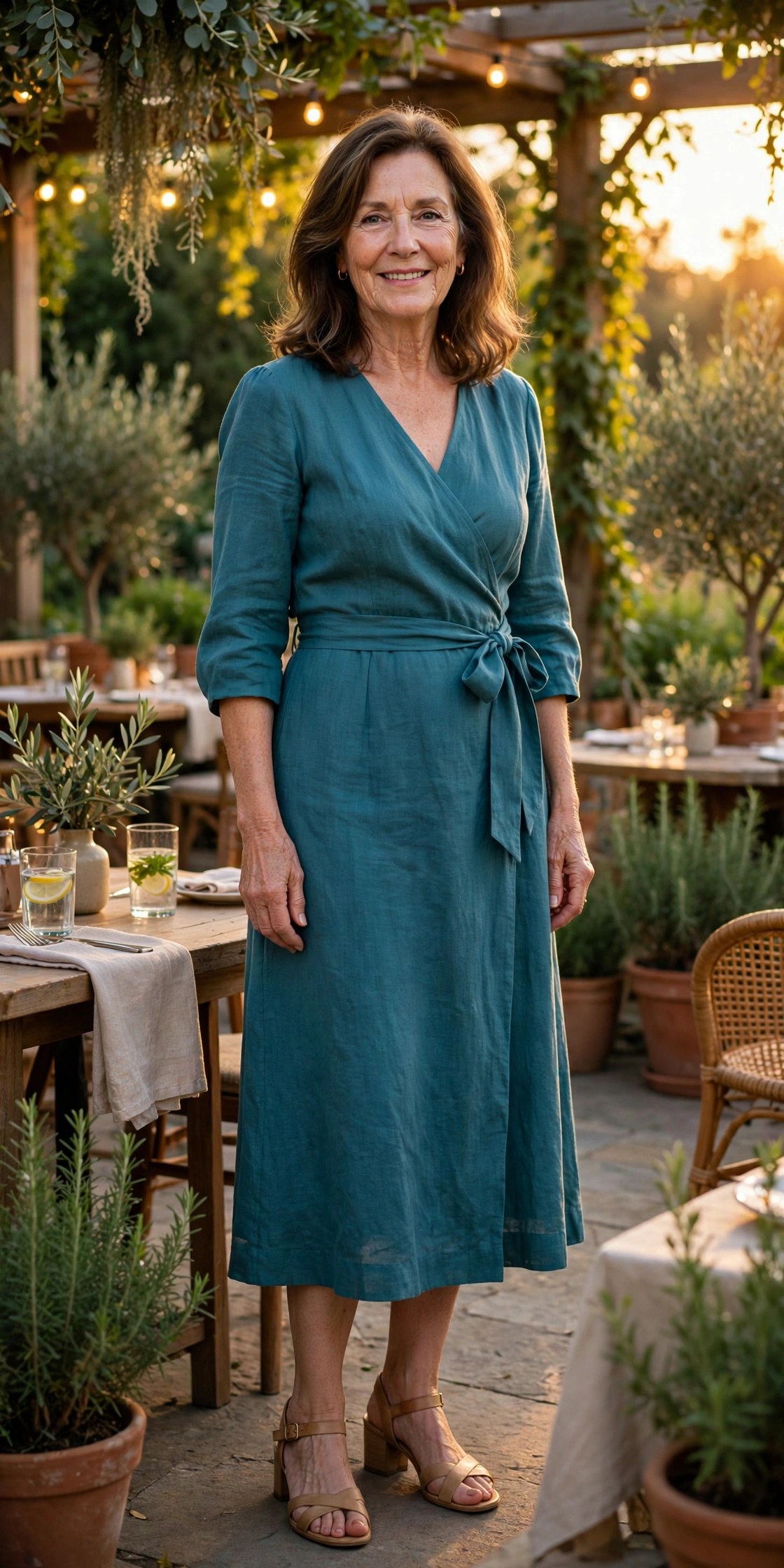
Yes, linen can do dinner. A wrap dress adjusts to your waist instead of fighting it, and the diagonal line of the wrap distracts the eye from any soft creasing below.
Pick a jewel or deep botanical shade and add a low block heel. The wrap’s movement means the skirt re-drapes itself every time you stand.
Secure the wrap with a small hidden snap or a camisole underneath if the neckline shifts when you sit. Feeling secure is what lets the outfit stay relaxed.
12. Flat-Front Cropped Linen Pants for Travel Days
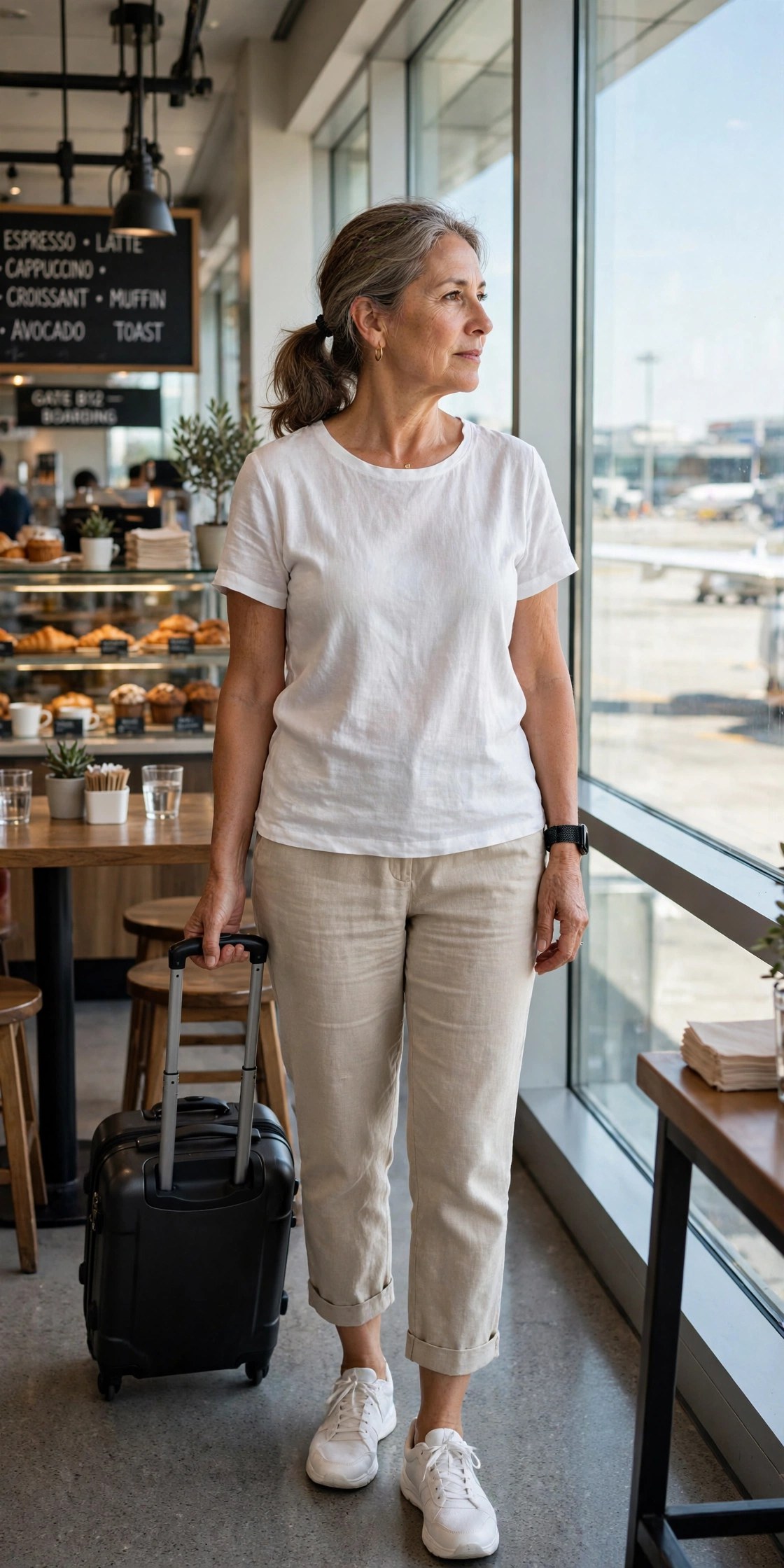
Linen belongs in your suitcase — with a plan. A cropped, flat-front pant in a blend arrives with far fewer hard creases than pure linen, and the shorter length never pools or drags.
Pack it rolled, not folded, and hang it in a steamy bathroom on arrival. Ten minutes of steam and it is ready for dinner, no iron required.
Which Colours Hide Creases Best?
Colour does quiet camouflage work. Mid-tone and deeper shades — navy, teal, olive, terracotta, chocolate — swallow shadows, so creases barely register.
Very pale colours show every fold because light catches each ridge. If you love white and cream, choose them in heavier weaves and relaxed shapes, as in ideas 1 and 10.
Small prints and subtle stripes help too. A patterned surface gives the eye texture to read, and a crease becomes just one more line in the design.
The 5-Minute Steam-and-Go Routine
Skip the iron for everyday wear. A handheld steamer relaxes the deepest creases in minutes and is far kinder to linen fibres than a hot plate.
Hang the piece the night before and let gravity work while you sleep. A light mist of water, smoothed by hand, handles anything left in the morning.
Wash cool and gentle, then remove while slightly damp and hang straight away. Never bake linen in a hot dryer — that is what sets hard wrinkles in permanently.
Travelling? Roll each piece, unpack and hang on arrival, and use the bathroom-steam trick from idea 12. That simple routine replaces ironing almost entirely.
Store linen hanging, not folded in a drawer. Folds from storage become the hardest creases of all, while a hanger lets the fabric relax between wears.
Frequently Asked Questions
Do I actually need to iron linen?
No. Steaming, hanging overnight and choosing blends will handle almost everything. Save the iron for a formal shirt front, if ever.
Which linen blend wrinkles the least?
Linen–viscose and linen–cotton both crease far less than thin pure linen. A mid-weight weave matters as much as the blend itself.
Can women over 50 wear linen to an evening event?
Yes — choose darker colours, structured shapes like a blazer or wrap dress, and one polished accessory. The matte texture looks elegant after dark.
How do I stop linen trousers bagging at the knees?
Bagging comes from thin fabric and a tight fit. Choose a wider leg, a blend with viscose or cotton, and a weave with real substance.
What shoes work best with linen outfits?
Leather slides, espadrilles, clean white sneakers and low block heels all work. A finished shoe is what keeps relaxed linen looking intentional.
The Bottom Line
Linen was never meant to look pressed and perfect — it was meant to look cool, calm and lived-in. Choose substance over gauze, structure over squeeze, and blends over brittle pure linen.
Do that, and the creases that remain stop being a problem to fix. They become the signature of a woman who dressed for the day, not for the ironing board.