
How to Find Your True Color Undertone After 50
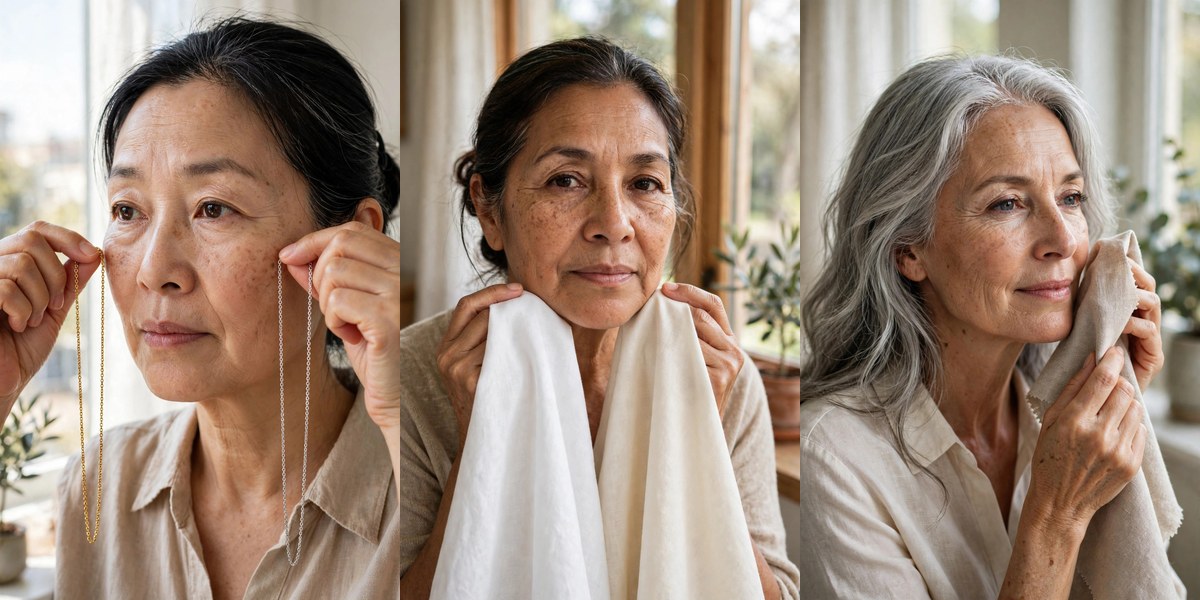
The shades that flattered you at 35 can feel strangely “off” at 55 — harsher, duller, oddly disconnected from your face. That’s not your imagination, and it doesn’t mean your style is slipping.
It’s your color undertone asking for a fresh reading. Skin thins, contrast softens, hair changes color — and the little bit of color detective work you skipped in your 30s suddenly matters a lot.
This guide gives you five at-home tests with the exact setup and the exact tell for each answer — plus how to decode mixed results, recalibrate for grey hair, and shop with your verdict. Ten minutes, a window, and a mirror: that’s the whole kit.
1. Assemble Your Testing Toolkit First

- A bright window — morning light near a north-facing window is the gold standard
- A clean hand mirror
- A bare face: no makeup, no self-tanner, no heavy moisturizer sheen
- Hair pulled fully back and off your face
- One plain pure-white cloth and one plain cream or ivory cloth
- One simple gold piece and one simple silver piece of jewelry
Every test below lives or dies on lighting. Bathroom bulbs and yellow lamps lie — they add warmth that isn’t yours and hide coolness that is. A cloudy-bright day near a window is the most honest mirror you own.
Test bare-skinned and hair-back for one reason: makeup and dyed hair are evidence tampering. You’re reading the undertone of your skin, not your foundation shade or your colorist’s work. Give the whole thing ten unhurried minutes.
2. The Vein Test: Read Your Wrist in Daylight

The setup: turn your inner wrist up in natural daylight — not under a lamp, not through curtains that tint the light. Look at the veins near your wrist crease, where the skin is thinnest.
The tell: veins that look clearly blue or purple point cool. Veins that look green or olive point warm. A genuine mix of both — blue on one wrist, green on the other — points neutral.
Be honest about this test’s limits. On very fair or very deep skin, veins are harder to read, and thick skin can fake a green cast. Treat this as a supporting witness, never the judge — don’t decide on the vein test alone.
3. The Gold-vs-Silver Jewelry Test
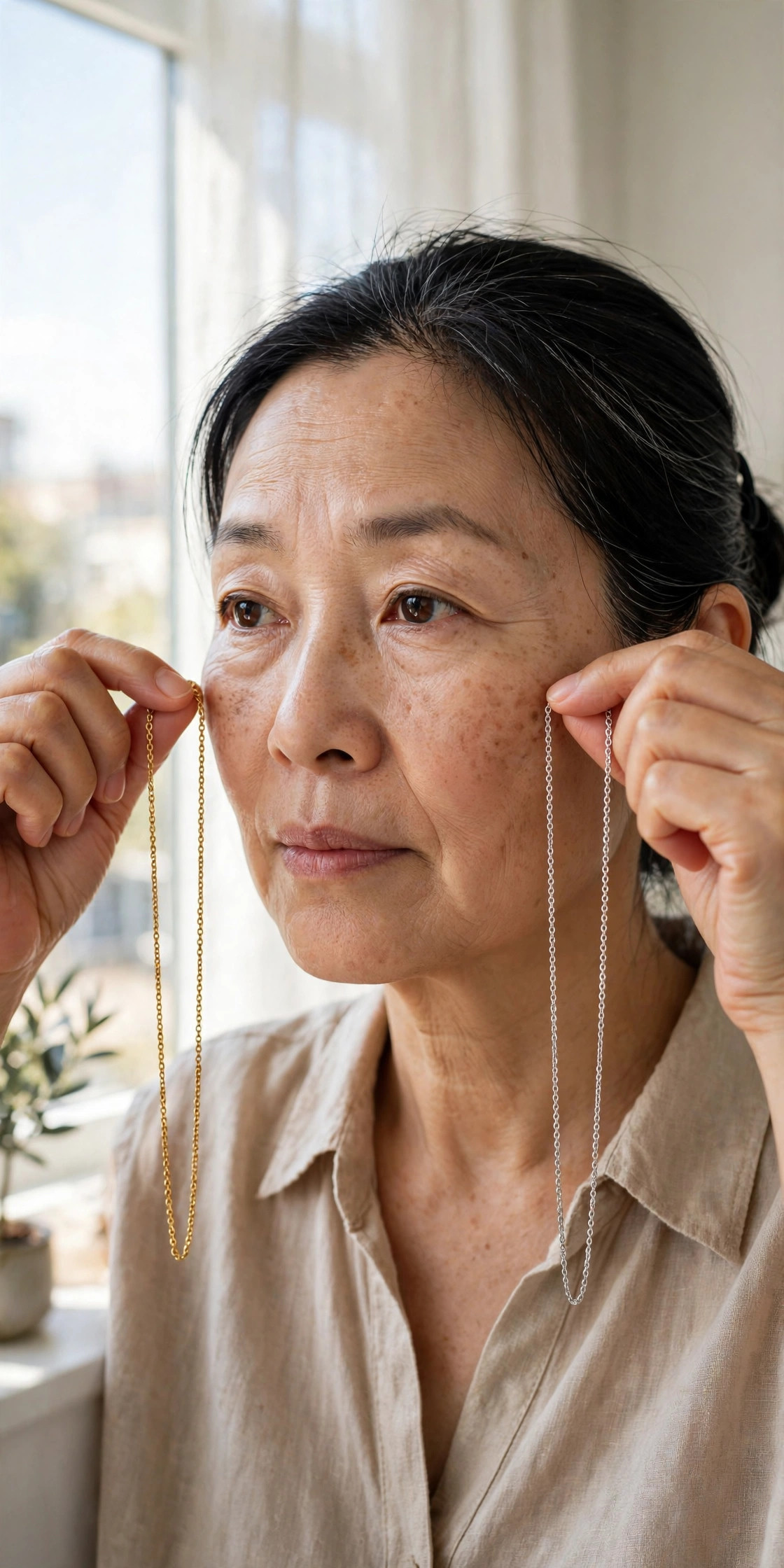
The setup: bare face, hair back, daylight. Hold a gold piece under your chin and study the mirror for a full 20 seconds, then swap to silver. Don’t rush — your eyes need the comparison fresh.
The tell: gold makes your skin look warmer, smoother, lit from within — that’s a warm vote. Silver makes you look brighter, clearer, more awake — that’s a cool vote. If both look equally fine and neither thrills you, that’s a real neutral vote, not a failed test.
No gold? No silver? Borrow from a friend’s jewelry box for five minutes. Use simple pieces — a plain chain beats a statement necklace, because stones and design distract from what the metal itself is doing to your skin.
4. The White-vs-Off-White Drape Test
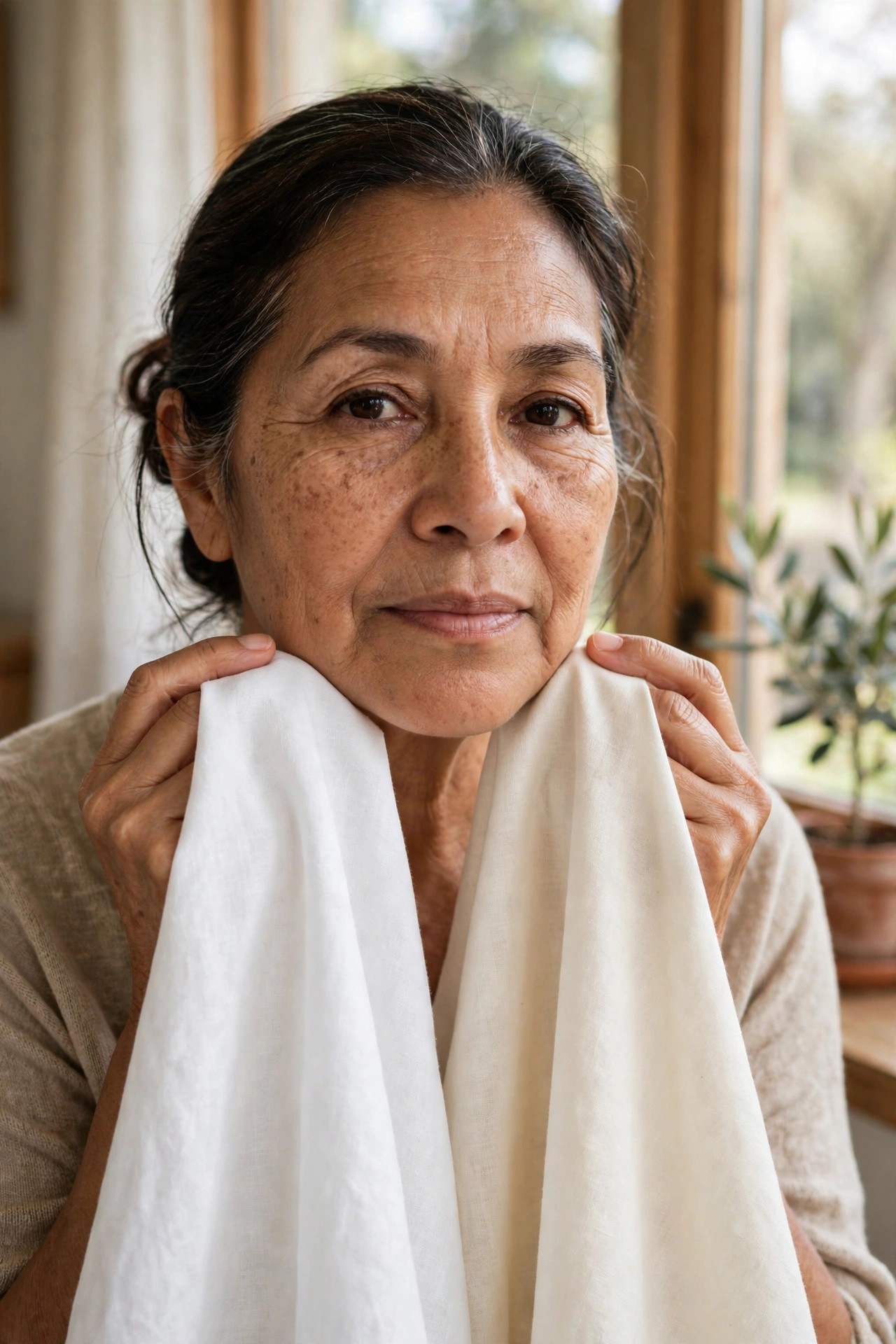
The setup: hold a pure, bright white cloth under your chin first, then swap to a cream or ivory cloth. Same daylight, same mirror, same bare face. Look at your whole face, not the cloth.
The tell: if bright white makes you look crisp and awake, cool is voting. If white makes you look tired and shadowed while cream softens you into looking rested — warm is voting. If both whites are honestly wearable, neutral is the honest answer.
Of all five tests, color professionals trust this one most. It’s a full-face read, not a wrist read, and it shows exactly what the question is really about: how light bounces off your skin. When this test and another disagree, weight this one heavier.
5. The Sun Response Test

The setup: no props needed — just your memory. Think back to your 20s through 40s, before daily sunscreen became a religion. How did your skin behave after an afternoon in real sun?
The tell: burned first, then maybe tanned a little — cool-leaning. Tanned readily to golden brown — warm. Turned deep brown with an olive cast and rarely burned — warm-to-olive. Freckled and burned without ever truly tanning — cool.
Use your younger-skin memory on purpose. Decades of sunscreen, hats, and indoor winters can make a natural tanner test like a burner today. And skip the self-tanner years entirely — bottled tan is another form of evidence tampering.
6. The Eye-and-Hair Clue Read
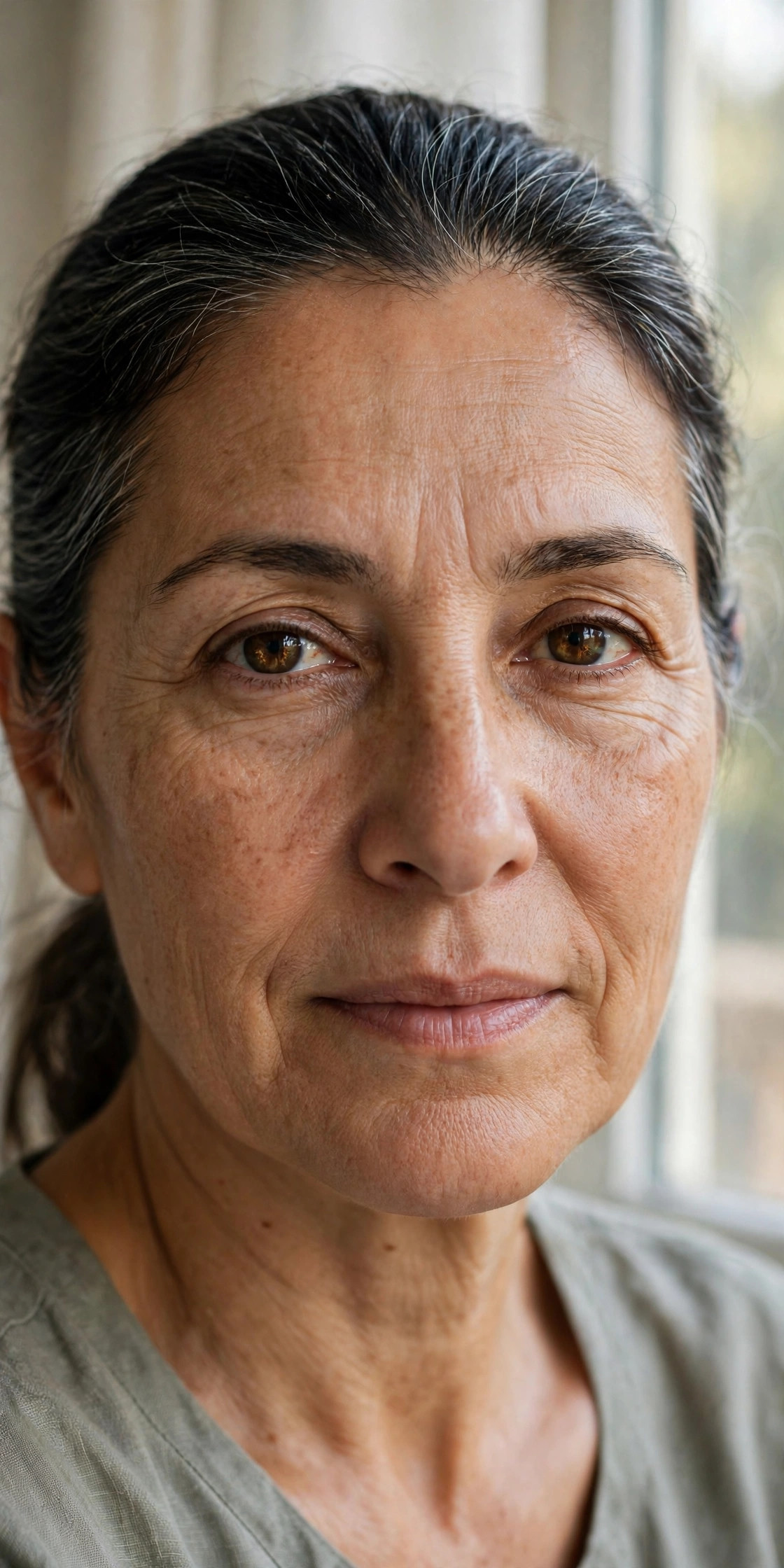
The setup: daylight mirror again. Study your eyes first, then recall your natural hair color in your teens and twenties — the one that grew out of your head, not the salon.
The tell: eyes with gold, amber, or warm brown flecks lean warm; grey-blue, icy hazel, or cool deep brown lean cool. Natural hair that was golden, auburn, warm red, or honey brown leans warm; ash blonde, ash brown, or blue-black leans cool.
Your current hair color doesn’t count here unless it’s your natural grey. Dye is a costume — charming, but not evidence. If you’ve gone silver, note it separately: grey hair changes your contrast (see section 9), not the undertone verdict itself.
7. Decode Your Results: Warm, Cool, Neutral or Olive?
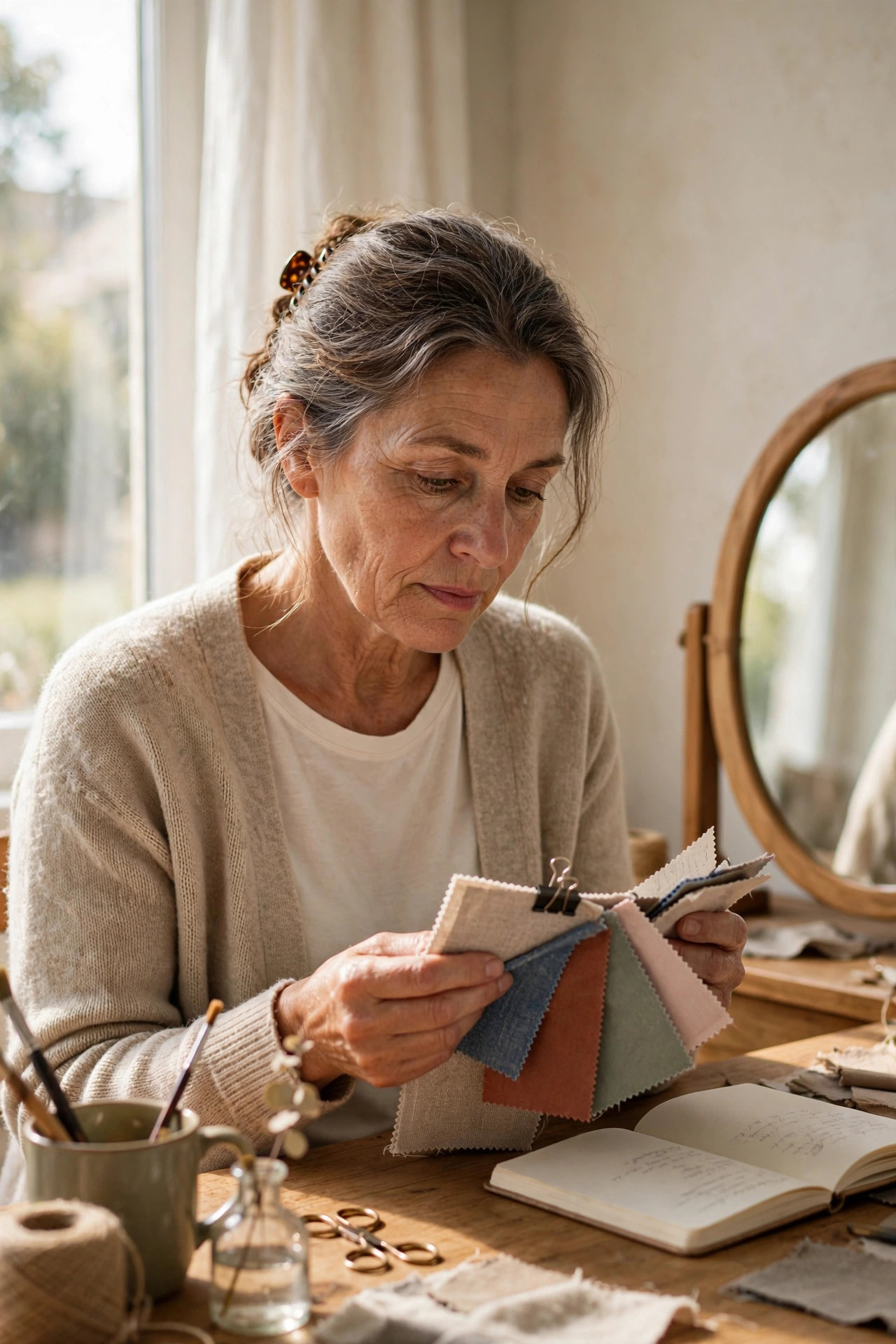
Tally your votes — three or more pointing one way is a verdict. Warm means most tests lit up on the warm tells: greenish veins, gold flattering, cream softening, easy tanning, warm flecks in the eyes. Cool means the mirror-image set: blue-purple veins, silver brightening, white sharpening, burning before tanning, cool flecks.
A genuine 50/50 split isn’t failure — it’s the neutral verdict, and it’s a real, common result. Neutral means your skin carries both families, so most tests read “both fine.” Olive is warm’s close cousin: a greenish cast in the skin that tans deep, common across Mediterranean, South Asian, Latin, and Middle Eastern complexions — if everything says warm but colors still feel slightly off, olive is worth considering.
Once your undertone verdict is in, the natural next step is learning which season family it points to — our guide on how to find your color season after 50 walks through that step without the jargon.
8. When the Tests Disagree: Tiebreakers That Settle It
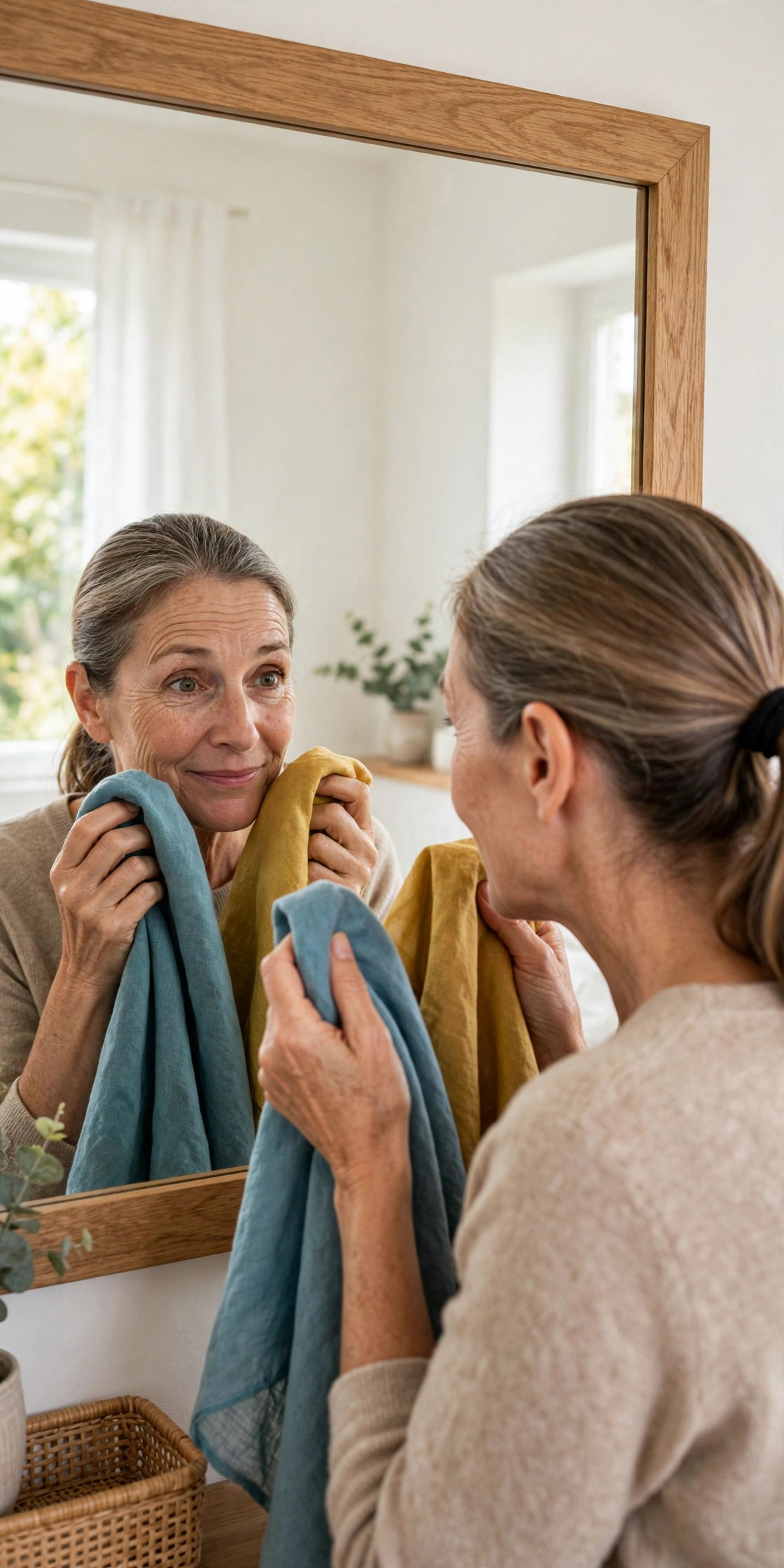
Jewelry says warm, the white drape says cool, the veins won’t commit — this happens to roughly a third of women. First, re-run the two face tests (jewelry and white drape) on a different day; fatigue and even mood genuinely skew what you see.
Then apply the tiebreakers in order: the white drape test outranks the vein test every time — face beats wrist. The “everyday instinct” test outranks memory: which metal do you actually reach for most mornings? That habit is data. And when you’re still split down the middle, accept the neutral verdict instead of forcing one — neutrals aren’t undecided, they’re flexible.
If you want a definitive answer, a professional color analysis session is the honest upgrade. One in-person draping session settles what five home tests can only approximate. It’s a luxury, not a necessity — but it ends the guessing.
9. Grey Hair Changed My Reading — Recalibrate Like This
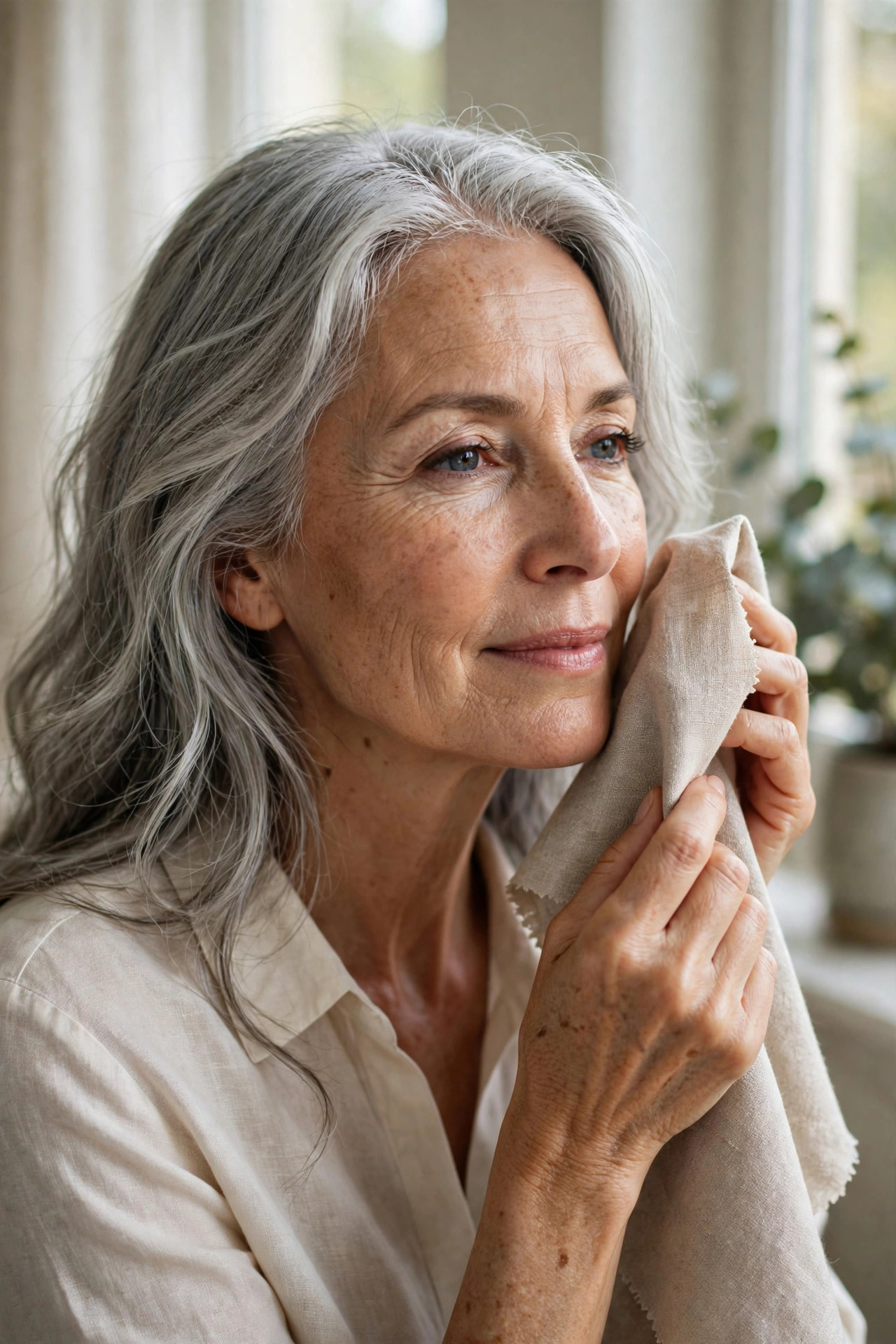
Going grey doesn’t change your undertone — but it changes your contrast, and contrast is half of what the mirror shows you. Silver hair next to the face can make a warm undertone read cooler than the tests say, which is why so many women feel their colors “broke” during the grow-out.
Recalibrate by testing twice: once with hair fully pulled back (the true skin read), once with hair framing your face (the real-world read). Anchor your verdict on the pulled-back tests — veins, sun memory, and the drape don’t change with hair color — then adjust how you wear the answer around your new silver.
For the wearing part, our guide to the best colors to wear with grey hair after 50 shows how to style around silver without fighting it.
10. Your Undertone Wardrobe Card: Shop With Your Answer

Write your verdict on a small card and keep it in your bag: “Warm — cream over white, gold over silver.” Shopping becomes a filter, not a gamble. In the fitting room, always test a new color at the neckline first — that’s where undertone matters; trousers and shoes get a free pass.
Store lighting lies almost as badly as bathroom bulbs, so when a piece is a maybe, step toward the store’s front windows — or check it in daylight before the tags come off. And build from what you own: pull out the pieces that already get compliments and check them against your verdict. You’ll likely find you’ve been dressing your undertone all along.
If your verdict came back warm, the best colors for warm undertones over 50 is your full next step — and for making those colors look expensive on a budget, quiet luxury on a budget over 50 is the one to read next.
Frequently Asked Questions
Can my undertone actually change after 50?
The undertone itself stays put — it’s set in your skin. What shifts is everything around it: thinning skin, softened contrast, grey hair, sun history. So the colors that flatter you can genuinely change even though your undertone hasn’t.
Which single at-home test is the most reliable?
The white-versus-off-white drape test. It’s a full-face read in natural light, and it shows exactly how color interacts with your skin. Weight it above the vein test whenever two tests disagree.
What if every test gives me a different answer?
You’re most likely neutral — and that’s a verdict, not a shrug. Neutrals can wear both warm and cool families. Test new pieces at the neckline in daylight and let your mirror, not a rulebook, decide.
Does grey or silver hair change my undertone?
No, but it changes your contrast, which changes how colors read next to your face. Retest with your hair pulled back for the true skin verdict, then adjust your wearing choices around the silver.
Is professional color analysis worth it after 50?
If the home tests leave you genuinely torn, yes — one in-person draping session settles years of guessing. It’s a luxury rather than a necessity, but many women call it the best money they ever spent on their wardrobe.
Finding your undertone isn’t about rules — it’s about evidence. Five honest tests, one clear verdict, and suddenly the dressing room stops being a guessing game.
Run the tests this weekend while the light is good. Your mirror has been trying to tell you the answer for years; now you know how to listen.




2 Comments
Comments are closed.