
Why Clothes Stop Fitting Right After 50 — and What to Do About It
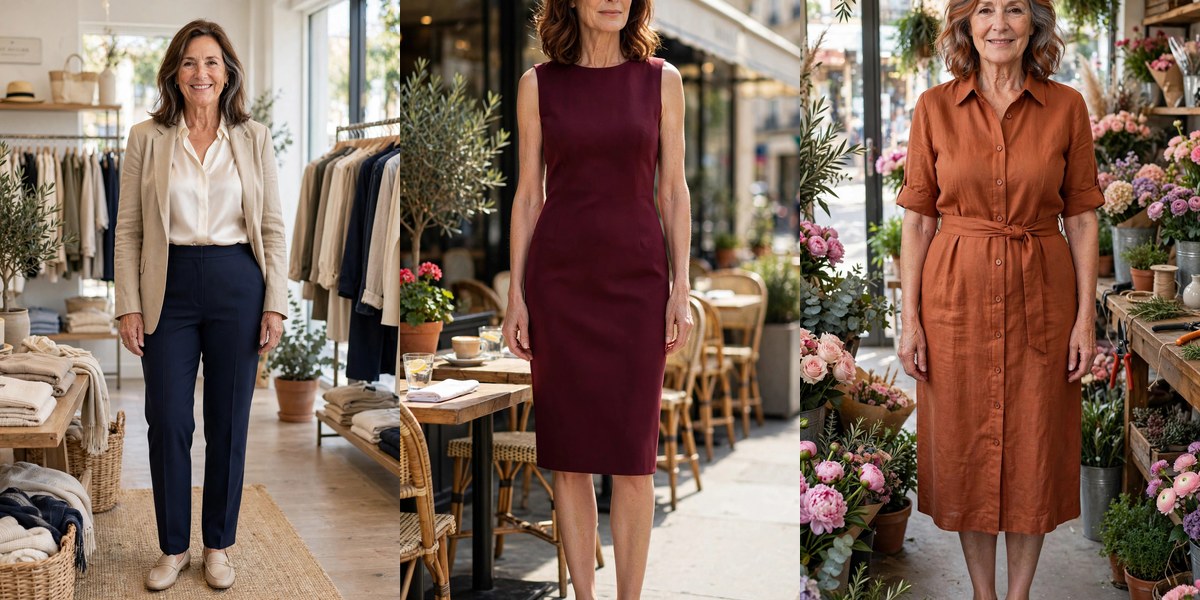
Your favorite pants used to glide on. Now the waistband pinches while the thighs swim — and nothing about your routine changed.
This guide is for every woman over 50 standing in a fitting room wondering what happened to her size. Here is the reassuring truth: it is not your body. It is the sizing, the fabric, and a fit template that was never built for a woman past 50.
Below are twelve body-area fit fixes — what changed, and exactly what to do about each one. If you are also relearning your silhouette, these sister guides on dressing an hourglass figure over 50 and dressing a rectangle shape over 50 pair beautifully with this one.
1. The Waistband Pinch: Size for the Hips, Fit the Waist

What changed: Weight drifts toward the middle after 50, even when the scale barely moves. Pants cut for a younger waist-to-hip ratio now pinch at the waist while the thighs swim.
The fix: Buy for the widest part — your hips — then have the waistband taken in by a tailor. It is one of the cheapest alterations there is, and the result looks custom-made.
Try this: When you take trousers in for a waistband alteration, wear the shoes you will pair them with. Hem and waist are often adjusted in the same visit.
2. The Back-Waist Gap: Where Curvy-Fit Pants Earn Their Keep

What changed: That annoying gap at the back of your waistband means the pattern assumed a straighter line from hip to waist than your body now draws.
The fix: Look for lines labeled curvy, hourglass, or contoured waistband — they are cut with a bigger hip-to-waist difference. No tailor needed for most of them.
Try this: Curvy-fit lines vary wildly by brand, so try two or three labels before you judge the cut. What one brand calls curvy, another calls regular.
3. Shirts Pulling Across the Shoulders and Back
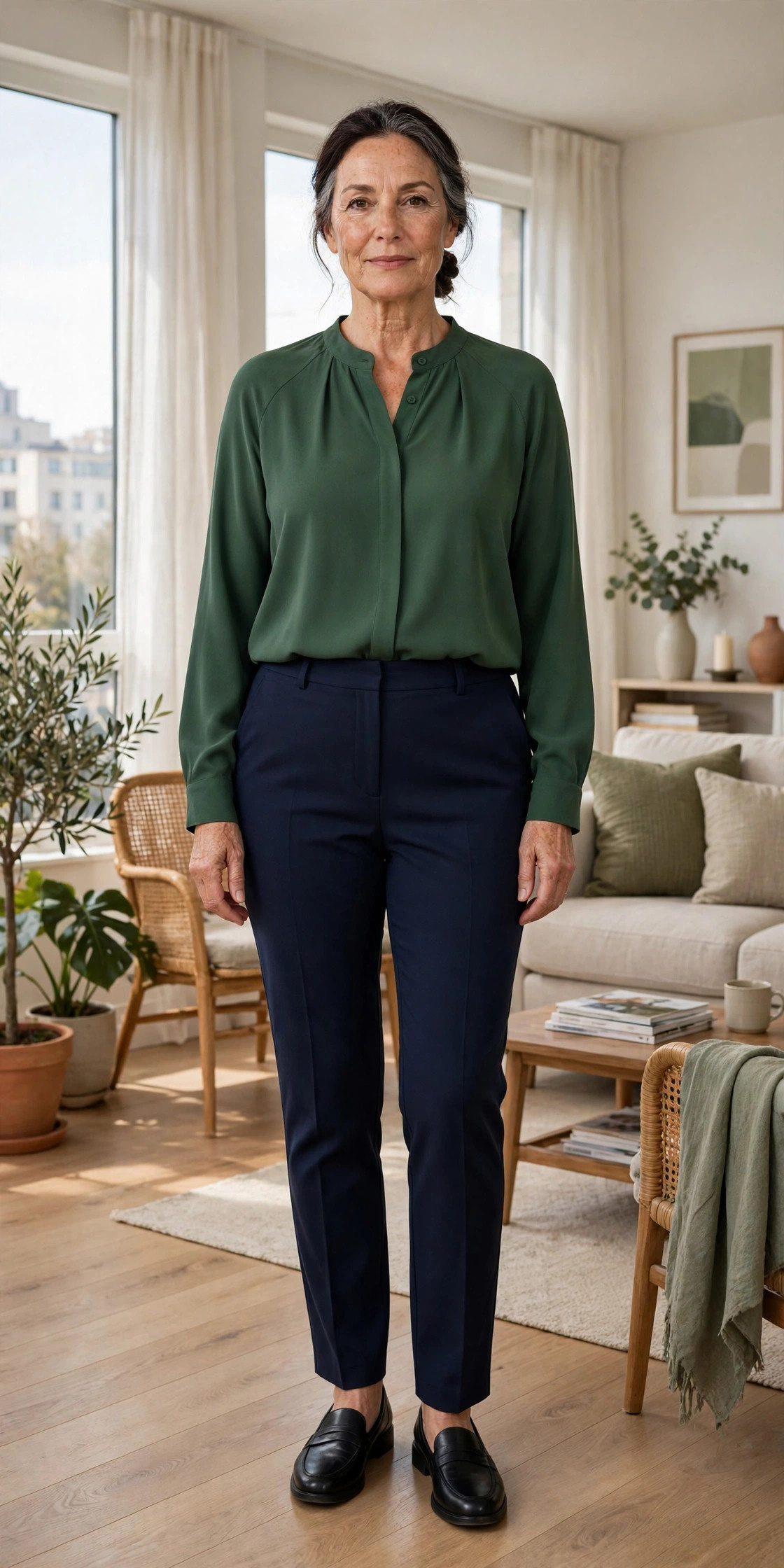
What changed: Posture shifts and small changes in upper-back muscle can make your old shirt size pull horizontally, even though your weight is the same.
The fix: Choose blouses with a back pleat, a yoke with ease, raglan sleeves, or a touch of stretch in the weave. Fit the shoulders first; a tailor can nip the waist in minutes.
Try this: Do the hug test in the fitting room: wrap your arms around yourself. If the back pulls tight, the shoulders are too narrow for you.
4. Armholes That Dig or Gape in Sleeveless Tops
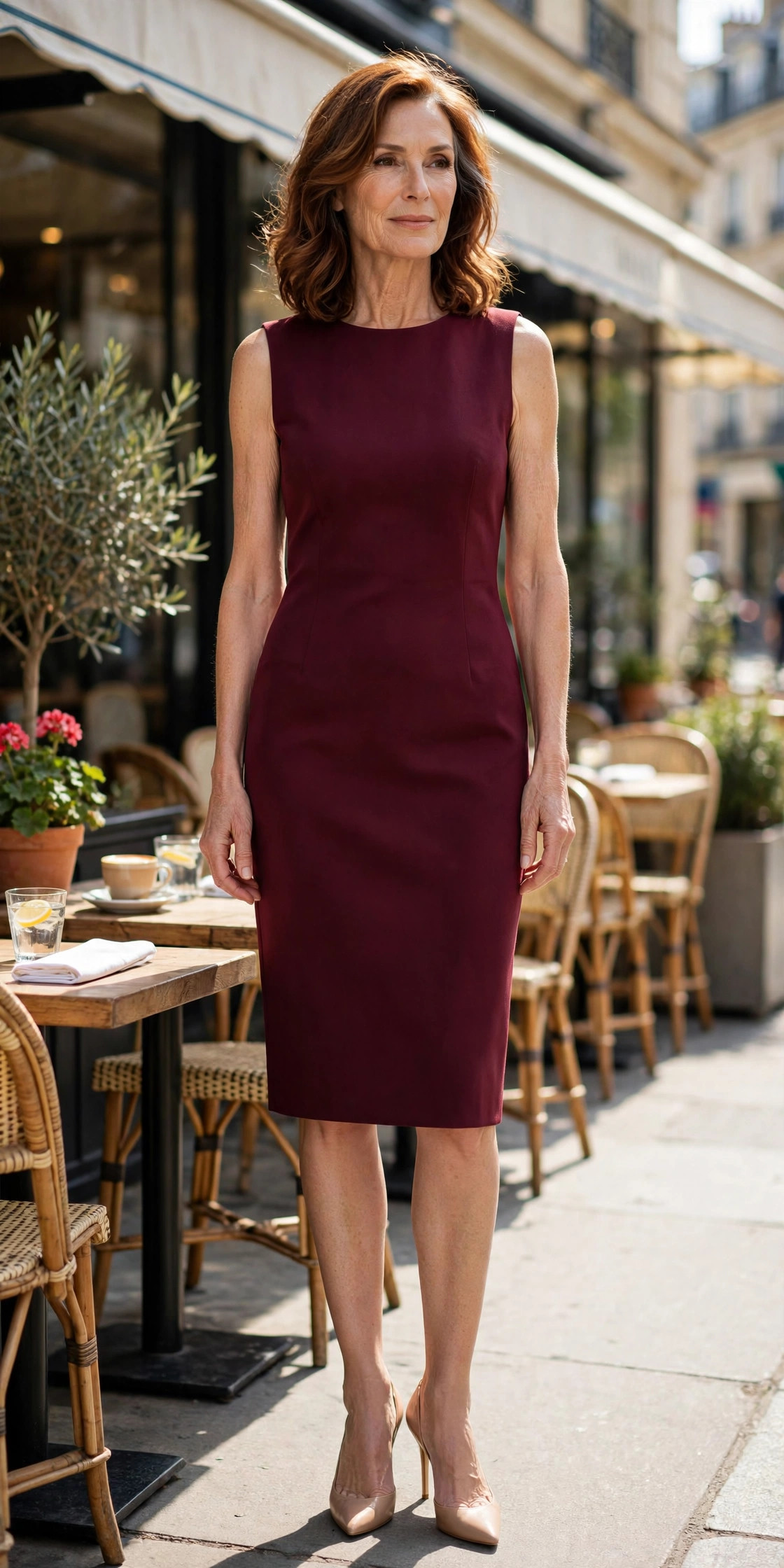
What changed: Standard armholes are drafted for a slimmer upper arm and a higher bust point. When either shifts, sleeveless tops either saw into your arm or gape open.
The fix: Higher-cut armholes that sit close to the body almost always fit better than deep, sloppy ones. Princess-seamed sheaths and dresses with a defined armhole are your safest bet.
Try this: A tailor can take in a gaping armhole slightly, but cannot make a too-small one bigger. Buy for the armhole, alter the waist.
5. Sleeves That Suddenly Run Short
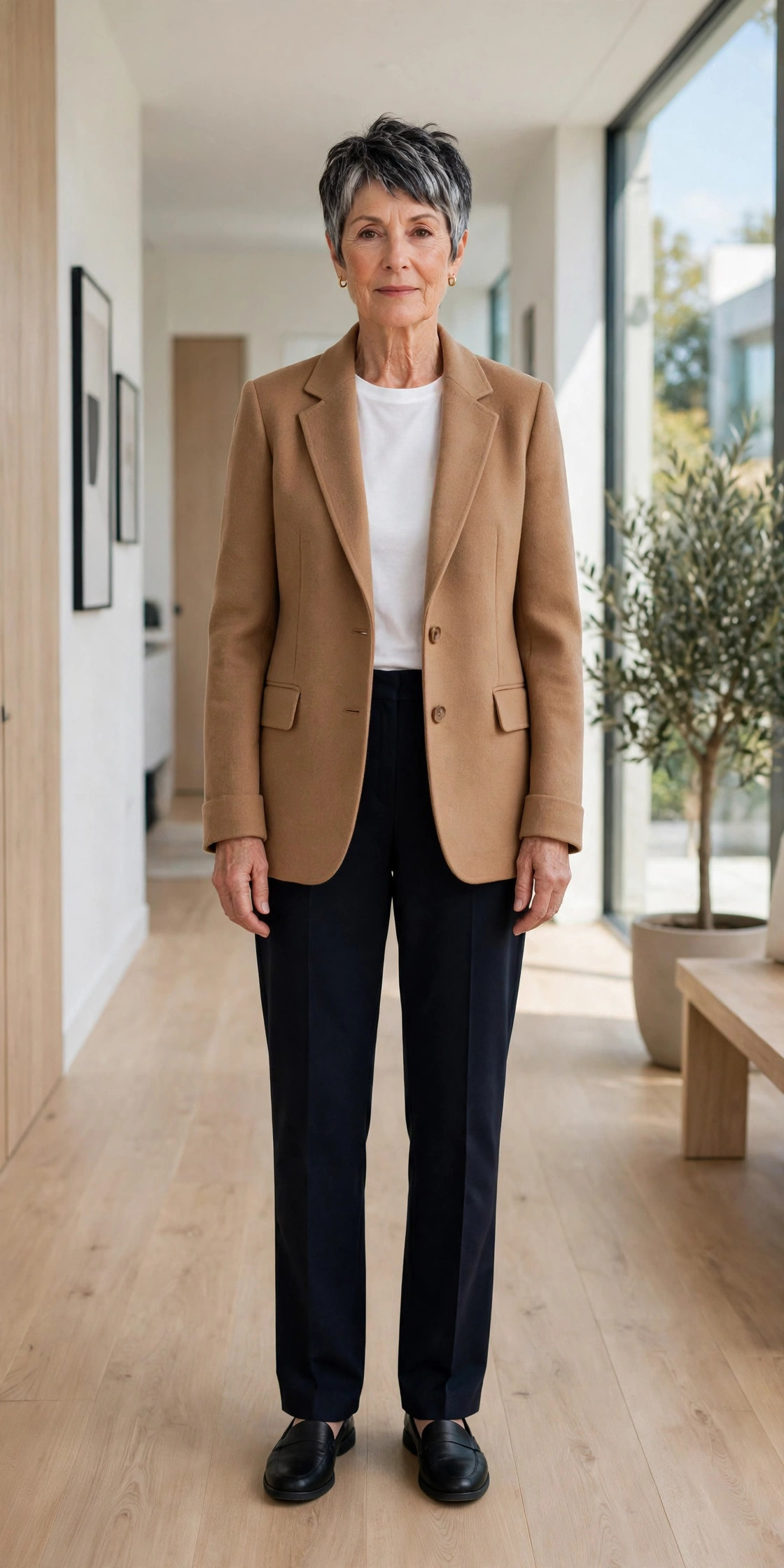
What changed: As posture rounds slightly forward, sleeve length that used to reach your wrist now rides up. Off-the-rack sleeves also assume longer arms than many women have at this stage.
The fix: Three-quarter and bracelet sleeves solve this instantly — they are meant to end above the wrist. For full sleeves, choose blazers with working button cuffs you can have shortened, never lengthened.
Try this: Bracelet-length sleeves solve this on casual tops with no tailor required, and they show off a bracelet beautifully.
6. Buttons Gaping at the Bust

What changed: Bust fullness redistributes with age, and a straight button front has zero forgiveness. One small shift and the placket pulls open between buttons.
The fix: Switch to wrap tops, hidden-placket shirts, or pullover blouses for the same polish with none of the gap. A tiny snap sewn between buttons on a beloved shirt works wonders.
Try this: For woven shirts you already own, a tailor can add hidden snaps between buttons. It rescues the whole shirt.
7. The Rise Is Wrong: When Sitting Feels Like a Fight
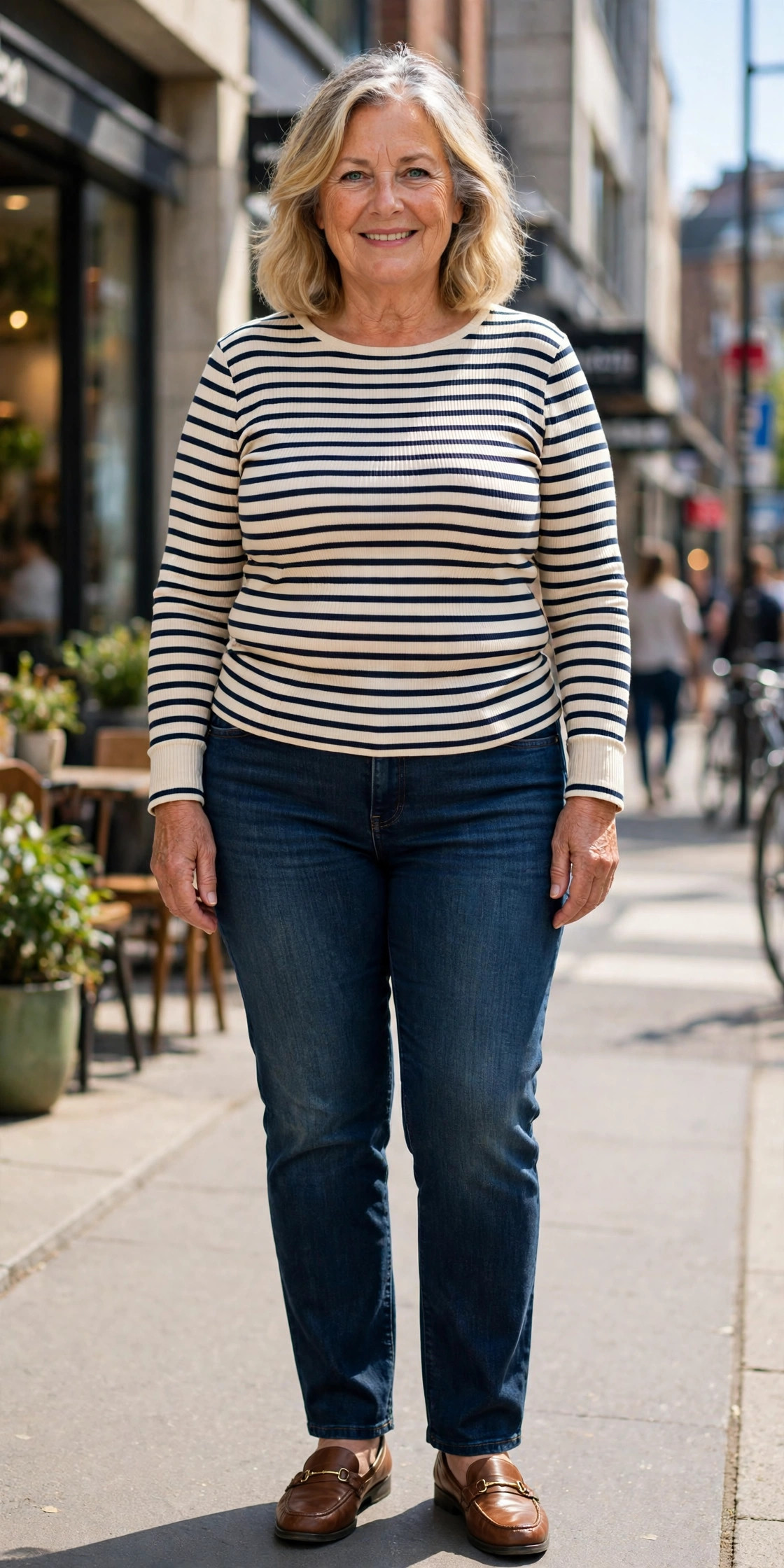
What changed: Low rises that once sat comfortably now dig when you sit, because the soft tissue at the waistline sits higher than it used to.
The fix: Move to a mid or high rise with a contoured waistband that curves inward at the top. Try the sit test in the fitting room — if it pinches seated, it will only get worse at your desk.
Try this: If you are 5’4″ or under, try the petite line before giving up on a style — a regular rise can sit too high on a shorter torso.
8. Skirts That Ride Up or Twist
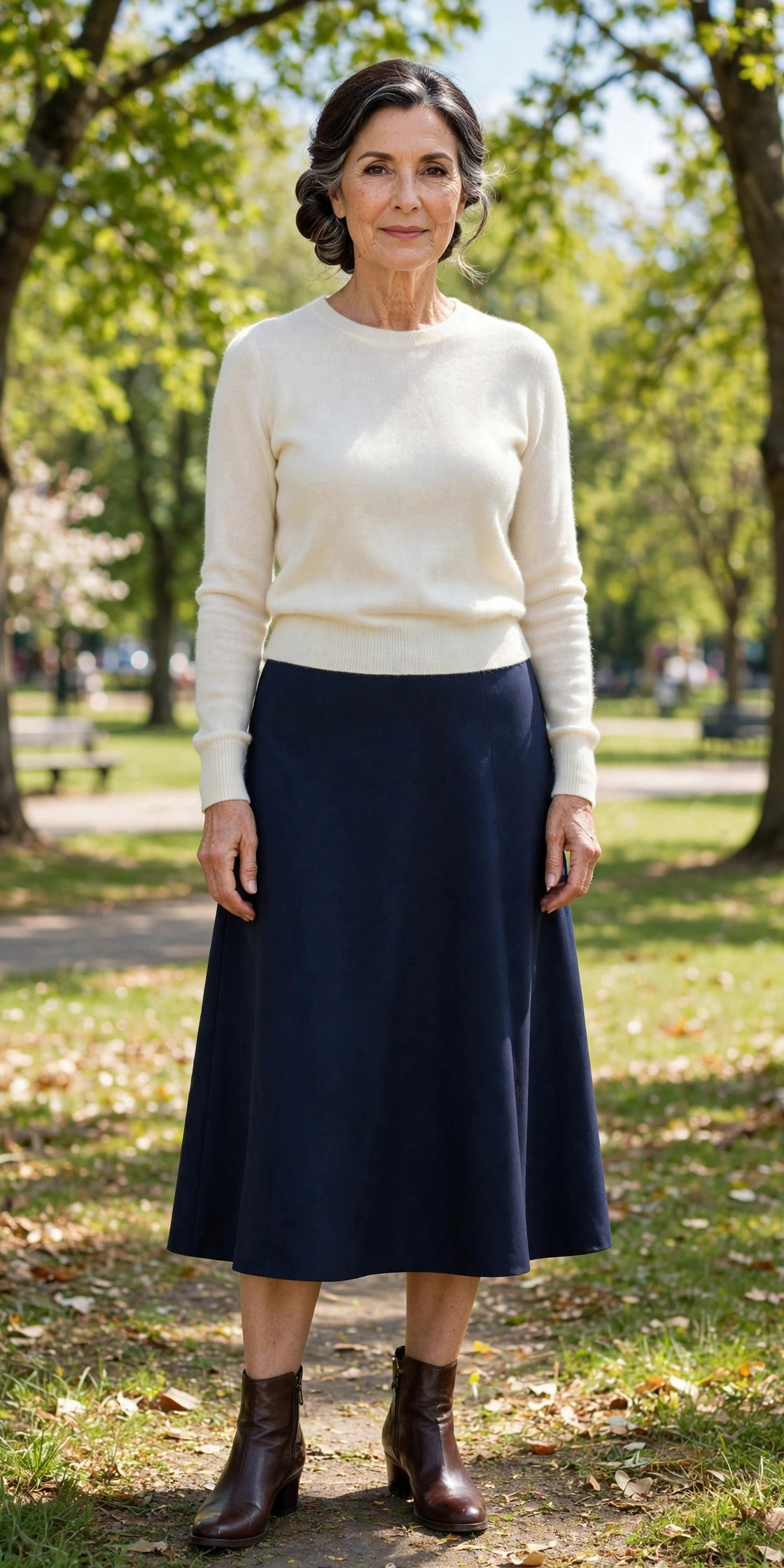
What changed: When hips widen relative to the waist, a straight skirt has to climb to find room. Knit pencil skirts also twist as your stride pulls the fabric.
The fix: A-line and softly flared skirts skim instead of gripping, so they stay put all day. If you love the pencil shape, choose one with a back vent and a touch of stretch.
Try this: A half-slip with a little grip at the hem keeps skirts from climbing on bare legs. Old-school, and it works.
9. Dresses That Fit Nowhere — Until a Tailor Sees Them

What changed: A dress has to fit shoulders, bust, waist, and hips at once — four measurements that no longer move in sync. Off the rack, something always gives.
The fix: Buy to fit your widest measurement, then have the rest taken in. A shirt dress nipped at the waist is the classic example: the dress that fits nowhere becomes the dress that fits everywhere.
Try this: Bring the belt you plan to wear to the fitting — a tailor nips the waist differently when a belt will sit on top.
10. Start Underneath: The Foundation Has Changed Too
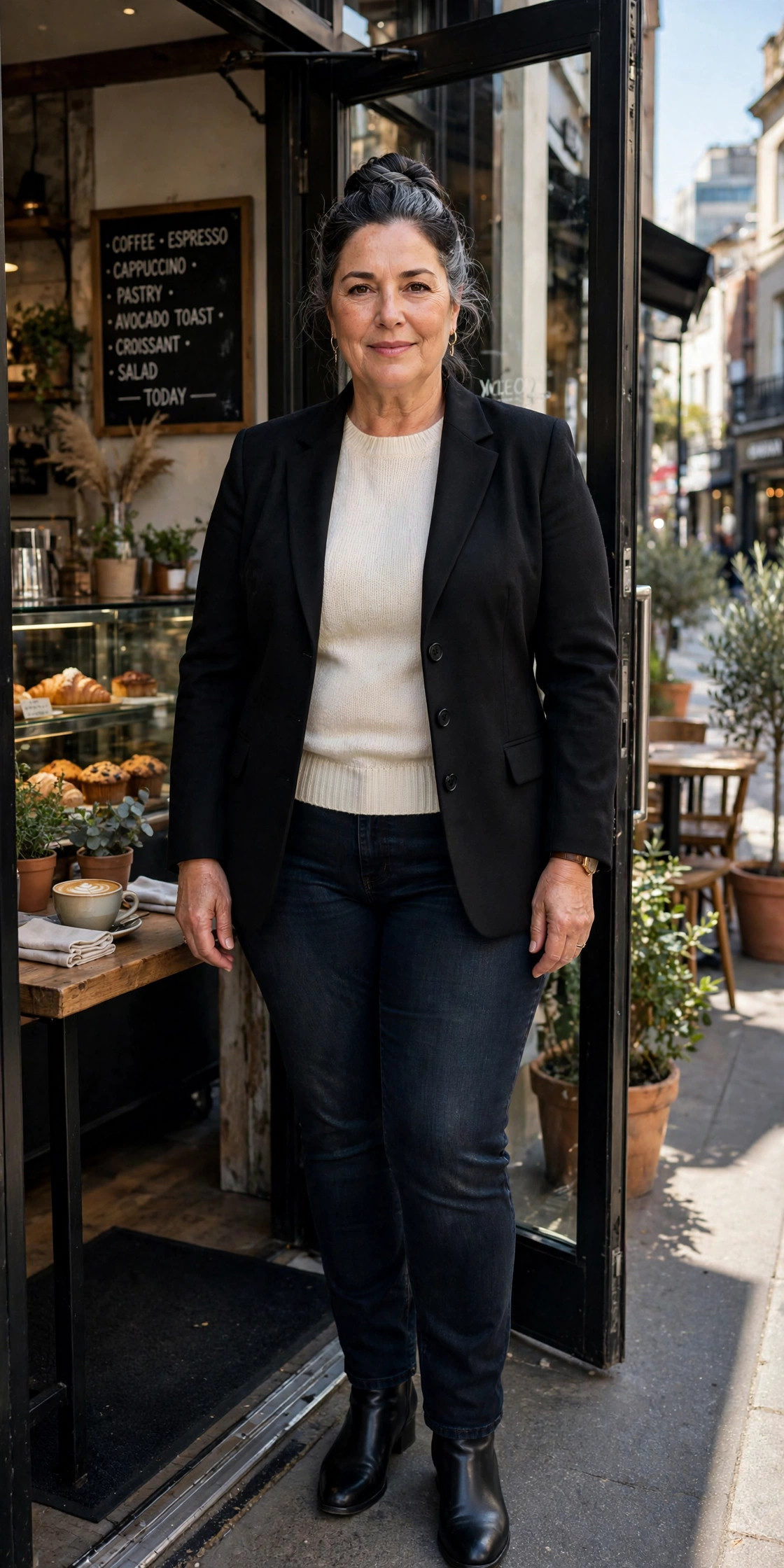
What changed: Band size, strap length, and cup shape all shift over time. When the bra is wrong, every top, blazer, and dress on top of it fits wrong too.
The fix: Get professionally fitted once a year — most department stores do it free. The right foundation can make your existing wardrobe fit noticeably better overnight.
Try this: Straps that dig or a band that rides up are the two classic signs the size is wrong. A good fitter spots both in seconds.
11. Forgiving Fabrics: Let the Cloth Do the Work

What changed: Stiff, unforgiving fabrics show every millimeter of mismatch between the pattern and your body. What used to skim now pulls.
The fix: Build your wardrobe around fabrics with give and memory: ponte knit, stretch denim with a little elastane, viscose and rayon blends, fine merino. They drape over changes instead of fighting them — a principle that runs through quiet luxury dressing on a budget too, where fabric quality does the heavy lifting.
Try this: Check the fabric content label, not just the feel: even 2% elastane in a woven shirt changes how it moves with you all day.
12. The Tailor: Your Secret Weapon

What changed: Nothing about you — but your clothes now need small, specific adjustments that no size chart can predict. That is exactly what tailors are for.
The fix: Treat the tailor as part of the purchase price, not an extra. Budget one alteration per new garment, the way French-style dressing treats finishing touches as non-negotiable. A $15 tweak can make a sale-rack blazer look made-to-measure.
Try this: Ask for a quote before you commit, and start with one garment. A good tailor will tell you honestly when a piece is not worth altering.
The 60-Second Fitting-Room Audit
Run every garment through this quick checklist before you buy. It takes a minute and saves a closet of regrets.
- Sit down. If the waistband pinches seated, walk away — it will only get worse at your desk.
- Raise your arms. Shirts should move with you, not yank at the buttons or ride up.
- Check the back waistband. More than a finger’s gap means the cut is wrong for your hip-to-waist ratio.
- Walk ten steps. Skirts that ride up in the store will ride up all day.
- Look at the armholes. They should lie flat — no digging into your arm, no gaping open.
- Ignore the size tag. Buy the size that fits the widest part; everything else can be altered.
Alterations Worth Paying For — and Which to Skip
Not every fix is worth the tailor’s bill. Here is the short list that pays for itself, and the ones to skip.
Worth it: taking in a waistband, hemming trousers and jeans, tapering a wide leg, shortening blazer sleeves, and nipping a dress at the waist. Each typically costs a fraction of the garment’s price and doubles how often you will wear it.
Most simple alterations cost far less than replacing the garment, and a tailor who knows your body becomes one of the best investments in your wardrobe. Ask friends for a recommendation, start with a single pair of trousers, and judge the result on how often you reach for them afterward.
Skip: rebuilding shoulders, re-cutting armholes, letting out seams with no extra fabric, or resizing anything more than one full size. If the garment needs surgery, it was the wrong garment.
Frequently Asked Questions
Why do clothes fit differently after 50 if my weight has not changed?
Hormonal shifts redistribute where your body carries weight — often toward the middle and away from the limbs. Your silhouette changes even when the scale does not, and standard sizes are drafted for younger proportions.
Should I just size up when everything feels tight?
Not automatically. Sizing up often leaves shoulders, armholes, and leg openings swimming. Fit the widest or trickiest part of your body first, then have a tailor take in the looser areas.
Can I still wear high-waisted jeans after 50?
Absolutely. Choose a mid-to-high rise with a contoured waistband that curves inward at the top. It sits flat against your back with no gaping and no pinch when you sit.
Which alterations are actually worth paying for?
Waistband take-ins, hems, sleeve shortening, and waist nips on dresses and blazers. These are quick, inexpensive, and make off-the-rack pieces look custom.
What fabrics are most forgiving for a changing figure?
Ponte knit, stretch denim with a little elastane, viscose and rayon blends, and fine-gauge merino. They drape and recover instead of pulling across the body.
Your body has carried you through decades of life, and it deserves clothes that honor it today. Stop blaming the mirror — fix the fit, and getting dressed becomes a pleasure again.





One Comment
Comments are closed.