How to Create a Stylish Fall Wardrobe Over 50 Without Overspending: A Smart Money Plan That Still Looks Expensive 💰🍂
Here’s a secret the fashion industry would rather you didn’t know: the women who always look effortlessly chic usually don’t own more clothes than you. They just spend differently.
They buy fewer things. They choose better fabrics. They know exactly what’s missing before they shop. And they’ve figured out how to make a $30 sweater look like it cost $200.
After 50, many of us have more clothes than we need and less patience for things that don’t work. This guide is a practical money plan for your fall wardrobe. You’ll find out what to buy, what to skip, where to splurge, where to save and how to make everything look more expensive than it was. 💡
🧾 Step 1: Know What You Already Spend (and Wear)
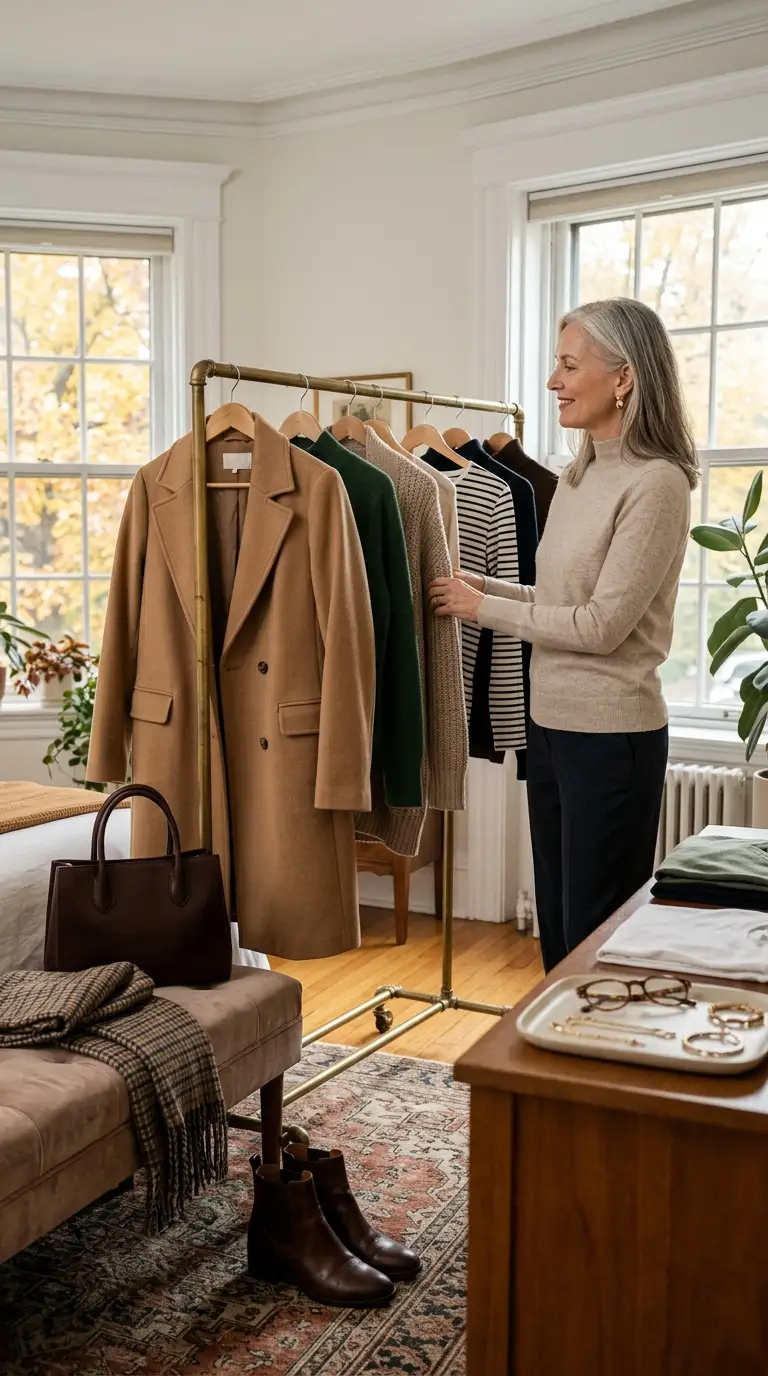
Before setting a budget, look back at the last year.
Quick self-check:
| Question | Your Answer |
|---|---|
| How many fall items did I buy last year? | |
| How many do I still wear regularly? | |
| What did I buy and barely wear? | |
| What do I reach for every week? |
Most women find that around 20% of their wardrobe gets worn 80% of the time. The rest is money sitting in a closet.
The goal: Spend more on the 20% you love and wear, and stop buying more of the 80% you don’t.
🔍 Step 2: Do a 30-Minute Closet Audit
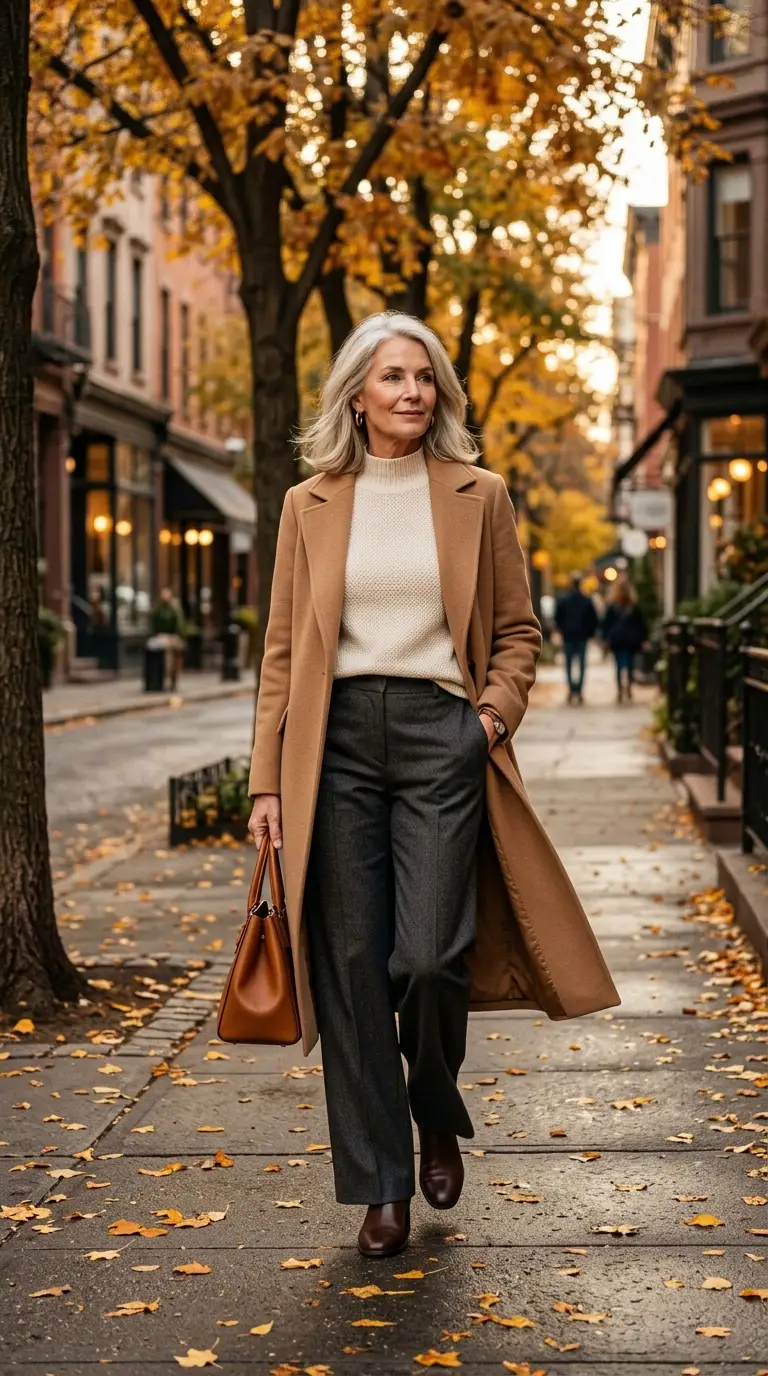
Set a timer and pull out everything you’d wear in fall.
Sort into four piles:
- ✅ Love and wear: Keep front and center
- 🔧 Needs repair or alteration: A tailor might make it new again
- 🤔 Haven’t worn but might: Try it in a new outfit this week
- 👋 Let go: Doesn’t fit, doesn’t suit you, or you haven’t worn it in two years
Money tip: The “let go” pile can make you money. Sell good pieces through resale apps, consignment shops or a local swap.
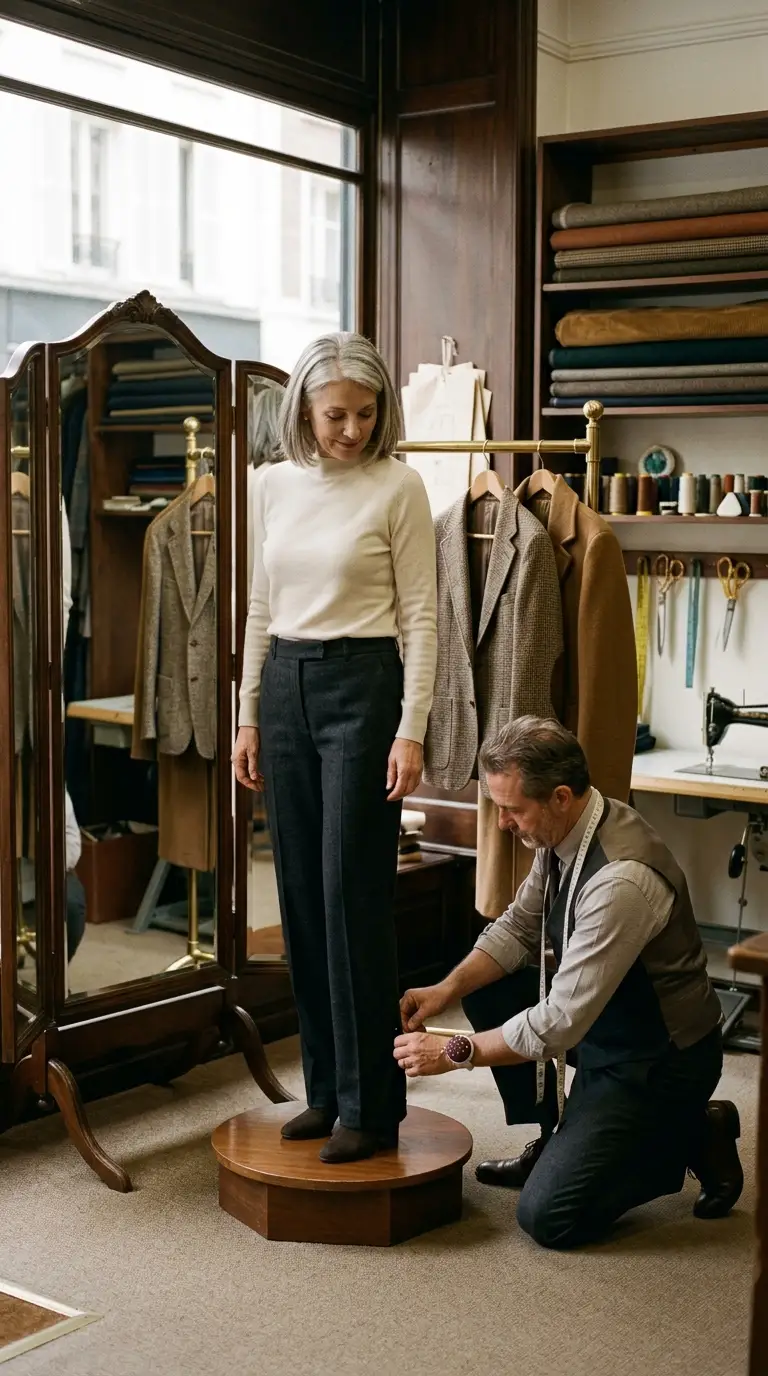
✂️ Step 3: Repair and Alter Before You Buy
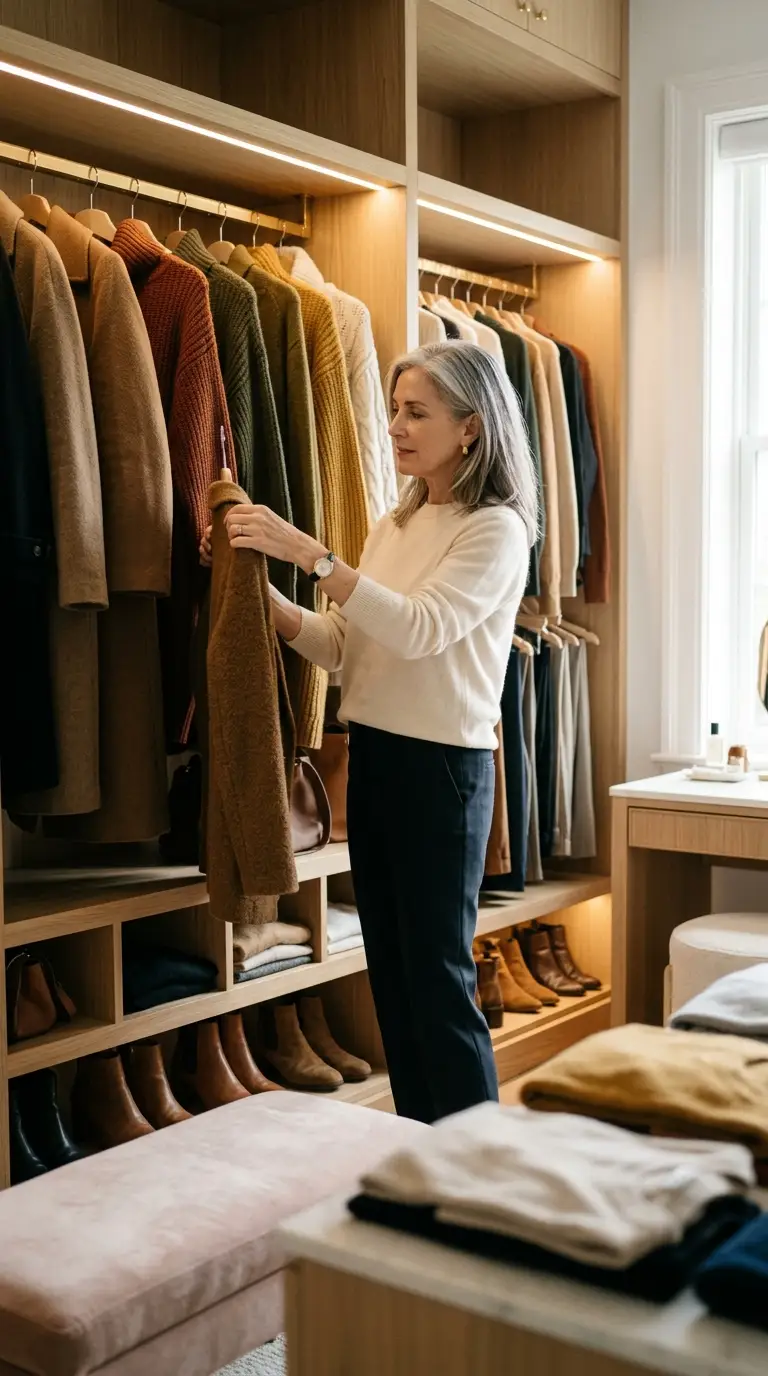
Your “needs repair” pile is the cheapest wardrobe upgrade you’ll ever make.
| Fix | Typical Cost | Impact |
|---|---|---|
| Hem trousers | Low | Instantly more polished |
| Replace coat buttons | Low | Looks more expensive |
| Re-sole boots | Medium | Adds years of life |
| Take in a blazer | Medium | Fits like it was made for you |
| De-pill sweaters | Very low (a fabric shaver) | Looks brand new |
| Shorten sleeves | Low | Cleaner silhouette |
A well-fitted $40 pair of trousers looks better than a badly fitted $200 pair.
💵 Step 4: Set a Simple Fall Budget
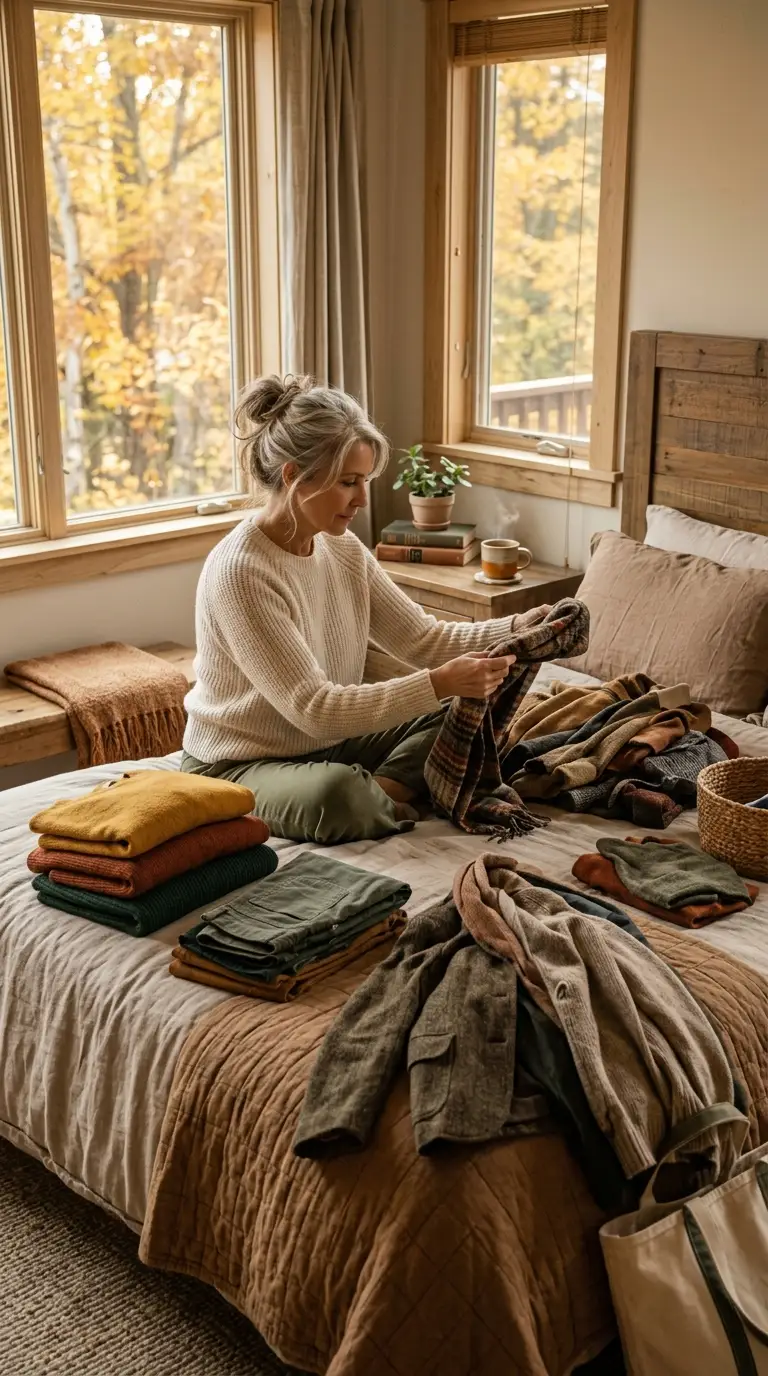
You don’t need a complicated spreadsheet. Decide on one number for the season and split it like this:
| Category | % of Budget | Why |
|---|---|---|
| 1-2 investment pieces | 50% | Coat, boots or a great knit |
| Basics refresh | 25% | Tees, turtlenecks, socks |
| One trend piece | 15% | Leopard, suede, a new color |
| Tailoring and care | 10% | Hems, repairs, a sweater shaver |
Example with a $400 budget:
- $200: Quality ankle boots
- $100: Two new turtlenecks and a long-sleeve tee
- $60: A leopard midi skirt
- $40: Hemming trousers and a sweater shaver
💎 Step 5: Know Where to Splurge and Where to Save
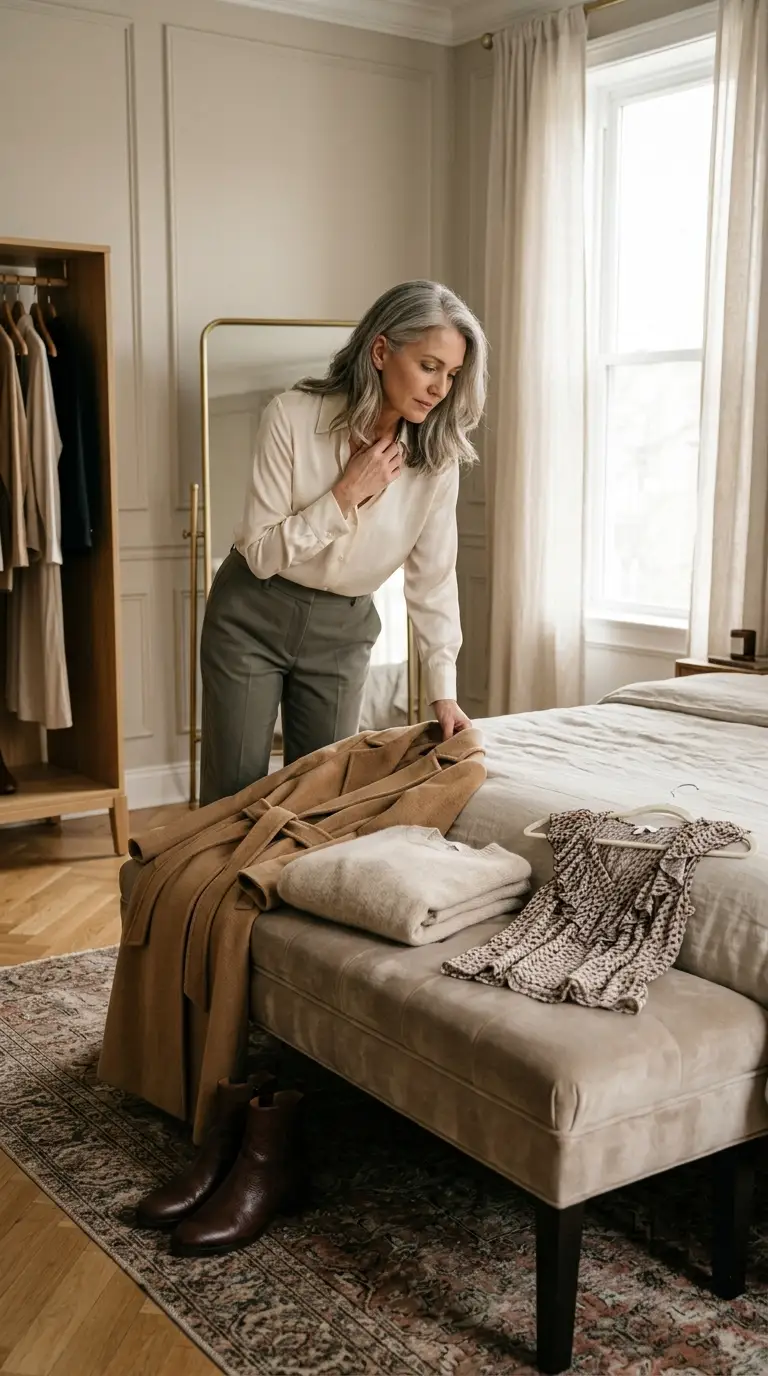
Splurge on things you wear constantly or that touch the ground:
- Coats: You’ll wear them for years, and they’re the first thing people see.
- Shoes and boots: Quality leather lasts, supports your feet and can be re-soled.
- Knitwear you wear weekly: Good wool and cashmere last much longer.
- Trousers that fit perfectly: Fit is everything.
- A good bag: It finishes every outfit.
Save on things that wear out quickly or are trend-driven:
- T-shirts and tanks: They get washed constantly anyway.
- Trend pieces: Leopard, a statement color, a fun skirt.
- Scarves and jewelry: Affordable options look great.
- Workout and lounge clothes.
- Holiday-specific pieces.
🧮 Step 6: Use Cost-Per-Wear
This is the smartest shopping math there is.
Cost per wear = price ÷ number of times you’ll wear it
| Item | Price | Times Worn | Cost Per Wear |
|---|---|---|---|
| Wool coat | $250 | 100 | $2.50 |
| Ankle boots | $180 | 120 | $1.50 |
| Trendy top | $45 | 3 | $15.00 |
| Cashmere sweater | $120 | 40 | $3.00 |
The “cheap” top is actually the most expensive thing on the list.
Before buying, ask: “Will I wear this at least 30 times?”
♻️ Step 7: Shop Secondhand Like a Pro
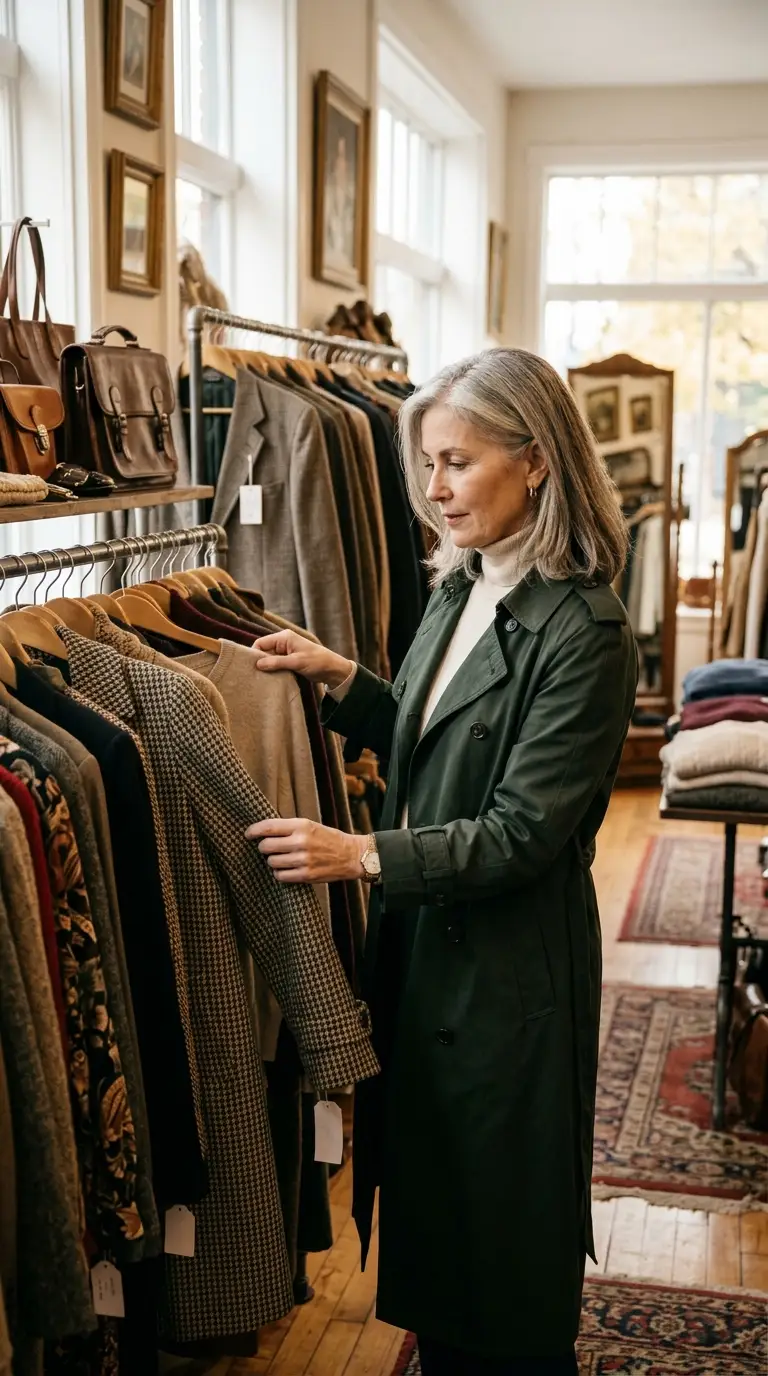
Secondhand shopping is the best way to get quality pieces on a budget.
Best things to buy secondhand:
- Wool coats (often barely worn)
- Leather and suede jackets
- Cashmere sweaters
- Leather bags
- Blazers
What to check:
- Fabric label: Look for wool, cashmere, silk, leather
- Seams and lining: Should be intact
- Underarms and cuffs: Check for wear
- Buttons and zips: Should work smoothly
- Smell: Most odors wash out, but smoke can be stubborn
Where to look: Thrift stores in well-off areas, consignment shops, online resale platforms and local clothing swaps with friends.
📅 Step 8: Time Your Purchases
| When | What to Buy |
|---|---|
| Late August-September | Basics on early-season promotions |
| Late November (holiday sales) | Coats, boots, knitwear |
| January-February | Deep discounts on winter coats and boots for next year |
| Anytime | Use price alerts on items you’re watching |
Rule: Never buy something just because it’s on sale. A $20 item you never wear is $20 wasted.
✨ Step 9: Make Affordable Clothes Look Expensive
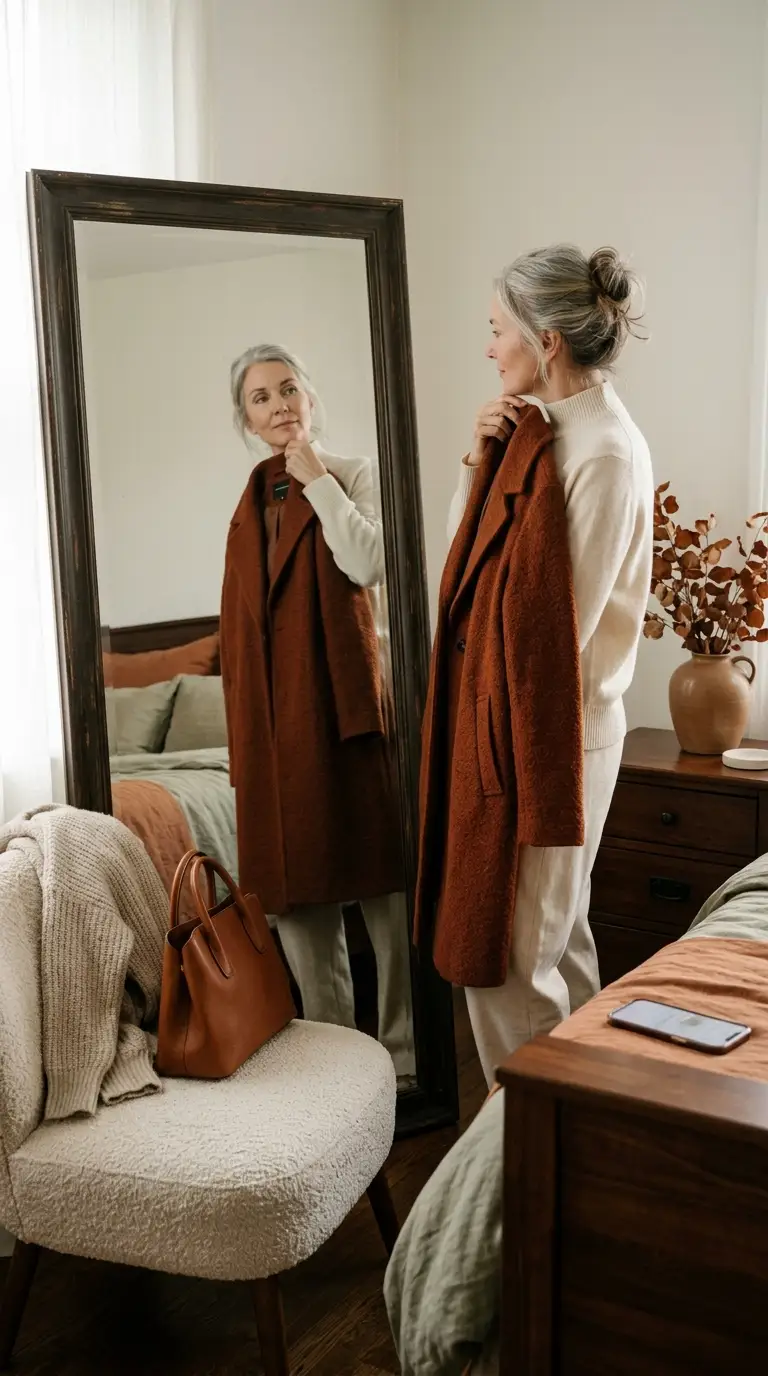
These small habits make a big difference:
1. Choose natural fabrics or fabrics that look natural. Wool blends, cotton and viscose look richer than shiny polyester.
2. Stick to a tight color palette. Camel, cream, chocolate, black and navy always look expensive together.
3. Get things tailored. Fit is the number one sign of quality.
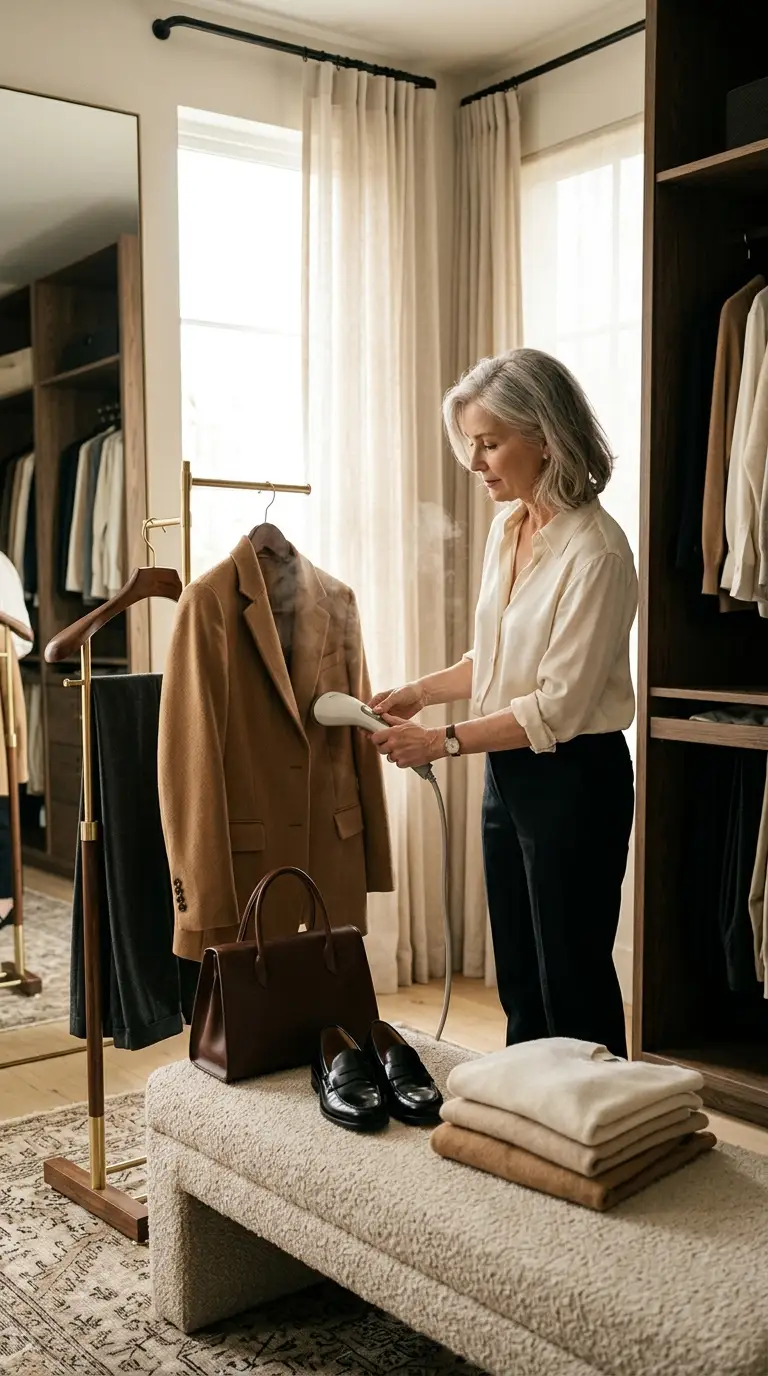
4. Steam everything. Wrinkles make expensive clothes look cheap. A handheld steamer is one of the best style investments.
5. Remove pills. A fabric shaver makes old sweaters look new.
6. Upgrade buttons. Swapping plastic buttons for horn or metal ones transforms a cardigan or coat.
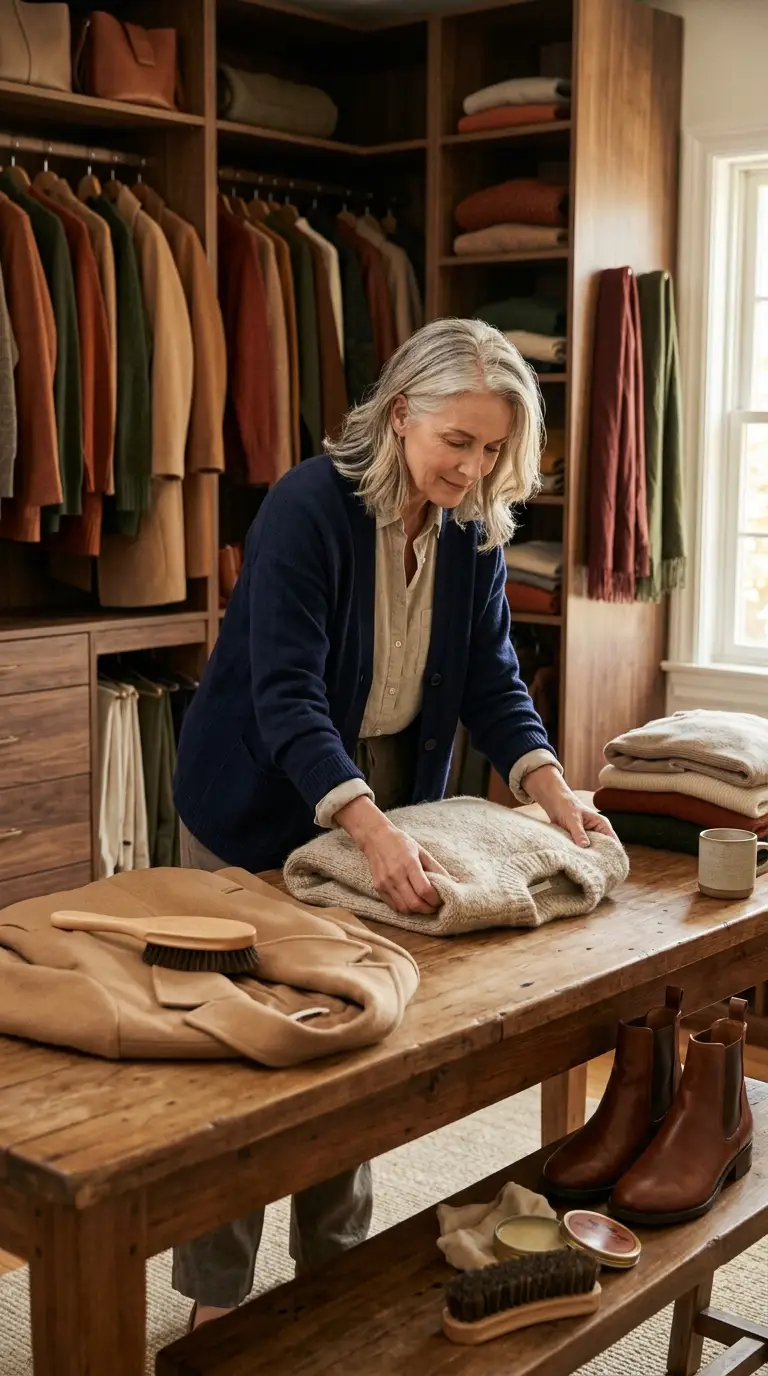
7. Polish your shoes. Clean, conditioned leather looks expensive. Scuffed shoes look tired.
8. Wear monochrome. One color head to toe looks luxurious and deliberate.
🧽 Step 10: Care for What You Own
Making clothes last longer is the same as saving money.
| Item | Care Tip |
|---|---|
| Knitwear | Hand wash or gentle cycle, dry flat, fold (never hang) |
| Wool coats | Brush after wear, dry clean once a season |
| Leather boots | Condition and protect before fall starts |
| Suede | Use a protector spray and a suede brush |
| Jeans | Wash inside out in cold water, less often |
| Silk | Hand wash or gentle cycle, air dry |
🛑 The “Wait 48 Hours” Rule
Before buying anything that isn’t on your list, put it in your cart and wait 48 hours. If you still want it, can name three outfits with it and it fits your budget, go ahead. Most of the time, the urge passes.
❓ Frequently Asked Questions
How can I build a fall wardrobe on a budget over 50?
Start with a closet audit, repair what you have, set a budget, spend most of it on one or two investment pieces and buy secondhand when you can.
What fall pieces are worth splurging on?
Coats, boots, frequently worn knitwear, well-fitting trousers and a good bag.
What can I save money on?
T-shirts, trend pieces, scarves, jewelry and loungewear.
How do I make cheap clothes look expensive?
Tailor them, steam them, remove pills, choose a tight color palette and upgrade buttons.
Is secondhand shopping worth it?
Yes, especially for wool coats, leather jackets, cashmere and blazers.
💛 Spend Less, Look Better
Looking stylish after 50 has never been about how much you spend. It’s about knowing what works for you, choosing pieces that last and caring for them well.
Start this week with the 30-minute closet audit. You might find you already own most of a beautiful fall wardrobe. 🍂
What’s the one investment piece you’d put first on your fall list?