How to Dress Old Money Over 50 Without Spending Old Money

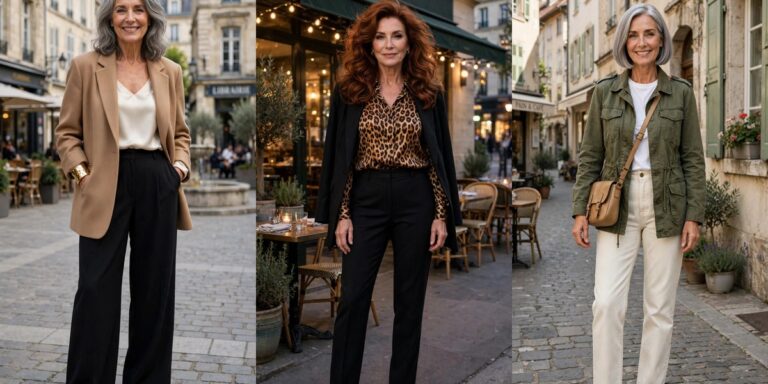
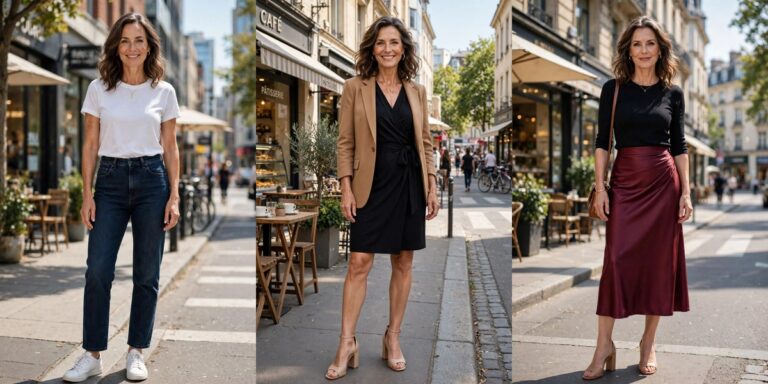
The old money look was never really bought in one shopping trip. It is built from calm colours, clean lines and pieces that look cared for, and most of that effect costs far less than the photographs suggest.
If you are over 50 and love the codes in our old money outfits for women over 50, this is the budget version of the same idea. No costume, no logos, and no pressure to replace your whole wardrobe.
Think of this article as a ledger. Each section shows one piece, tells you honestly where the money shows and where nobody can tell, and gives you the exact checks to use on the rail.
How to Read This Save vs Splurge Ledger
Save here means the cheaper route genuinely passes: nobody at lunch, at church or in a photograph will spot the difference. Spend here means the one place where cutting corners shows quickly, so it deserves the bigger share of a small budget.
You do not need to act on all eleven sections at once. Start with the pieces you wear most, and work through the ledger over a season.
1. The Blazer: Where the Money Shows Most

Spend here: Put the largest share of your blazer budget into shoulder and lapel construction. The shoulder seam should sit at your own shoulder bone, and the lapels should lie flat with no gaping when the top button is closed.
Save here: Brand, lining pattern and designer buttons save you nothing visually. A plain, matte button in navy, black or tortoiseshell passes at any price.
On the rail, hang the blazer up and step back. If the front hangs straight, the back vent lies closed and the fabric does not shine under the shop lights, it will read as expensive for years.
2. The Knit: Where Nobody Can Tell

Save here: A dense, smooth knit in cream, navy or camel is almost impossible to price by eye. Cotton blends and fine acrylic blends pass beautifully when the weave is tight and the surface is clean.
Spend here: Spend attention, not money: check cuffs, neckline and elbows before you buy. Stretched ribbing, early pilling and a wavy hem are the three details that give a cheap knit away.
Hold the knit up to the light and stretch it gently. If you cannot see through it and it springs back, it will sit neatly under blazers and coats all winter.
3. The Trousers: Spend on Fit, Save on the Label
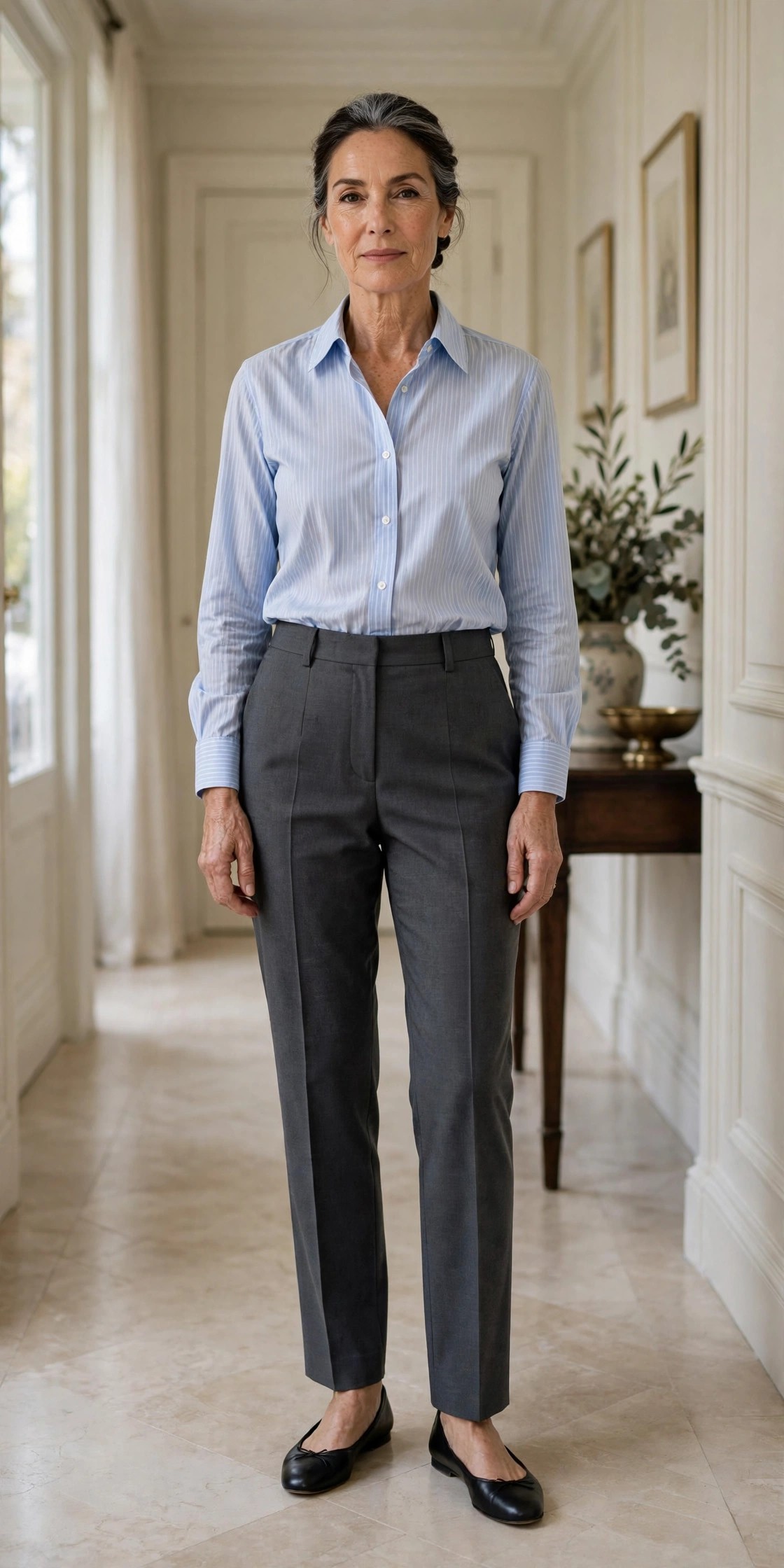
Spend here: Trousers earn a splurge on fit because they set the whole line of the outfit. A higher rise that sits at your natural waist, a clean crease and a hem that just skims the shoe make inexpensive fabric look tailored.
Save here: Ponte, twill and wool-blend fabrics from the high street all pass when they are matte and hold their shape. Skip paper-thin fabric that shows every seam underneath.
Try the sit-and-cross test in the fitting room. If the waistband stays put, the front does not pull and the knee does not bag after two minutes, the pair is a keeper.
4. The Crisp Shirt: The Under-$50 Workhorse

Save here: A cotton or cotton-blend shirt is the easiest save in the whole ledger. White, pale blue and a fine stripe are the three that do the most work with jeans, trousers and skirts.
Spend here: Spend two minutes checking the collar and cuffs, because they frame your face and hands. A collar that stands up cleanly and cuffs that stay crisp after washing are what separate a polished shirt from a limp one.
Steam or press the front placket and collar before wearing, and roll the sleeve once, neatly. That small finish is why the same shirt can look five times its price.
5. The Coat: Hunt It Secondhand First

Save here: A coat is the single best secondhand buy in this wardrobe. Wool and wool-blend coats in camel, navy and charcoal turn up constantly in charity and consignment shops, often barely worn.
Spend here: Spend on condition checks and, if needed, a professional clean and a button re-sew. Check the lining for tears, the underarms for wear, and the hem for sagging before you fall in love with the colour.
Try it over your thickest knit before you decide. A coat that closes comfortably over layers, with sleeves that end at the wrist bone, will polish everything underneath it.
6. Loafers and Shoes: Clean Beats Costly

Save here: Nobody can price a simple loafer, ballet flat or low-profile sneaker from across a room. Choose one clean shape in dark brown, black or burgundy and wear it with everything.
Spend here: Spend on comfort and upkeep instead: a padded insole, a sole with grip, and five minutes with a brush and polish. Scuffed toes and dusty suede are what actually make shoes look cheap.
Wipe shoes after wear, rest them a day between outings and store them with paper inside. That habit stretches a modest pair for seasons and keeps every outfit looking finished.
7. The Quiet Bag and Belt: No Logos Needed

Save here: One structured bag in black, tan or chocolate, with simple hardware and no visible branding, does the work of five trend bags. Faux leather passes easily when the edges are painted neatly and the shape holds when you set it down.
Spend here: Spend your attention on stitching and zips. Even stitching, a zip that runs smoothly and handles that stand up on their own are the quiet signals of quality.
Match your belt to your shoes, not exactly, just in the same family. That one repeated colour is a classic old money code, and it costs nothing extra at all.
8. Fabric Look-Alikes: What Passes at Arm’s Length

Save here: Linen blends wrinkle less than pure linen and read just as rich, ponte stands in for fine wool in trousers, and a matte silk-look blouse gives the same soft light as silk. These swaps are the engine of the whole budget.
Spend here: Spend a moment on the daylight test, because shine is the great betrayer. Take the piece to the shop window: if it glitters or looks plasticky in natural light, put it back, whatever the label promises.
Run your hand over the fabric, too. It should feel dry and substantial, not slippery or squeaky, and it should drape in soft folds rather than cling to every line underneath.
9. Thrift Hunting for Heritage Pieces

Save here: Blazers, wool coats, leather belts, silk-look scarves and sturdy loafers are the heritage pieces worth hunting pre-loved. They were made in classic shapes for decades, so the secondhand rail is full of them.
Spend here: Spend time on a slow, regular route rather than one big spree. Visit the same two or three good shops monthly, head straight for the tailoring and coat rails, and leave if your size and colours are not there.
Use the checklist below in the shop, not at home. It turns a hopeful browse into a disciplined hunt, and it stops tired pieces with famous names following you home.
10. Tailor’s Tricks That Make Inexpensive Pieces Look Bespoke

Spend here: A small tailoring budget outperforms a bigger shopping budget. Shortening a trouser hem, nipping in a waistband and taking a sleeve to the wrist bone are the three fixes that change how a whole outfit reads.
Save here: Save by tailoring pieces you already own before buying anything new. Most wardrobes hold two or three good pieces that only need one fix to rejoin daily wear.
Take one piece at a time and wear the shoes you plan to pair with it to the fitting. Ask for the hem to just skim the shoe, and keep the original hem on jeans if you may resell or restyle them later.
11. Grooming and Finish: The Zero-Cost Polish

Save here: This is the only section where the save is total. Steamed clothes, brushed hair, short neat nails and one pair of small studs or hoops create more polish than any single purchase in this article.
Spend here: Spend ten unhurried minutes before you leave: steam the front of your top, check hems for threads, and wipe your shoes. Nothing looks expensive when it is creased, and almost everything looks better when it is not.
Keep the finish quiet rather than heavy. Natural, even makeup, tidy brows and a soft lip colour suit the old money codes far better than a full glamorous face. If you want the wider capsule these pieces belong to, see our old money capsule wardrobe over 50 for how they combine.
The Thrift-Hunting Checklist to Keep on Your Phone
Run through this list before any secondhand or sale piece reaches the till. It takes under a minute, and it protects the whole budget.
- Lining: intact, clean and not pulling away at the shoulders or hem.
- Buttons and zips: all present, firmly sewn and moving smoothly.
- Cuffs, collar and elbows: no shine, thinning or stretched ribbing.
- Underarms and seat: no pilling, stains or worn patches.
- Smell test: walk away from anything musty that a clean will not fix.
- Fit first: shoulders and rise must be right; hems and waists can be tailored, shoulders cannot.
- Three-outfit rule: name three outfits at home it completes before you buy it.
For a gentler take on the same calm palette, our French style secrets for dressing over 50 shows how French women stretch a small wardrobe. The coastal grandmother capsule wardrobe is another useful companion if your summers run hot.
Frequently Asked Questions
Can you really dress old money over 50 on a small budget?
Yes, because the look depends on fit, calm colour and condition far more than price. Start with the ledger above: tailor what you own, hunt the coat secondhand and keep shoes immaculate.
Which piece should I spend the most on first?
Start where fit is hardest for you, which for most women is trousers or the blazer. Get that one piece sitting perfectly, then save confidently on knits, shirts and accessories around it.
Which fabrics look expensive but cost less?
Linen blends, ponte, cotton poplin, matte silk-look fabrics and substantial denim all pass well. Check them in daylight, choose matte finishes and avoid anything thin, shiny or clingy.
What should I check when buying old money pieces secondhand?
Check the lining, buttons, cuffs, underarms and smell before you check the label. Shoulders and rise must fit as they are; hems and waistbands are the easy, affordable fixes.
How do I stop the look feeling like a costume?
Wear one heritage detail at a time, not pearls, scarf, loafers and blazer all at once. Keep colours calm, skip visible logos and let one quiet accessory finish the outfit.
The Bottom Line
Old money style on a budget is a habit, not a haul: buy slowly, tailor honestly and keep everything clean and calm. Work through the ledger one piece at a time, and your wardrobe will start to look considered long before it looks costly.