How to Dress a Rectangle Body Over 50 to Create Definition

If your tops fall straight from shoulder to hip and your waist never quite shows up to the party, you are probably dressing a rectangle body shape. The good news: you don’t need a smaller waist to look more defined.
This guide is for women over 50 with a straighter figure who want outfits that suggest beautiful curves and structure — without squeezing, sucking in, or fussing all day. If you love a pared-back wardrobe, you’ll also enjoy our take on quiet luxury on a budget.
Below is a five-strategy Definition Toolkit: where to place shape, which garments create it, and 17 full outfit ideas that prove each strategy. Plus a 60-second checklist and fixes for the combinations that quietly flatten your silhouette.
How the Definition Toolkit Works
Dressing a rectangle shape is a contrast game. Wherever your body runs straight, your clothes add a change: a belt, a tuck, volume above or below the waist, a neckline that draws the eye inward.
The five strategies below are the only ones you need. Pick one per outfit and your silhouette instantly reads more shaped — comfortably.
Strategy 1: Mark the Waist — belts, tucks, and wrap lines that tell the eye exactly where your waist sits.
Strategy 2: Add Volume Top and Bottom — width at the shoulders and hips that makes the middle look defined by comparison.
Strategy 3: Shape with Necklines and Fabric Tricks — small details that create inward movement without any tightness.
Strategy 4: Dresses That Build Shape for You — one-piece silhouettes with the definition sewn in.
Strategy 5: Layers That Finish the Silhouette — jackets and cardigans that end exactly where they should.
Strategy 1: Mark the Waist
The fastest way to create definition is to draw a clear line at your natural waist. Done softly, it suggests a waistline rather than demanding one.
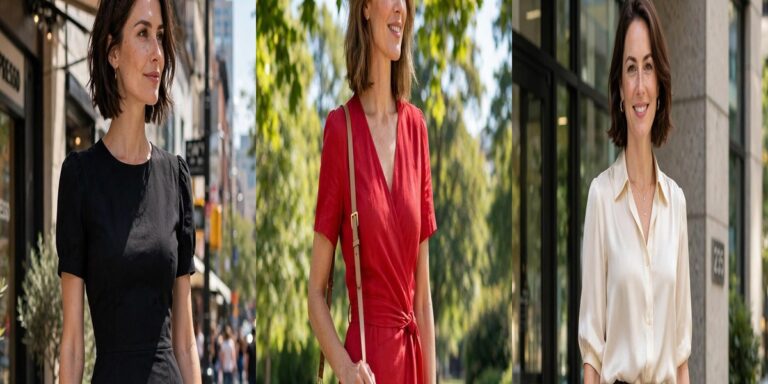
1. The Shirt Dress with a Slim Belt

A shirt dress is a rectangle-shape secret weapon: the button placket already creates a vertical line, and a slim belt (about 1.5 inches wide) finishes the job. Choose a belt one shade darker or lighter than the dress so it reads as jewelry, not a corset.
Wear it at your natural waist — the narrowest point between ribs and hips — and keep it snug, never tight. A pointed flat or low block heel below keeps the whole line elegant. This is the French-girl trick done right, and it pairs beautifully with the styling ideas in our French style secrets for dressing over 50.
2. The Front Tuck + High-Waisted Trouser

The front tuck (sometimes called the French tuck) is the single highest-impact trick in this guide. Tucking just the front of a soft blouse into high-waisted trousers marks your waistband clearly while the sides drape free.
The trouser rise does the heavy lifting: a true high waist (11–12 inches) with a defined waistband gives the tuck something to sit in. Add a wide leg below and you get an instant hourglass suggestion — fitted above the waist, movement below it.
3. The Wrap Top with Wide-Leg Pants
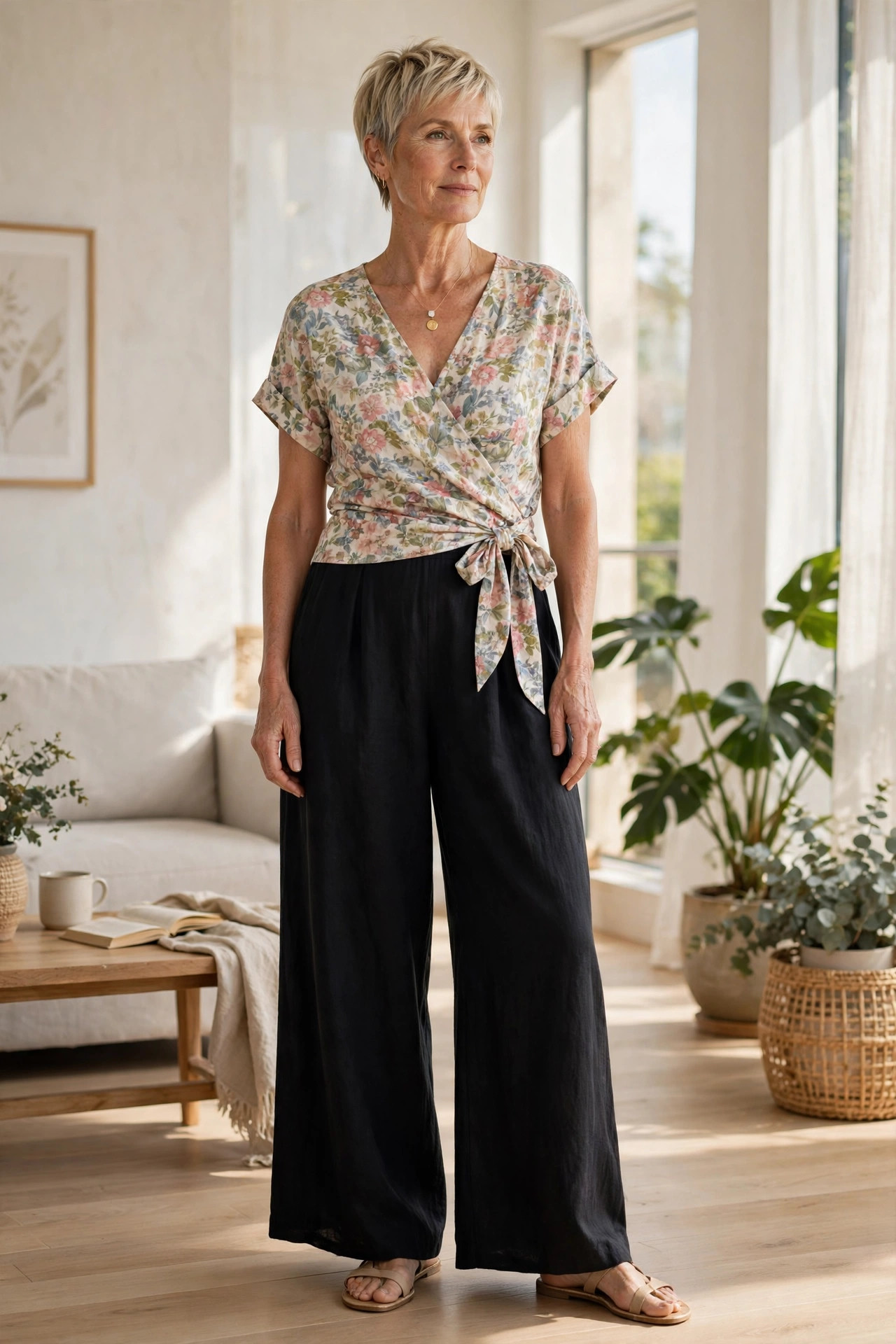
A wrap top draws a diagonal line across your torso, and diagonals are magic on a straight figure — the eye follows the cross right to your waist. Choose a true wrap (ties at the side) or a faux-wrap with a fixed V.
Keep the fabric fluid: silk-like viscose or soft jersey skims rather than clings. Wide-leg pants below echo the softness while adding the lower-half volume that balances everything. Finish with a delicate pendant that sits in the V.
4. The Modern Peplum

Forget the stiff 2012 peplum. Today’s version is a soft flare that starts right at the waist and skims the hip — it literally builds the curve a rectangle shape skips. Look for knit or crepe peplums, not structured foam.
Pair it with slim trousers or a pencil skirt so the flare is the only volume in the outfit. One peplum moment per outfit is the rule; two and the effect cancels itself out.
Strategy 2: Add Volume Top and Bottom
Definition is relative. Add gentle width at the shoulders and hips, and the middle reads as a waist by pure comparison — no squeezing required.
5. The Puff-Sleeve Top + Straight Skirt

A softly gathered sleeve widens the shoulder line, which makes the waist beneath it look narrower. Keep the puff modest — a gentle gather at the cap, not a statement balloon — and tuck the blouse into a straight or A-line skirt.
This works because the volume sits exactly where a rectangle shape is straightest. A tucked waistband plus shoulder volume equals instant proportion, and the look stays polished for office or dinner.
6. The Fitted Knit + Wide-Leg Trouser

This is the contrast formula at its purest: a fine ribbed knit that follows your torso tucked into trousers that widen from the hip. The eye reads fitted-then-full and fills in a waist in between.
Fabric weight matters here. Choose a medium-weight knit with structure — too thin and it clings, too bulky and it erases the tuck. A substantial loafer or pointed flat grounds the wide leg.
7. The A-Line Midi Skirt + Tucked Tee

An A-line skirt moves outward gently from the waist, manufacturing the hip curve a rectangle figure doesn’t show. A simple tucked tee on top keeps it effortless and modern.
Hem length is the detail that matters: the skirt should end at or just below the knee’s fullest curve, or at mid-calf — never at the widest part of your calf, which visually shortens the leg. A half-tuck works if a full tuck feels too neat.
8. The Bootcut Jean + Half-Tucked Blouse
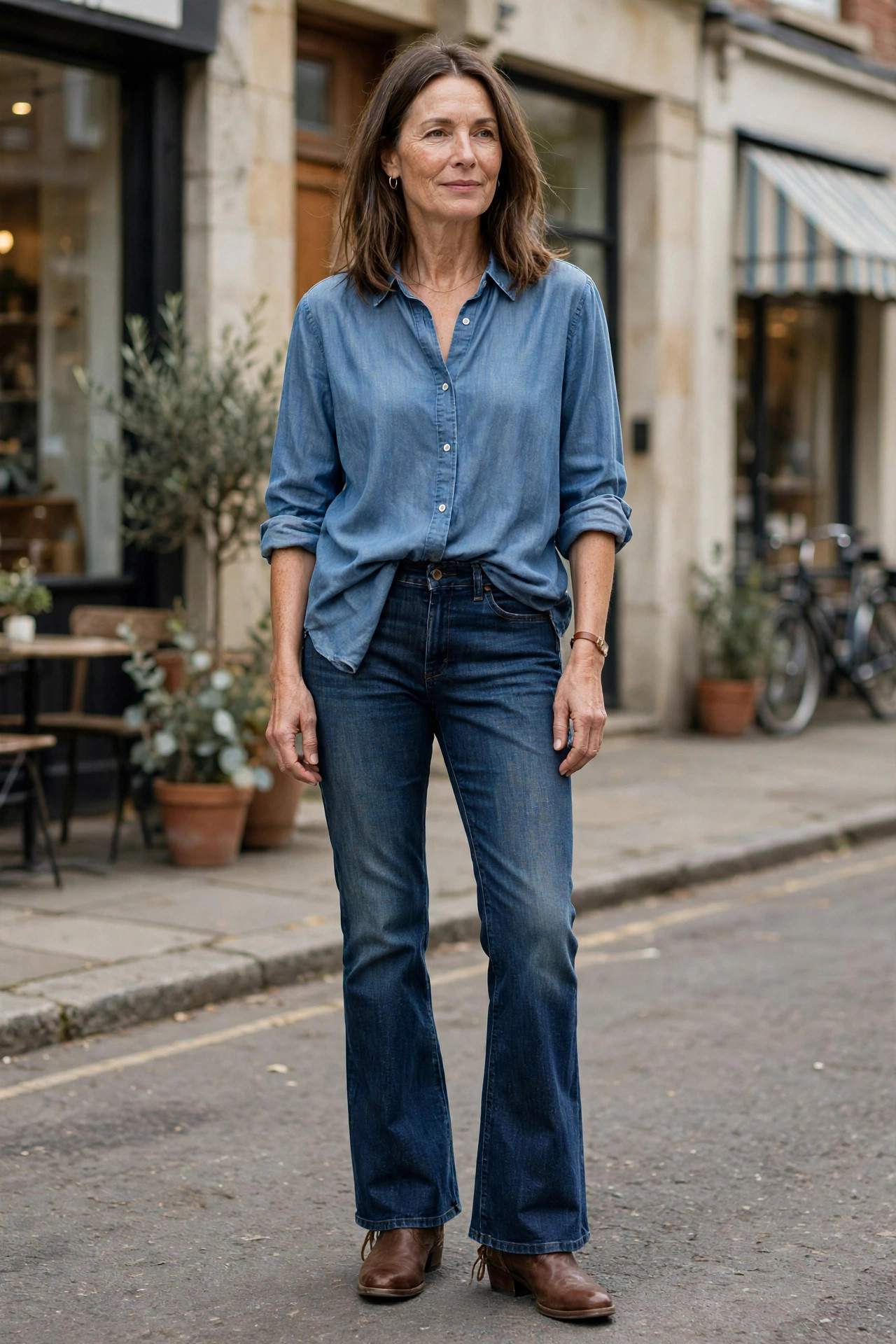
Bootcut jeans are a rectangle shape’s quiet best friend. The subtle flare below the knee adds lower-leg shape that straight or skinny cuts skip entirely, which makes the waist look more defined by comparison.
Choose a mid or high rise with a clean, flat waistband, then half-tuck a soft blouse at the front. A sleek ankle boot continues the leg line instead of chopping it — avoid chunky sneakers here, which blunt the effect.
Strategy 3: Shape with Necklines and Fabric Tricks
Not every definition strategy is about the waistband. Necklines, gathering, and color placement reshape the eye’s path through your outfit.
9. The Deep V-Neckline

A V-neck, open collar, or partially unbuttoned shirt creates vertical space through your upper body. That vertical line breaks up the squareness a high, closed neckline can emphasize on a straight figure.
Let the V fall to about collarbone depth — deep enough to draw the eye inward, modest enough for every setting. A pendant that follows the V doubles the effect and gives jewelry a natural home.
10. Ruching at the Waist

Ruched or gathered fabric at the waist does something clever: the gathers pull the eye toward the middle of the torso and the fabric releases above and below, which reads as shape even on the straightest figure.
Look for ruching on one side of a dress or top rather than all the way around — asymmetric gathering looks modern and avoids adding bulk. It also forgives a less-than-perfect fit everywhere else.
11. The Color-Break Outfit
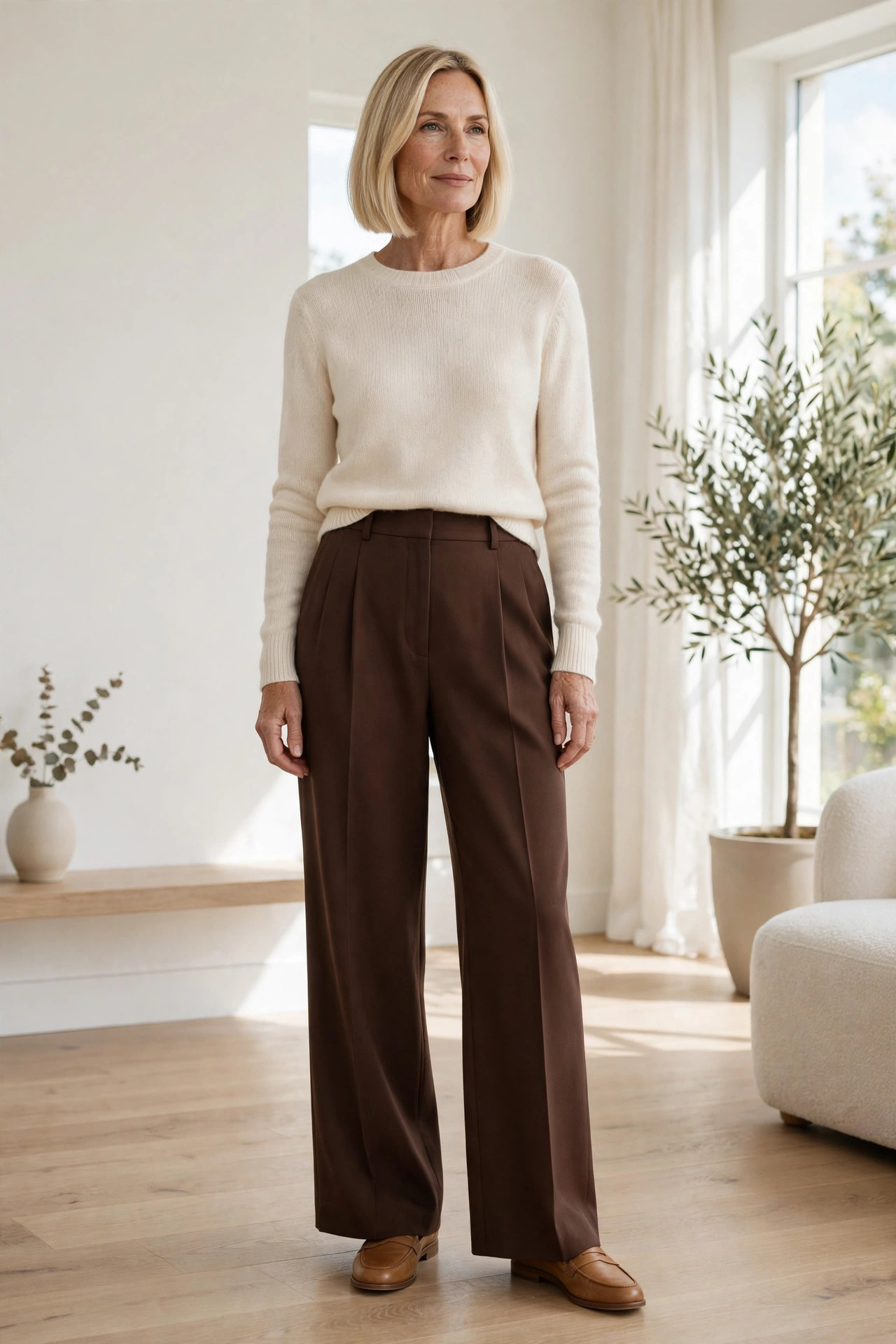
You don’t always need a different silhouette — a color change at the waist creates definition on its own. A cream knit tucked into chocolate trousers draws a crisp horizontal line exactly where you want the eye to stop.
This is a capsule-wardrobe dream: the same relaxed cuts you already own, restyled so the color shift lands at the waistband. Texture contrast (smooth knit with nubby trouser) deepens the effect.
Strategy 4: Dresses That Build Shape for You
The right dress does all the proportion work in one piece. Look for construction — seams, wraps, and skirt shapes — rather than anything labeled “fitted.”
12. The True Wrap Dress
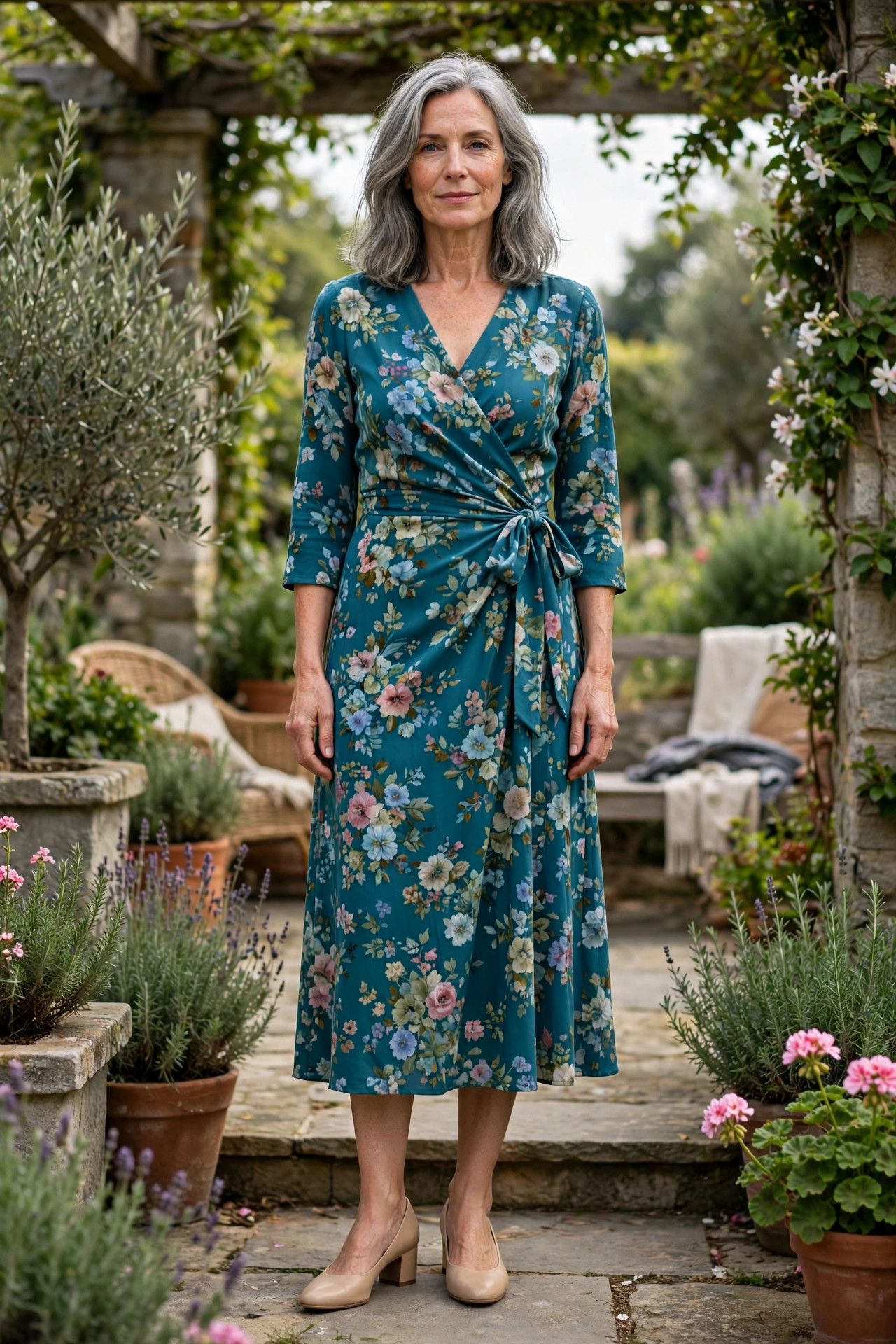
The true wrap dress remains the single most waist-creating dress ever designed. The diagonal closure cinches visually (not physically) at the waist while the skirt flares gently over the hip.
For over 50, choose a midi length with elbow or three-quarter sleeves and a V that you can pin to your comfort level. A wrap dress in a fluid crepe moves beautifully and never needs adjusting — the definition is built in.
13. The Fit-and-Flare Midi

Fit-and-flare gives you a shaped bodice that defines the upper body and a skirt that releases from the waist — the classic recipe for suggesting an hourglass. It works especially well in structured cotton or ponte.
Keep the bodice softly shaped rather than body-con: princess seams or gentle darts beat a clingy knit. A defined waist seam is the whole point, so skip styles where the flare starts at the hip.
14. The Bias-Cut Skirt
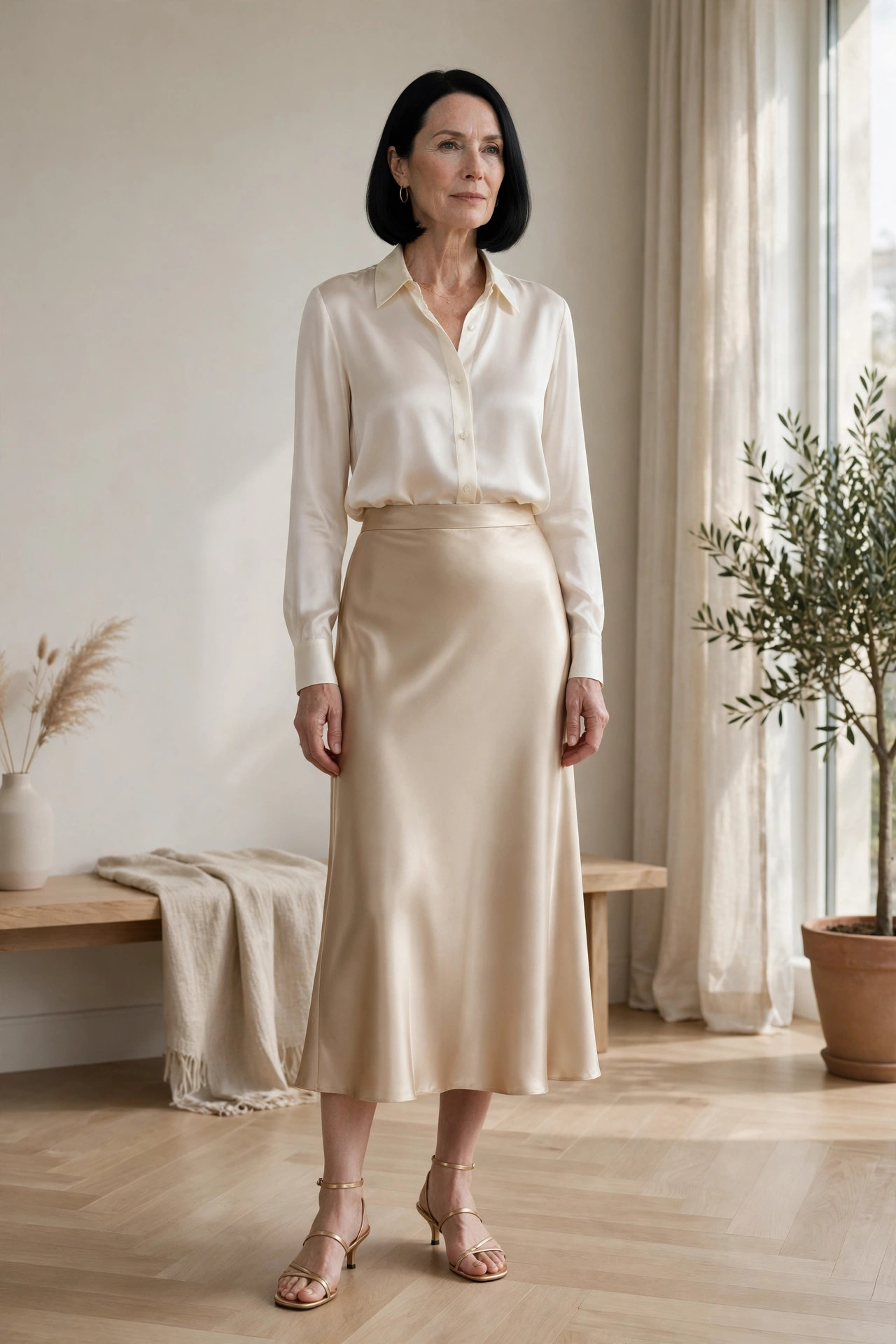
Cut on the diagonal, bias fabric drapes over the hip in soft folds that a straight-cut skirt can’t produce. It adds fluid shape exactly where a rectangle figure runs straight.
Pair it with something simple and tucked on top — a silk blouse or fine knit — so the skirt is the star. A bias skirt in satin or washed silk elevates instantly for evening with just a heel swap.
Strategy 5: Layers That Finish the Silhouette
Your outer layer can make or break the definition you’ve built. The rule is simple: end it at the waist or high hip, and let it open rather than close.
15. The Cropped Blazer over a Column Dress
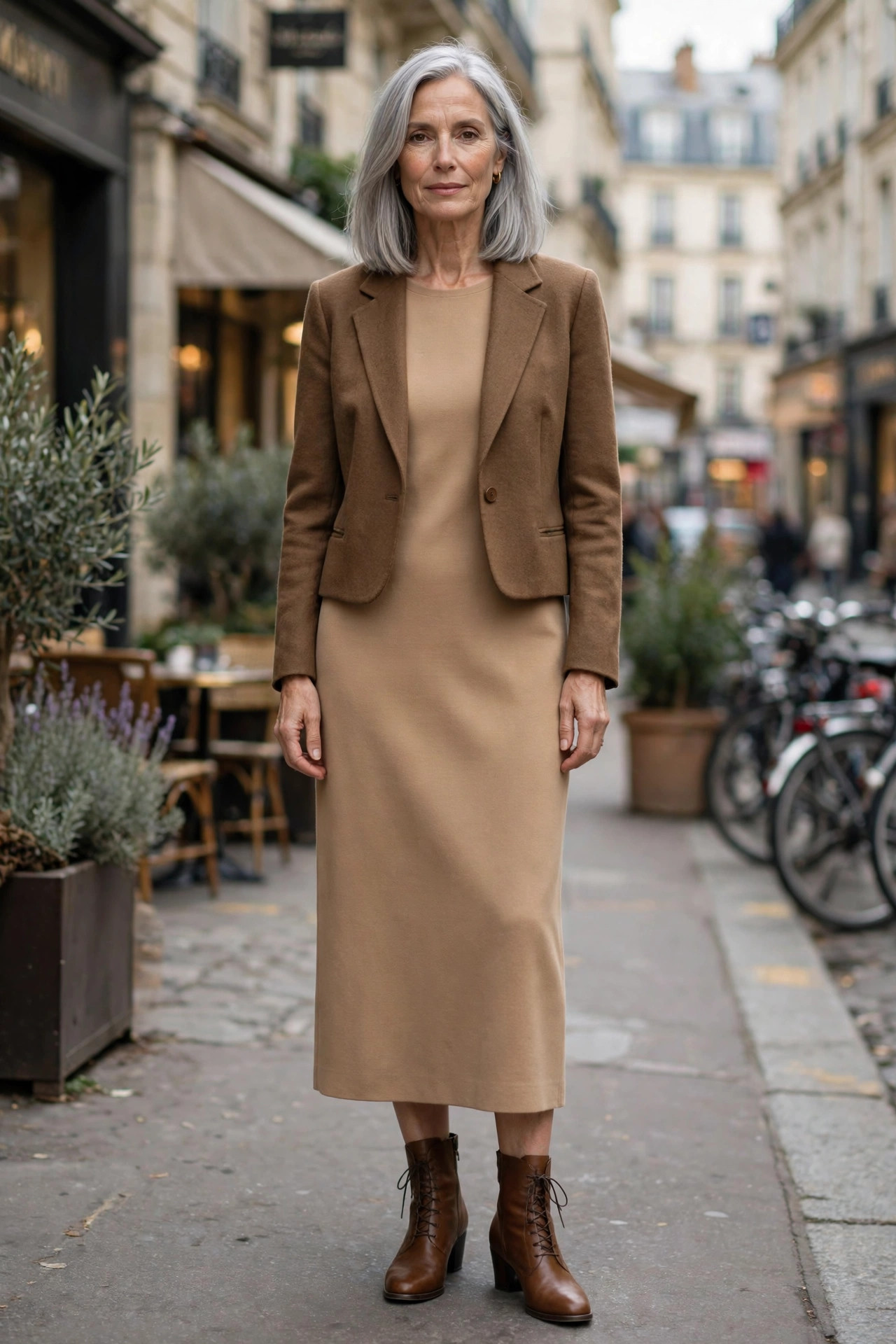
A column dress on its own can read as one long straight line — but add a blazer that ends at the high hip and you’ve drawn a waist into the outfit without touching the dress. A single-button closure adds gentle shaping.
The blazer should be lightly structured through the shoulder with a shorter hem; an oversized blazer falling past the hip does the opposite. Our guide to wearing a trench coat over 50 covers the same hem-placement logic for longer outerwear.
16. The Waist-Length Open Cardigan
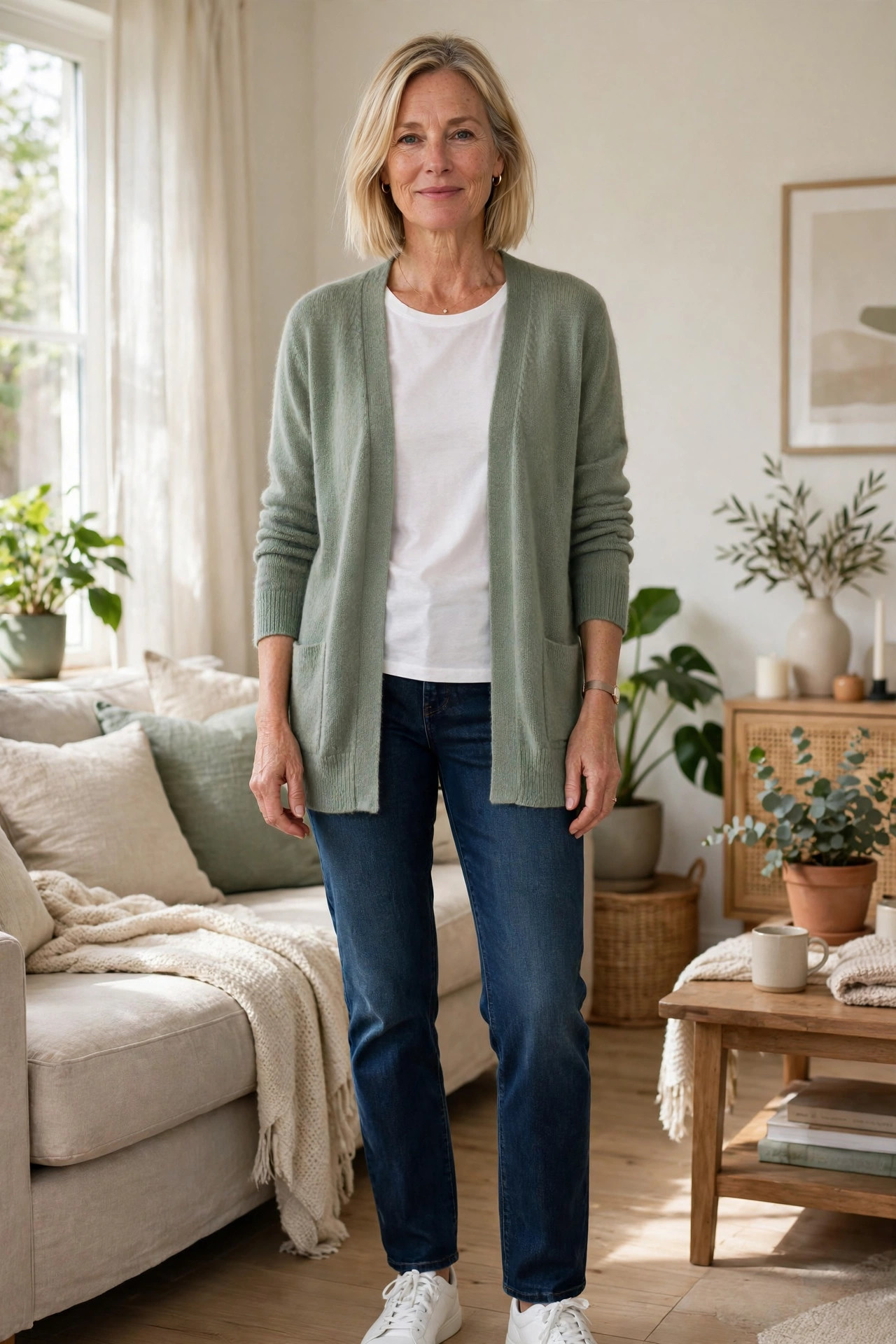
Worn open, a waist-length cardigan creates two vertical lines down your front — and vertical lines are slimming, elongating magic on a straight figure. The hem landing at the waist marks it clearly.
Choose a fine or medium knit, never a heavy chunky one that adds bulk where you want a line. It works over a tucked tee and jeans for weekends or over a dress for the office.
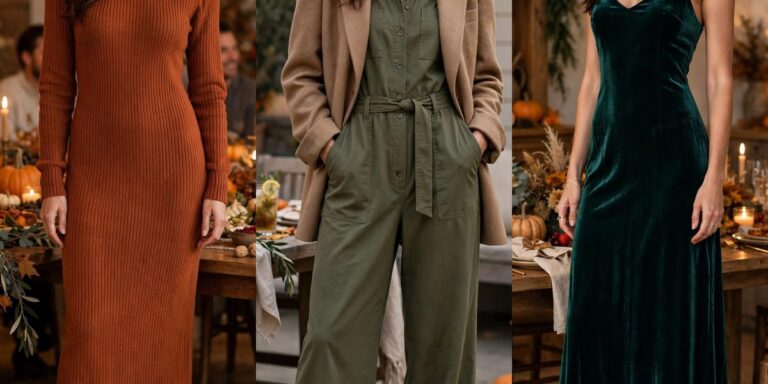
17. The Evening Column + Statement Belt

Evening dressing rewards the boldest waist marker: a wider statement belt (2–3 inches) over a simple column dress. Metallic, embellished, or in an interesting texture — it becomes the jewelry of the outfit.
Keep everything else quiet so the belt carries the look: minimal neckline, sleek hair, one great shoe. For more polished evening inspiration, browse our old money outfits for women over 50.
The 60-Second Definition Checklist
Run any outfit through this list before you leave the house:
- Is my waist marked? A tuck, belt, wrap line, or color break should sit at your natural waist.
- Is there contrast? Fitted somewhere + fuller somewhere else beats same-width-everywhere.
- Where do my hems end? Jackets at the high hip, skirts avoiding the widest calf point.
- Is my neckline open? A V, scoop, or open collar keeps the upper body from looking square.
- One volume moment only. Wide trousers or a peplum or a puff sleeve — not all three.
- Do my shoes ground the outfit? A substantial shoe under a wide leg; a sleeker shoe under a slim one.
Three Flat Outfits and Their Easy Fixes
These common combinations quietly erase definition — each has a one-move fix:
Long loose tunic + loose trousers → one uninterrupted column. Fix: front-tuck the tunic or add side slits and a V-neckline.
Oversized blazer over wide pants → box on box. Fix: swap the base for a fitted knit and show the waistband, or choose a shorter blazer.
Thick untucked sweater + straight jeans → a single block of knit. Fix: try a finer knit with bootcut jeans, or half-tuck and add a belt.
None of these are forbidden — they’re simply starting points. One adjustment is usually all it takes.
Frequently Asked Questions
What is a rectangle body shape?
It means your shoulders, waist, and hips measure fairly close to each other, with little visible waist definition. It’s one of the most common shapes — and it responds beautifully to contrast dressing.
Should I wear a belt if I don’t have much of a waist?
Yes — a belt creates the waistline rather than requiring one. Wear a slim to medium belt at your natural waist over dresses and high-waisted trousers, kept snug rather than tight.
Can I wear oversized clothes with a rectangle shape?
Absolutely, with one balancing piece. An oversized blazer looks polished over a fitted knit and straight jeans; a roomy sweater works when your waistband is visible or your trousers have shape.
Which dress shapes create the most definition?
True wrap dresses, fit-and-flare midis, and shirt dresses with belts do the most work. They all mark the waist and add movement below it — the two ingredients that matter.
What should I avoid if I want more shape in my outfits?
Avoid letting every piece run long, loose, and the same width — that repeats your straightest line. Shapeless sacks and straight-across hems that hide the waistband are the main culprits; one defined element fixes most outfits.
The Takeaway
You don’t need a different body — you need a clearer strategy. Mark the waist, add volume where it flatters, and let contrast do the shaping. Start with one toolkit strategy tomorrow morning and watch your mirror change its mind.