14 Things to Stop Saving for ‘Someday’
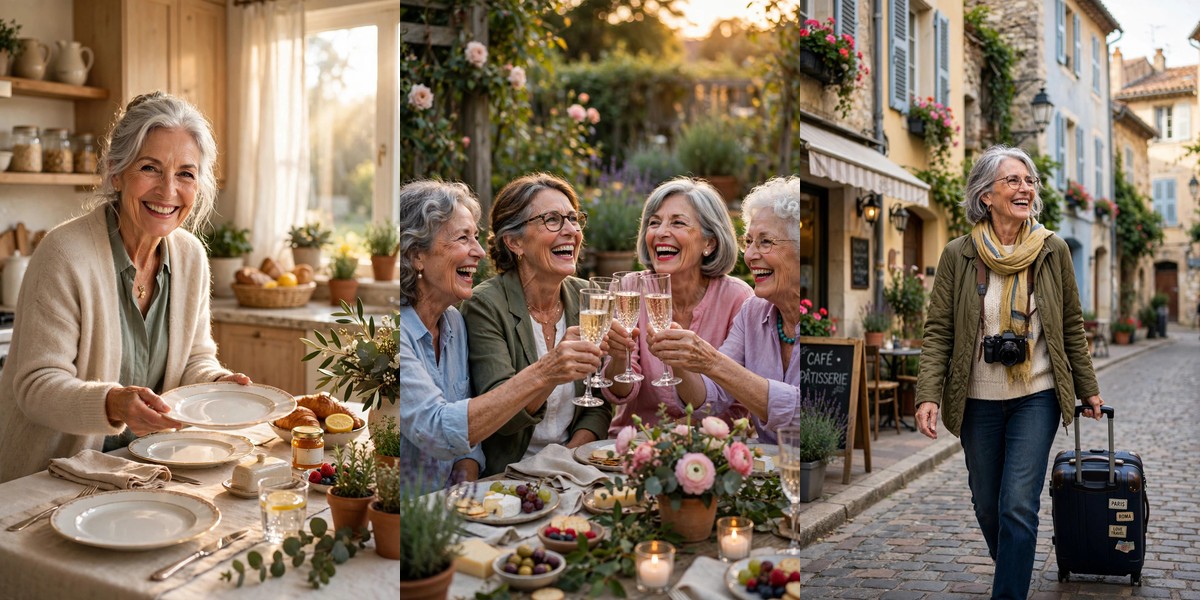
Somewhere in your house there is a shelf of beautiful things that never get touched: the good china behind the glass door, the bottle you’ve been aging for the “right” occasion, the perfume that only leaves the tray when someone important is watching. We all save the best for a someday that keeps politely declining to arrive.
This is for every woman over 50 who is quietly done with waiting. Below are 14 things worth taking off the shelf — each with the real cost of saving it, and one small way to start enjoying it this week. If postponing your own joy feels familiar, the regrets people commonly carry into their 70s makes the same case, louder.
First, before a single cabinet opens, sign the permission slip.
📝 Your Permission Slip
I, the undersigned, hereby grant myself full permission to use the good things now. No milestone required, no guest list, no apology for enjoying what I bought, was given, or kept safe for years. Chips, creases, and empty bottles are evidence of a life being lived — not a museum being maintained. Signed, me — today.
Keep that where you can see it. And if saying “yes” to yourself feels unfamiliar, learning to say no after 50 is the perfect companion skill — because every “yes” to the good china is a “no” to the imaginary audience.
1. 🍽️ The Good China — Weeknight Dinners Deserve the Best Plates
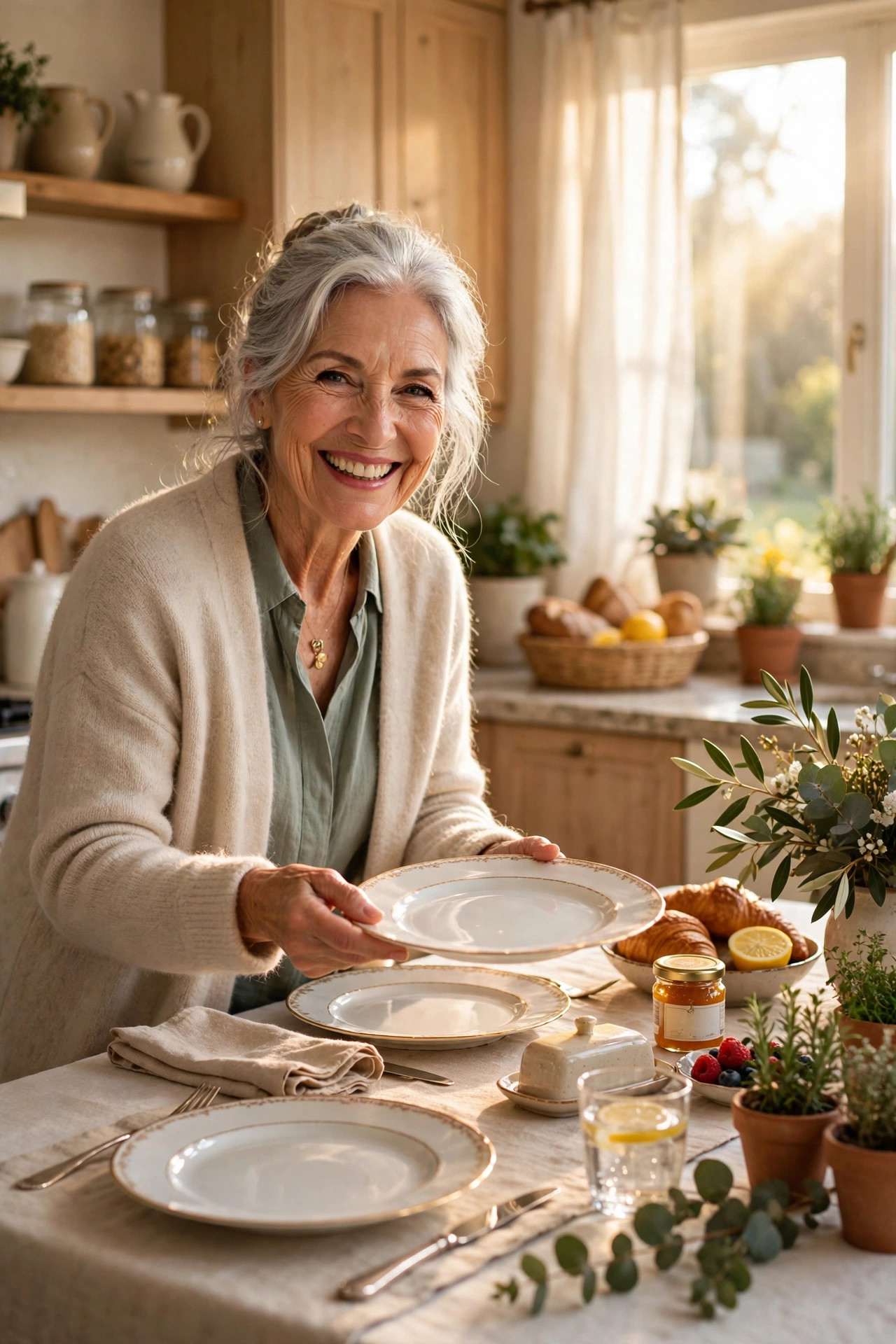
Most women keep the good plates for holidays and feed themselves off the everyday stoneware, as if an ordinary Tuesday hasn’t earned the gold rim. The china sits behind glass, lovely and useless, while you eat a thousand forgettable meals you will never remember.
Move the best plates to the front shelf where your hand lands without thinking. Eating scrambled eggs off porcelain doesn’t make the eggs fancier — it makes the morning feel like something you chose instead of something you’re getting through.
The cost of waiting: roughly 350 unremarkable meals a year, each one a small vote for “not special enough.” Those votes add up to a decade.
✨ Use it this week: serve one completely ordinary dinner on the good plates tonight. Not Sunday — tonight.
2. 🍷 The Saved Bottle — Drink the Good Wine on an Ordinary Night
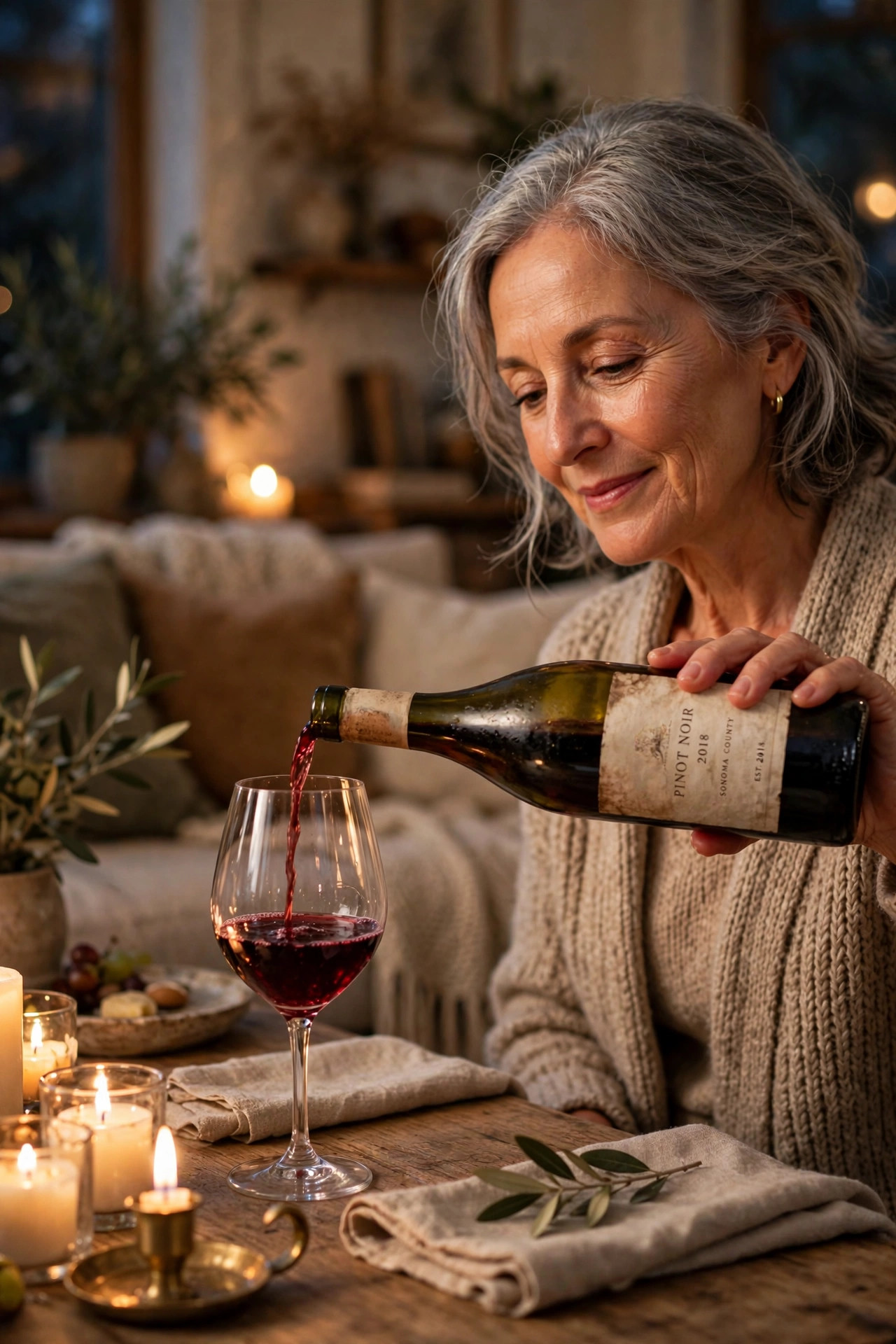
Every house has one: the bottle being kept for the visit, the anniversary, the celebration — and it keeps aging past the point where it was meant to be opened. Wine doesn’t improve on hope; it has a window, and the window doesn’t wait for your calendar.
A quiet evening at home is a legitimate occasion. Open the bottle on a night with no guests and no agenda, pour a glass, and taste what you’ve been guarding. The people who made it wanted it drunk, not displayed.
The cost of waiting: vintages turn past their peak in the dark, and you lose both the money and the memory you could have had.
✨ Use it this week: pick the oldest “special” bottle you own and open it this week. If you’re saving it for a person, invite that person — or toast them alone.
3. ✉️ The Beautiful Stationery — Send the Letters You’ve Been Composing in Your Head

Heavy cream paper and good pens invite a strange paralysis: the paper feels too nice for your messy thoughts, so you write nothing at all. Meanwhile the people you’d write to would be thrilled just to see your handwriting in the mailbox.
A crooked line on expensive paper beats a perfect sheet in a drawer. Write the thank-you note, the thinking-of-you card, the three-sentence letter. Stationery is not a savings account; it doesn’t earn interest sitting in the box.
The cost of waiting: unsent letters are unsaid things — and the people you meant to write to won’t be around forever.
✨ Use it this week: ink the pen and write one real letter on the good paper. Address it. Stamp it. Mail it today.
4. 👗 The Dress-Up Clothes — Wear the Silk to the Grocery Store

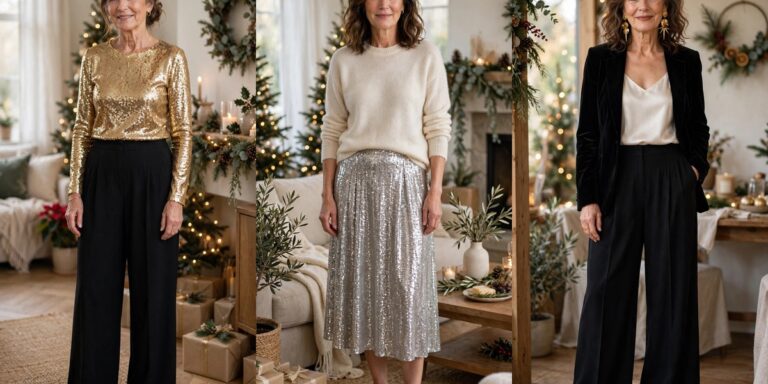
Silk dresses, tailored trousers, the good blazer — they hang in the dark waiting for an invitation grand enough to release them. But bodies change, styles shift, and the “right occasion” keeps moving while the clothes slowly become relics of a life you didn’t live.
Wear the nice things on the plainest days. A silk dress at the farmers’ market, good earrings for errands, the tailored coat for a walk — these small overdressings rewire the belief that beauty needs permission. Dressing well for yourself is the occasion.
The cost of waiting: clothes you saved “for best” often don’t fit the woman you are by the time “best” arrives.
✨ Use it this week: put on the nicest thing in your closet for the most ordinary task on your list. Notice how the day bends toward you.
5. 🌸 The Good Perfume — Smell Like Yourself Every Morning

So many of us spray the good perfume only when other people will be close enough to notice — which means the scent lives on the shelf while our own quiet mornings smell of nothing. That reverses the whole point: fragrance is a sensory gift, and you’re its primary recipient.
Perfume also expires. Top notes evaporate whether the bottle is open or sealed, so “saving” an expensive scent is just letting it die slowly. Spray it for the dog walk, the library run, the hour you spend reading alone. Your own pleasure is a worthy audience.
The cost of waiting: every unspritzed year is fragrance turning to expensive colored water on the vanity.
✨ Use it this week: move your favorite bottle next to your toothbrush. One spray every morning, no occasion needed.
6. 🛏️ The Heirloom Linens — Sleep Under the Quilt Tonight
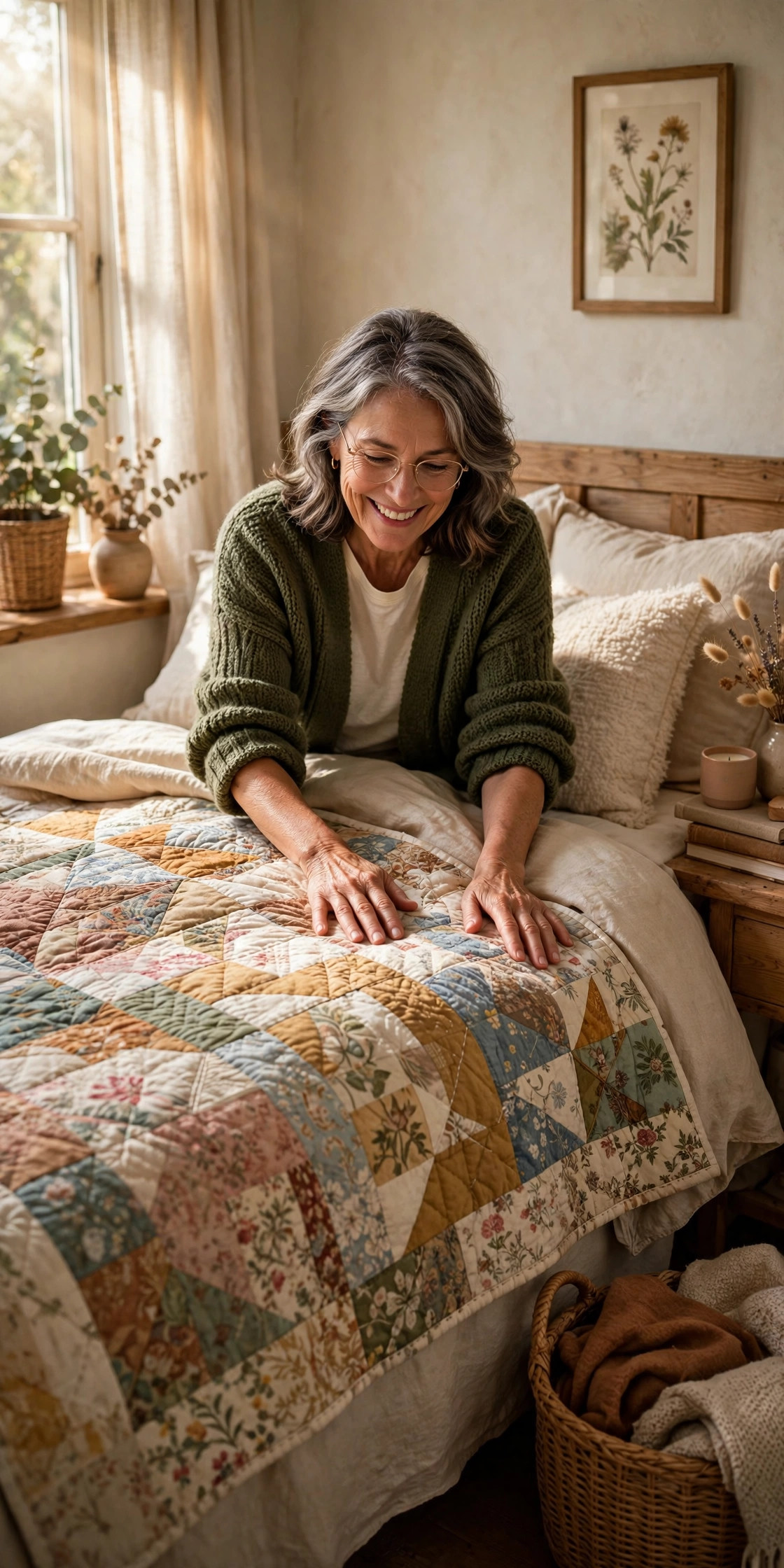
The hand-stitched quilt, the good linen sheets — folded in cedar for decades while you sleep on thin, tired cotton. We’ve turned our bedrooms into museums, forgetting that fabric stored in the dark actually weakens and yellows faster than fabric that’s loved into softness.
Put the best quilt on your own bed tonight, not the guest bed. Let it do what it was stitched to do: keep someone warm. An heirloom that’s used every night becomes part of your story instead of a parcel you’ll hand to your children, unused, in a box.
The cost of waiting: decades of comfort withheld from the person the quilt was made for — you, right now.
✨ Use it this week: pull one “too good” linen item out of storage and put it on your own bed before bedtime.
7. 📓 The Beautiful Journals — Write in the Notebook

You know the drawer: the gorgeous leather-bound journal, the too-pretty notebook from the trip, waiting for thoughts worthy enough to grace the first page. So the first page stays blank, and the thoughts go nowhere at all.
A journal’s beauty is not diminished by your handwriting — it’s completed by it. Messy lists, half-formed memories, angry pages, grateful ones: the notebook becomes yours only when you stop treating it like a display piece and start treating it like a tool.
The cost of waiting: years of thoughts, dreams, and small daily joys that were never recorded because the book was “too nice.”
✨ Use it this week: open the prettiest blank journal you own and ruin page one gloriously — write today’s date and one honest sentence.
8. 🧶 The Craft Stash — Cut the Fabric
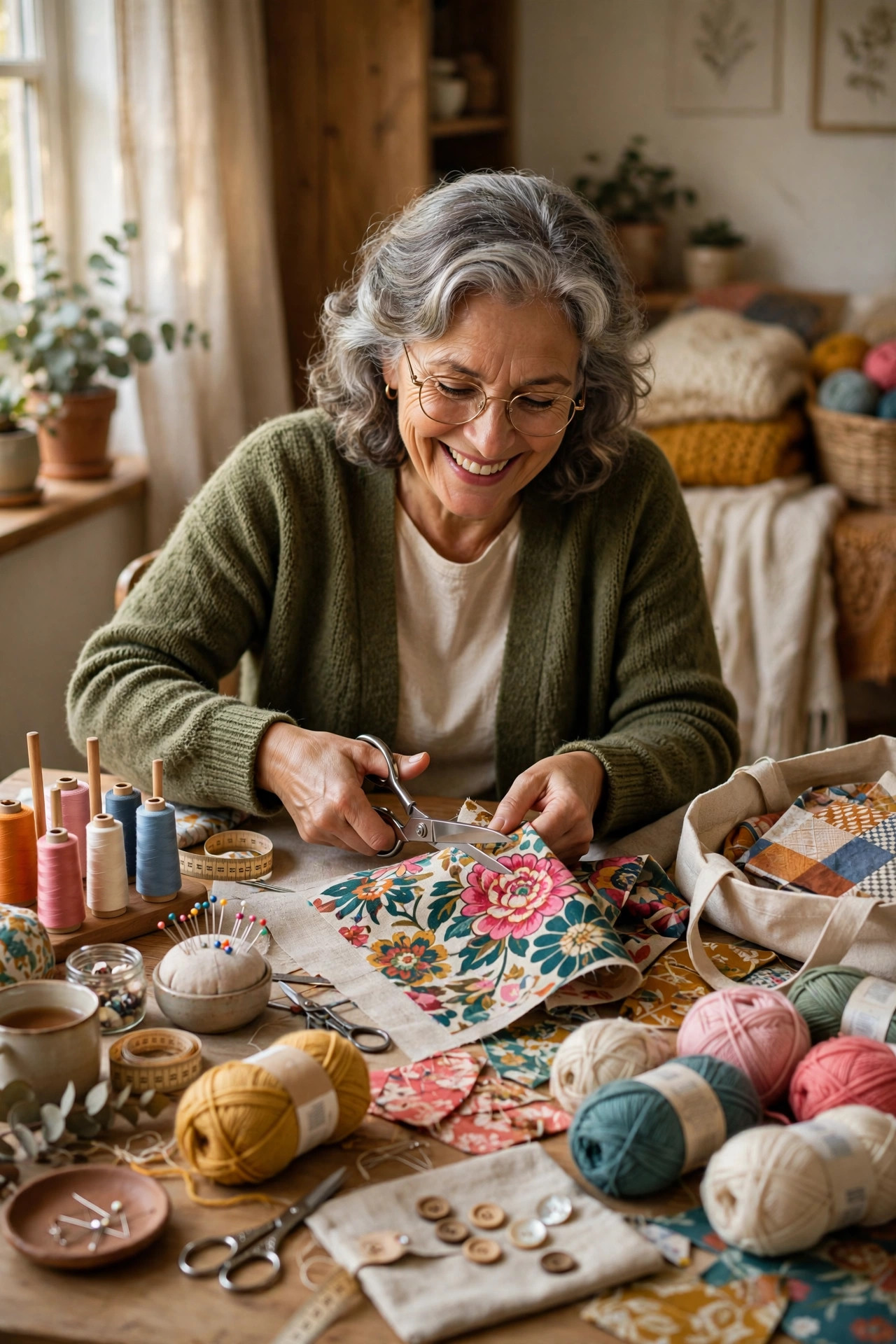
The beautiful fabric you “can’t” cut, the wool with the price tag still on, the supplies saved for the perfect project — they’re a museum of intentions. And the longer they sit, the more precious they feel, until cutting them feels like a crime instead of the whole point.
Materials are meant to be consumed, not curated. Cut the good fabric. Cast on with the good yarn. Your first imperfect project teaches you more than a decade of protective storage, and the joy of making is the interest your stash was always supposed to earn.
The cost of waiting: creativity deferred until retirement, then until “things settle,” then until the hands don’t cooperate anymore.
✨ Use it this week: pull one saved material out of storage and start something small tonight — a pouch, a swatch, a single evening of play.
9. 💍 The Real Jewelry — Wear the Gold to Lunch

The good necklace lives in the box. The real earrings wait for weddings. We treat fine jewelry like it needs a chaperone, so the pieces we love most are the ones we wear least — which is precisely backwards.
Jewelry is at its best against skin, not velvet. Wear the gold necklace with a plain tee. Take the good earrings to lunch with a friend. These pieces were given to you, or earned by you, to be lived in — and you look like the woman who owns them every time you do.
The cost of waiting: heirlooms you never wear become ornaments for your children to sell instead of memories attached to you.
✨ Use it this week: choose one “occasion” piece and wear it on a day with absolutely no occasion.
10. 🥂 The Crystal Glasses — Raise a Toast on a Thursday

Crystal glasses boxed in the sideboard, used twice a decade, polished annually for nobody. Meanwhile you drink sparkling water out of a chipped mug — as if Thursday evening hasn’t earned the sparkle.
Call two friends, chill something bubbly, and use the good glasses for no reason at all. Crystal catches light the way friendship catches time: both are meant to be held up and looked through, not kept in tissue paper.
The cost of waiting: friendships are maintained by small, easy gatherings — the ones the “good glasses” were supposedly waiting for.
✨ Use it this week: unwrap the crystal and pour something fizzy into it. Even sparkling water counts. The clink is the point.
11. 🍵 The Fancy Tea & Chocolates — Stop Running a Museum Pantry
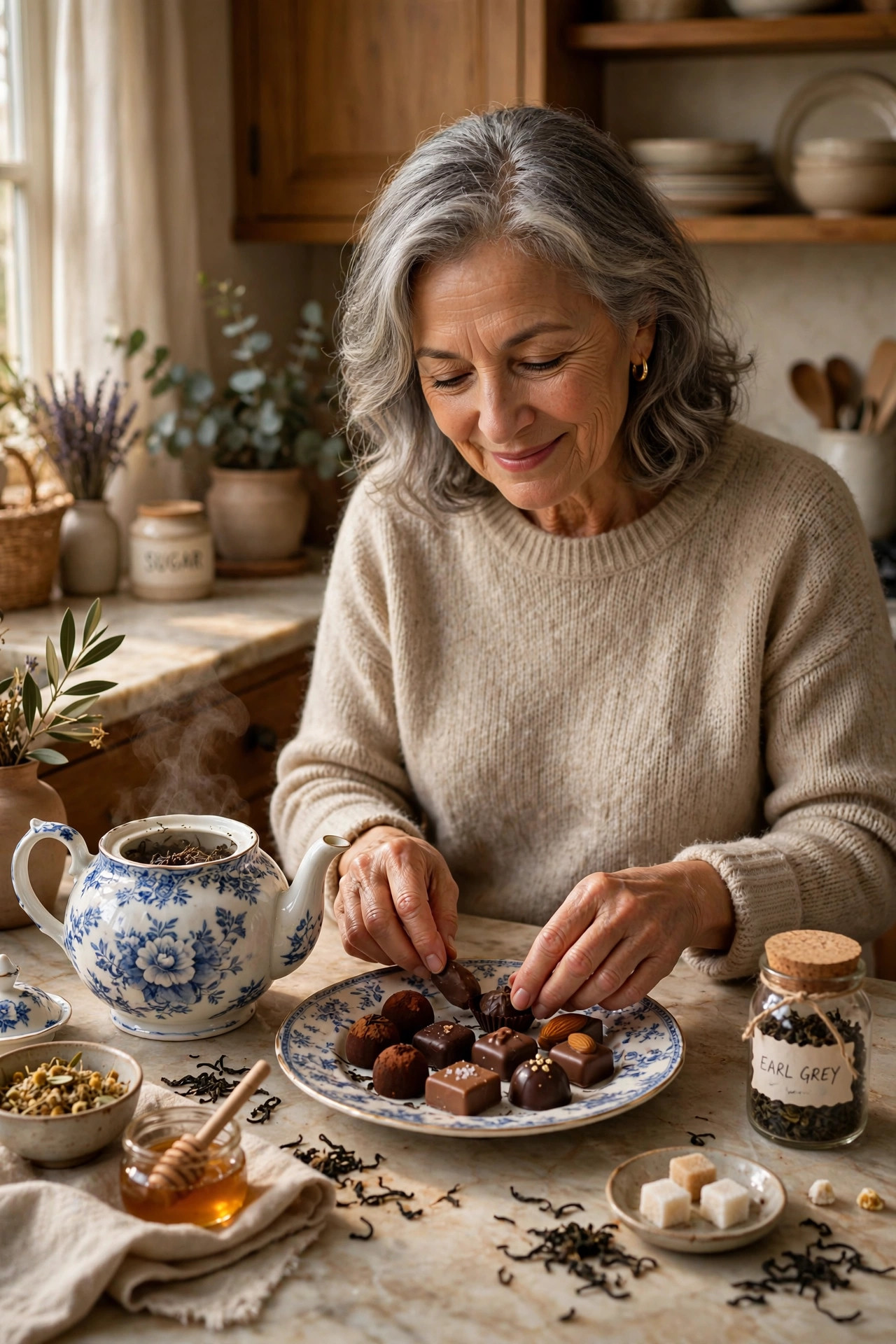
We all have the shelf: the loose-leaf tea saved “for when someone visits,” the good chocolates reserved for guests, the fancy coffee for company. Guests, as it turns out, are perfectly happy with whatever — and meanwhile the best things in your kitchen expire waiting for them.
You are the guest. Brew the good tea on a rainy afternoon, eat the expensive chocolate straight from the box, make the fancy coffee on a Monday. Enjoying your own pantry isn’t selfish — it’s the reason the pantry exists.
The cost of waiting: stale tea, bloomed chocolate, and years of ordinary cups when you owned extraordinary ones.
✨ Use it this week: open the fanciest edible in your kitchen and serve it to yourself, beautifully, on a real plate.
12. 📚 The Unread Books — Crack the Spines

The beautiful hardcovers sit pristine on the shelf while you reread old favorites, telling yourself you’ll get to them when there’s time. A pristine book is not a treasured book — it’s a closed door with a lovely cover.
Dog-ear the page. Underline the sentence that stops you. Write in the margins. A book that’s been argued with in pencil is worth more than a mint copy, because it holds the one thing a bookstore can’t sell you: your own thinking.
The cost of waiting: the ideas, comfort, and company of a thousand pages, traded for a tidy shelf.
✨ Use it this week: pull the most beautiful unread book off your shelf, open it somewhere in the middle, and read for twenty minutes.
13. 🎹 The Unplayed Instrument — Make Some Noise
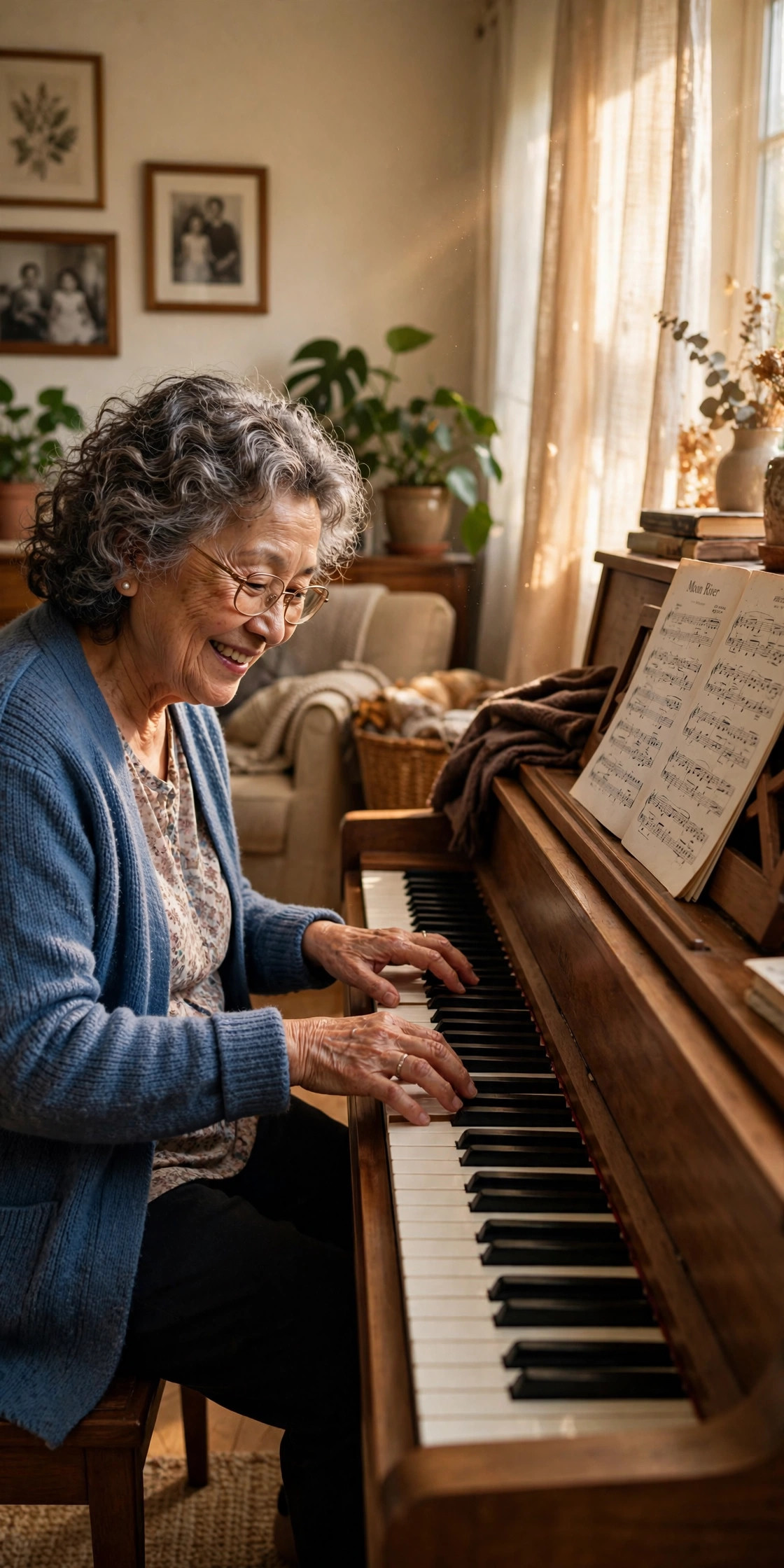
The piano under its cover, the guitar in the corner — silent monuments to the player you used to be, or meant to become. We tell ourselves we’re preserving the finish, but mostly we’re avoiding the embarrassment of sounding like a beginner again.
Nobody is listening through the walls, and the instrument doesn’t care about your missed notes. Ten imperfect minutes of scales fills a house with something no decoration ever can: evidence that a person is alive in it. Rusty is fine. Silent is the only wrong note.
The cost of waiting: fingers stiffen, skills fade, and the thing you loved becomes furniture instead of music.
✨ Use it this week: take the cover off and play for ten minutes — badly, joyfully, today.
14. ✈️ The Postponed Trip — Someday Is Not a Date
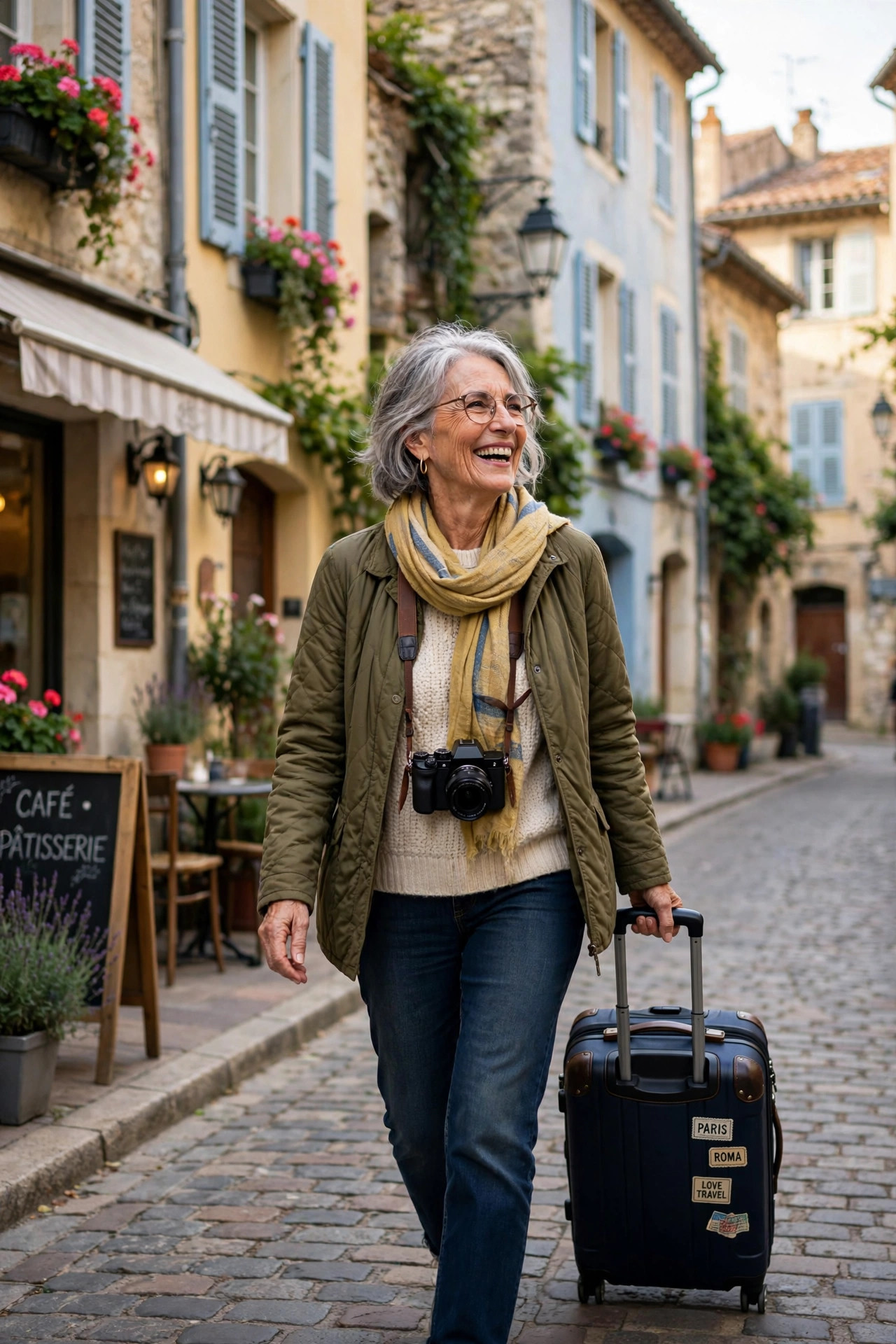
The biggest “someday” of all isn’t in a cabinet — it’s on a calendar that never gets marked. The coastal train route, the garden tour, the city you always meant to see in autumn. There’s always a reason to wait: the money, the timing, someone else’s schedule.
Someday is not a date; it’s a filing cabinet where dreams expire. As women in their 80s would tell their 50-year-old selves, the adventures you postpone are the ones you remember postponing. Book the small version now — the weekend away, the train ticket, the museum day two towns over — and let momentum do the rest.
The cost of waiting: the trip folder on your computer quietly becomes a memorial to the adventures that almost happened.
✨ Use it this week: book one real, non-refundable thing — a ticket, a room, a tour. Someday needs a deadline to become a date.
🧾 The Someday Shelf Audit
Don’t try to liberate your whole house in a day. Take a slow walk, shelf by shelf, and give each one its assignment:
- The china cabinet: move the best plates to the front shelf tonight.
- The drinks shelf: pick the oldest “special” bottle and open it this week.
- The desk drawer: ink the pen, write one letter on the good paper.
- The closet: wear the nicest thing you own to an ordinary errand.
- The vanity: move your favorite perfume next to your toothbrush.
- The linen chest: put the best quilt on your own bed tonight.
- The junk-beautiful drawer: open the notebook, start the craft, take the cover off the piano.
- The calendar: book one small trip before the week is out.
The good things were never the point — you were. They were bought, saved, and wrapped in tissue for the person reading this sentence. Stop saving your life for a someday that never arrives, and start using it like the good stuff it is: today.