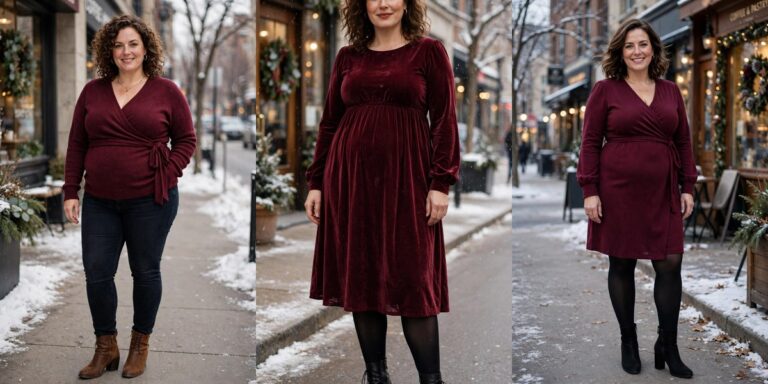
How to Wear Midi Skirts Over 50 and Look Incredibly Elegant
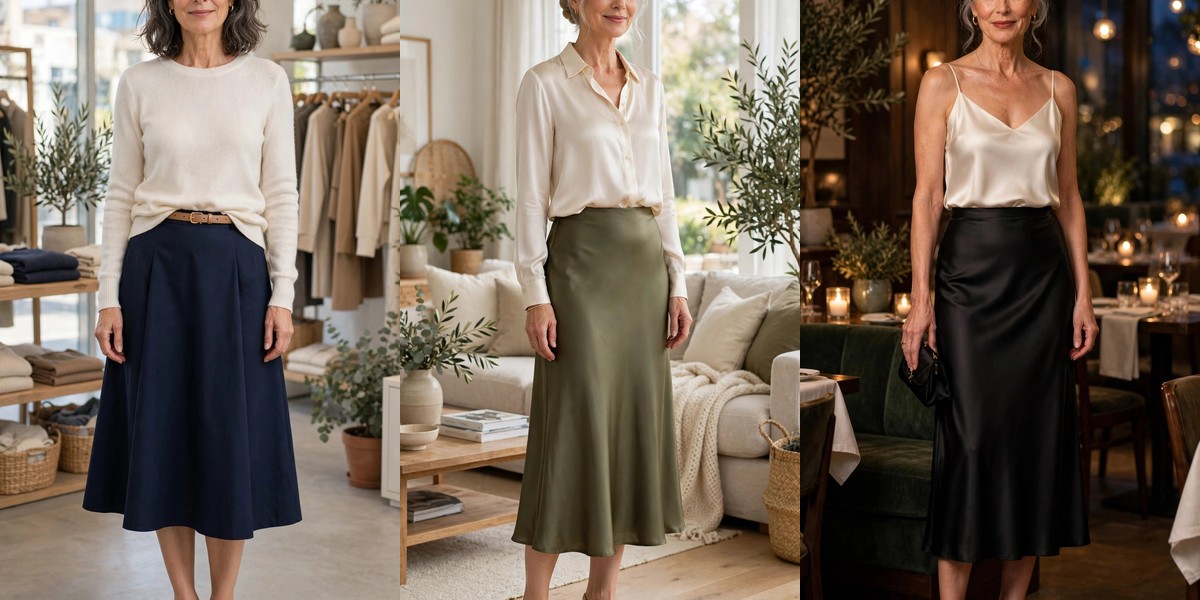
A midi skirt can look like pure grace on the hanger and like a frumpy column of fabric on the body. The difference is rarely the skirt itself.
If you are a woman over 50 who wants polish without stiffness, this guide is for you. Below, the midi is decoded into five chapters and eleven styling codes: length, shape, pairings, the leg line, and occasion.
Follow the codes in order and you will know exactly where a hem should land, how to define the waist, which shoes keep the leg long, and how one skirt can carry you from a school pickup to a dinner table.
Chapter 1: The Length Code — Hemlines decide about half of a midi skirt’s elegance. These three lengths cover every situation you will face.
1. The Just-Below-the-Knee Classic

The safest midi length sits one to two inches below the knee. It reads classic rather than trendy, shows enough leg to keep proportions open, and suits almost every shoe from loafers to block heels.
It is the length to buy when you want one skirt that does everything. Choose a smooth waistband and a gentle flare so the fabric moves instead of clinging. Code #1: when in doubt, end the hem just below the knee — it is the only midi length that flatters everyone.
2. The Tea-Length Sweet Spot
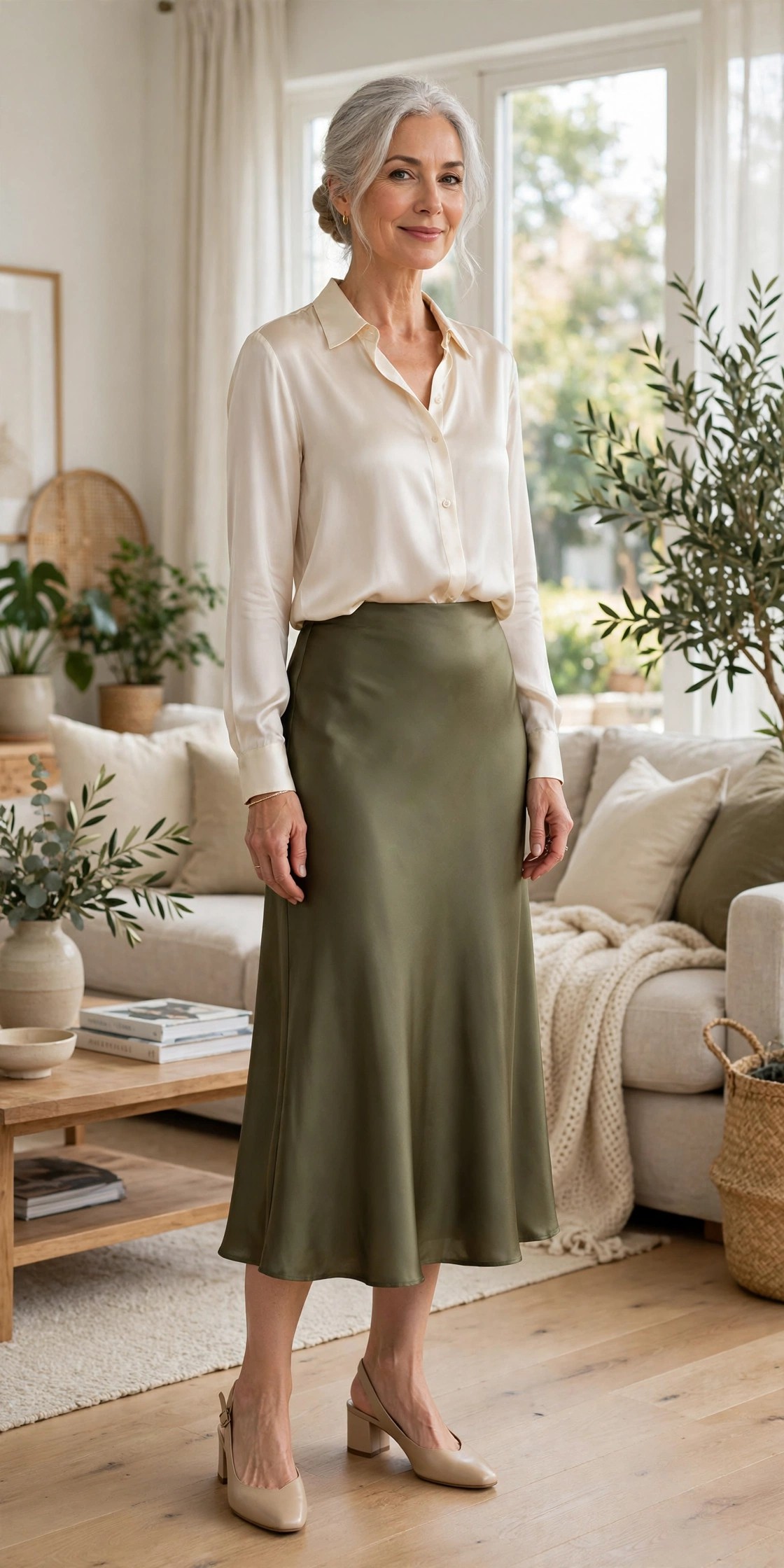
Tea length falls to the lower calf, a few inches above the ankle. It is the most naturally elegant of the three lengths because it leaves a clean, unbroken stretch of leg between hem and shoe.
This is the length for lunches, weddings as a guest, and any day you want to look composed without heels. Keep the fabric fluid — satin, crepe, or a soft pleated weave — so the longer hem moves with you instead of stiffening. Code #2: let a longer hem meet a low-vamp shoe and your leg line will look longer, not shorter.
3. The Mid-Calf Decision

Mid-calf is the length people fear, because it can land exactly on the widest part of the calf. It is not unwearable — it just asks for one compensation: a shoe with a clean, open cut.
Pair a mid-calf hem with pointed flats or slingbacks and the eye travels straight down to a visible foot. Avoid ankle straps here, since the strap chops the leg exactly where the hem does. Code #3: never let hem and shoe band the leg twice — open one of the two, and mid-calf becomes easy.
Chapter 2: The Shape Code — Length sets the frame; shape sets the mood. These two silhouettes cover every body type over 50.
4. The A-Line Anchor

A soft A-line is the easiest midi shape to live in. It defines the waist, skims the hip and thigh, then releases into gentle flare — structure where you want it, ease everywhere else.
Look for a flat waistband with no gathers, because gathers add bulk exactly where you don’t want it. The A-line also takes a front slit well, which gives the stride room without showing more than you intend. Code #4: shape at the waist, freedom through the skirt — that is the entire trick of the A-line.
5. The Pleated Movement

Pleats give a midi skirt something tailoring cannot: motion. Fine knife pleats catch light and air as you walk, so the skirt always looks alive — a quality that reads as confidence on women over 50.
The rules are short: fine pleats, flat waistband, and a fluid fabric with enough weight to fall rather than fly. Pair pleats with a half-tucked blouse so the movement stays anchored at the waist. Code #5: pleats are forgiving, but only when the fabric is heavy enough to hang — thin pleats puff, fluid pleats pour.
Chapter 3: The Pairing Code — The skirt is half the outfit. These three pairings decide whether it reads elegant or accidental.
6. The Waist-Defining Tuck
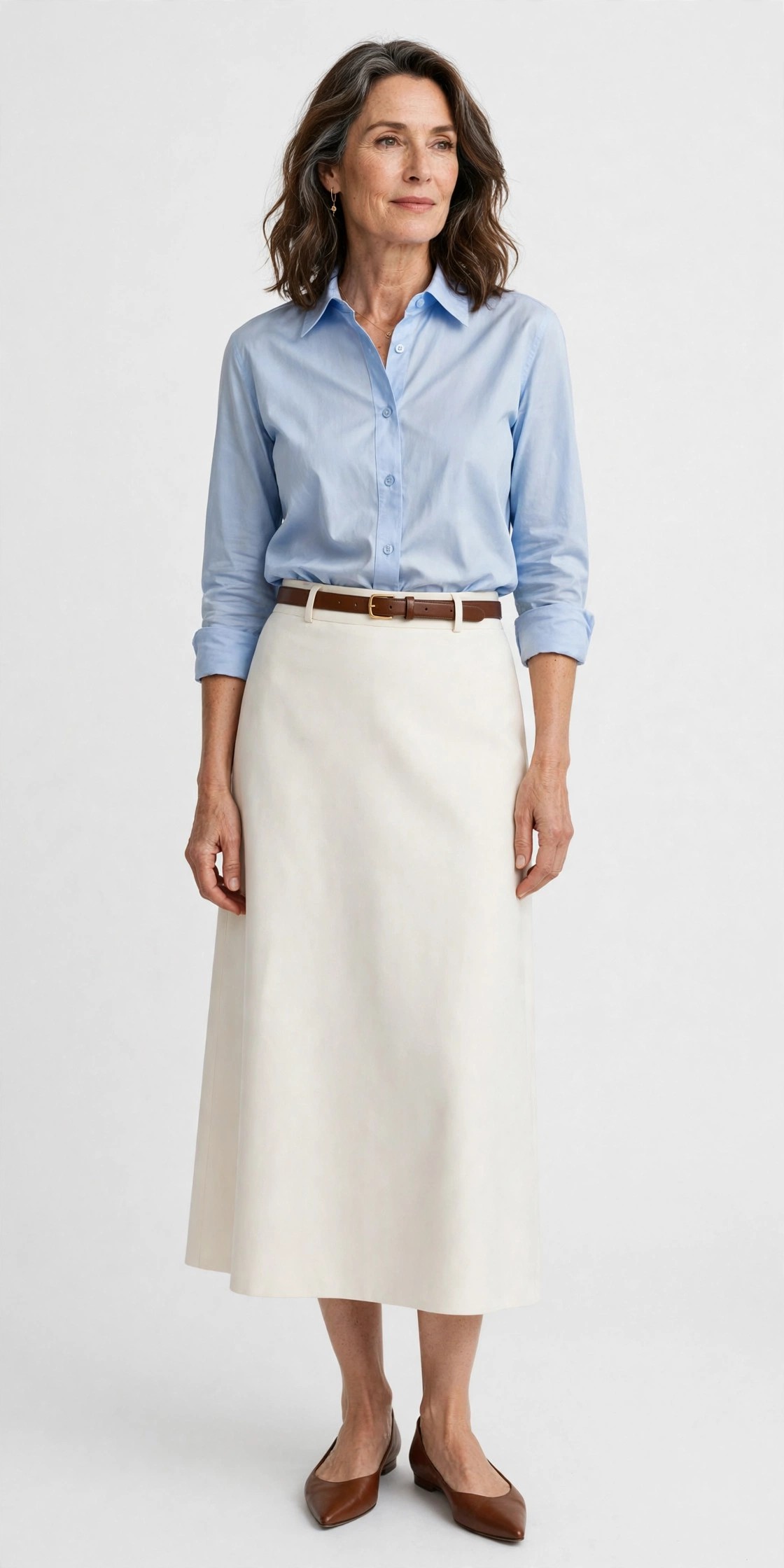
A midi skirt adds fabric below the waist, so the top must give the outfit a boundary. A front tuck — just the front of a shirt or blouse — marks the waist without looking overdone.
If a tuck feels too neat for your taste, a slim belt over the sweater does the same job. What matters is that the eye can find your waist in under a second. Code #6: every midi outfit needs one visible waist moment — tuck, belt, or a cropped top line.
7. The Knit Pairing

A fine-knit sweater is the midi skirt’s best everyday companion. It has enough polish for lunch or a casual dinner, but it never fights the skirt for attention.
Choose a sweater that ends at the high hip rather than mid-thigh, and let the textures do the talking — a cream crewneck over a knit skirt feels rich even in simple colors. Medium-weight knit is the sweet spot; thin jersey clings and thin sweaters slide. Code #7: knit on knit works when both pieces have body — let texture, not bulk, carry the pairing.
8. The Third-Piece Finish

A third piece — a cropped jacket, blazer, or structured cardigan — turns a skirt outfit from “nice top” into an intentional look. The key word is cropped: it should stop at or above the waistband.
A jacket that covers the skirt’s waistband erases the waist you worked to define. Keep the hem of the jacket above the widest part of the skirt and the silhouette stays crisp. Code #8: the third piece ends where the waist begins — anything longer swallows the skirt’s structure.
Chapter 4: The Leg-Line Code — The hem draws the eye downward, so everything below it must cooperate. For more on balancing longer hems, see how to wear wide-leg pants over 50, where the same leg-lengthening logic applies.
9. The Shoe Code
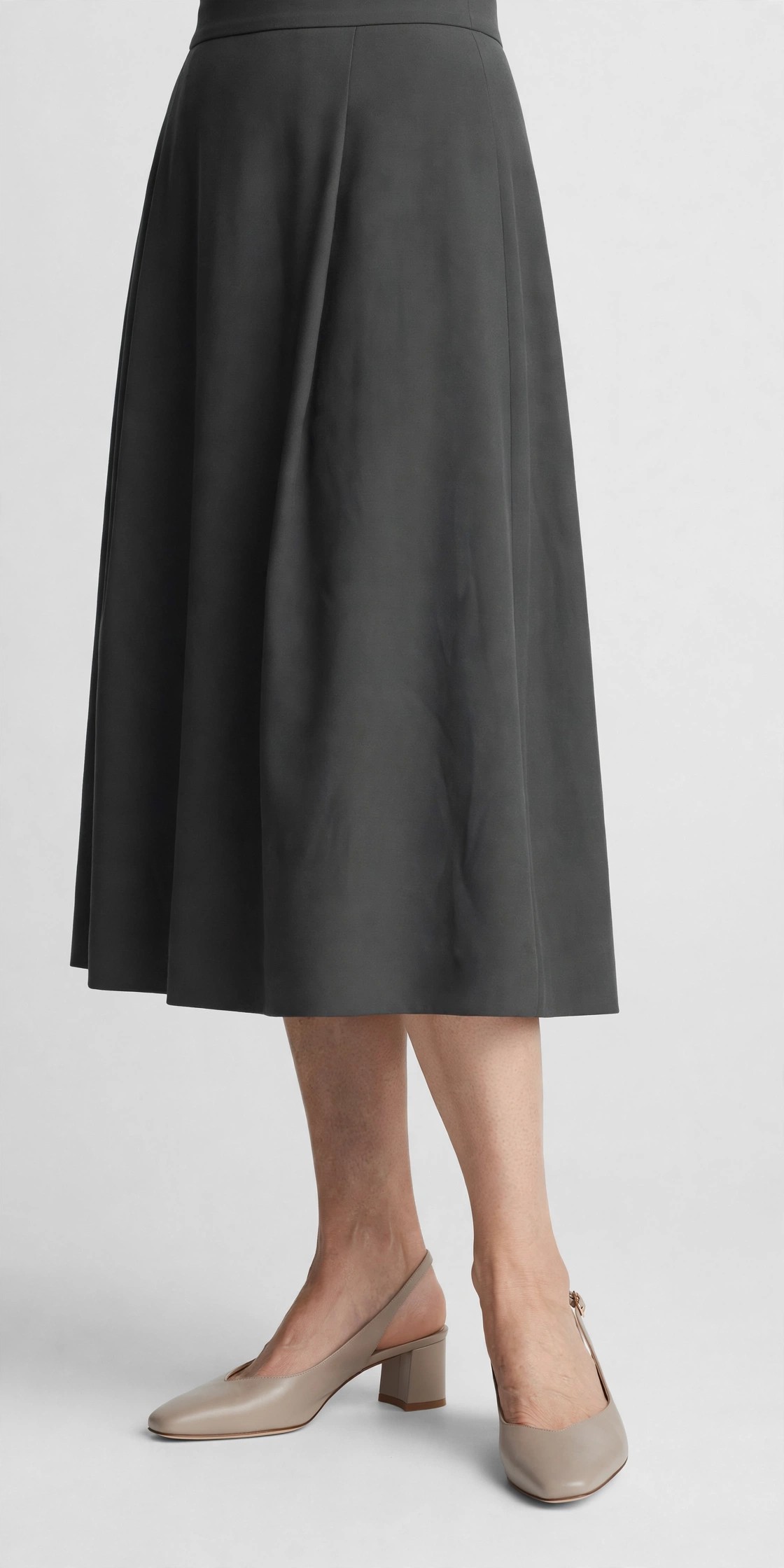
Shoes make or break a midi because the hem frames the ankle. The reliable choices are pointed flats, slingbacks, low block heels, refined sandals, and sleek loafers — all leave the top of the foot open.
You do not need heels for elegance. You need an open leg line: more visible foot makes the whole outfit look lighter. In winter, choose tall boots that slide under the hem so there is no awkward gap. Code #9: show the foot, not the ankle strap — a clean shoe opening is the cheapest leg-lengthener you own.
10. The Tights Edit
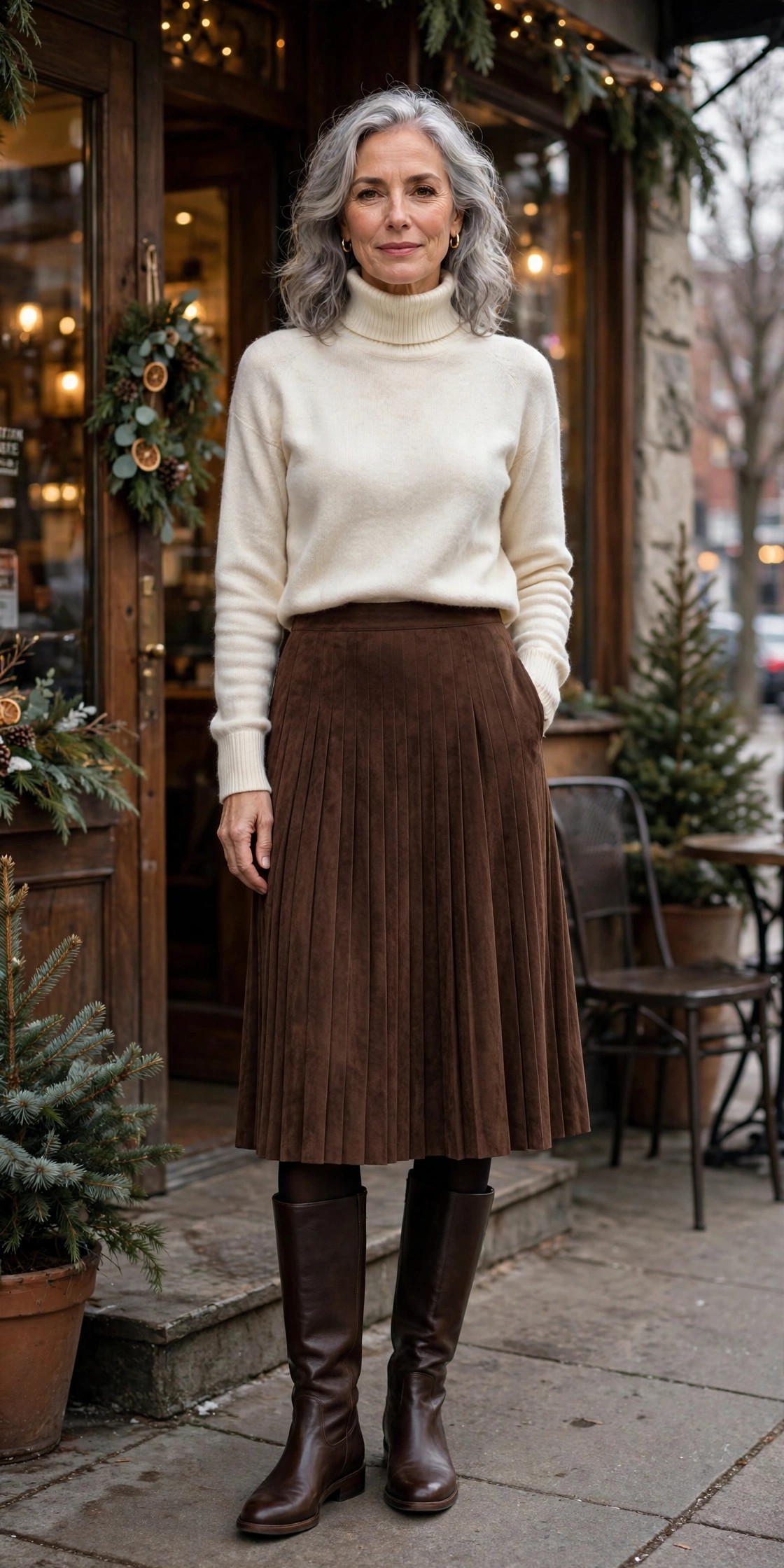
Tights are not a compromise — they are a color strategy. Opaque black tights under a dark skirt create one continuous column of color that lengthens the leg, while a nude tone keeps a light skirt airy in early fall.
The rule is simple: tights and shoes should be close in color so the leg reads as one line. An ankle gap between light tights and dark shoes chops exactly what you are trying to stretch. Code #10: match tights to shoes (or to the skirt) and the leg becomes one unbroken line.
Chapter 5: The Occasion Code — One well-chosen midi skirt can dress for every plan on your calendar, if you know how to shift the supporting pieces.
11. The Day-to-Dinner Conversion

Start with a neutral midi — black, navy, or ivory — and a simple top for daytime. To take it to dinner, you only need to change two things: the texture and the shine.
Swap the knit for a silky shell, the loafers for slingbacks, and add one piece of jewelry that catches the light. The skirt itself never changes — your evening elegance comes from what you put above and below it. Code #11: keep the skirt constant and convert the occasion with top, shoe, and jewelry alone.
The Atelier Checklist: Eight Stitches Before You Leave
Run through this before any midi outfit leaves the house. First, check the hem in a full-length mirror — one inch changes the effect more than any accessory.
Confirm the waist is visible from the front. Feel the fabric drape: it should fall, not cling and not puff. Then check the shoe opening against the hem — open foot, clean leg line.
Match tights to shoes or skirt, not to the season’s default. Keep the jacket hem above the waistband. And when something feels off, change one thing — the shoe, the tuck, or the jacket — before you blame the skirt.
For a wider view of age-flattering proportion rules, the stylist’s fashion tips for women over 50 cover the same balance logic across tops, trousers, and layers. And when a new skirt joins the closet, weigh it against everything every woman over 50 should have in her closet so it earns its place instead of duplicating it.