
How to Wear Wide-Leg Pants Over 50 Without Looking Overwhelmed

Wide-leg pants look like a dream on the hanger — and like a fabric avalanche in the fitting-room mirror. If you have ever pulled on a pair and wondered where you went inside all that cloth, you are not alone.
This guide is for women over 50 who want the comfort and modern line of wide-leg pants without feeling swallowed by them. No drastic wardrobe overhaul required.
Below are 12 simple balance equations — one for the waist, one for the hem, one for the shoes, and more — plus a 60-second mirror check you can use every morning. For the denim version of these rules, see our jeans outfits for women over 50 guide.
Part 1 — The Foundation: Choose Pants That Don’t Fight You
Before any styling trick, the pants themselves have to be right. These two equations are about what to buy.
1. The High-Rise Anchor
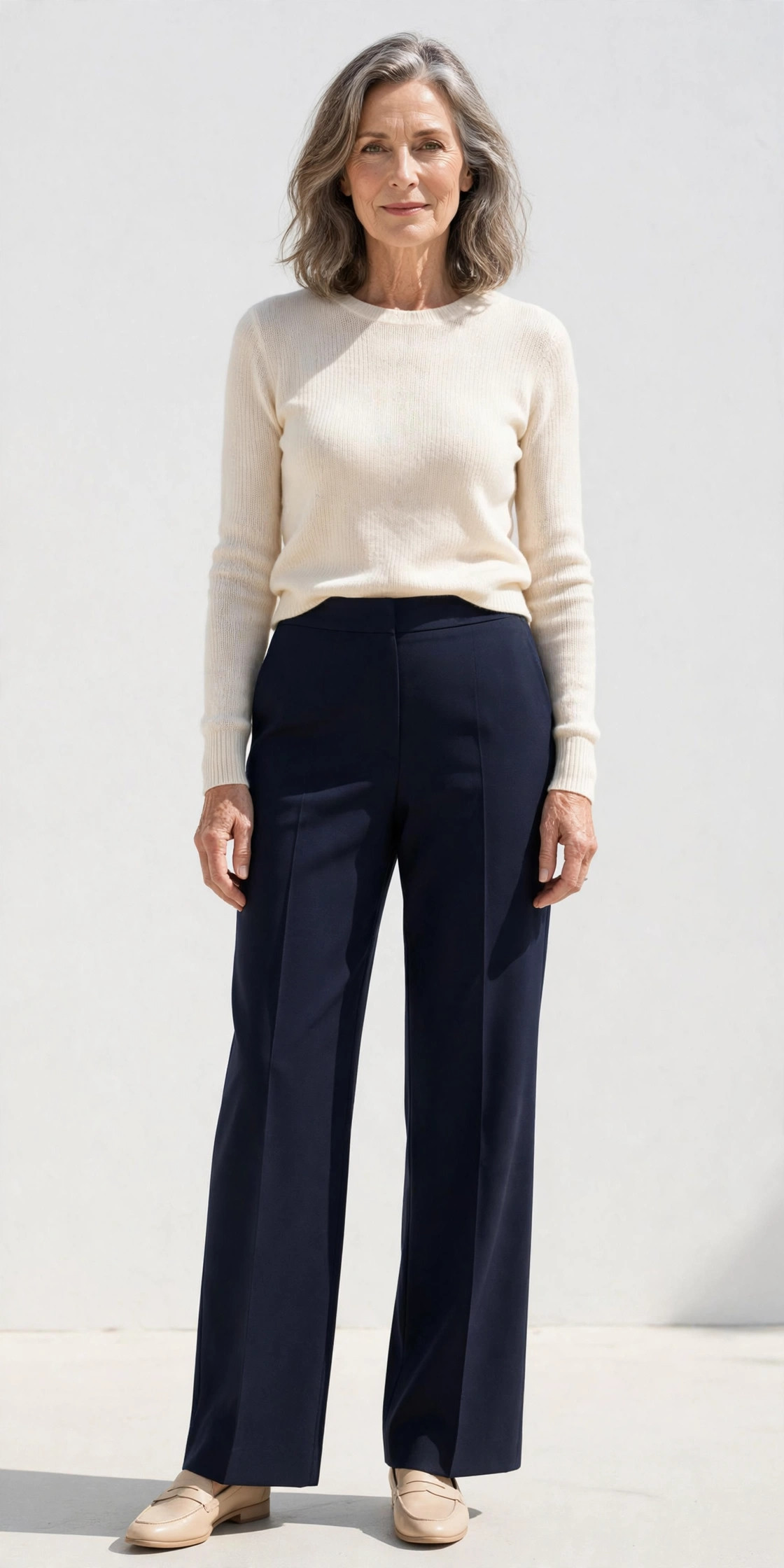
Start with the rise, not the width. A high-rise waistband that sits at your natural waist gives the whole outfit a center point, so the volume below reads as intentional instead of shapeless.
Look for a waistband that lies flat and stays put when you move — no digging, no rolling, no bunching under your top. Mid-rise works too, but a low rise combined with wide legs is the pairing that swallows a torso.
The equation: high-rise waist + a smooth waistband = a visible waistline, the anchor of every wide-leg outfit.
2. Fabric That Falls, Not Clings
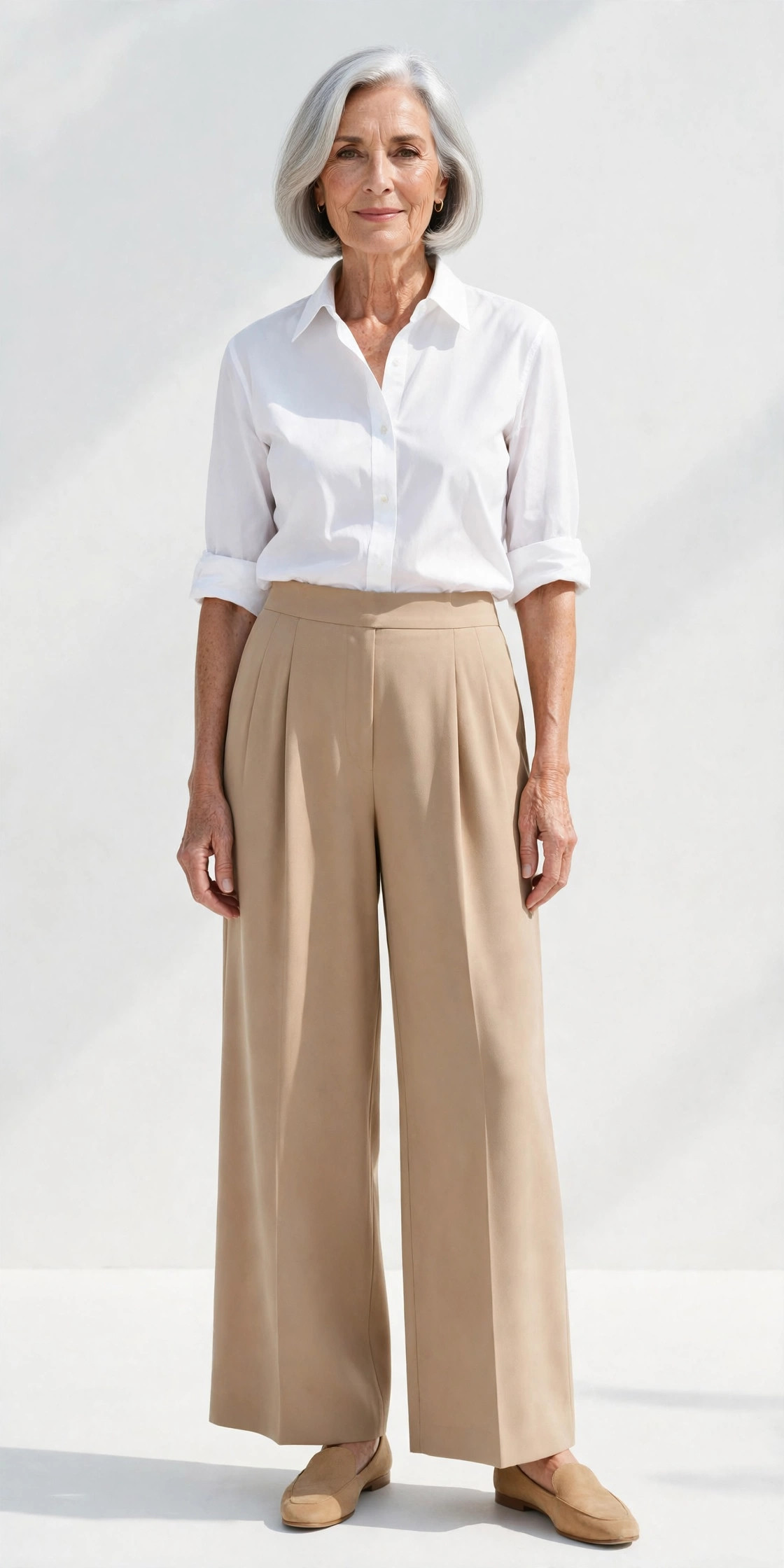
Thin, flimsy jersey is what makes wide-leg pants look sloppy — it clings at the thigh and loses its shape by noon. Choose fabrics with a little body: ponte, crepe, medium-weight twill, or a lined linen blend.
Do the hand test in the fitting room: scrunch the fabric, then watch it drop. If it falls in a clean line, it will behave all day. If it crumples and clings, it will fight you from morning to night.
The equation: fabric with weight + fluid drape = trousers that skim instead of cling.
Part 2 — The Upper Half: Give the Eye a Place to Land
Volume below needs an anchor above. Each of these equations puts something intentional on top so the outfit has a clear beginning.
3. The Full Tuck

The fastest way to balance wide legs is to tuck your top in completely. A fine-knit sweater or tee, tucked into a high-rise waist, draws a clear line between your upper body and the wide leg below.
Keep the tucked layer smooth rather than billowing — a top that sits close without squeezing is the sweet spot. This single move works with nearly every fabric, from denim to crepe, and takes seconds.
The equation: full tuck + fitted knit = waist definition in ten seconds flat.
4. The Half-Tuck Button-Down
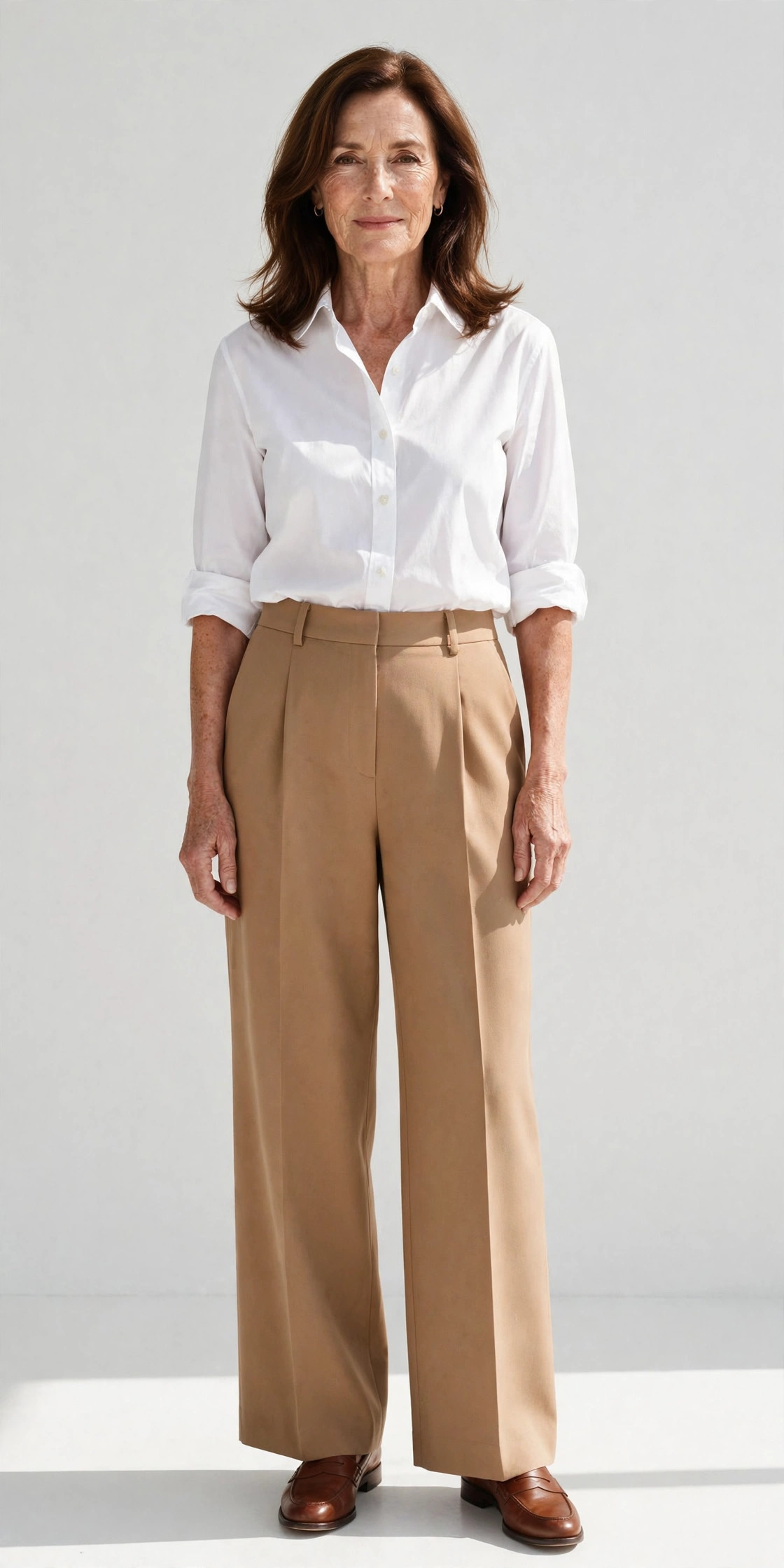
If a full tuck feels too polished for the day ahead, tuck just the front of a crisp button-down shirt and let the back skim free. You get structure from the collar and cuffs with an easy, undone finish.
Wear it open over a neat tank in warm weather, or buttoned with the sleeves rolled for errands and lunch. The shirt’s straight lines are the perfect counterweight to the curve of a wide pant.
The equation: half-tucked shirt + neat underlayer = polish without stiffness.
5. The Cropped-Jacket Cutoff

A jacket that ends at or just above the waist acts like punctuation — it tells the eye exactly where your torso stops and the wide leg begins. That is the whole job of a layer here.
Try a cropped denim jacket, a boxy suede style, or a short blazer over a simple tee. Skip jackets that end at mid-thigh with very wide pants; the two long lines merge and your shape quietly disappears.
The equation: wide leg below + cropped layer above = the torso stays in the picture.
Part 3 — The Length Equation: Hems and Shoes
The bottom edge of a wide leg decides everything. Get the hem and the shoe right, and even the simplest pair looks considered.
6. The Perfect Hem

Hem length is the quiet detail that makes wide legs look expensive. For full-length pants, the hem should just kiss the top of your shoe — or fall a breath above the floor for a dressier shoe.
Pick one shoe height for each pair and hem for it. A small alteration transforms off-the-rack pants into ones that look made for you, and it ends the dreaded puddle of fabric at the floor.
The equation: hem cut for your tallest shoe + a clean shoe = a floor-skimming, expensive-looking leg.
7. The Pointed-Toe Rule
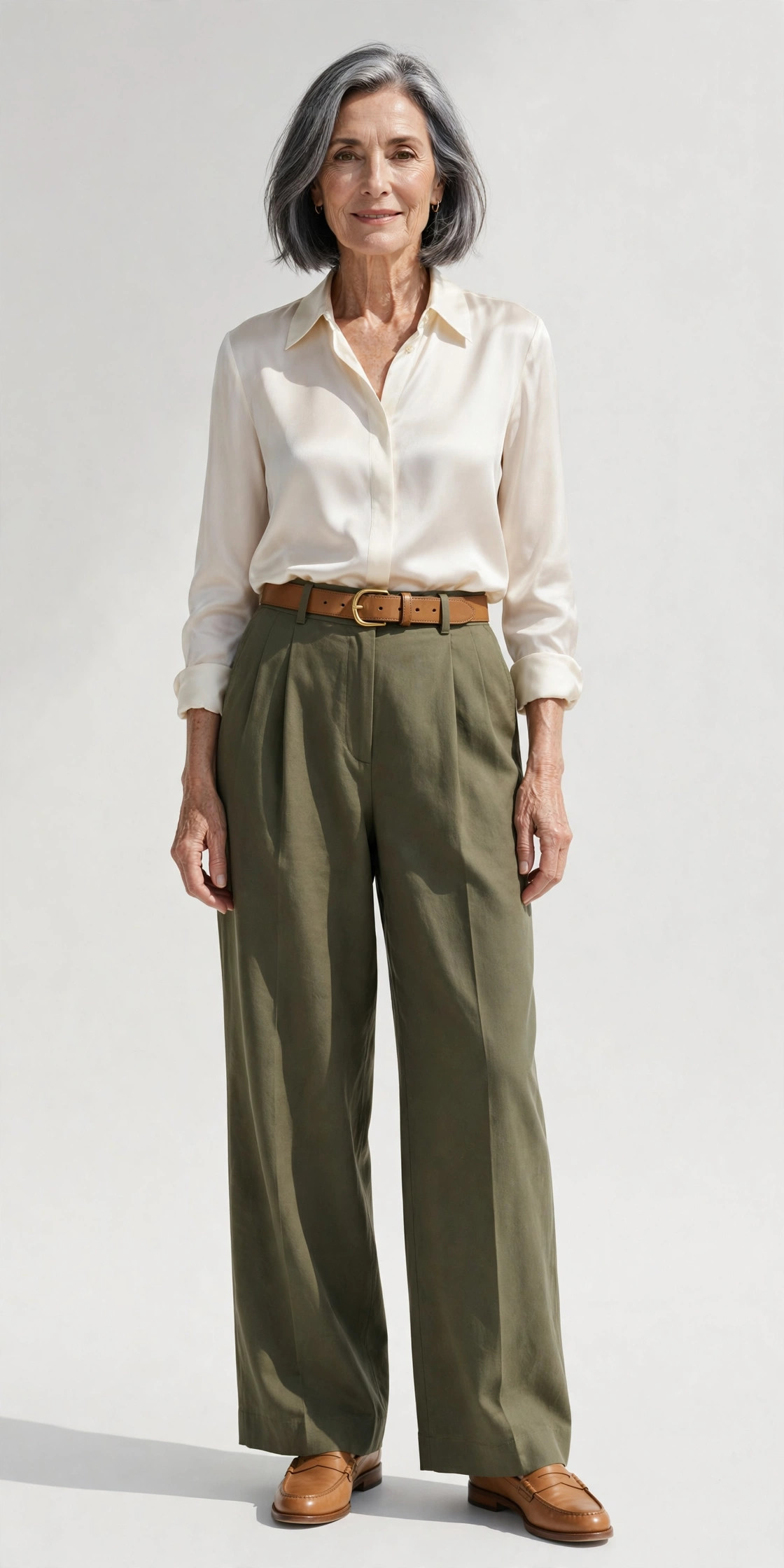
Shoes shape the outfit more than most women expect. A pointed or almond toe extends the leg line under a wide hem, while a chunky round shoe can make the pant look heavier than it is.
This does not mean heels — pointed flats, slingbacks, and sleek sneakers all qualify. Let a sliver of the shoe peek out from under the hem; that small glimpse reads as deliberate and modern.
The equation: pointed toe + a visible sliver of shoe = longer legs under any wide hem.
8. The Cropped Wide-Leg

If full-length wide legs feel like a big commitment, go cropped. A pair that ends just above the ankle — with a sliver of skin showing — reads lighter, fresher, and far easier to style with flats.
Cropped wide legs are the friendliest entry point: loafers, sneakers, and ballet flats all work beautifully. Keep the rest of the outfit neat, and the shorter length does most of the balancing for you.
The equation: cropped hem + visible ankle = wide-leg volume, half the effort.
Part 4 — The Finishers: Details That Pull It Together
These final equations are the small moves that take wide-leg outfits from correct to chic.
9. The Column of Color

Wear your top and trousers in the same color family — cream on cream, navy on navy, black on black — and the body becomes one long, unbroken line. Suddenly the volume reads as elegance, not bulk.
Exact matching is not required; close tones are often more flattering. This trick is especially kind on shorter frames, where a single color adds visual inches without a single heel.
The equation: one color family, head to toe = volume becomes a silhouette instead of a shape to decode.
10. The Belt Moment
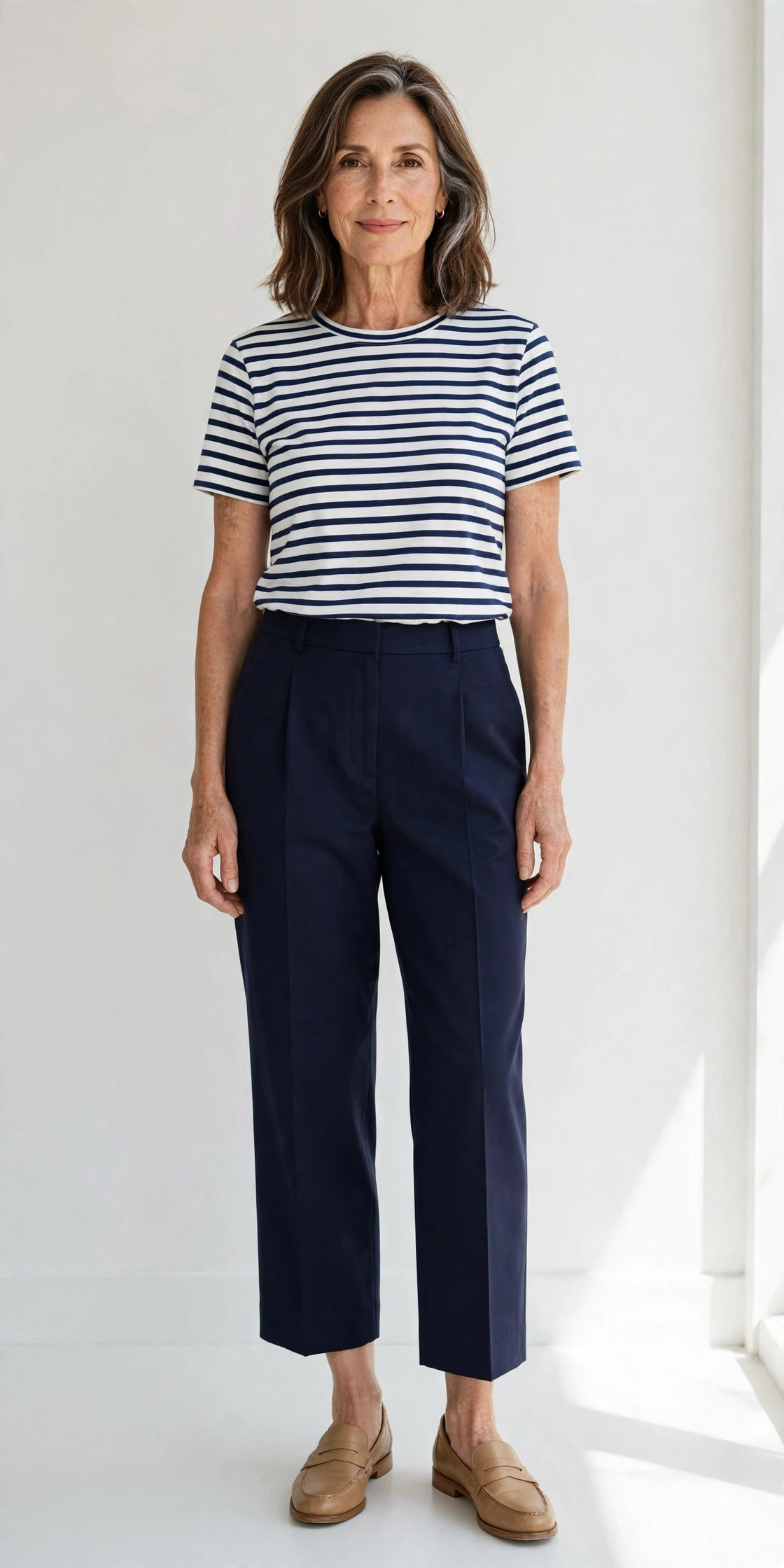
A belt is the smallest piece with the biggest balancing job. It marks the waist, breaks up a long top, and gives a fluid pair of trousers instant polish — all for the price of one accessory.
Choose a medium-width leather belt in tan, black, or tortoise: wide enough to be seen, slim enough to sit flat. Slip it through the belt loops or over a tucked shirt — never over a bulky knit, which defeats the purpose.
The equation: visible belt + tucked top = the waist, drawn in one clean line.
11. The Structured Layer
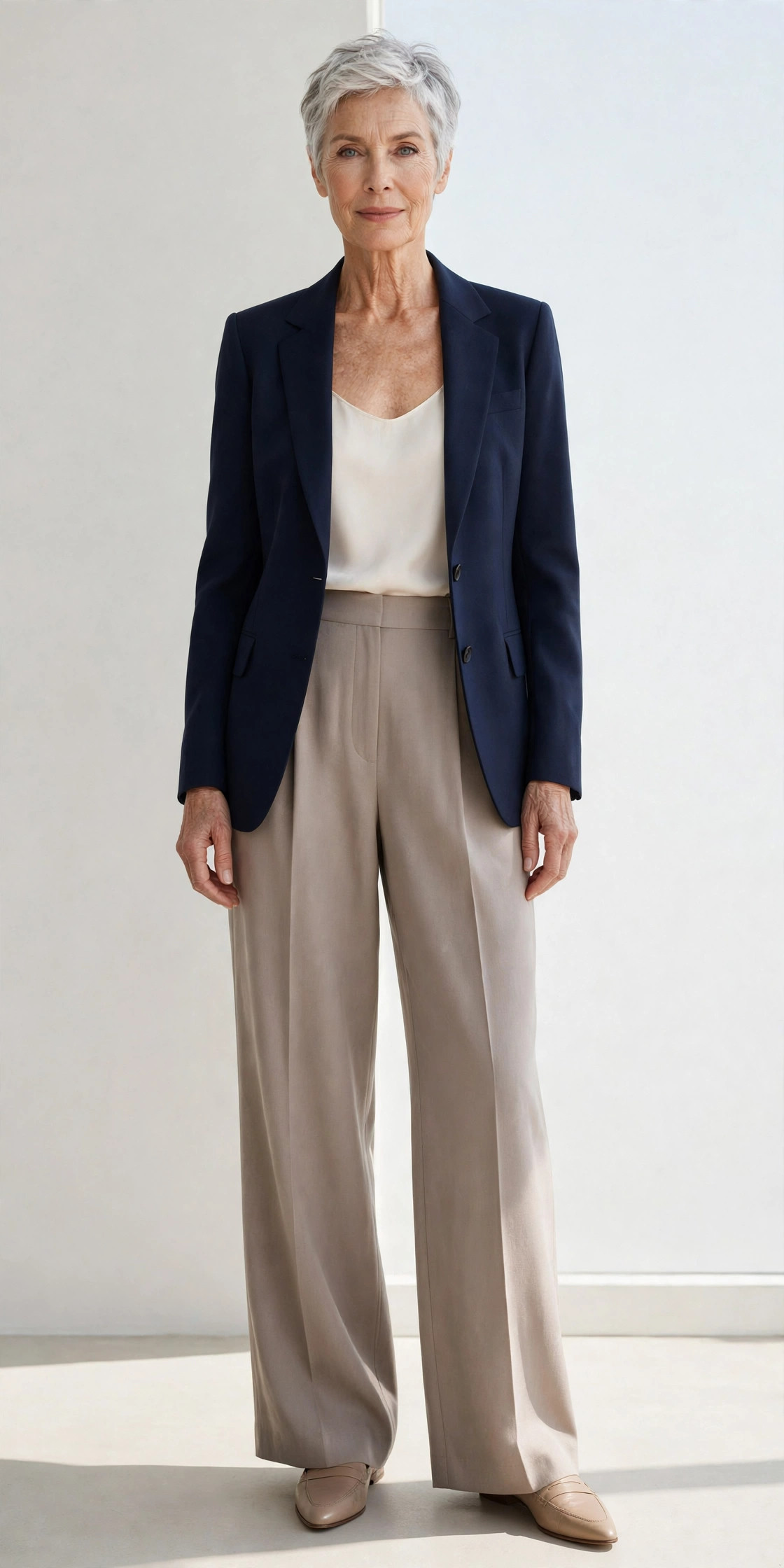
Wide-leg trousers love a layer with shoulders. A blazer with a clean shoulder line frames the outfit and keeps soft fabric from looking limp — especially important in crepe or linen.
Wear it open over a neat shell, or try a fine-gauge cardigan over a fitted tee. The rule is simple: the softer the pant fabric, the more structure the layer should carry to keep the balance.
The equation: soft pant + structured layer = polish that holds its shape all day.
12. The Evening Equation
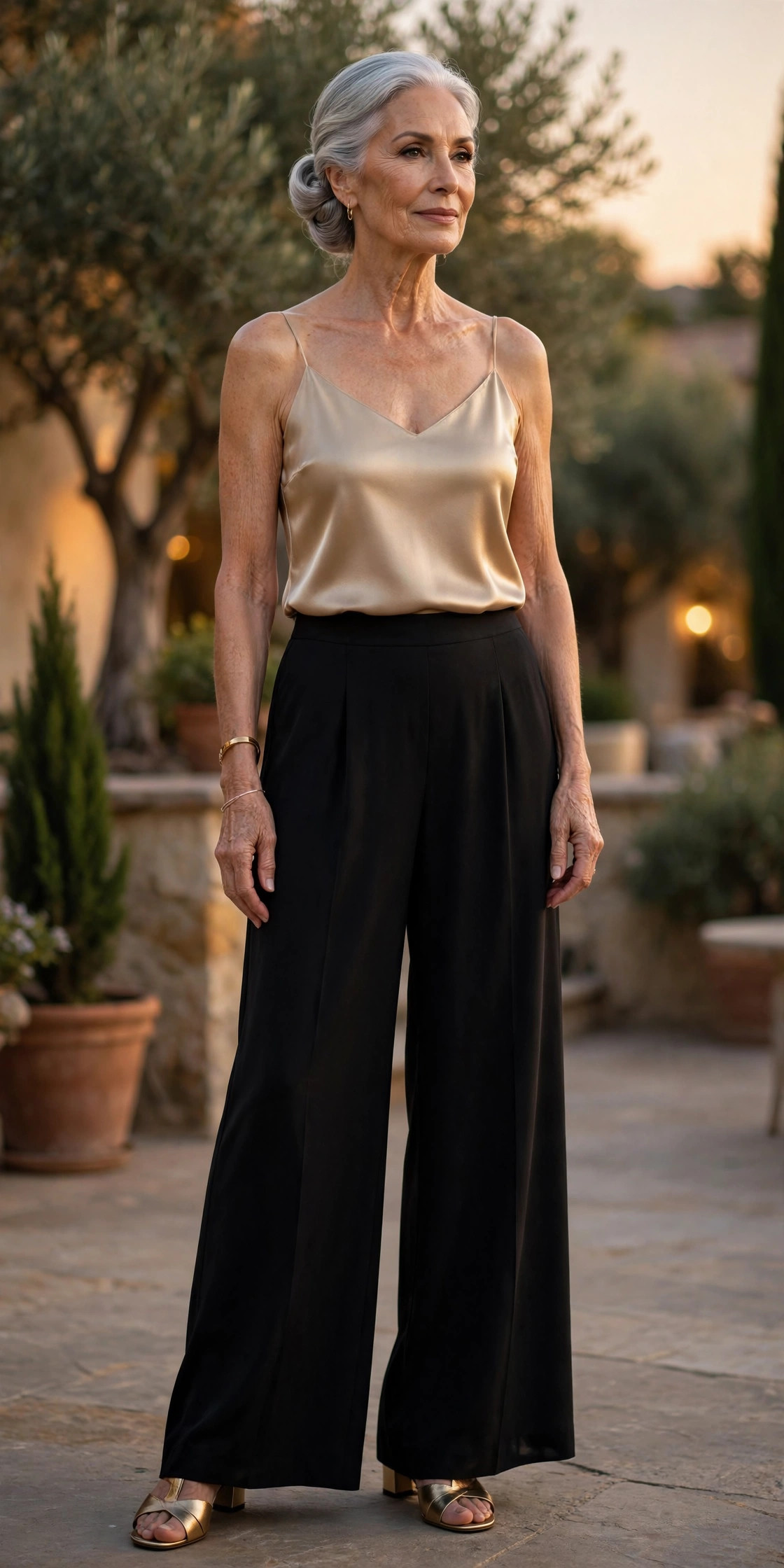
For evening, keep the formula and simply change the fabrics: fluid black wide-legs, a silky camisole or shell, and a dressy low heel. It is evening wear as comfortable as pajamas that looks anything but.
Add one refined detail — a gold bracelet, a metallic sandal, a sleek chignon — and let the fluid trousers do the drama. Wide-leg evening pants out-dress most skirts in the comfort department.
The equation: fluid black trousers + silky top + low dressy heel = evening elegance, zero fuss.
The 60-Second Mirror Check
Run through this list before you leave the house. If every answer is yes, the volume is balanced — if not, you now know exactly which equation to apply. Many of the pieces you need are probably already in your closet.
- Is the waist visible — through a tuck, a belt, or a cropped layer marking it?
- Does the fabric skim your body rather than cling or billow?
- Does the hem clear the floor and show a hint of shoe?
- Is the top cleaner and closer-fitting than the pants?
- Do the shoes have enough shape to stand up to the hem — pointed toe, slim loafer, or sleek heel?
- Is there one structured piece — a collar, a jacket, or a belt — framing the look?
- Does the outfit have a clear beginning, middle, and end when you glance in the mirror?
If wide-leg jeans are your true love, the same balance rules apply — our guide on how to wear jeans over 50 walks through them in denim.
Frequently Asked Questions
Can women over 50 wear wide-leg pants without looking shorter?
Yes — the trick is a visible waist and the right hem. A high-rise waist plus a tucked top keeps the leg line long, and hemming trousers to skim your shoe adds visual inches. A column of one color works wonders on shorter frames.
Should I tuck my top into wide-leg pants?
Tucking is the easiest balance move: a full tuck or a half-tuck of a button-down defines the waist instantly. If you dislike tucking, use a cropped jacket or a belt to mark the waist instead. Something in the outfit must define it.
What is the best shoe to wear with wide-leg pants?
Choose shoes with shape: pointed flats, loafers, sleek sneakers, slingbacks, or low block heels. The hem should just meet the top of the shoe. Avoid bulky round-toed shoes with very wide hems, which can make the outfit look heavy.
Are cropped or full-length wide-leg pants more flattering after 50?
Both work beautifully. Cropped pairs that show a sliver of ankle feel lighter and are effortless with flats. Full-length pairs look more elegant and lengthening but need a precise hem and the right shoe height. When in doubt, start cropped.
What tops should I avoid with wide-leg pants?
Long, loose tunics that end at mid-thigh with no waist definition are the main culprit — the two volumes merge and your shape disappears. If you love a longer top, add a half-tuck, a belt, or a cropped layer to frame it.
Wide-leg pants were never the problem — a missing waistline, a dragging hem, or a shapeless shoe was. Fix one balance point at a time, and the silhouette starts working for you instead of against you.
Pick one equation to try this week. The full tuck takes ten seconds, and once you see the difference in the mirror, the rest of the formulas start feeling obvious. For more over-50 styling foundations, browse our fashion tips from a stylist.




2 Comments
Comments are closed.